
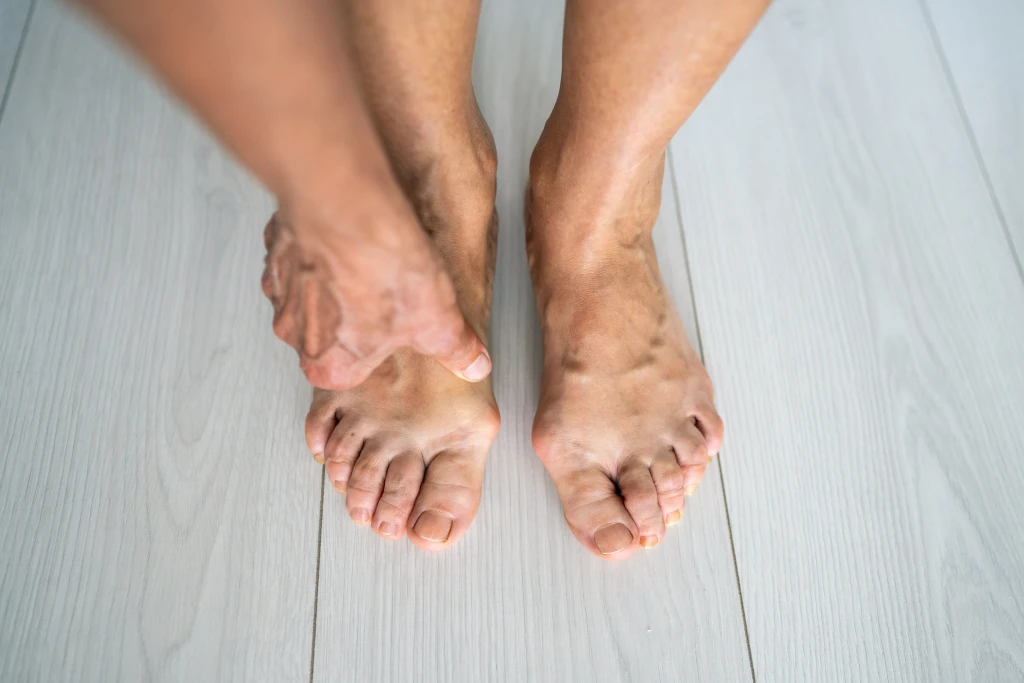
You might have felt your big toe joint getting sore after a long day of walking or standing, even in shoes that used to feel fine. So, when you finally sit down and lift your foot up to ease the ache, you start noticing more than just pain. There’s a hard bump forming on the side of the joint, and the area feels more sensitive than it used to.
And when the ache keeps coming back, the bump starts to feel less like a random sore spot and more like something structural. This is what a bunion (hallux valgus) is. As the big toe shifts toward the lesser toes, the joint becomes more prominent and starts sitting out of line. Then as the joint keeps taking pressure with every step, the area stays irritated, and the pain becomes harder to ignore. At the same time, the bump doesn’t always show up at the big toe joint. A bunionette (Tailor’s Bunion) can form at the base of the little toe along the outside edge of the foot, and it can cause a similar bony bump. To recognise bunions early and avoid letting them worsen, it helps to know the most common symptoms.
Symptoms of Bunions and Bunionettes
Bunions and bunionettes can lead to noticeable discomfort that might worsen into pain, often interfering with daily activities. Symptoms usually start with a visible bump and can progress to additional issues over time.
- Visible bony bump: For bunions, this appears at the big toe joint or first metatarsophalangeal (MTP) joint, and for bunionettes, it forms at the little toe joint or fifth MTP joint.
- Swelling and redness: The skin around the affected joint can look inflamed, especially once the area stays irritated with daily movement.
- Stiffness and pain with movement: The joint can feel stiff or uncomfortable, and this can progress into aching or throbbing pain during movement or when bending the toe.
- Symptoms that worsen in tight footwear: Tight or narrow shoes can increase pressure and friction against the bump, sometimes leading to corns or calluses near the affected area.
- Toe changes over time: Bunions and bunionettes can contribute to hammer toes, where the second, third, or fourth toe bends at the middle joint.
Types and Stages of Bunions
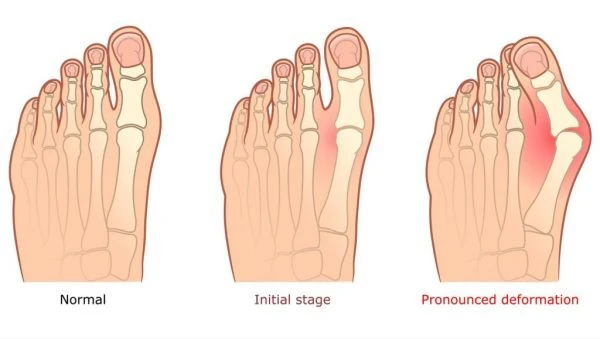
Bunions can progress gradually over time, which is why symptoms often feel mild at first, then become harder to ignore as the joint shifts further out of alignment. Although bunions are often grouped under one term, there are different types, and each type can move through stages that reflect increasing severity.
Standard Bunion
A standard bunion is the most common type, and it typically progresses through four stages.
- First Stage (Mild): A small bump starts forming, and the big toe begins drifting toward the second toe. Symptoms are often minimal or easy to ignore.
- Second Stage (Moderate): The bump becomes more obvious, and stiffness or discomfort tends to show up more often, especially in tighter footwear.
- Third Stage (Severe): The big toe starts to crowd or overlap the second toe, with worsening pain, swelling, and more restriction in movement at the joint.
- Fourth Stage (Advanced): The deformity becomes more pronounced and persistent, with chronic pain, joint stiffness, and increasing difficulty wearing comfortable shoes.
Bunionette
A bunionette forms along the little toe side of the foot, and it can also progress through stages of increasing severity.
- First Stage (Mild): A small bump begins forming near the little toe joint, and symptoms are often minimal at the start.
- Second Stage (Moderate): The bump becomes easier to notice, and pain or inflammation tends to flare more often, particularly in snug footwear.
- Third Stage (Severe): The little toe might angle further inward, which can increase misalignment and make discomfort more persistent.
- Fourth Stage (Advanced): Pain can become constant enough to affect daily footwear choices, and supportive measures are often needed to relieve discomfort.
Congenital and Juvenile Bunions
Congenital and juvenile bunions describe bunions that develop earlier in life due to genetics and foot structure. Symptoms can be mild at the start, but the bunion might become more noticeable as the child grows. Over time, it will progress in the same manner as listed above, with worsening pain, stiffness, and misalignment.
Causes of Bunions and Bunionettes
Bunions and bunionettes don’t appear out of nowhere. They tend to form gradually when repeated pressure and stress affect the big toe or little toe joint over time, causing the joint to shift out of its natural alignment. While there’s rarely one single cause, factors such as foot structure, genetics, inflammation, footwear, and long-term load through the foot can all contribute, and footwear in particular can worsen bunions that are already developing.
What Increases Joint Pressure on the Toes?
- Poor fitting shoes, especially those that are tight, narrow, high heeled, or pointy toed, can crowd the toes and increase pressure and friction at the joint.
- Sports or activities that involve tight or restrictive footwear, such as football or ballet, can increase pressure on the toe joints, especially when worn regularly.
- Standing for long periods, being on your feet often, or doing high load activities can repeatedly stress the joint over time.
- People with high arches, where the pressure tends to concentrate around the forefoot and the big toe joint.
- People with flat feet or excessive pronation during gait. The big toe joint is restricted when the foot over-pronates, causing one to push off using the inner side of the big toe and forcing the big toe to deviate over time.
- Inherited joint hypermobility causes joints to deform more easily under load.
- People with a plantarflexed first ray. This is rarely mentioned, but a naturally lower-sitting big toe joint compared to the lesser toes increases the load on the big toe joint, causing restriction and deviation over time.
Who Carries Higher Baseline Risk?
- Inherited foot type and structure, including abnormal bone alignment, flat feet, low arches, high arches, or loose joints, can increase the chance of bunion or bunionette formation.
- A family history of bunions or bunionettes can make these changes more likely, and bunions are commonly linked to genetics.
- Females are more likely to develop bunions or bunionettes, with pooled prevalence of around 30% in women compared with 13% in men.
- Previous foot injuries or defects present at birth can affect joint stability and alignment, increasing long term risk.
- Rheumatoid arthritis (RA) and other inflammatory arthritis conditions can raise risk by affecting joint structure and stability.
Conditions Commonly Mistaken for Bunions
Not every painful bump or flare around the big toe joint is a bunion. Some conditions can look similar at first because they cause swelling, redness, or pain in the same area, even though the underlying issue is different. This is why it helps to know what else can mimic bunion symptoms, especially when the pain feels sudden or more intense than expected.
Bursitis
Bursitis is inflammation of the soft tissue cushioning near the joint, and it can cause local pain and swelling that feels similar to bunion irritation. However, bursitis is centred around the surrounding tissue rather than the bony prominence and joint misalignment seen in bunions.
Gout
Gout frequently targets the big toe joint and is known for sudden, intense pain with redness and swelling. Compared to bunions, which tend to worsen gradually as alignment shifts over time, gout flares occur in episodes and can feel dramatic when they strike.
Hallux Rigidus
Hallux rigidus (osteoarthritis) involves wear and stiffness within the big toe joint, often causing pain during toe bend and reduced movement. Bunions are more linked to joint misalignment and toe drift, which changes how pressure moves through the forefoot over time.
Pseudogout
Pseudogout can cause sudden pain, swelling, warmth, and redness around a joint, and it can sometimes be mistaken for a bunion when symptoms flare near the big toe region. Unlike bunions, which develop gradually from changes in joint alignment, pseudogout is driven by inflammation triggered by calcium pyrophosphate crystal deposits and often feels more abrupt.
Sesamoiditis
Sesamoiditis causes pain under the big toe joint, and it often worsens with walking and push off through the forefoot. Unlike bunions, which involve a visible bony bump and toe misalignment, sesamoiditis is usually more focused under the joint rather than on the side of the big toe.
Treating and Preventing Bunions
Although bunions aren’t always fully preventable, early care can reduce irritation, slow progression, and support long-term foot comfort. This works best when symptoms are addressed early, while footwear fit, joint support, and foot mechanics are managed at the same time. Conservative care settles the pain and reduces how often the joint flares, and the same habits that ease symptoms are what slow the deformity from progressing.
Conservative treatment
Most bunion symptoms are managed by settling the irritated joint, then improving daily support and reducing the pressure that keeps it flaring.
- Symptom relief: Resting the foot when the bunion feels acutely irritated, especially after long walking or standing, and soaking it in warm water to relax the muscles both ease discomfort. Short-term non-steroidal anti-inflammatory drugs (NSAIDs), where appropriate and guided by your doctor, can reduce pain and swelling, while long-term use is avoided due to potential side effects.
- Footwear: Proper shoes with a roomier toe box, including wider widths such as 2E or 4E, avoid pushing the toes together and loading the forefoot. Tight, narrow, or pointed shoes are the usual aggravators.
- Customised insoles: Custom insoles address malalignment and provide structural support, helping redistribute pressure through the foot and away from the big toe joint. It can also be designed to improve the range of motion through the big toe joint, if restriction is an underlying driver.
- Padding and toe splints: Cushioned bunion pads reduce friction, and toe separators or splints relieve soft tissue tension and provide pain relief. These ease symptoms but do not correct the underlying deformity.
- Mobility and strengthening programme: A mobility and strengthening programme, where appropriate, improves joint control and supports alignment during walking.
- Focused shockwave therapy: Where symptoms persist despite consistent footwear and support changes, focused shockwave therapy (ESWT) can be discussed to help reduce joint inflammation and support symptom relief.
- Body weight management: Maintaining a balanced weight reduces overall strain through the feet and the big toe joint.
When conservative care isn’t enough
It helps to be clear about what conservative care can and cannot do. Over-the-counter products such as splints or even orthotics do not correct the bunion deformity, and the only way to realign the joint is surgery. Non-surgical care still plays a valuable role in slowing progression, reducing pain, and helping you stay active with less disruption, so surgery is considered only when pain limits daily activity despite these measures. There are several corrective surgery options available, and we recommend seeing a foot and ankle surgeon if you are considering it.

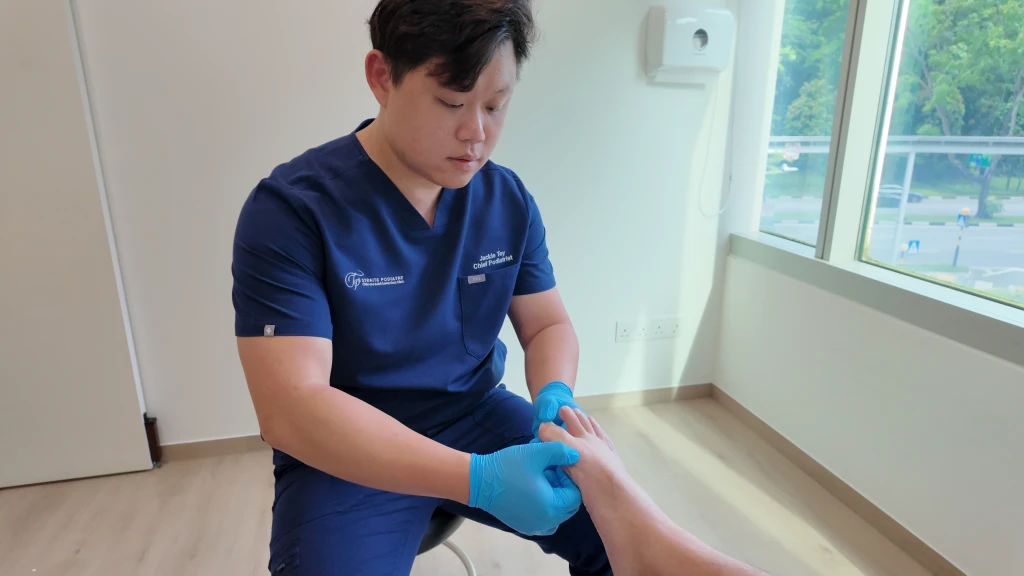
Have Your Bunion Pain Managed at Straits Podiatry
When pain around the big toe or little toe keeps returning and starts making walking uncomfortable, it helps to get it checked properly. At Straits Podiatry we start by confirming whether the pain is coming from a bunion or bunionette, then look at what’s causing repeated pressure and irritation through the front of the foot. This includes your activity levels, the shoes you wear most, and how your foot is taking load as you walk. Where useful, imaging can also help us assess the joint and surrounding tissues more closely.
Once we know what is driving the irritation, we’ll put together a plan that fits your routine. This can include footwear guidance, customised insoles to reduce pressure through the affected joint, and simple adjustments to how you pace walking and exercise while the area settles. If symptoms persist, ESWT can also be arranged. Speak with our team or book a consultation for an assessment and a personalised plan to manage your bunion pain.
Frequently Asked Questions About Bunions
What is a bunion?
A bunion is a bony prominence at the base of the big toe caused by the joint gradually shifting out of alignment. As the big toe angles toward the second toe, the joint can start to stick out, leading to rubbing, swelling, redness, and pain, especially in tight footwear. A similar deformity on the outside of the foot at the little toe joint is called a bunionette, or Tailor’s bunion.
What causes bunions and bunionettes to form?
Bunions and bunionettes usually develop when foot structure and daily loading gradually push the toe joints out of alignment. Genetics often plays a role, especially if you have naturally flat feet, low arches, or more flexible joints that shift under pressure. Footwear can worsen symptoms, particularly narrow toe boxes and high heels that compress the forefoot. Arthritis, past injuries, and long hours of standing or walking can also increase strain and speed up progression.
How can I tell if my pain caused by my bunion or it’s something else?
Bunion pain usually comes with a visible bump along the side of the big toe joint, and it often feels worse after tight shoes or long periods on your feet. The area can become sore, swollen, or irritated because the joint keeps rubbing against footwear and taking repeated pressure. In contrast, gout tends to flare suddenly with intense pain, warmth, and redness. Sesamoiditis is felt more under the big toe joint, while bursitis is more of a soft tissue tenderness around the area. If symptoms overlap, an assessment helps confirm the true cause.
Will my bunion resolve on its own, or does it require attention?
Bunions don’t usually go away on their own, because the underlying alignment change tends to persist. However, symptoms can often be managed well with non-surgical care. This includes wider footwear, cushioning pads to reduce rubbing, toe spacers for comfort, and orthotics if foot mechanics are increasing pressure through the joint. If pain persists or deformity progresses, an assessment can guide whether further treatment is needed.
Why are claw toes, hammer toes, and mallet toes linked to bunions and bunionettes?
Bunions and bunionettes can crowd the toes by shifting the big toe inward or the little toe inward, reducing space across the forefoot. As the toes get compressed, pressure patterns change and smaller toes will gradually bend into fixed positions. This can contribute to claw toes (multiple joints curl), hammer toes (middle joint bends), or mallet toes (end joint bends). Footwear, tendon imbalance, and foot mechanics can also contribute.