
What Is Wart Needling and Curettage?
Wart needling and curettage is a single-session procedure for stubborn plantar warts that have not cleared with freezing or topical care. It is also known as Falknor’s needling method, after the podiatrist Dr Gordon Falknor, who described it in 1969. It is the option many people reach for when a wart on the sole of the foot has been sitting there for months, has resisted repeated cryotherapy sessions, or has grown thick and painful enough to change the way they walk.
The idea behind it is different from simply cutting or burning the wart away. A plantar wart is caused by the human papillomavirus (HPV), which lives inside the skin cells and is skilled at hiding from the body’s immune defences. That is why a stubborn wart can persist for so long: the immune system has not properly recognised the infection. Needling works by deliberately puncturing the wart many times with a fine sterile needle. This controlled trauma breaks up the wart tissue and pushes HPV proteins down into the deeper layers of the skin, where immune cells are far more active. The bleeding it draws to the area carries those immune cells in. In effect, the procedure introduces the virus to the immune system so the body can recognise it and clear it, including tissue that was never directly touched by the needle.
Because a single needling session sets that immune response in motion, it is usually a one-off procedure rather than a course of weekly visits. Published cure rates for needling sit above 85% in the studies available, and it is regarded as a relatively safe option when performed by a trained clinician. It is not a first resort for a brand-new, superficial wart, where a simpler approach may clear things without a local anaesthetic injection. Its value is in the harder cases: the deep, painful, or long-standing warts that have already shrugged off other options.
How Wart Needling and Curettage Is Performed
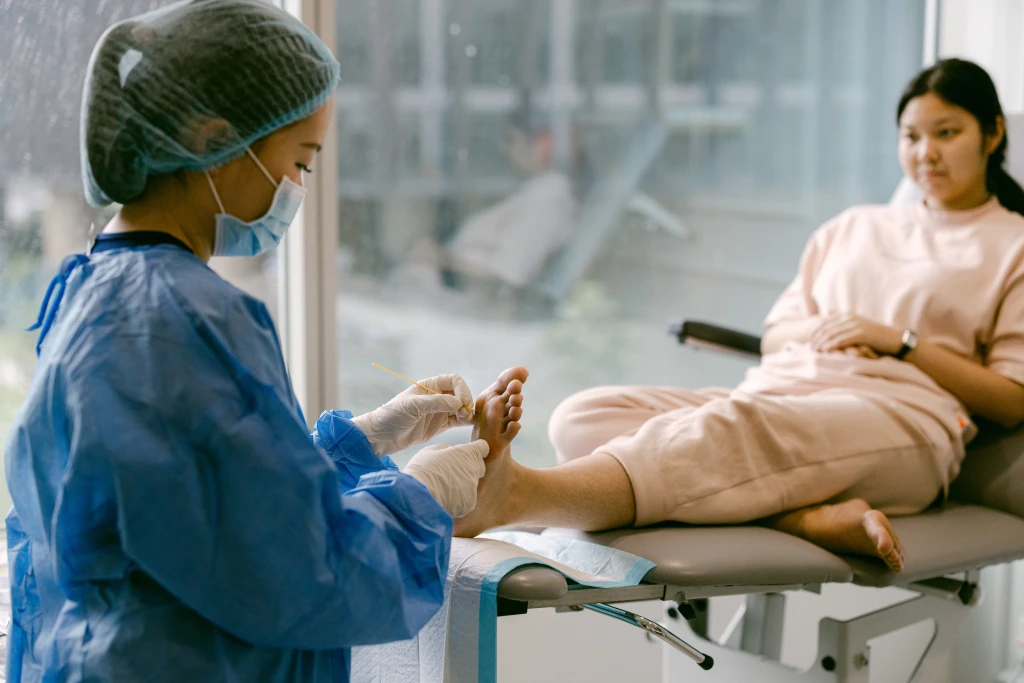
The procedure is carried out in the clinic and is not considered surgery. There is no cutting into healthy tissue and no stitching afterwards. The needling itself is painless because a local anaesthetic is used first, and most people walk out of the clinic and go about the rest of their day.
Here is what happens, step by step.
- Assessment and diagnosis. Your podiatrist examines the lesion first, because not everything that looks like a plantar wart is one. Corns, calluses, and some other skin lesions can look similar, and each is managed differently. Your medical history, how long the wart has been present, and what you have already tried are reviewed before anything is decided.
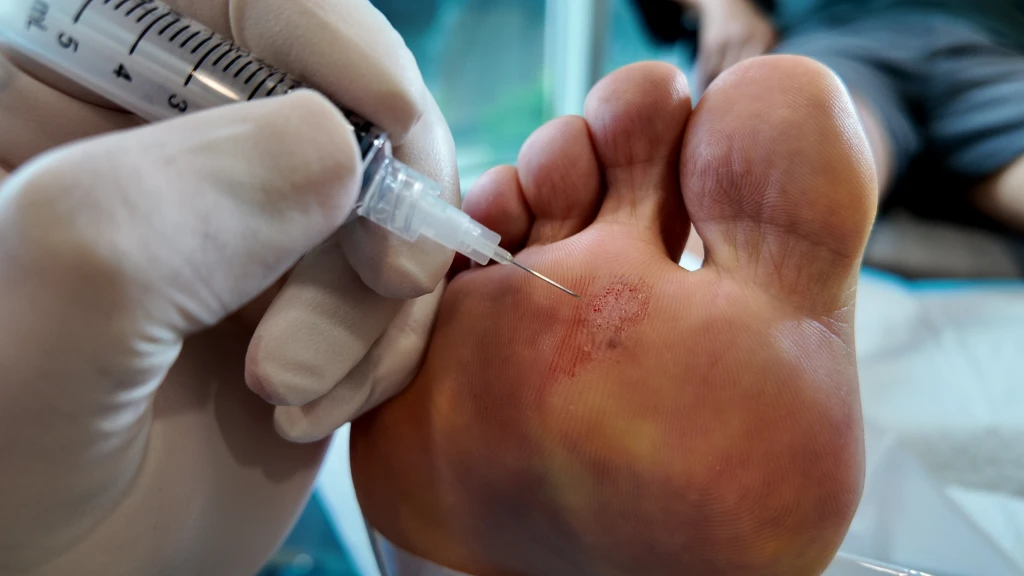
- Local anaesthetic. A local anaesthetic is injected around and underneath the wart so the area is fully numb. You feel the pinch of the injection at the start, similar to a dental one, and nothing after that.
- Debridement. Any overlying callus or thickened skin over the wart is carefully pared away with a sterile blade, so the needle can reach the living wart tissue rather than the dead surface layer.
- Needling. The wart is punctured repeatedly with a fine sterile needle. This breaks down the wart tissue and draws a small amount of blood into it, carrying HPV proteins into the deeper, immune-active layers of the skin. This is the step that sets off the immune response.
- Curettage (optional) and dressing. Loosened wart tissue may be removed with a small scoop-shaped instrument called a curette, and a sterile dressing is applied. Your podiatrist explains how to keep the area clean, when to change the dressing, and what footwear will keep pressure off the site while it settles.
The immune part of the process is slower and happens out of sight. Over the following weeks, the body works through the tissue it now recognises as infected, and the wart gradually resolves as healthy skin replaces it.
How Long Does Recovery Take?
You can walk immediately after the procedure, with the dressing in place. The treated area is usually numb for the first few hours while the anaesthetic wears off, then mildly tender for a day or two afterwards, roughly like a deep bruise on the sole of the foot. Over-the-counter paracetamol is generally enough for the soreness.
The site itself can take about one to two weeks to settle. During that time it is sensible to avoid activity that loads the treated area heavily, such as running, jumping, or long walks, both to keep the dressing in place and to reduce the chance of bleeding or infection. Most people who work at a desk are back the next day in comfortable, enclosed shoes. In Singapore, that also means being realistic about barefoot and open-footwear habits while the site heals: keep it covered and dry rather than exposed on wet bathroom floors or at the pool.
The wart clearing completely is a separate, longer timeline. The skin needs time to work through the immune response, so the final appearance of the wart resolving often takes several more weeks after the site itself has healed. Your podiatrist will usually arrange a review so progress can be checked and any small remaining lesion picked up early.
Wart Needling Compared With Other Solutions
Needling is one of several ways to manage a plantar wart, and the honest position is that none of them clears every wart every time. What matters is matching the method to the wart in front of you. The three options below all work on the same underlying principle, which is prompting the body’s own immune system to recognise and clear the virus. They differ in how strong that signal is, how many visits it takes, and how much of the effort falls on you.
Wart needling
Needling delivers the strongest single immune signal of the three, because the wart tissue is physically broken down and exposed to blood in one deliberate event. That is why it tends to be reserved for thick, painful, or long-standing warts that have resisted other treatments. The trade-off is a local anaesthetic injection and a short period of post-procedure tenderness, in exchange for a single session rather than a run of weekly appointments.
Cryotherapy (freezing)
Wart cryotherapy applies extreme cold to the wart to destroy the infected tissue and provoke a localised immune response. It needs no injection, which can make it the gentler starting point, especially for children or more superficial warts. The trade-off is that it usually takes several sessions spaced two to four weeks apart, and each visit is briefly painful rather than numbed. It is often the first thing tried, with needling considered if freezing has not shifted the wart.
Salicylic acid
Salicylic acid, sold in pharmacies as gels, plasters, or liquids, gradually softens and breaks down the wart over weeks of daily home application. It is inexpensive and needs no clinic visit, and for small, recent, superficial warts it can work well. The catch is consistency: it depends on you applying it correctly every day for a long stretch, it is far less effective on deep or weight-bearing warts, and overuse can damage the surrounding healthy skin.
The practical pattern many people follow is to start simple and escalate. A new wart may be given salicylic acid or freezing first. Needling comes into its own for the stubborn cases where those have already been given a fair try.
When Is Wart Needling Not Suitable?
Needling involves a local anaesthetic injection and a minor procedure on the sole of the foot, so it is not the right first step for everyone. Your podiatrist assesses your general health, your circulation, and the wart itself before recommending it. Situations where needling may be deferred, modified, or set aside in favour of another option include the following.
- Diabetes with complications. In poorly controlled diabetes, or where there is significant nerve damage (neuropathy) or reduced blood supply to the feet, healing can be slower and the risk of infection higher. Needling may still be possible with closer monitoring, but the decision is made case by case.
- Poor circulation to the feet. Reduced blood flow can delay healing of the small wound left after the wart tissue is removed, so circulation is checked before proceeding.
- Bleeding disorders or blood-thinning medication. Because the technique deliberately draws blood to the area, a clotting disorder or medication such as warfarin or another anticoagulant needs to be weighed before going ahead.
- Active local infection. If the skin around the wart is already infected, that is usually settled first before any needling is carried out.
- Pregnancy. Elective procedures involving a local anaesthetic are generally postponed until after delivery, unless there is a strong clinical reason to proceed sooner.
- Very young children. Needling is technically possible in children, but tolerance of a local anaesthetic injection varies with age. Freezing or a topical regimen is often tried first when a child cannot comfortably manage the injection.
None of these rule needling out automatically. They are reasons to have the foot assessed properly, so the safest and most suitable option is matched to your situation rather than assumed.
Have Your Plantar Wart Assessed at Straits Podiatry
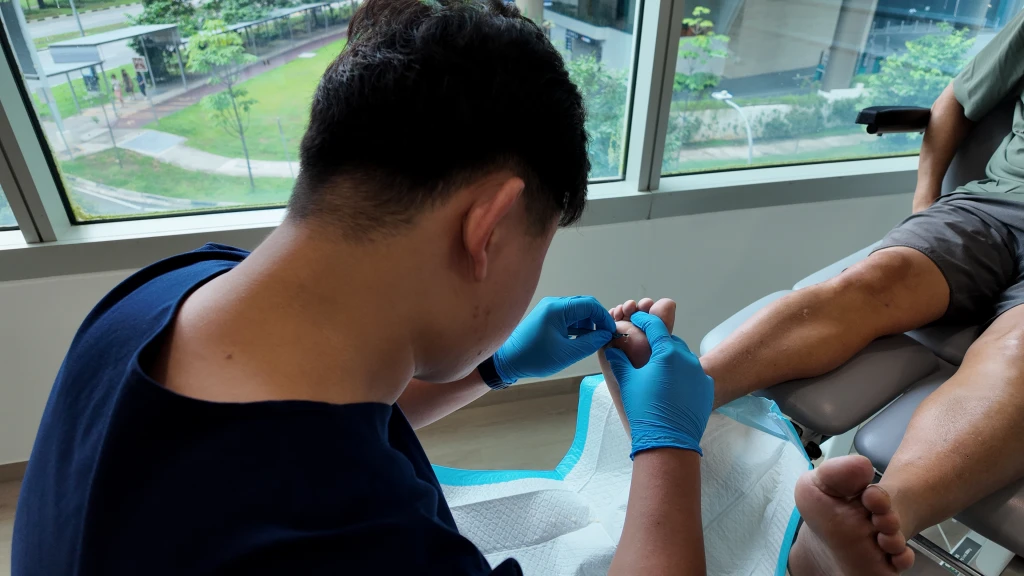
No single method clears every plantar wart, which is why our podiatrists offer needling alongside cryotherapy and topical options rather than defaulting to one technique. A thick, painful, or long-standing wart that has already resisted freezing or topical care may respond better to a single needling session, while a cluster of small surface lesions may suit a gentler approach. The point of an assessment is to look at the wart, your skin, and your general health, then match the method to what is actually there. We see plantar warts across all three of our clinics in Buona Vista, Orchard, and Paya Lebar.
Speak with Straits Podiatry or book a consultation to have your plantar wart assessed and the right option discussed with you.
Frequently Asked Questions About Wart Needling
Does wart needling hurt?
The needling itself is not painful, because a local anaesthetic is injected around and underneath the wart before any needling begins. You feel the pinch of the anaesthetic injection at the start, similar to a dental injection, then nothing during the needling and curettage. Once the anaesthetic wears off, the area is usually mildly tender for a day or two, comparable to a deep bruise, and over-the-counter paracetamol is generally enough for the soreness. The trade-off with needling is a short spell of tenderness afterwards in exchange for a single session, compared with freezing, which is briefly painful at each of several visits.
How long is the recovery, and when can I walk and exercise again?
You can walk out of the clinic immediately with a dressing in place. The site usually settles over one to two weeks. During that period, it is best to avoid activity that loads the treated area heavily, such as running, jumping, or long-distance walking, so the dressing stays put and the site is not disturbed. Most desk-based workers return the next day in comfortable enclosed shoes. Full resolution of the wart’s appearance takes longer than the site itself, often several more weeks, as the skin works through the immune response and healthy skin replaces the wart tissue.
What is the success rate of needling compared with cryotherapy and salicylic acid?
Published cure rates for needling sit above 85% as a single-session procedure. Cryotherapy and salicylic acid both have more variable success rates that depend heavily on consistency: cryotherapy generally needs several sessions, and salicylic acid needs daily home application for weeks. The mechanism is similar across all three, which is triggering the immune system to recognise the virus, but the immune signal from needling is stronger because the wart tissue is broken down and exposed to blood in one event. This is why needling is often considered for thick, painful, or long-standing warts that have resisted other options. No wart treatment works for everyone, and some recurrence is always possible.
Will the wart come back after needling, and what happens if it does?
Recurrence is possible. It usually happens for one of two reasons. The immune response may have cleared the main wart but missed a small satellite lesion nearby that was not visible at the time, or the virus may be picked up again by walking barefoot where HPV is shed, such as public showers, pool changing rooms, or shared mats. If a wart does return, the options include repeat needling, switching to freezing for small surrounding lesions, or a topical regimen. A follow-up review means any recurrence is usually caught while it is still small and easier to manage. Drying the feet thoroughly, wearing slippers in communal wet areas, and not sharing footwear all lower the risk going forward.
Is wart needling safe for children, diabetics, and pregnant women?
It depends on the individual. For people with diabetes, the main considerations are circulation and the risk of slower healing. In well-controlled diabetes without significant nerve damage or reduced blood supply, needling can be carried out with closer monitoring of the site afterwards. For pregnant women, needling is generally postponed until after delivery, because elective procedures with a local anaesthetic are usually avoided during pregnancy unless there is a strong clinical reason. For children, needling is possible but tolerance of the anaesthetic injection varies with age, so freezing or a topical regimen is often tried first. Each case is assessed individually so the right option is matched to the person.
How is needling different from just cutting the wart out?
Needling is not an attempt to physically remove all the infected tissue, which is why cutting a plantar wart out is generally avoided: the virus lives in the surrounding skin, so cutting alone tends to leave a wound that heals with the wart returning. Needling instead uses controlled trauma to introduce the virus to the immune system, so the body clears the infection itself, including tissue the needle never touched. That is also why there is no deep cut and no stitching, and why the wart can keep resolving for weeks after the procedure is done.