
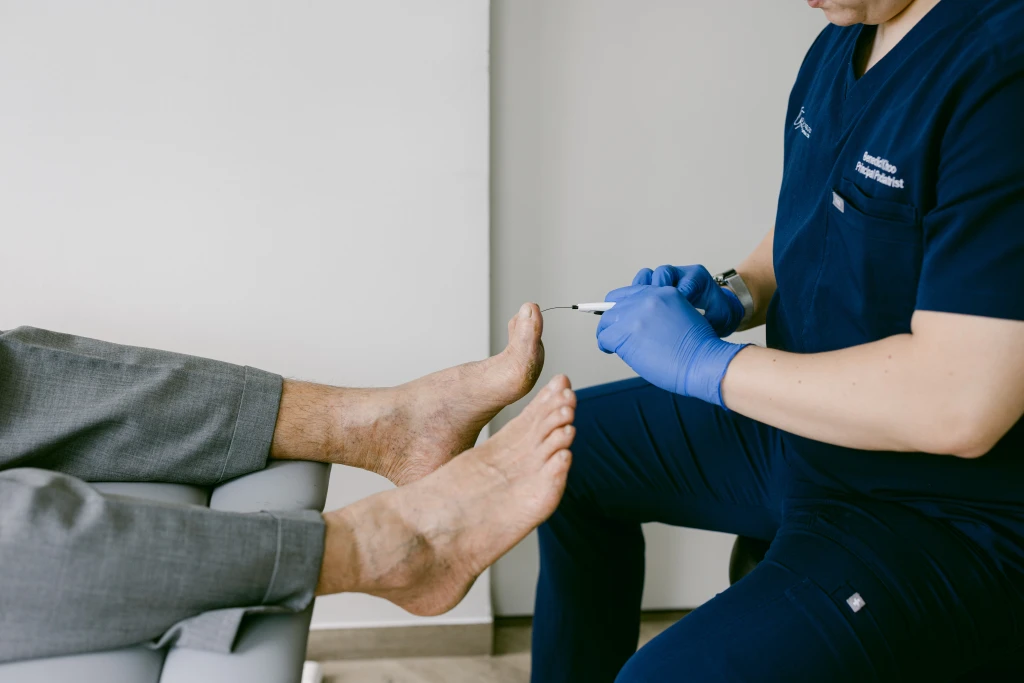
What Is Diabetic Foot Screening?
Diabetic foot screening is a structured, preventive check of the feet in people living with diabetes. Rather than waiting for pain or a visible wound, the screening looks for the silent changes that raise the risk of an ulcer, an infection, or delayed healing, and it does so early enough for something to be done about them. High blood sugar over time can quietly damage the nerves and narrow the blood vessels in the lower limb, and both of those changes tend to happen without obvious symptoms. A diabetic foot check is designed to catch them before they cause harm.
The screening covers four systems that diabetes affects most in the foot: nerve function (sensation), circulation, the skin and nails, and the overall structure of the foot. From those findings, the podiatrist assigns a risk category and sets how often the feet should be reviewed. This is the part that matters most. A one-off look at the feet tells you about today. A risk-classified screening with a matched review interval turns that single check into ongoing protection, which is the whole point of the diabetic foot care pathway. If you want to understand what an established wound involves rather than how it is prevented, that sits with foot ulcers. This page is about the check that helps keep them from starting.
Who Should Have a Diabetic Foot Screening?
International guidance from the International Working Group on the Diabetic Foot (IWGDF) is that everyone with diabetes should have their feet screened at least once a year, even when the feet look and feel completely normal. That baseline matters because the early changes are usually painless. The interval is then shortened for anyone whose risk is higher.
Screening is especially important if you fall into one of these groups:
- You have had diabetes for many years. The longer the duration, the greater the chance that nerve or blood-vessel changes have begun.
- You have reduced sensation in your feet. Loss of protective sensation from peripheral neuropathy means a blister, cut, or pressure point may go unnoticed until it becomes a wound.
- You have poor circulation. Reduced blood flow slows healing and makes small problems harder to recover from.
- You have foot deformities. Bunions, clawed or hammertoes, a high arch, or a collapsed arch create high-pressure zones where skin breaks down.
- You have had a foot ulcer, an amputation, or a foot infection before. A previous problem is one of the strongest predictors of a future one.
- You have kidney disease or are on dialysis, or you smoke. Both add to circulatory and healing risk.
Even without any of these, an annual diabetic foot check is worth keeping in your calendar, because the value of screening is in finding the change you cannot feel yet.
What Happens During a Diabetic Foot Screening?
A diabetic foot screening is a hands-on assessment carried out by a podiatrist. You will usually be asked to remove shoes and socks so both feet can be examined and compared. The screening is painless, and each part of it maps to one of the systems diabetes affects. Here is what the check involves.
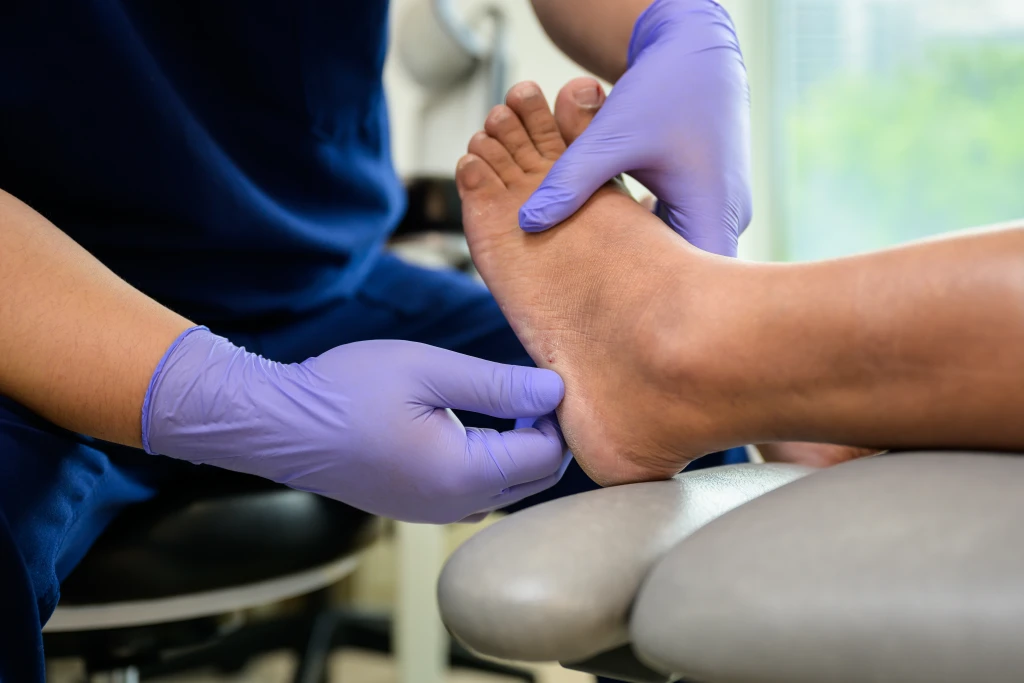
Skin and nail inspection. The podiatrist looks closely at the skin and nails for cuts, blisters, cracks, corns, calluses, colour changes, and any early signs of infection. Skin that looks dull or purplish and feels cold can point to circulation trouble and is followed up promptly. Areas of hard skin are noted, because callus often sits over a pressure point where an ulcer can form underneath.
Sensation testing. To check for peripheral neuropathy, the podiatrist tests whether you can feel light pressure at set points on the sole using a 10-gram monofilament, and whether you can feel vibration using a tuning fork. This is done with your eyes closed so the result reflects true sensation rather than what you see. Losing the ability to feel the monofilament is a key sign of protective sensation loss.
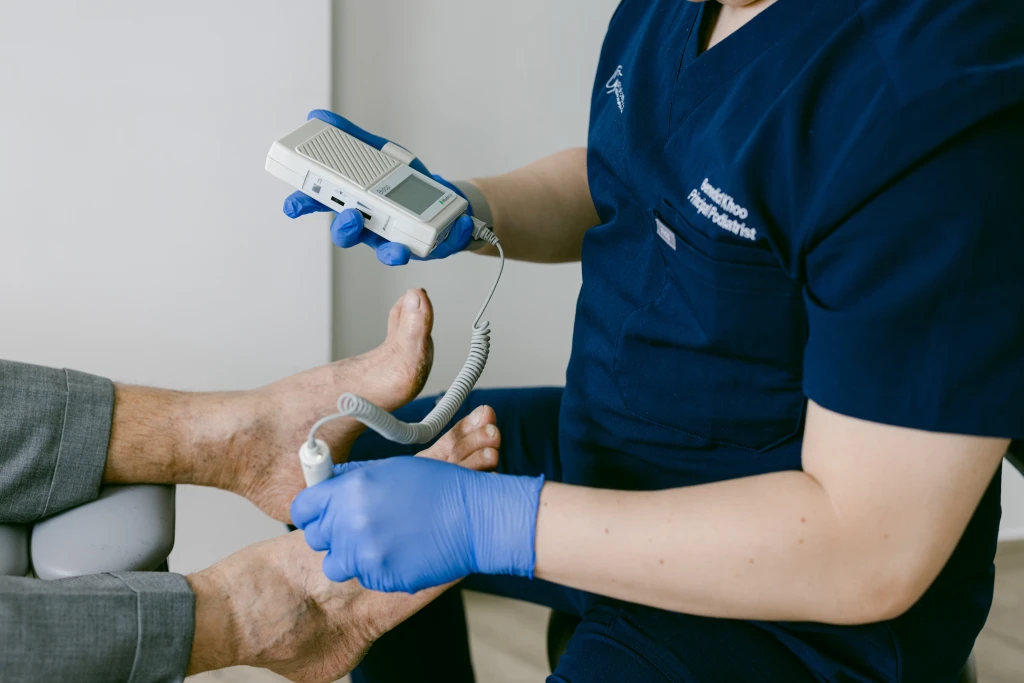
Circulation assessment. The podiatrist feels for the pulses at the top of the foot and behind the ankle to gauge blood flow. If a pulse is weak or absent, a handheld Doppler is used to listen to the flow in the vessel and flag a possible blockage for further investigation.
Foot structure and pressure check. The overall shape of the foot is assessed for deformities such as bunions, clawed toes, a high or flat arch, or the early signs of a Charcot collapse. These change how load passes through the foot and create the high-pressure areas where skin breaks down.
Walking and offloading assessment. The podiatrist watches you stand and walk to see how weight is distributed across each foot. This shows where pressure is concentrated and guides whether offloading, such as custom offloading insoles or accommodative footwear, would help protect a high-pressure zone.
At the end, the findings are pulled together into a risk category, and that category sets your next review date. The results are recorded so that future screenings can be compared against them and any change picked up quickly.
Understanding Your Diabetic Foot Risk Category
The findings from the screening place each foot into a risk category. The category is what determines how often you should be reviewed, and it can move up or down over time as your feet change. The commonly used classification is as follows:
- Very low risk: no loss of protective sensation and no sign of reduced circulation.
- Low risk: loss of protective sensation, or reduced circulation, but not both.
- Moderate risk: loss of protective sensation or reduced circulation, together with a foot deformity that creates a high-pressure area.
- High risk: loss of protective sensation or reduced circulation, plus a history of foot ulcer, amputation, or end-stage kidney disease.
Two feet can sit in different categories, and the higher-risk foot sets the review schedule. Because diabetes progresses, a foot classified as low risk this year can move into a higher category later, which is exactly why the screening is repeated and the interval reset each time rather than assumed to stay the same.
How Often Should Diabetic Foot Screening Be Repeated?
The screening interval is matched to your risk category, so higher risk means more frequent reviews:
- Very low risk: once a year.
- Low risk: every six to twelve months.
- Moderate risk: every three to six months.
- High risk: every one to three months, or sooner if your podiatrist advises it.
These are general guideline ranges, and your individual interval is set at the first screening and confirmed at each subsequent visit. The reason the frequency rises with risk is straightforward: the higher your risk, the shorter the window in which a small problem can turn into a serious one, so the reviews are spaced to catch changes while they are still easy to manage.
What Happens If the Screening Finds a Problem?
A screening is only useful if the findings lead somewhere, so the next step depends on what is found. If your feet are very low risk, the outcome may simply be reassurance, guidance on daily foot self-checks and footwear, and a date to come back in a year.
If the screening flags loss of sensation, reduced circulation, a high-pressure deformity, or a previous ulcer, the risk category is raised and the review interval is shortened accordingly. Care is then tailored to what was found. That can include managing corns and calluses that sit over pressure points, arranging offloading with insoles or accommodative footwear, showing you how to inspect your own feet safely at home, and agreeing a plan for what to do if you notice a new break in the skin. Where reduced circulation is suspected, onward referral for vascular assessment may be arranged, and because Straits Podiatry is part of Healthway Medical Group, that coordination can happen within the group. The aim throughout is the same: keep the skin intact and stop a small change from becoming an ulcer.
Diabetic Foot Screening Versus a General Podiatry Visit
It helps to be clear about how a screening differs from a normal podiatry appointment, because the two serve different purposes and many people with diabetes benefit from both. A general podiatry visit is problem-led: you come in because something hurts or looks wrong, such as an ingrown toenail or heel pain, and the visit focuses on managing that specific issue. A diabetic foot screening is risk-led: the goal is to find the silent changes before they cause a symptom, using standardised tests for sensation, circulation, and structure that a problem-led visit may not include. The screening also records its findings so they can be tracked over time. Think of the screening as the regular, preventive backbone of diabetic foot care, with problem-led visits handling anything that comes up in between.
When Is Diabetic Foot Screening Not the Right Step?
Diabetic foot screening is a preventive check, so its scope has edges, and it is worth knowing when a different step is needed instead.
- If you already have an open wound, ulcer, spreading redness, or signs of infection, you need active wound care now, not a routine screening. This is urgent, particularly if the area is warm, swelling, or smelling, and should be seen promptly rather than booked as a scheduled check. The management of an established wound belongs with foot ulcers care.
- If you have sudden severe pain, a cold or blue foot, or a foot that has suddenly become hot, red, and swollen without an obvious cut, seek medical attention promptly. These can signal an acute circulation problem or an early Charcot change, both of which need same-day assessment rather than a scheduled screening.
- If you do not have diabetes or prediabetes, a diabetic-specific screening is not the relevant assessment for you, though a general foot health check may still be useful.
None of these rule out screening in future. They simply mean the immediate need is care or urgent review first, with routine screening resuming once things are settled.
Have Your Diabetic Foot Screening at Straits Podiatry
Proactive care is what keeps diabetic foot complications from starting, rather than waiting for a symptom to appear. At Straits Podiatry, a screening does more than check your feet on the day. Our podiatrists risk-classify each foot and set a screening interval matched to your individual risk profile, in line with international guidelines, so the frequency of your reviews rises or falls as your risk status changes. Where a problem is found, the plan is built around the specific finding, from callus care and offloading with insoles to onward referral for circulation assessment within Healthway Medical Group. That structure is what turns a single check into ongoing protection.
Screening is available across our three clinics in Buona Vista (serving the west), Orchard (serving central Singapore), and Paya Lebar (serving the east). If you have diabetes, or think you may be at risk, speak with Straits Podiatry or book a consultation to arrange your diabetic foot check.
Frequently Asked Questions About Diabetic Foot Screening
How often should someone with diabetes get a diabetic foot check?
International guidance recommends at least one screening a year for everyone with diabetes, even when the feet feel fine, because the early changes are usually painless. From that baseline the interval is shortened by risk. Low-risk feet are typically reviewed every six to twelve months, moderate-risk feet every three to six months, and high-risk feet every one to three months. Your interval is set at the first screening and confirmed at each visit, since risk can change as diabetes progresses.
Does a diabetic foot screening hurt?
No. A diabetic foot screening is a painless check. The sensation test uses a thin nylon monofilament that presses lightly on the skin and a tuning fork that you feel as a gentle vibration, and the circulation check involves feeling for pulses and sometimes listening with a handheld Doppler. Nothing pierces the skin. The only slightly unusual part is that the sensation test is done with your eyes closed so the result reflects what you can genuinely feel.
Can a screening find a foot problem before I notice any symptoms?
Yes, and that is the main reason it exists. Two of the most dangerous changes in the diabetic foot, loss of protective sensation and reduced circulation, usually develop silently. You can lose the ability to feel a blister or cut without realising it, which lets a small injury turn into a wound before pain warns you. Circulation can drop without obvious signs until something fails to heal. The monofilament and Doppler checks pick up these changes while there is still time to protect the foot.
What does it mean if my screening comes back high risk?
A high-risk result means your foot has features that raise the chance of an ulcer, such as established sensation loss, reduced circulation, a high-pressure deformity, or a previous ulcer or amputation. In practice this means your reviews are scheduled more closely, often every one to three months, and your care is expanded to include callus management, offloading with insoles or accommodative footwear, guidance on daily self-checks, and prompt review of any new skin break. If circulation is a concern, onward referral for vascular assessment may be arranged. The aim is to keep the foot intact.
Is a diabetic foot screening different from a regular podiatry appointment?
Yes. A regular podiatry appointment usually addresses a specific complaint you have noticed, such as a corn or nail problem. A diabetic foot screening is preventive and follows a set structure that checks sensation, circulation, skin, and foot shape, then records the findings so changes can be tracked over time. Many people with diabetes benefit from both: the screening as the regular preventive check, and problem-led visits for anything that arises in between.
I have a wound on my foot already. Should I book a screening or something else?
If you already have an open sore, ulcer, spreading redness, or signs of infection, that needs prompt wound care rather than a routine screening, and it should be seen quickly rather than waiting for a scheduled check. A screening is designed to find risk before a wound forms, so once an active wound is present the priority shifts to caring for it. Managing an established diabetic wound is covered under diabetic foot ulcer care. If you are unsure how urgent it is, contact the clinic and describe what you are seeing so it can be assessed without delay.