
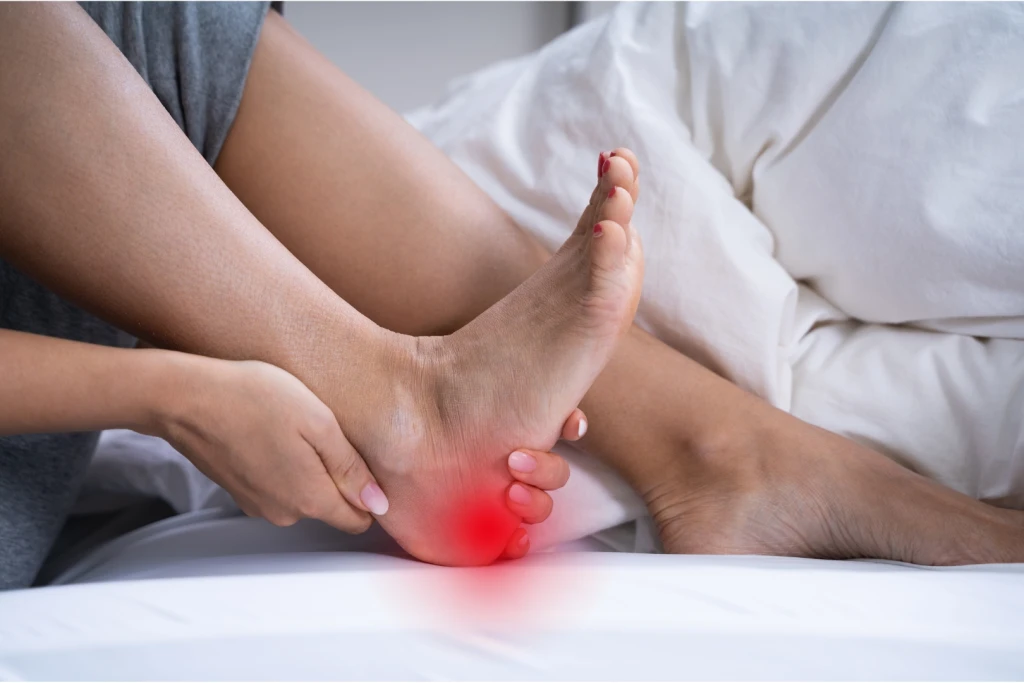
You swing your feet out of bed and a sharp jab under the heel stops you. In those first steps of the morning at home you feel it bite, and worry sets in as you wonder what kind of treatment to seek to alleviate the discomfort. Because heel pain has many causes, one possibility is irritation of the plantar fascia, the strong band that supports the arch.
To make sense of it, consider what loads this tissue. In particular, common heel pain causes include a sudden rise in activity, long hours on hard floors, tight calf muscles, and foot mechanics that strain the arch. As a result, when the plantar fascia is irritated, the first step after rest often feels especially sharp. Given these patterns, it’s sensible to seek a clear assessment rather than guess. A podiatrist can review your foot mechanics, training load and footwear, then tailor a care plan that fits your goals and routine. But first, let us look at the symptoms of plantar fasciitis.
Symptoms of Plantar Fasciitis
To start, most people notice sharp, stabbing heel pain with the first few steps after waking. Similarly, the pain can flare up with the first steps after any spell of rest such as a long sit or car ride. As the foot warms, the pain often settles for a while, which can be misleading.
However, as the day goes on, discomfort commonly returns as a dull ache after longer walks or prolonged standing. The sore spot is usually on the underside of the heel, slightly toward the inner side, and pressing there often reproduces the pain.
Less commonly, there might be swelling around the heel that can extend toward the ankle, and in longer duration cases some people describe a burning or tingling sensation. Importantly, if there is a sudden snap or pop with severe pain and difficulty bearing weight, that can indicate a tear and needs prompt assessment.
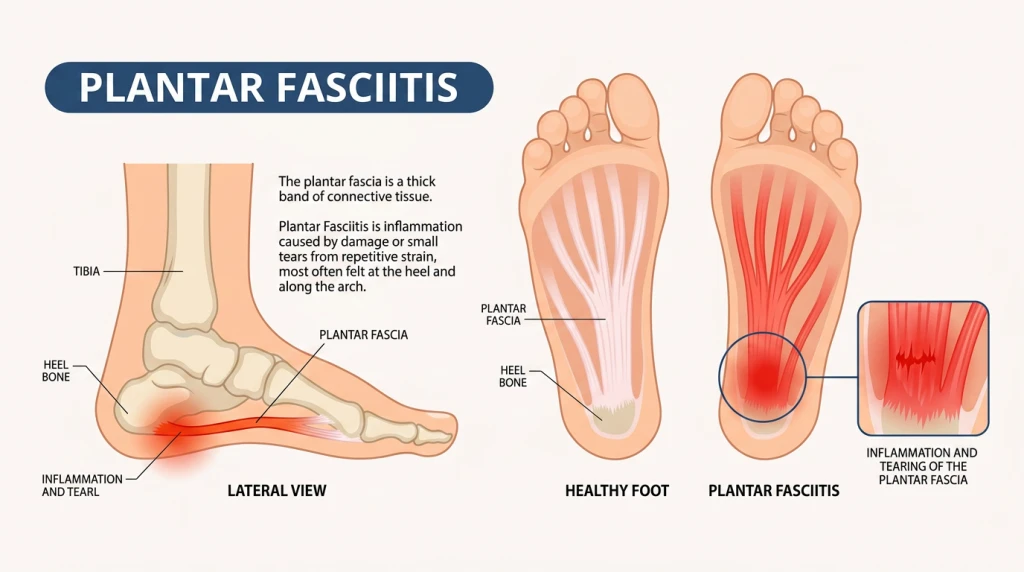
Causes of Plantar Fasciitis
Having recognised that heel pain often bites with the first steps after any rest, it helps to understand why the tissue protests. The plantar fascia links the heel to the toes, supports the arch, and steadies each stride. When repeated tension and compression outpace recovery, microtears and local irritation build. After rest the plantar fascia and calf complex can be less supple, so the first reload places relatively greater stress on the heel.
What Increases Load on the Plantar Fascia?
- A new or rapid rise in activity, especially longer runs, jumping, or dance.
- Long hours of standing or walking on hard floors such as tile or marble. Colder floors or very cool rooms can tighten tissues, and barefoot steps can sharpen that first load.
- Shoes that are worn out or lack support.
- Reduced heel fat pad cushioning.
- Tight calf muscles with limited ankle motion.
- Leg length difference.
Who Carries Higher Baseline Risk?
- Age between 40 and 60.
- Higher body weight.
- Foot mechanics such as flat feet (Pes Planus) or high arches (Pes Cavus).
- Occupations that keep you on your feet for many hours.
With these drivers clear, it is worth checking the diagnosis itself before turning to care, because several other conditions produce pain in the same corner of the heel and not all of them respond to the same plan.
Conditions Commonly Mistaken for Plantar Fasciitis
Plantar fasciitis is the most common cause of heel pain, which is exactly why it gets diagnosed too readily. Several other conditions produce pain in the same part of the heel, and a few of them do not improve with care aimed at the fascia. If heel pain has not responded the way plantar fasciitis usually does, one of the patterns below is often the reason.
Heel fat pad syndrome
Heel fat pad syndrome involves the natural cushion under the heel bone losing thickness or becoming bruised. The differentiator is the location and the quality of the pain. Fat pad pain sits centrally under the heel and feels like a deep bruise, worst when walking barefoot on hard floors. Plantar fasciitis is tender slightly toward the inner edge of the heel and produces a sharper, more defined jab. Fat pad pain also lacks the pronounced first-step-after-rest signature.
Baxter’s nerve entrapment
Baxter’s nerve entrapment is compression of a nerve branch running under the inner heel, and it is one of the more common reasons a heel labelled as plantar fasciitis does not settle. The differentiator is that the pain has nerve character. It burns, tingles, or spreads across the heel rather than staying as a mechanical sore point, and it can be present at rest. Stretching and orthotic offloading aimed at the fascia tend to make little difference.
Calcaneal stress fracture
A calcaneal stress fracture is an overload crack in the heel bone, and it matters not to miss because continuing to load it can worsen the injury. The differentiator is that squeezing both sides of the heel together reproduces the pain, whereas plantar fasciitis is tender on the sole. The pain worsens as impact continues rather than easing with warm-up, and it can ache at night. It is worth suspecting after a sharp rise in running, marching, or jumping.
Heel spur
A heel spur is a bony outgrowth on the heel bone, and the confusion runs in the opposite direction here. When an X-ray taken for heel pain shows a spur, the spur tends to get the blame. The differentiator is that the spur is generally an incidental finding. Spurs are common in people with no heel pain whatsoever, and removing one is rarely what settles the symptoms. The two coexist often because the same repeated traction on the heel bone drives both.
Tarsal tunnel syndrome
Tarsal tunnel syndrome is compression of the tibial nerve behind the inner ankle bone. The differentiator is the spread. Symptoms typically travel beyond the heel into the arch, the sole, or the toes, and they include numbness or pins and needles rather than pain alone. Symptoms often worsen through the day or at night, close to the reverse of the plantar fasciitis pattern.
Sever’s disease
In a growing child, heel pain is far more likely to be Sever’s disease than plantar fasciitis, which is uncommon before the growth plates close. The differentiator is age combined with the site. Sever’s irritates the growth plate at the back of the heel, hurts when the heel is squeezed from the sides, and flares with running and jumping sports. Heel pain in a child aged roughly 8 to 14 is worth assessing with Sever’s in mind first.
Treating and Preventing Plantar Fasciitis
With the symptoms recognised and the causes understood, the guiding principle is conservative-first. Calm the irritated plantar fascia, then rebuild strength and flexibility so the same activities place less stress on the heel. A podiatrist tailors this care plan to your pattern of pain, daily routine and goals, then paces the steps so progress feels steady rather than stop start.
Conservative treatment
Most cases settle with a structured non-surgical plan that calms the tissue while improving how each step loads the heel.
- Activity modification: Planning that smooths painful spikes yet keeps you moving, so the heel is not repeatedly overloaded while it settles.
- Rehabilitation and physiotherapy: Gentle plantar fascia and calf stretches, followed by progressive strengthening of the foot and calf, so the same activities place less stress on the heel over time.
- Night splint: In selected cases, a night splint lessens that first painful reload after rest by holding the calf and fascia at a gentle stretch overnight.
- Supportive footwear: Shoes with thicker soles and good cushioning soften heel strike and reduce microtrauma throughout the day.
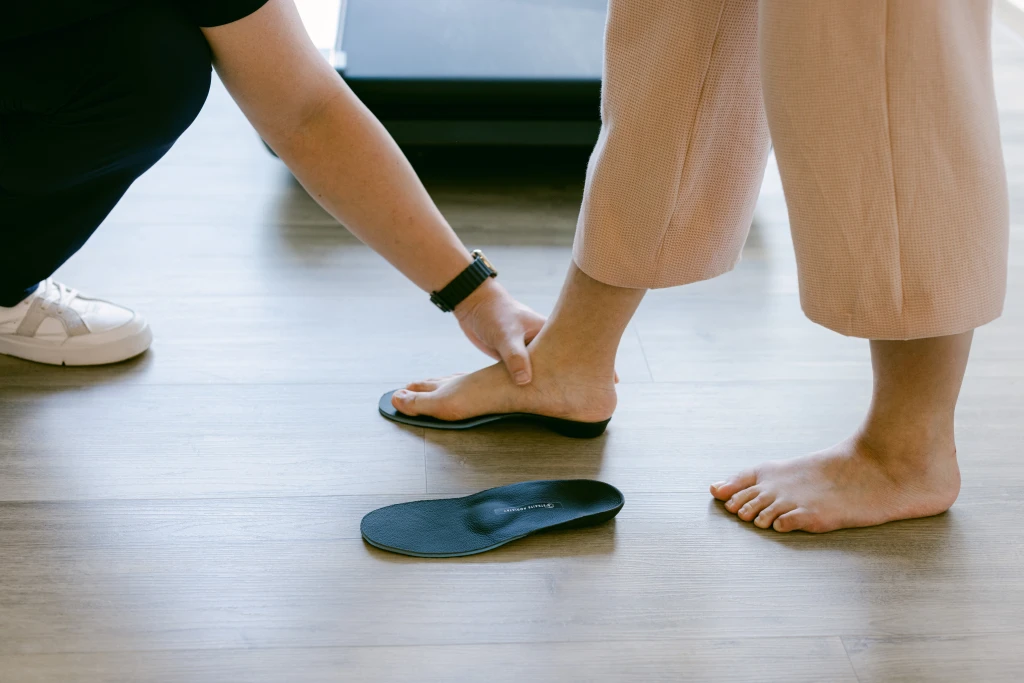
- Custom insoles (orthotics): Designed to distribute pressure and, when appropriate, reduce excess pronation for more efficient mechanics.
- Extracorporeal Shockwave Therapy (ESWT): For stubborn cases where progress has stalled, ESWT aims to stimulate repair in the irritated tissue.
When conservative care isn’t enough
Where symptoms persist despite consistent care, a steroid injection might offer brief respite, though it can weaken the fascia and raise tear risk. Surgery is uncommon and generally reserved for severe cases such as a complete tear or pain that does not settle after prolonged non-surgical care. A referral to an orthopaedic surgeon is arranged where this pathway becomes appropriate.
Preventing Plantar Fasciitis
Prevention consolidates the gains. Replace worn shoes and use supportive house footwear on hard floors. Increase training gradually and mix in lower impact sessions. Keep calves flexible and ankles mobile, and practise simple foot strength work regularly. After any long periods of rest, ease into the first few steps to let tissues warm. Maintaining a healthy weight also reduces day-to-day strain. Taken together, these habits reduce load, build resilience, and lower the chance of a setback.
Have Your Plantar Fasciitis Pain Managed at Straits Podiatry
When heel pain starts to dictate your day’s activities, you don’t have to guess your way through it. At Straits Podiatry we first confirm the diagnosis, then connect the dots between your activities, choice of shoes, calf flexibility, foot mechanics, and the surfaces you tread on the most, so the reasons behind your pain are clear.
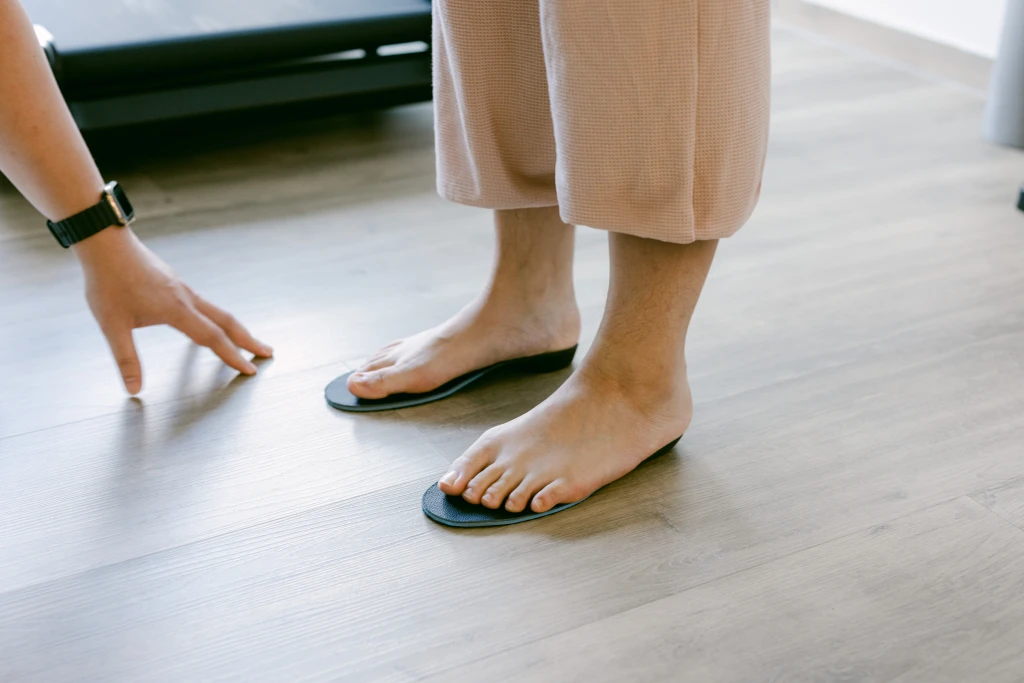
From there, we design a practical plan that fits daily life. This will include footwear guidance, custom insoles to improve mechanics, sensible activity pacing, and simple at home routines to ease strain. If symptoms persist, we can also discuss focused ESWT as part of a comprehensive approach. Speak with our team or book a consultation for a thorough assessment and a tailored path back to comfortable movement today.
Frequently Asked Questions About Plantar Fasciitis
How long does plantar fasciitis take to settle?
Recovery varies with how long the pain has been present and how consistently the load is managed. Many people notice meaningful relief within a few weeks of steady care that combines stretching, supportive footwear, and activity pacing, while longer-standing cases can take several months to settle fully because the tissue remodels slowly. Progress tends to be gradual rather than sudden, so a temporary flare after a busy day does not mean the plan has failed. A podiatrist can set realistic milestones for your pattern of pain and adjust the plan if progress stalls, and where recovery has plateaued, options such as shockwave therapy can be considered.
Who is at risk of heel pain from plantar fasciitis?
Anyone can develop plantar fasciitis, although it is more common in adults. Risk rises between 40 and 60 years of age, especially after a recent increase in activity or repetitive impact exercise. In addition, long hours on hard floors and worn or unsupportive footwear add strain across the day. Finally, foot mechanics such as flat feet or high arches, tight calves with limited ankle movement, higher body weight, reduced heel fat pad cushioning, or a leg length difference can further tip the balance.
What are the types of plantar fasciitis?
Clinically, plantar fasciitis is described as acute or chronic. Acute plantar fasciitis is short term irritation that follows a sudden spike in load or an incident, with symptoms appearing over days to a few weeks. Chronic plantar fasciitis develops when repeated strain outpaces recovery over months, so pain tends to wax and wane and often returns after activity. A sudden snap with severe pain suggests a plantar fascia tear rather than routine plantar fasciitis and needs immediate attention.
What are the symptoms of plantar fasciitis?
Most feel a sharp pain under the heel. It is typically worst with the first few steps after waking or after any spell of rest such as a long sit, then eases as you move. As the day goes on, the discomfort often returns as a dull ache after longer walking or standing, and pressing on the tender spot near the front of the heel usually reproduces it. In longer standing cases there might be swelling or a burning or tingling sensation, but if you feel a sudden snap with severe pain and difficulty bearing weight, seek immediate assessment as this might be a tear.
Why see a podiatrist for plantar fasciitis heel pain?
Heel pain has many possible causes, so seeing a podiatrist helps you get the right diagnosis from the start. They specialise in the foot and can distinguish plantar fasciitis from conditions such as Achilles tendonitis, heel bursitis, or a stress fracture of the heel bone, which need different care. While a family doctor can assess you, pinpointing the exact source often requires a detailed review of foot mechanics, calf flexibility, footwear, and the surfaces you tread on regularly. A podiatrist then provides a clear care plan with footwear guidance, custom insoles, sensible activity pacing, and shockwave therapy if symptoms persist.