
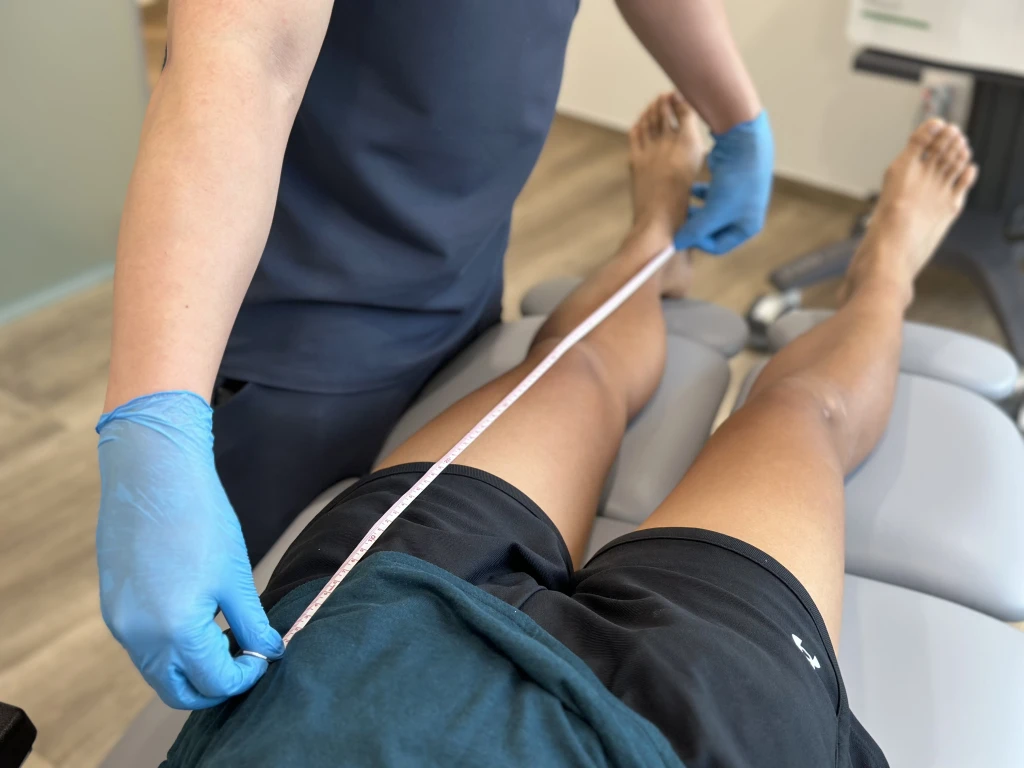
You keep getting a stubborn one-sided pain, in the foot, knee, hip, or lower back, that does not respond to treatment aimed at the sore spot itself. Sometimes the real driver sits further up the chain, in one lower limb being functionally or structurally longer than the other. A difference of less than 1 cm is common and often silent, but as the gap grows the body compensates to keep walking level, and that compensation puts uneven stress on the foot, knee, hip, and lower back. This is a leg length discrepancy, and it can drive recurring leg pain by altering how load is shared between the two sides.
In Singapore, leg length discrepancy is frequently identified in patients with recurrent runner’s knee, persistent plantar fasciitis on one side only, or unexplained one-sided lower back pain. It can be present from birth, develop after a fracture or surgery, or appear gradually through structural changes such as scoliosis. The right approach depends on whether the difference is structural (a real bone-length difference) or functional (a mechanical asymmetry), which is why careful assessment matters.
Symptoms of Leg Length Discrepancy
- Persistent one-sided foot, ankle, knee, hip, or lower back pain.
- Asymmetric shoe wear, with one shoe wearing down faster or in a different pattern.
- A noticeable hip or shoulder tilt when standing or walking.
- Limping, tip-toeing on one foot, or rolling one foot inward more than the other.
- Pain or fatigue on one side after walking, standing, or running.
- Recurrent unilateral musculoskeletal injuries that do not respond to local treatment.
Types of Leg Length Discrepancy
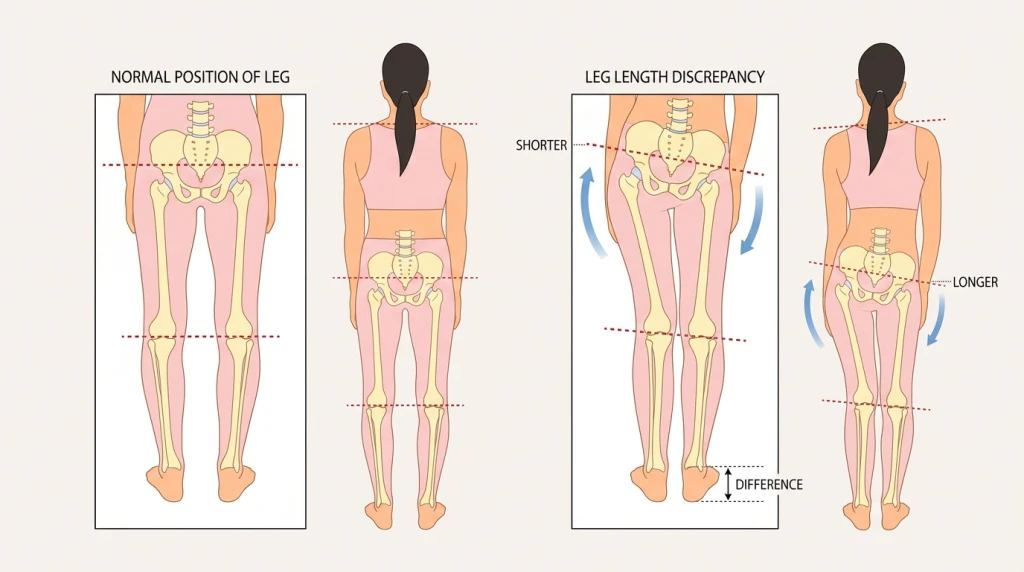
There are two main types, and many patients have a combination of both.
Structural leg length discrepancy
This form is a real difference in the length of the femur, tibia, or fibula. It is usually fixed and cannot be corrected by manipulation, stretching, or bracing. It is addressed through external compensation such as shoe lifts.
Functional leg length discrepancy
This form is an apparent difference where the bones are the same length, but pelvic tilt, scoliosis, muscular imbalance, or asymmetric foot posture (such as one flatter foot) makes one leg behave as if it is longer or shorter. This may be partially or fully correctable when the underlying driver is addressed.
The most complex cases combine both, which is why a careful assessment is needed before treatment is planned.
Causes of Leg Length Discrepancy
What Causes Leg Length Discrepancy?
Causes fall into several categories. Some are present from birth, including normal developmental asymmetry, congenital hip conditions, and skeletal dysplasias. Others develop later, including childhood diseases of the hip such as Legg-Calve-Perthes disease, avascular necrosis, neuromuscular conditions such as cerebral palsy or polio, bone tumours, and previous bone infections. Trauma is a common driver. Healed leg fractures (femur, tibia, or fibula) can leave a small length difference, and orthopaedic surgery (such as hip or knee replacement, or foot and ankle reconstruction) can introduce or change a discrepancy.
Functional causes include scoliosis, flat feet (especially when only one side is flat), muscular imbalance around the hip and pelvis, and chronic postural patterns that produce a tilted pelvis.
Who Carries a Higher Baseline Risk?
- People with a history of childhood hip conditions or limb fractures.
- Patients after hip or knee replacement, or foot and ankle reconstruction.
- Those with scoliosis or significant postural asymmetry.
- People with asymmetric foot postures (such as one flat foot and one normal arch).
- Athletes or runners with stubborn one-sided overuse injuries.
Conditions Commonly Linked with Leg Length Discrepancy
Because LLD changes how each leg loads the ground, it is often a hidden driver behind one-sided overuse problems. Conditions commonly linked include corns and calluses, bunion on one side, flat feet, plantar fasciitis, posterior tibial tendon dysfunction, Achilles tendonitis, runner’s knee, piriformis syndrome, and sciatica or lower back pain. When a one-sided condition keeps returning despite local treatment, a leg length assessment is worthwhile.
Treating and Preventing Leg Length Discrepancy
Treatment depends on the size of the discrepancy, whether it is structural or functional, and how much symptom load it is producing. Many small discrepancies do not need treatment at all and only become relevant if symptoms develop.
For structural discrepancies, the primary treatment is to add length back to the shorter side externally. Shoe lifts (added inside the shoe or onto the outside of the sole, depending on the size of the lift needed) are the most common approach. Customised foot orthoses can be built with a heel raise integrated into the device, which keeps the correction discreet and consistent between shoes. For functional discrepancies, treatment focuses on the underlying driver: postural correction, physiotherapy to address muscular imbalance and pelvic alignment, and radial pressure wave therapy to release tight or shortened muscles contributing to the asymmetry. Footwear modifications can help where one side has different cushioning or support needs. Surgical leg-lengthening procedures are reserved for large discrepancies (typically over 2.5 to 3 cm) where conservative compensation is inadequate.
Prevention is most relevant after fractures or surgery, where careful rehabilitation can reduce the residual asymmetry. For chronic functional discrepancies, regular stretching and strengthening to maintain balanced muscle length around the hip and pelvis helps prevent progression.

Have Your Leg Length Discrepancy Managed at Straits Podiatry
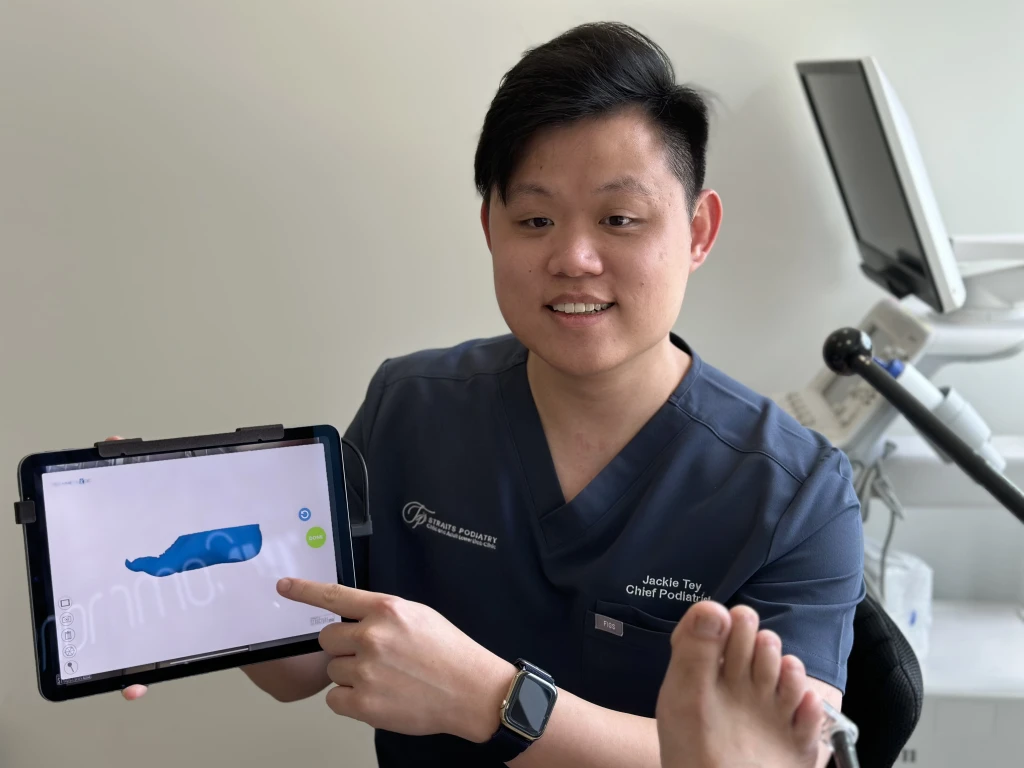
Straits Podiatry assesses leg length discrepancy with a structured biomechanical and gait examination, footwear review, and (where indicated) standing imaging to quantify the difference. Your plan may include gait analysis, custom orthotics with integrated heel raises, shoe lift modification, radial pressure wave therapy for tight compensatory muscles, and a structured rehabilitation programme with our physiotherapist.
Speak with Straits Podiatry or book a consultation for an assessment and a tailored approach to manage your leg length discrepancy.
Frequently Asked Questions About Leg Length Discrepancy
How big a difference is significant?
Small differences under 1 cm are common and often do not cause symptoms. Differences between 1 cm and 2 cm are more likely to drive musculoskeletal complaints and usually benefit from correction. Differences over 2 cm typically need more substantial compensation, and very large differences (over 2.5 to 3 cm) sometimes require surgical consideration. The threshold for treatment is symptoms rather than the millimetre figure alone.
How is leg length discrepancy diagnosed?
Initial assessment uses a clinical examination including pelvic alignment, gait observation, shoe wear pattern, and tape measurements from defined landmarks. Where a more precise measurement is needed, a standing X-ray or scanogram can quantify the difference accurately. Distinguishing structural from functional discrepancy matters too, since the treatment pathway differs.
Can a shoe lift fix the problem?
For structural discrepancies, yes, in the sense that it compensates for the difference and removes the asymmetric loading that drives symptoms. The underlying bone-length difference does not change, but the body is no longer fighting it on every step. For functional discrepancies, a shoe lift on its own often does not solve the problem and may even make it worse. The driver of the asymmetry needs to be addressed instead.
Will leg length discrepancy cause arthritis?
Long-standing significant discrepancies can contribute to asymmetric joint loading, which over time may accelerate wear in the hip, knee, or lower back on the affected side. Small discrepancies that are asymptomatic are not a clear risk factor. Addressing meaningful symptomatic discrepancies earlier rather than later helps reduce long-term joint stress.
Do I need to wear a shoe lift forever?
For structural discrepancies, the lift is typically a long-term solution because the bone-length difference does not change. The good news is that once integrated into custom orthotics or modified footwear, it becomes invisible and routine. For functional discrepancies, the lift is often a stepping stone while underlying postural or muscular drivers are addressed, and may be reduced or removed once the mechanics improve.