
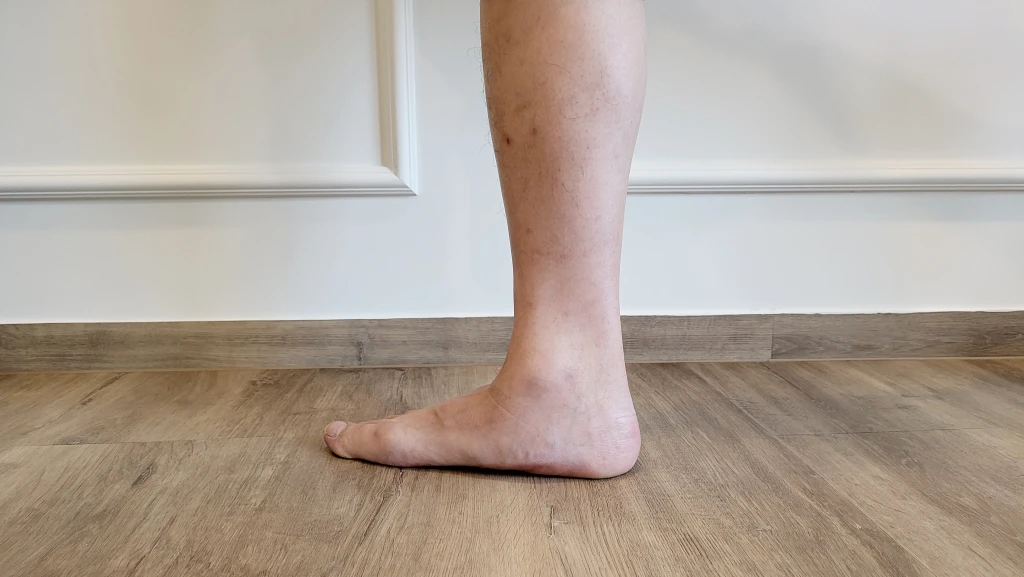
You catch a glimpse of your foot in a mirror at the pool and notice the inner border sits almost flat against the tiles, with no gap where the arch should be. Standing all day at work leaves the inside of the foot and the arch aching, your everyday shoes wear down faster along the inner edge, and by evening the tiredness has crept up into your calves and knees. Many people live with flat feet for years without a single symptom, so a low arch on its own is not a problem to fix.
Flat feet, medically termed pes planus, is a foot posture where the arch on the inside of the foot is lower than usual or fully collapsed, so that in standing a larger area of the sole makes contact with the ground. It is common across Asian populations. In young children a flat arch is often a normal stage that develops with age. What matters is not the shape itself but whether the arch is doing its job. When a flat foot starts to load the knee, hip, and lower back differently, or the arch is collapsing in an adult, identifying the type early keeps a cosmetic feature from turning into a painful one.
Symptoms of Flat Feet
Many flat feet stay silent. When symptoms do appear, they usually build gradually and settle around the arch and inner ankle before spreading up the limb.
- Aching along the arch or inner ankle: the most common complaint, typically worse after long periods of standing or walking and easing with rest.
- Swelling on the inside of the foot and ankle: particularly after a long day on your feet, tracking the line of the posterior tibial tendon.
- Foot fatigue: the legs and feet tire faster than expected during walking, standing, or exercise.
- Uneven shoe wear: the inner edge of the sole and the medial upper break down faster, and the heel counter starts to lean inward.
- Pain further up the chain: altered alignment can shift load to the knees, hips, or lower back, so discomfort sometimes shows there rather than in the foot itself.
- Difficulty with footwear: a splayed or widened forefoot can make well-fitting shoes harder to find.
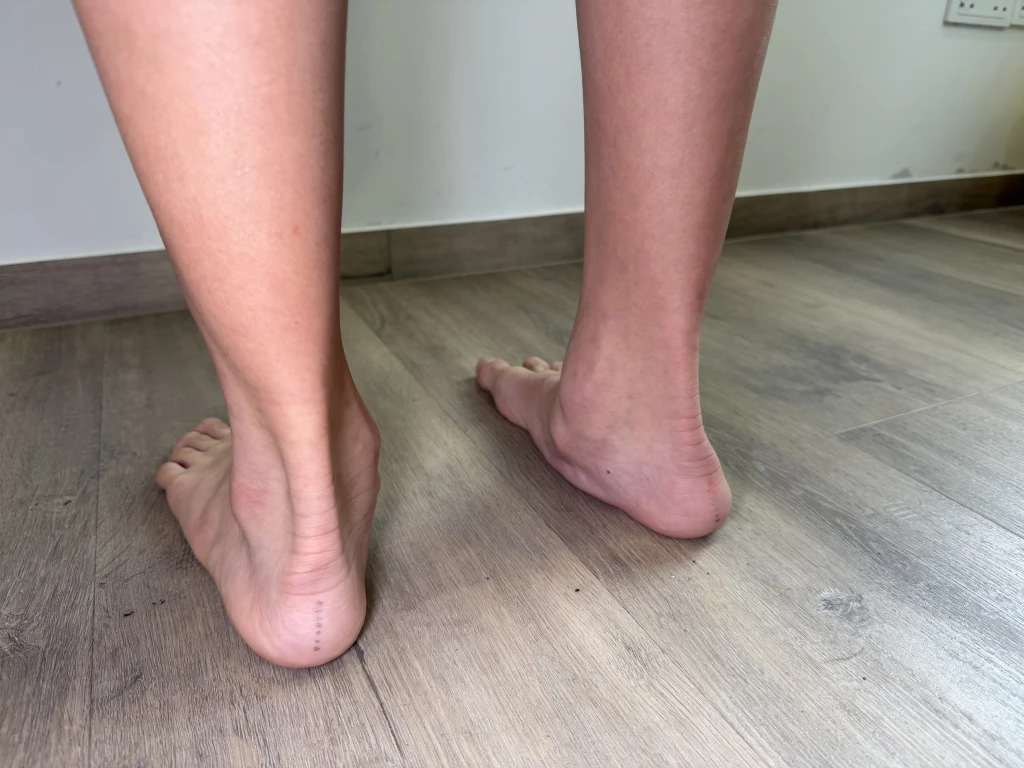
Types of Flat Feet
Flat feet are not a single condition. The type determines how the foot behaves under load and how it is managed.
Flexible flat feet
The most common type. An arch is visible when the foot is off the ground or on tiptoe, then flattens as soon as the person stands and takes weight. Flexible flat feet are usually painless and respond well to conservative support when symptoms do appear.
Rigid flat feet
The arch stays flat whether the foot is loaded or not, and does not reform on tiptoe. A rigid flat foot is more likely to point to a fixed structural cause, such as a tarsal coalition, and often warrants closer assessment and imaging.
Congenital flat feet
A flat arch present from birth. In most infants and toddlers this is a normal developmental stage: flexible flat foot is found in about 44% of 3 to 6 year olds and falls from 54% at age three to 24% by age six. A small number of cases are structural and need early attention, such as congenital vertical talus, where the talus bone sits in a fixed abnormal position and creates a rigid deformity.
Acquired adult flatfoot
An arch that was previously normal collapses during adulthood, usually because the tendons and ligaments supporting it have weakened over time. The most common driver is posterior tibial tendon dysfunction, where the main tendon holding up the arch gradually fails.
Causes of Flat Feet
A flat arch develops either because it never formed fully in childhood or because the structures that hold it up give way later in life.
What causes flat feet?
- Genetics and inherited foot structure: many flat feet are congenital and run in families.
- Posterior tibial tendon weakness: this tendon is the main dynamic support for the arch, and when it is overloaded or degenerates the arch drops.
- Injury: trauma to the foot or ankle, such as a Lisfranc injury or a significant ankle sprain, can damage the structures that maintain the arch.
- Ageing: tendons and ligaments lose stiffness over the years, allowing a gradual arch collapse.
- Higher body weight: extra load passing through the foot adds strain to the arch.
- Pregnancy: hormonal ligament laxity combined with added load can bring on arch flattening, especially where there is an existing predisposition.
- Inflammatory and neurological conditions: rheumatoid arthritis, tarsal coalition, and Charcot foot can each alter the bony and soft-tissue architecture of the foot.
Who carries a higher baseline risk?
- People with a family history of flat feet or generally lax joints.
- Adults over 40, particularly women, in whom posterior tibial tendon dysfunction is most common.
- People carrying higher body weight or who are pregnant.
- Those with diabetes or an inflammatory arthritis affecting the feet.
- People whose work keeps them standing or walking on hard floors for long stretches, a common pattern in Singapore retail, healthcare, and service roles.
Conditions Commonly Mistaken for Flat Feet
A low-looking arch is easy to label as simple flat feet, but several distinct conditions share the appearance and need to be told apart, because their management differs. The patterns most often confused with pes planus are below.
Posterior tibial tendon dysfunction
When the arch has dropped in adulthood, the driver is frequently posterior tibial tendon dysfunction rather than a lifelong flat foot. The clue is a progressive, often one-sided collapse with swelling and tenderness along the inner ankle, and difficulty performing a single-leg heel raise. It is really the cause of an acquired flat foot rather than a separate look-alike, which is why it is assessed specifically.
Tarsal coalition
Tarsal coalition is an abnormal bony or fibrous bridge between two of the tarsal bones, and it is a common reason for a rigid, painful flat foot in adolescents and young adults. The foot stays flat on tiptoe and side-to-side movement of the hindfoot feels stiff and sore. Because the restriction is structural, it is confirmed on imaging rather than assumed from the flat appearance alone.
Accessory navicular
An accessory navicular is an extra bone or ossicle on the inner side of the navicular, present in a minority of people. It can create a bony prominence and inner-arch pain that mimics a symptomatic flat foot, and it often sits alongside posterior tibial tendon irritation because the tendon attaches nearby. Tenderness localised to that prominence helps separate it from a general flat foot.
Charcot foot
In someone with diabetes and reduced foot sensation, a collapsing arch can be an early Charcot foot rather than ordinary flat feet. The warning signs are a warm, swollen, sometimes red foot that is changing shape relatively quickly, with little or no pain. This is a situation that needs prompt assessment, because it is managed very differently from a mechanical flat foot.
Physiological low arch and overpronation
Not every low arch is a clinical problem. A physiological low arch or a mildly overpronating foot pattern can look flat while functioning normally and causing no symptoms at all. The distinction matters because a painless, well-functioning flat foot usually needs monitoring and sensible footwear rather than active management.
Treating and Preventing Flat Feet
Treatment for flat feet is guided by the type of foot and the symptoms it produces, not by the flat appearance on its own. The principle is conservative first: support the arch, reduce the strain travelling up the limb, and strengthen the muscles and tendons that hold the arch, so that most adults settle without surgery. A painless flat foot generally needs no active treatment beyond sensible footwear.
Conservative treatment
Conservative care usually combines footwear and orthotic support with rehabilitation and load management, tailored to how the individual foot is loading.
- Supportive footwear: shoes with a firm heel counter, a supportive midsole, and adequate arch contour reduce strain across the foot. In Singapore’s climate, an unsupportive slipper or thin flat sandal worn all day is a common aggravator, so a structured sandal or shoe for long days on your feet helps.
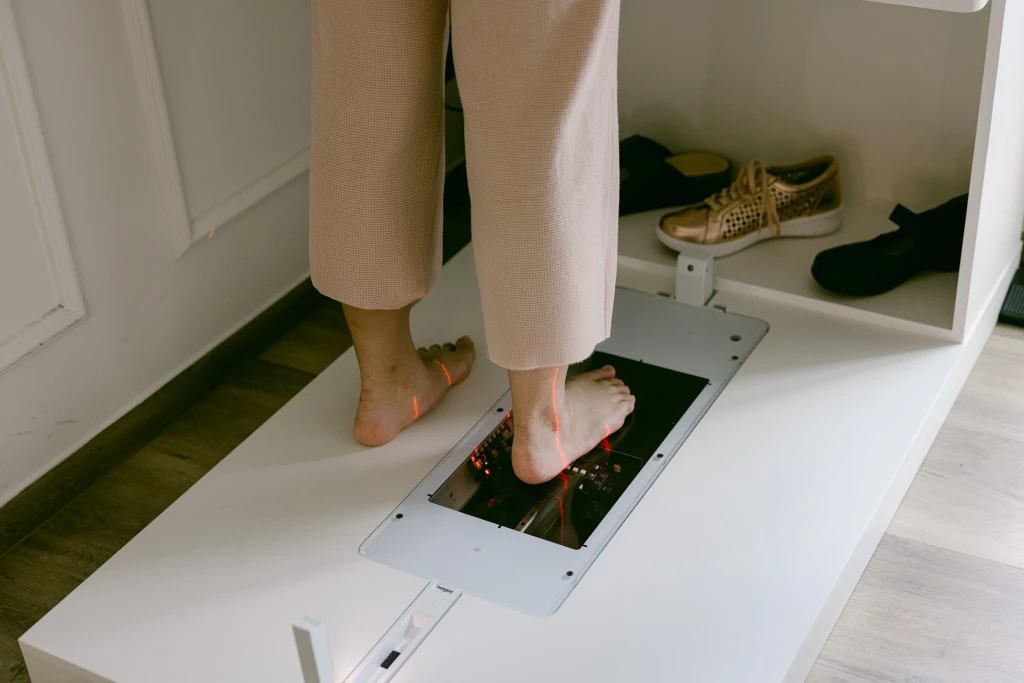
- Custom orthotic insoles: instead of just supporting the arch, well-designed custom orthoses control the rate of pronation and redistribute pressure across the sole. Typically built with a medial skive, medial flare, or a varus rearfoot posting (depending on severity), the orthoses aim to generate a supinating force through the foot, which is particularly useful where a weak posterior tibial tendon is driving the collapse.
- Rehabilitation and strengthening: targeted stretching and strengthening of the calf, Achilles, and posterior tibial tendon improve the foot’s dynamic support, and our physiotherapist can guide progression where the supporting muscles need rebuilding.
- Activity and weight management: modifying high-impact loading during flare-ups and keeping body weight in a healthy range both reduce the load passing through the arch.
- Pain and inflammation control: short-term measures such as ice after activity, and simple analgesia or anti-inflammatory medication where appropriate, can settle a symptomatic phase while the supportive measures take effect.
When conservative care isn’t enough
Where symptoms persist despite footwear, orthoses, and rehabilitation, or where there is significant tendon dysfunction or a fixed structural deformity, a surgical opinion may be appropriate. A referral to an orthopaedic surgeon is arranged for that assessment. Surgery is a last resort rather than a first option. It is considered mainly when pain and walking difficulty are not controlled by conservative care, or when a rigid deformity is progressing. The procedures used depend on the underlying problem and can involve tendon repair, realignment of the bones, or fusion of a joint in advanced cases. Most adults never reach this stage with timely conservative management.
Preventing Flat Feet
Not every flat foot can be prevented, since many are inherited, but a few habits reduce the chance of a symptomatic collapse and keep an existing flat foot comfortable. Choose footwear with genuine structure for long days rather than flat, unsupportive slippers. Build and maintain calf and foot strength, and progress running or standing loads gradually rather than in sudden jumps. Keep body weight in a healthy range to limit the load through the arch, and if you have diabetes, keep to your regular foot screening so that any early change in foot shape is caught quickly. If you notice a new or progressing arch collapse, inner-ankle swelling, or foot pain that is not settling, have it assessed early rather than waiting for it to worsen.
Have Your Flat Feet Managed at Straits Podiatry
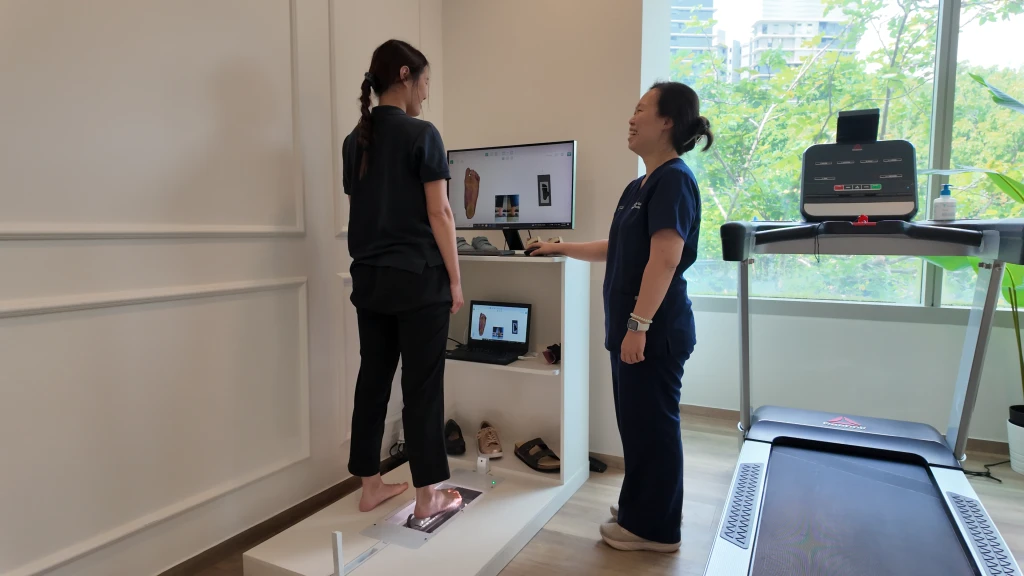
When flat feet start producing symptoms, the priority is identifying which type of flat foot you have and how it is loading the rest of the lower limb. Our podiatrist assesses whether the arch is flexible or rigid, checks the strength of the posterior tibial tendon, and reviews your footwear and gait, so the plan is matched to your specific foot rather than a generic flat-feet protocol.
From there, care is built around your daily routine. Depending on what the assessment shows, it can include gait analysis, custom orthotic insoles, footwear guidance, supramalleolar orthoses for paediatric cases, and structured rehabilitation with our physiotherapist where the supporting muscles and tendons need strengthening. If your arch has flattened or your feet ache with standing and walking, speak with a podiatrist in Singapore or book a consultation for an assessment.
Frequently Asked Questions About Flat Feet
How do I know if I have flat feet?
Three simple home checks give you a good indication. First, wet your feet and stand on a dry surface. A normal footprint shows a clear inward curve along the arch, while a flat foot leaves a full or almost full impression. Second, look at your regular shoes from behind: a flat foot tends to wear the inner edge of the sole faster and tilts the heel counter inward. Third, stand and look at your heels from behind: a flat foot usually angles inward. These checks flag a low arch but do not tell you whether it needs management, which is what an assessment is for.
Are flat feet a problem if they do not hurt?
Not always. A painless, flexible flat foot that functions well often needs nothing more than sensible, supportive footwear and occasional monitoring. It becomes worth assessing when pain appears in the arch, inner ankle, knee, hip, or lower back, when the arch is collapsing progressively in an adult, or when the foot is stiff and flat even on tiptoe.
Can flat feet develop later in life?
Yes. An arch that was previously normal can drop in adulthood, most often because the posterior tibial tendon weakens with age, injury, higher body weight, or an inflammatory condition. A newly developing or one-sided arch collapse in an adult is worth having assessed early, because catching posterior tibial tendon dysfunction before the deformity becomes fixed keeps management conservative.
Can flat feet be corrected permanently?
It depends on age and cause. In children, the developing foot can respond to guided support such as supramalleolar orthoses in selected cases. In adults, the bony structure is set, so conservative care manages symptoms and supports function rather than rebuilding the arch. Permanent structural change generally only comes from surgery, which is reserved for a small minority of cases. For most adults the realistic and effective goal is comfortable, well-supported movement.
Do flat feet cause knee, hip, or back pain?
They can. When the arch collapses, the alignment of the leg above it changes, and that altered loading can contribute to knee, hip, or lower back discomfort in some people. It is not inevitable, and many flat feet never cause trouble further up the chain, but where lower-limb pain and a flat foot occur together, assessing how the foot is loading the limb is a sensible step.
Are custom orthotics worth it for flat feet?
They can be, when prescribed correctly. A custom orthosis is designed from your specific foot and gait to support the arch and control the rate of pronation, which is especially useful where a weak tendon is driving the collapse. They work best as part of a plan that also addresses footwear and strength, and a podiatrist assessment is what tells you whether an orthosis is the right tool for your foot rather than an off-the-shelf insole.
Related Articles