High Arch Feet Symptoms, Causes, and Management
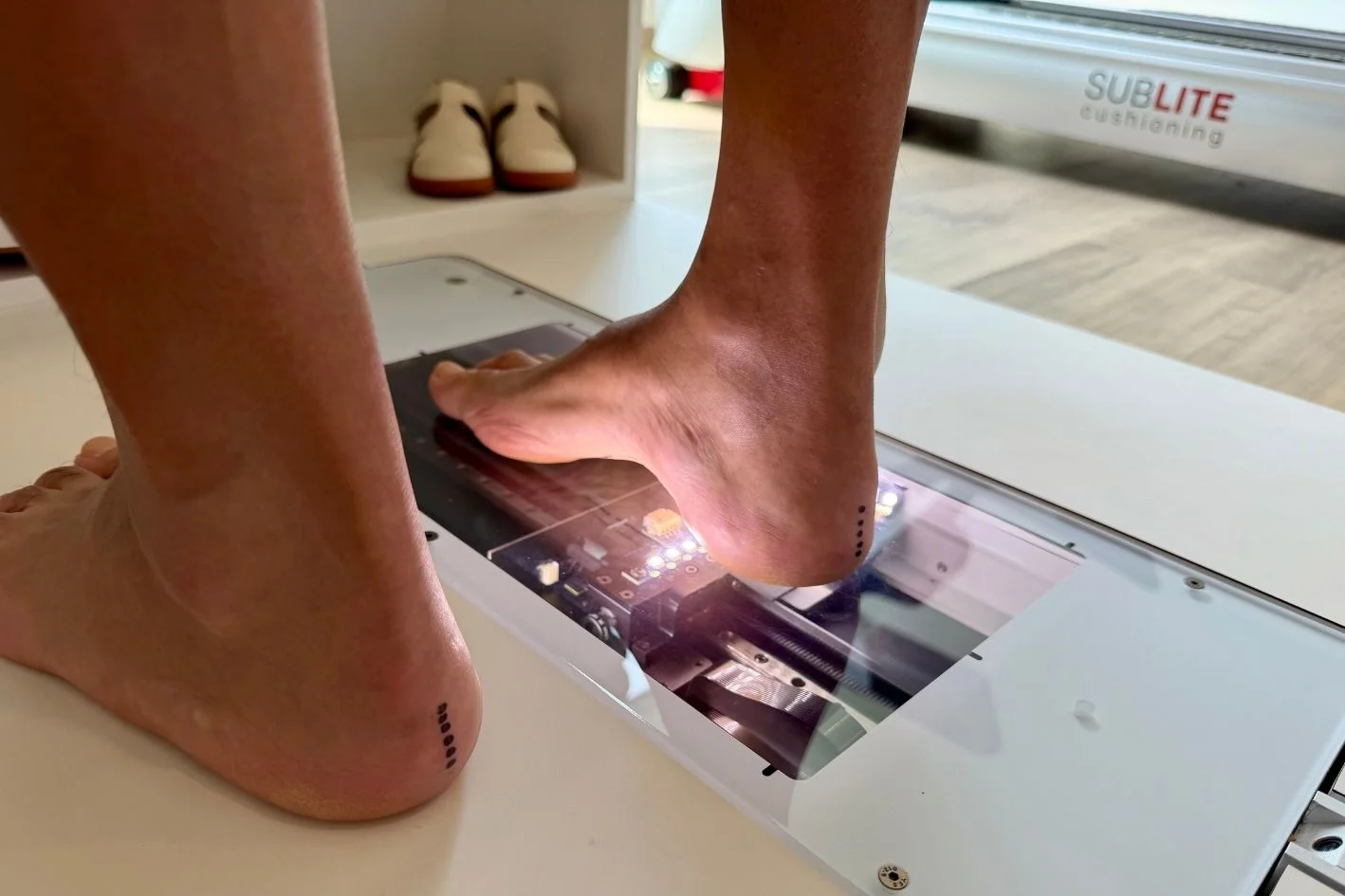
You might first notice it when you look down and realise the foot arch seems more raised than usual. As that shape becomes harder to ignore, the foot can also start to feel less comfortable under load. The ball of the foot might ache after standing or walking, the outer border might feel more loaded, or the ankle might seem less steady on uneven ground.
This is part of what defines high arch feet, also known as pes cavus. Because the arch sits higher than usual, less of the foot meets the ground during weightbearing. As a result, body weight is spread across a smaller area, so certain parts of the foot can end up taking more force. The foot can also be less flexible, which reduces how well it absorbs shock during walking and other weightbearing activity.
When the foot handles force this way, extra strain can build through the foot and ankle over time. This is why high arch feet can contribute to pain, instability, and other related problems rather than simply affecting foot shape alone. Even so, the effects can vary from person to person. Some people are born with high arches and develop few issues, while others might find symptoms becoming more noticeable over time, especially when an underlying medical or neuromuscular cause is involved. With that in mind, it helps to look at the symptoms associated with high arch feet next.
Symptoms of High Arch Feet
Symptoms of high arch feet can show up across different parts of the foot and ankle rather than in one area alone. Pain might develop in the heel, arch, or ball of the foot, while some people also notice ankle pain or swelling after activity. Early on, these symptoms might still settle with rest, which is why they can be mistaken for a minor strain or dismissed as part of an unusual foot shape.
And as the condition progresses, it can take one of two main forms.
- Pes cavovarus – this is the most common variation. It combines high arches with an inward tilting heel. The big toe is flexed to point down, which helps make the whole foot arch more. It’s also called claw foot.
- Pes calcaneocavus – this is a less common variation. In this form, the heel is flexed upward while the forefoot is flexed downward, making the arch highest toward the back. It is sometimes called posterior pes cavus.
As symptoms become more persistent, pain might last longer, return more easily, or no longer settle as well with rest. The ankle might also start feeling less steady, especially during walking or activity. When this happens, high arch feet shouldn’t be ignored, particularly as the same altered loading pattern can contribute to a wider range of foot and ankle problems over time.
Conditions Associated with High Arch Feet
Over time, high arch feet can spread load less evenly through the foot and ankle. As pressure builds through a smaller contact area and shock absorption becomes less effective, added strain can develop through nearby structures. This can contribute to a wider range of related conditions:
- Shin splints – altered foot mechanics can affect how force travels further up the lower limb during walking or exercise.
- Ankle sprains – the ankle can feel unstable and roll more easily. This can result in a recurrence of sprains.
- Peroneal tendonitis – the peroneal tendons along the outer side of the ankle can become irritated under repeated strain.
- Achilles tendonitis – altered loading through the heel and ankle can also place added stress on the Achilles tendon.
- Plantar fasciitis – strain through the plantar fascia can contribute to pain under the heel, especially when shock absorption is less effective.
- Metatarsalgia – extra pressure through the forefoot can irritate the ball of the foot and lead to pain that becomes more noticeable during standing or walking.
- Metatarsal stress fractures – repeated forefoot overload can place the metatarsals under strain. Over time this might lead to a stress fracture.
- Morton’s neuroma – forefoot overload can also irritate the nerve between the toes, leading to burning, tingling, or sharp pain.
- Plantar plate injury – increased strain beneath the forefoot can overload the soft tissue structures that help support the toes.
- Claw, mallet, and hammer toes – progressive structural change can affect toe posture over time.
- Foot corns and calluses – areas under higher pressure can gradually develop thicker skin, especially over weightbearing points.
Causes of High Arch Feet
High arch feet don’t always develop for the same reason. In some people, the raised arch is present from the start. In others, it reflects an underlying issue that affects how the foot is shaped, supported, or moves over time. With this in mind, it helps to first look at the main causes, then at those who might carry a higher baseline risk.
What Causes High Arches in Feet?
- Some people are simply born with higher arches, even without another underlying condition.
- Some babies are born with contractures that developed in the womb, and conditions such as clubfoot can be a contributing factor.
- Hereditary neuromuscular disorders such as Charcot-Marie-Tooth disease, muscular dystrophy, and spina bifida occulta can gradually alter muscle balance and foot shape over time.
- Other neurological or neuromuscular conditions, such as cerebral palsy and post poliomyelitis syndrome, can also be associated with high arch feet.
- Acquired neurological problems such as diabetes related neuropathy, spinal tumours, or stroke can also lead to high arches later in life.
- Injuries and contractures can also play a part. Reduced movement after injury, tissue tightening, or altered bone alignment can gradually pull the foot into a higher arched position.
Who Carries a Higher Baseline Risk?
- Children whose high arches appear early or become more obvious with growth can carry a higher baseline risk, as this might be one of the earlier signs of an underlying neuromuscular disorder.
- People with high arches on both sides, especially when the shape seems to run in the family, might be more likely to have an inherited cause rather than an isolated foot posture.
- People with known neurological or neuromuscular disease can also carry a higher baseline risk, as these conditions might affect nerve signalling or muscle balance over time.
- People whose foot shape changes after injury, immobility, or tissue tightening might also be at higher risk, particularly when the arch develops as part of a more structural or contracture related change.
Need Help? See A Podiatrist Today
Managing and Limiting Progression of High Arch Feet
Managing high arch feet usually starts with improving how pressure is distributed through the foot, while giving the ankle and lower limb better support during walking and daily activity. In many cases, conservative care can help relieve pain, improve stability, and reduce stress on the structures that are taking more load. Early management matters not only for symptom relief, but also because recurring pain, instability, or visible shape changes shouldn’t be ignored.
Some common ways to manage high arch feet include:
- Changing to more appropriate footwear to improve day to day support, comfort, and walking stability.
- Using customised orthotics to increase contact area, redistribute pressure, and improve how force passes through the foot.
- Using an ankle-foot orthosis (AFO) in selected cases, especially when an underlying neuromuscular condition is also affecting foot control or ankle stability.
- Going for physiotherapy to improve lower limb strength, flexibility, and muscle balance over time.
- Reducing or pausing the activities that keep aggravating the area, especially running, jumping, marching, or other repeated loading through the lower legs.
- Taking anti-inflammatory medication such as non-steroidal anti-inflammatory drugs (NSAIDs) if advised, to help temporarily relieve any pain and inflammation.
To help limit further progression, it’s also worth paying closer attention to the factors that might allow the foot shape or its related problems to worsen over time:
- Keeping up with the recommended footwear, prescribed customised orthotics, or ankle support rather than using them only when symptoms flare.
- Reviewing footwear regularly and replacing pairs that are worn out, unsupportive, or no longer helping to control load well.
- Staying consistent with stretching, strengthening, and physiotherapy-based exercises, especially when muscle imbalance or tight tissues are part of the problem.
- Having recurring pain, instability, or pressure points reviewed early rather than waiting for symptoms to become more established.
- Monitoring children and adults with known neuromuscular conditions more closely, especially when foot shape or walking pattern begins to change.
Finally, it helps to be clear about what conservative care can and can’t do. Footwear changes, orthotics, and other supportive measures don’t correct the high arch deformity itself, and the only way to correct the deformity is through surgery. Even so, non-surgical management can still play a valuable role in reducing pain, limiting progression, and helping you stay active with less disruption. With the right support in place, symptoms often feel more manageable, and movement can start to feel steadier and more comfortable again.
Have Your High Arch Feet Managed at Straits Podiatry
When high arch feet begin changing how load passes through the foot, daily movement can start to feel more demanding than it should. What first seems like a structural quirk can, over time, become more difficult to dismiss as discomfort keeps returning or the foot feels less steady under pressure. At Straits Podiatry, we will first assess how your foot posture is affecting movement, support, and stability, while also looking at whether there are related problems that might need attention.
Once we have a clearer picture of the severity of your high arch feet and how they are affecting you, we can map out a care plan tailored to your needs. This might include footwear guidance, custom orthotics where appropriate, support to improve pressure distribution and stability, physiotherapy, and advice on managing strain through the foot and ankle. Speak with our team or book a consultation for an assessment and a tailored approach to manage your high arch feet.
Frequently Asked Questions About High Arch Feet
When should high arch feet be assessed?
High arch feet should be assessed when pain keeps returning, the ankle feels unstable, pressure points continue building up, or the foot shape seems to be ever evolving. It’s also worth seeking professional advice when recurring problems such as ankle sprains, forefoot pain, or foot corns become harder to manage, as proper assessment by a podiatrist can help clarify what’s driving the symptoms and what support might be most appropriate.
Can high arch feet affect walking or exercise?
Yes, they can. Because high arch feet tend to spread load less evenly and absorb shock less effectively, walking and exercise can gradually start to feel more demanding than they should. As this continues, certain areas might begin taking more strain with each step, while stability on uneven ground can also feel less reliable. In turn, activity that once felt manageable might become harder to sustain comfortably or start bringing back discomfort more easily.
Do high arch feet always need treatment?
Not always. Some people with high arch feet have very few symptoms, so treatment might not be needed straight away. Even so, if pain keeps returning, walking becomes less comfortable, or related problems start developing, it’s worth looking at what kind of support or management might help. In this situation, it’s best to seek advice from a podiatrist, as a proper assessment can help clarify what’s causing problems and what kind of support might be most appropriate.
Can a pair of custom orthotics fix high arch feet?
Not for correcting the deformity itself, as that can only be done through surgery performed by an orthopaedic surgeon. Instead, custom orthotics are used to improve pressure distribution, support stability, and reduce strain on the parts of the foot taking more load. As a result, they can still make walking and daily activity feel more manageable, even though the underlying shape of the foot remains the same. If symptoms keep returning, it’s worth having this assessed so the support used can be matched more appropriately to foot function.
Do children with high arch feet need closer attention?
In some cases, yes. When high arches appear early, become more obvious with growth, or seem to run in the family, it’s worth looking more closely at whether there might be an underlying neuromuscular cause. This doesn’t mean every child with high arch feet has a serious problem. Even so, if the foot shape seems to be changing, walking looks less steady, or balance appears to be affected, it shouldn’t be dismissed too quickly. Because children’s feet are still developing, early input from a podiatrist experienced in paediatric foot care can help clarify whether the posture simply needs monitoring or whether further support should be considered.