
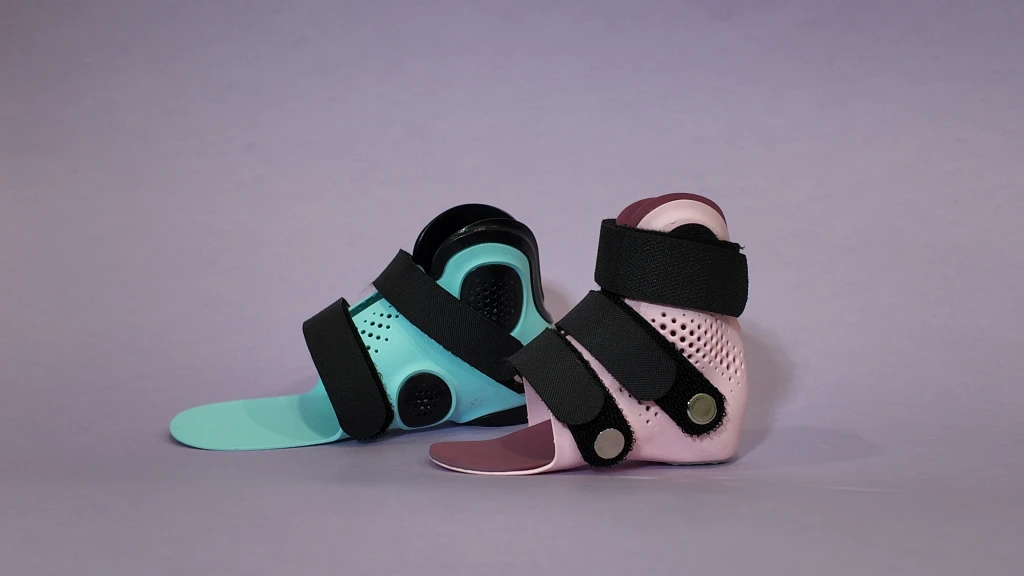
What Is a Supramalleolar Orthosis (SMO)?
A supramalleolar orthosis (SMO) is a custom paediatric device that cradles a child’s heel and wraps just above the ankle bones (the malleoli, which give the device its name), holding the foot in a steadier position while the child stands and walks. It is a lighter, lower-cut relative of the full ankle-foot orthosis (AFO). Where an AFO runs up the lower leg to control the ankle joint, an SMO stops just above the ankle bones, so it is less bulky, easier to fit inside a school shoe, and less visible.
The problem it addresses is instability at the rearfoot. In a child with marked flexible flat feet, the heel tilts inward and the ankle rolls inward (excessive pronation) every time the foot loads. That flattens the arch, unlocks the joints that should give the foot a firm base, and sends a wobble up the leg. Some children compensate by toe walking instead. An SMO holds the heel upright and the rearfoot centred, giving the foot a stable platform so the muscles can develop normal control rather than fighting a collapsing base.
It is worth being honest about what an SMO is not. It does not permanently reshape bone, and not every flat-footed child needs one. Most young children have flexible flat feet that steady on their own as the foot matures.

Which Children Benefit From an SMO?
An SMO is prescribed for the child whose flexible flat foot is unstable enough to interfere with everyday movement, not for a foot that simply looks flat. The assessment looks for a foot that collapses markedly on standing, a heel that tips well out of line, and a child showing the downstream effects.
Situations where an SMO is commonly considered:
- Symptomatic flexible flat feet. The child trips often, avoids longer walks, complains of tired or achy legs after activity, or looks noticeably clumsy compared with peers, and the assessment links this to a foot rolling in heavily.
- Delayed or wobbly motor development. Where a very unstable foot is holding back balance, standing confidence, or the normal progression of walking and running.
- Joint hypermobility or low muscle tone (hypotonia). Children whose joints are very loose or whose muscles are low in tone often lack the passive stability a firmer foot would have.
- Toe walking linked to instability. Some children walk on their toes partly because a flat, mobile foot gives them nothing solid to stand on. Where assessment supports it, an SMO can form part of a wider plan.
- Conditions needing rearfoot control while the foot grows, such as metatarsus adductus or, in more involved cases, patterns managed for club foot.
The consistent thread is function, not appearance. A flat foot that causes no tripping, fatigue, balance problem, or developmental delay usually does not need a device at all, and recognising that difference is a core part of the assessment.
How an SMO Is Assessed, Made, and Fitted
An SMO is a prescribed device, so the value sits as much in the assessment as in the device.
- Biomechanical and developmental assessment. The podiatrist looks at how the child stands and walks, checks whether the arch reappears off weight or on tiptoes, assesses joint mobility and muscle tone, and asks about milestones, tripping, and fatigue. This separates the child who needs a device from the child who needs time and review.
- Casting or 3D scanning. If a device is indicated, the foot’s shape is captured in a corrected position. The correction built into that shape is what holds the heel upright, so this is where the prescription really happens.
- Manufacture to prescription. The SMO is made unique to the child’s foot, with shell height, rigidity, and any additions matched to their pattern. An off-the-shelf insole cannot replicate this, because it is not built to that child’s corrected shape.
- Fitting and footwear check. The device is checked in the child’s own shoe, because an SMO only works if it sits properly inside footwear the child will actually wear. Families are asked to bring the school shoe.
- Break-in and review. Wear is built up gradually, and the fit is reviewed as the child grows. Children’s feet change quickly, so an SMO is monitored and replaced over time, not fitted once and forgotten.
Throughout, the aim is a device the child will tolerate and actually wear, since a well-designed SMO left in the cupboard does nothing.
How Long Does a Child Wear an SMO Each Day?
The guiding principle is consistent use while the child is on their feet, because the SMO only works when the foot is loaded in a corrected position. For most children that means wearing it whenever they are in shoes, which covers school, outdoor play, and walking. Time at home should be as long as possible, depending on how active the child is indoors. SMOs are not worn in bed, in the shower, or for swimming.
The device is not worn all day from day one. We recommend building up wear over the first week or two, starting with shorter stretches, much like breaking in new shoes. The podiatrist sets a wear schedule at prescription and adjusts it as the child improves or grows. Because the foot is still developing, an SMO is usually a support used for a defined stretch of growth rather than worn indefinitely.
SMO vs a Full Ankle-Foot Orthosis (AFO)
Parents often ask how an SMO differs from the taller brace they may have seen. Both guide a child’s gait, but they solve different degrees of the same problem.
An SMO stops just above the ankle bones. It controls the rearfoot and the rolling-in of a flexible foot while leaving the ankle joint free to move, which suits a child who needs steadying rather than restraining. It is lighter, fits more easily inside ordinary shoes, and is less conspicuous.
A full ankle-foot orthosis (AFO) extends up the lower leg and controls the ankle joint itself. It is used where a child needs more control than an SMO can give, for example significant muscle tone changes or a neurological presentation where the ankle position must be managed.
The right device follows the assessment. A child whose flexible flat foot needs a stable base is usually over-braced by an AFO, while a child who needs true ankle control is under-served by an SMO.
When Is a Supramalleolar Orthosis Not Suitable?
An SMO is not the right answer for every child, and recognising when it is not indicated is a core part of a careful paediatric assessment.
- Flexible flat feet that are painless and cause no functional problem. Many young children have flexible flat feet that steady as the foot matures, often by around age three to four. Where there is no tripping, tired legs, poor balance, or delayed motor development, periodic review is usually the reasonable path. Fitting an SMO to a foot that does not need one adds cost and hassle without benefit.
- Rigid or structurally fixed feet. An SMO works by guiding a flexible foot into a better position. A foot that does not correct when assessed off weight may need imaging and a different management plan before any device is considered.
- Neurological or high-tone presentations that need more control. Some children need the ankle-joint control an SMO cannot provide, and are better suited to a full ankle-foot orthosis (AFO) or a plan shared with their wider medical team.
- Skin integrity or wound concerns. Broken skin, active eczema or dermatitis, pressure sores, or reduced sensation over the contact areas need to settle first, because the device holds firm, continuous contact against them.
- A child who cannot tolerate or consistently wear the device. An SMO only helps while it is worn during weight-bearing. Where a child genuinely cannot tolerate it, the plan is revisited rather than forced.
Where an SMO is not suitable, an alternative approach or a period of monitoring is discussed with the family, so no child ends up in a device they do not need.
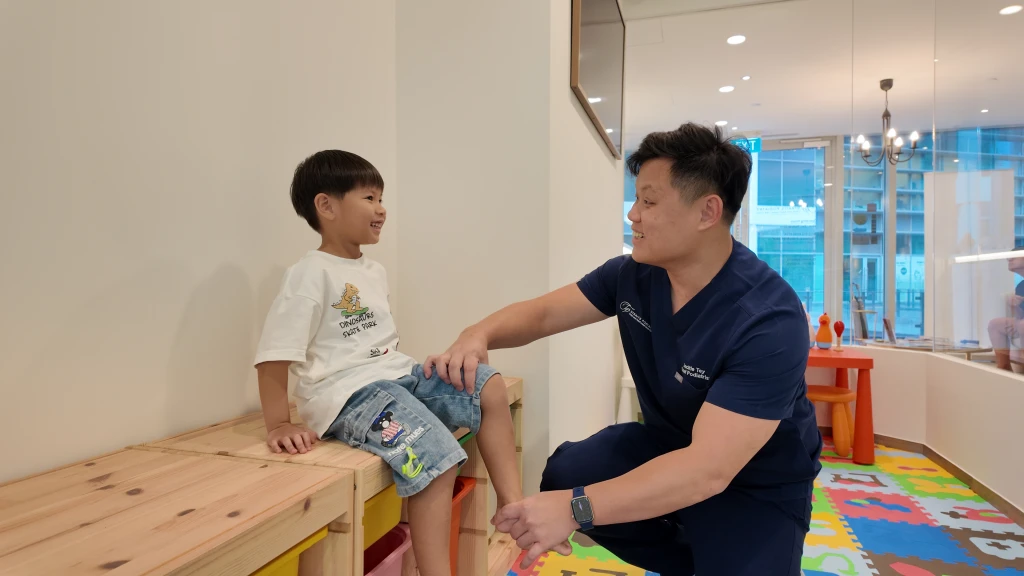
Have Your Child’s Supramalleolar Orthoses Made at Straits Podiatry
Paediatric lower limb care is a niche within podiatry. It takes careful assessment to tell normal childhood development apart from a genuine concern, and that assessment is what separates the children who benefit from an SMO from those who simply need time and review.
Each pair at Straits Podiatry is made unique to your child’s feet and prescribed only after a biomechanical assessment. That assessment draws on our paediatric services, including foot posture analysis with 3D scanning, musculoskeletal assessment, visual gait analysis, and postural assessment, so the prescription matches how your child actually moves rather than how the foot looks at rest. Footwear guidance is given alongside it, and each pair is covered under a limited warranty period. All three clinics offer the full paediatric assessment.
Speak with Straits Podiatry or book a consultation to have your child assessed before any device is recommended.
Frequently Asked Questions About Paediatric Supramalleolar Orthoses
Does my child actually need an SMO, or will the flat feet correct on their own?
Most children have flexible flat feet that steady as the foot matures, often by around age three to four, and those children do not need a device. An SMO helps the narrower group whose flat foot is symptomatic (frequent tripping, tired legs, avoiding distances, poor balance) or so unstable that motor development is held back. A paediatric assessment looks at foot posture, joint mobility, muscle tone, balance, gait, and developmental milestones together, and a device is recommended only where that assessment shows the foot genuinely needs support to develop normally.
At what age can a child start wearing an SMO?
An SMO can be fitted from the age of independent walking onwards, often from around 12 to 18 months, if the assessment shows the foot needs support. There is no minimum age that fits every child, and SMOs are not fitted routinely to toddlers without a clear indication. Older children who have not outgrown a symptomatic flat foot benefit too. Whatever the starting age, the device is reviewed regularly and replaced as the foot outgrows the shell.
Will an SMO fit inside my child’s normal school shoes?
An SMO is less bulky than a full ankle-foot orthosis, with the shell stopping just above the ankle bones, so it fits inside most lace-up or velcro school shoes that have a removable insole. The shoe usually needs to be about one size larger than the child would normally wear. Slip-on shoes, narrow ballet flats, and very low-profile sneakers are usually not compatible. Bringing the school shoe to the fitting lets the device be checked inside the actual shoe.
Do supramalleolar orthoses hurt or feel uncomfortable for my child?
A well-fitted SMO should not be painful. It holds the foot with firm but comfortable contact, and most children adjust within the first week or two as wear is built up gradually. Feeling the device at first is normal. Persistent pain, redness that does not fade, rubbing, or blistering is not expected and means the device needs reviewing rather than pushing through. Because young children cannot always describe discomfort clearly, parents are asked to check the skin when the SMOs come off.
How is an SMO different from a shop-bought insole or arch support?
A shop-bought insole sits flat in the shoe and gives a fixed contour under the arch. It may offer mild comfort, but it cannot control how the ankle rolls in above the foot, which is the actual problem in marked excessive pronation. An SMO is taller and wraps around the heel and ankle bones to hold the rearfoot upright, so it works on the cause rather than cushioning the arch. It is also made to a cast or 3D scan of the child’s own foot in a corrected position and prescribed after an assessment, which a generic insole is not.
How long will my child need to keep wearing the SMO?
An SMO is a support used while the foot develops, not a permanent fixture. How long it is needed depends on the child’s pattern, how the foot responds, and how balance and motor skills progress, all checked at each review. Because children grow quickly, the device is replaced as the foot outgrows the shell, and each review asks whether the same level of support is still needed or can be stepped down.
Is an SMO safe, and are there children who should not use one?
For a suitably assessed child, an SMO is a low-risk external device that holds the foot in a better position. It is not right for every child. A painless flat foot causing no functional problem usually needs review rather than a device, a rigid or structurally fixed foot will not respond to it, a child with a significant neurological or high-tone presentation may need the greater control of a full ankle-foot orthosis, and fragile or broken skin over the contact areas needs to settle first. This is why an SMO is prescribed only after a paediatric assessment.