
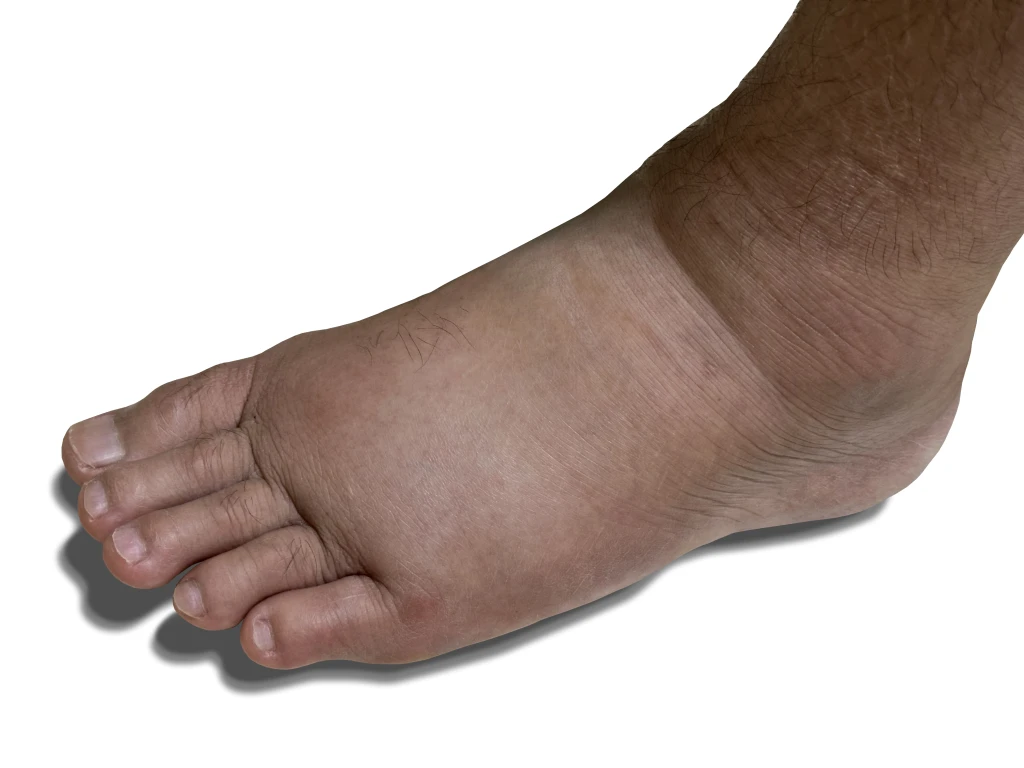
If you have diabetes and one foot has suddenly become warm, swollen, and red, sometimes without the pain you would expect, it is a warning sign that should not be brushed off. When the protective sensation in the feet is lost, most often through diabetic peripheral neuropathy, small injuries that would normally prompt rest go unnoticed and accumulate. Over weeks, the bones, joints, and soft tissues of the foot and ankle can weaken, fracture, and dislocate, and the foot can collapse into a deformed shape, sometimes with a characteristic rocker-bottom appearance that changes how weight is loaded through the sole. This is Charcot foot, also called Charcot neuroarthropathy.
Charcot foot is uncommon in the general population but carries a high risk profile in people with long-standing diabetes. In Singapore, where the National Population Health Survey 2024 reports that 9.1% of residents aged 18 to 74 have diabetes (external link, opens in new tab), recognising the early signs matters. A warm, swollen, red foot in someone with neuropathy should be treated as suspected Charcot until proven otherwise. The condition is jointly managed by podiatry, orthopaedic surgery, and the patient’s diabetes team, with podiatry leading the offloading, footwear, and ongoing foot protection side of care.
Symptoms of Charcot Foot
Early Charcot foot can look like a simple infection or sprain, which is why it is often missed. Watch for:
- Warmth in one foot, often several degrees hotter than the other
- Redness and swelling, usually without an obvious wound
- Pain or aching that feels milder than the visible swelling would suggest, or no pain at all
- A feeling of instability or that the foot is “giving way”
- A visible change in foot shape, such as a collapsed arch or a rocker-bottom sole in later stages
In a person with diabetes and neuropathy, a hot, swollen foot without an obvious cut should be assessed urgently. The earlier the foot is offloaded, the better the chance of preserving its shape.
Phases of Charcot Foot
Charcot foot moves through phases that look very different and need different management.
- Acute (active) phase: the foot is hot, red, and swollen. Bone is fracturing and the joints are unstable. This is the phase where damage progresses fastest and where immediate offloading makes the biggest difference.
- Subacute (coalescent) phase: heat and swelling start to settle. Bone fragments begin to consolidate, but the foot is still vulnerable.
- Chronic phase: the foot has cooled and stabilised in its new shape. Deformity, if it has developed, is now fixed. Care shifts to long-term footwear, pressure offloading, and ulcer prevention.
Causes of Charcot Foot
What Causes Charcot Foot
Charcot foot develops when three things line up: nerve damage that removes pain signals, repeated minor trauma that the patient does not feel, and an inflammatory response that weakens bone faster than it can repair. In most cases, the underlying nerve damage comes from poorly controlled diabetes over many years. A small unnoticed event such as stepping awkwardly off a kerb, a long walk in unsupportive shoes, or a minor twist can set off a cascade of micro-fractures. Inflammation then drives further bone resorption, and the foot begins to collapse.
Who Carries a Higher Baseline Risk?
- People with long-standing type 1 or type 2 diabetes, especially with HbA1c that has been high for years
- Anyone with confirmed diabetic peripheral neuropathy
- People who have had a previous foot ulcer or previous Charcot episode
- People with chronic kidney disease related to diabetes
- People with alcohol-related neuropathy
- People who have had spinal cord injury or other causes of loss of foot sensation
Conditions Commonly Mistaken for Charcot Foot
A hot, swollen foot in a person with diabetes is easy to misread, because the two most common alternative explanations can look almost identical to acute Charcot in the first few days. The clinical risk runs in one direction: if acute Charcot is mistaken for infection and the patient keeps walking on it, the foot can collapse before the diagnosis is corrected. When the diagnosis is uncertain, the safer default is to offload the foot while investigations are completed.
Cellulitis
Cellulitis is a bacterial skin infection that also produces a red, hot, swollen foot, so it is often the first thing assumed when a diabetic foot flares up. The distinguishing feature is that cellulitis is usually associated with a skin break, spreading redness, and signs of infection such as fever, whereas acute Charcot typically follows minor unnoticed trauma with intact skin. Elevating the foot often reduces the redness of early Charcot but has less effect on established cellulitis. Imaging and assessment alongside the diabetes team help separate the two when the picture is unclear.
Gout
Gout is a form of inflammatory arthritis caused by uric acid crystals, and an acute attack in the foot produces sudden heat, redness, and swelling that can mimic early Charcot. The classic gout pattern centres on a single joint, most often the big toe, and comes on rapidly over hours. Charcot tends to involve the midfoot and develops against a background of established diabetic neuropathy. Blood tests, joint fluid analysis, and imaging (x-ray, MRI, or bone scan) help distinguish crystal arthritis from bone and joint breakdown.
Treating and Preventing Charcot Foot
There is no medication that reverses Charcot foot. Treatment is about stopping the active process, letting bone consolidate in the best possible shape, and protecting the foot for life afterwards.
In the acute phase, the priority is immediate offloading. A total contact cast or a CAM walker boot is fitted as soon as Charcot is suspected, and weight-bearing on the affected foot is restricted. This is not a wait-and-see condition. Every step on an actively inflamed Charcot foot adds to the bone damage. Offloading usually continues for several months, with serial imaging used to confirm the foot has cooled and consolidated before normal footwear is reintroduced.
Once the chronic phase is reached, care shifts to long-term protection: properly fitted footwear, custom orthotics to redistribute pressure across the altered foot shape, and a regular review schedule to catch any new ulceration early. Severe deformities that cannot be accommodated in footwear may need reconstructive surgery led by an orthopaedic foot and ankle surgeon, with podiatry continuing on the protective side.
Prevention sits with the diabetes team and the patient: blood sugar control, daily foot self-checks, properly fitted shoes, and yearly diabetic foot screening to detect diabetic peripheral neuropathy before it allows Charcot to develop.
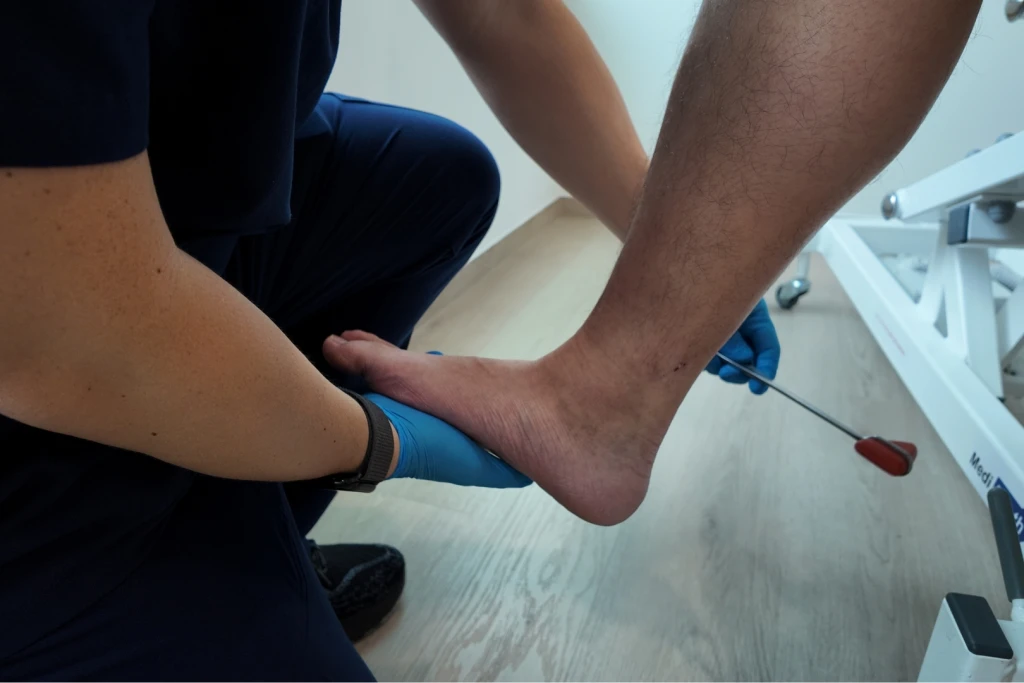
Have Your Charcot Foot Managed at Straits Podiatry
Straits Podiatry’s role in Charcot foot is the foot protection side of a multidisciplinary plan. Care includes diabetic foot screening to detect neuropathy early, offloading with CAM boots or referral pathways for total contact casting, custom orthotics and footwear advice once the foot has consolidated, wound and diabetic foot ulcer management if skin breaks down, and an ongoing review schedule matched to your risk level. Straits Podiatry works alongside your endocrinologist, family doctor, and where needed orthopaedic surgery to keep the foot stable.
Speak with Straits Podiatry or book a consultation for an assessment and a tailored approach to manage your Charcot foot.
Frequently Asked Questions About Charcot Foot
How quickly does Charcot foot need to be treated?
Suspected acute Charcot is treated as urgent. Once heat, redness, and swelling appear in a neuropathic foot, the underlying bone may already be fracturing. Every additional day of walking on it adds to the deformity that the foot will set into. The standard response is to offload the foot immediately, usually with a CAM walker boot or total contact cast, while imaging confirms the diagnosis. Delaying treatment to “see if it settles” is the most common reason a Charcot foot ends up severely deformed.
Will my Charcot foot return to its normal shape?
Once bone has fractured and remodelled, the foot generally sets into its new shape rather than returning to baseline. The aim of treatment is to catch the active phase early enough that the bone consolidates in a shape that can still be fitted into footwear without high pressure points. Late-presenting cases sometimes need reconstructive surgery to correct severe deformity. Early offloading is the single biggest factor that determines how the foot looks and functions at the end.
Do I still need to see a podiatrist after my Charcot foot has settled?
Yes. A foot that has been through Charcot has altered bone shape, altered pressure distribution, and ongoing neuropathy. That combination keeps the foot at higher risk of ulceration for life. Ongoing podiatric review covers footwear, orthotic adjustments, skin and nail care, and early detection of any new pressure point or wound. The schedule is usually set based on individual risk rather than a fixed interval.
Can I prevent Charcot foot if I have diabetes?
Risk can be lowered but not eliminated. The strongest protective factors are good long-term blood sugar control, which slows the nerve damage that allows Charcot to develop, plus daily foot self-checks, properly fitted shoes, and yearly diabetic foot screening. If neuropathy is detected, the foot is checked more often and any minor injury is taken seriously. The first sign of a hot, swollen foot in a neuropathic patient should always be assessed promptly rather than waited out.
Is Charcot foot only a diabetic complication?
Diabetes is the most common cause in Singapore, but Charcot foot can develop in anyone whose foot has lost protective sensation. Other causes include alcohol-related neuropathy, spinal cord injury, certain inherited neuropathies, and rare neurological conditions. The mechanism is the same in each case: the foot stops feeling injury, repeated unnoticed trauma damages bone, and the foot collapses. Anyone with significant foot numbness, regardless of the cause, should be on a foot protection plan.