
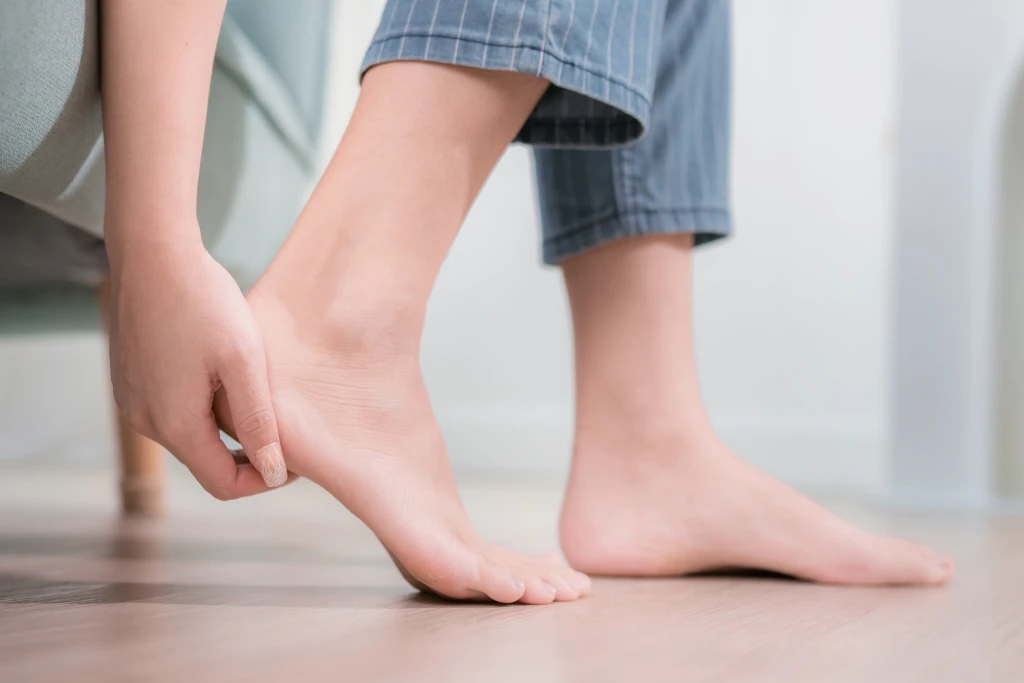
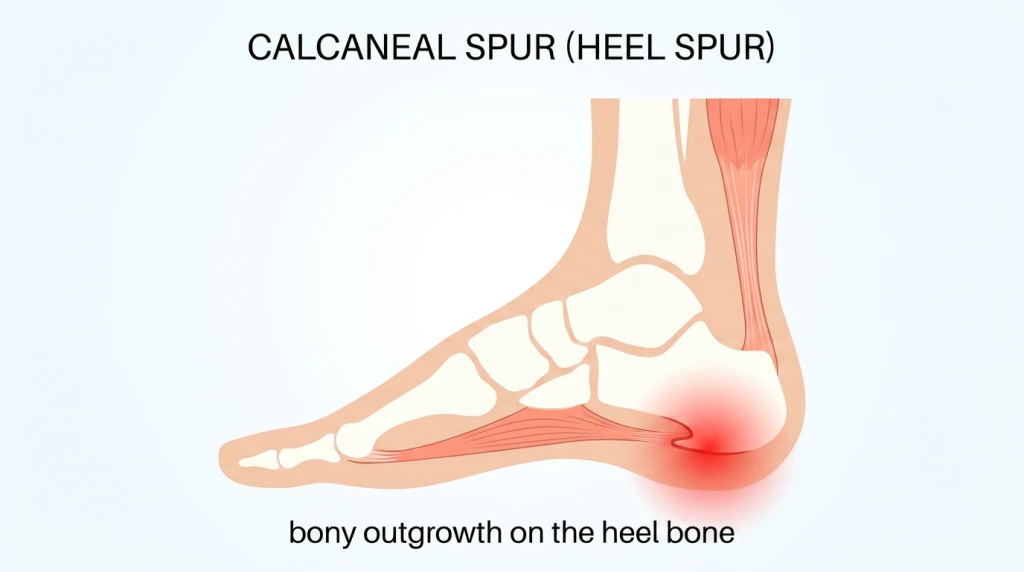
Imagine taking a step and feeling as if a stone is lodged deep in your heel. While that kind of pain can come from several causes, one possible finding is a heel spur. This refers to a small bony outgrowth, called a calcaneal spur, that develops on the heel bone. Despite the name, the spur itself is rarely the source of pain. More often, the discomfort comes from nearby tissues such as the plantar fascia or the Achilles tendon.
To understand why heel spurs form, it helps to look at how this part of the foot works as a weight-bearing structure. With every step, pressure travels through the heel, especially at the points where tendons and ligaments attach. When these areas are placed under repeated strain due to long hours on hard floors, frequent running, or footwear that lacks support, the body responds by depositing calcium. Over time, these deposits can harden into a spur. Because this process is gradual and often silent, many people only learn they have a spur when it shows up on an X-ray. The position of the spur also adds context. Plantar spurs form on the underside of the heel, while posterior spurs develop at the back where the Achilles tendon connects. Since heel pain can arise from many different conditions, the presence of a spur does not always explain the pain. To see when it becomes significant, it helps to look more closely at the symptoms linked to heel spurs.
Symptoms of heel spurs
Although heel spurs can look dramatic on an X-ray, they are usually silent. More often, the soreness you feel comes from the tissues around the spur rather than the bony growth itself. Consequently, many people who think they have spur pain are actually dealing with plantar fasciitis or, less commonly, Achilles tendonitis.
When a heel spur does cause trouble, it’s typically because it rubs or presses on the attached tissue. This might produce heel pain that can be sharp, dull, or occasionally throbbing. In addition, swelling and tenderness can appear at the base or back of the heel, and the discomfort often intensifies when walking barefoot or exercising in shoes that lack support.
At times, you might notice a small bump beneath or behind the heel. If nearby nerves are irritated, the sensations can broaden beyond pain to include tingling, numbness, or a burning feeling. Since these features overlap with other causes of heel pain, a careful assessment by a podiatrist helps determine whether the spur is truly responsible and sets the stage for diagnosis and pain management.
Causes of Heel Spurs
Heel spurs develop as a reaction to ongoing stress at the bottom of the heel. When the plantar fascia repeatedly pulls on its attachment to the heel bone during movement, small areas of strain begin to form. In trying to repair this micro-trauma, the body deposits extra bone at the site. Over time, these deposits can harden into a spur. Because anything that increases pulling forces on the heel can add to this process, it is helpful to look at what drives spur formation and who carries higher baseline risk.
What Drives Heel Spur Formation
- Repeated overuse of the plantar fascia from training or long periods on hard ground
- Shoes that are worn out or poorly supportive, forcing the heel to absorb more strain
- Muscle weakness or imbalances that shift load unevenly through the foot
- Limited mobility in the foot that reduces shock absorption with each step
- Excessive inward rolling of the foot (overpronation) or other biomechanical changes
- Structural variations such as leg length difference, bowed legs, or knocked knees (Genu Valgum)
- Walking or running patterns that overload the heel and its supporting ligaments
- Conditions such as inflammatory arthritis that add to tissue stress
- Thinning of the fat pad beneath the heel, reducing its natural cushioning
Who Carries Higher Baseline Risk?
- People with long-standing plantar fasciitis or other tendon problems that keep tissues under tension
- Those with flat feet (Pes Planus) or high arches (Pes Cavus), which both alter how force travels through the heel
- Individuals with tight calf muscles or a tight plantar fascia band that increase pulling on the heel bone
- People with obesity or a high BMI, adding extra load with each step
- Older adults, as fascia flexibility declines and the protective heel fat pad thins
- Regular wearers of high heels, which strain the fascia and may shorten the Achilles tendon
- Athletes such as runners and jumpers who repeatedly load the heel on hard surfaces
- Individuals with gait abnormalities or leg length differences that place uneven stress on the heel
- Those with underlying systemic conditions such as ankylosing spondylitis or Rheumatoid Arthritis
- Anyone relying on worn-out or unsupportive footwear that fails to cushion impact
With the causes of heel spurs established, there is a question worth pausing on that matters more here than on most pages: whether the spur is the source of your pain at all. The conditions below share the same territory and are frequently the real explanation.
Conditions Commonly Mistaken for Heel Spurs
Because a spur is a visible finding on an X-ray, it tends to attract the blame for whatever heel pain prompted the scan in the first place. Most of the time the spur is an incidental finding and the pain belongs to something else: spurs turn up in 10% to 63% of people who have no heel pain at all. Plantar spurs sit under the heel and posterior spurs sit at the back, and each shares its ground with a different set of conditions.
Plantar fasciitis
Plantar fasciitis is by far the most common reason a heel hurts when a spur is present, and the two frequently appear together. The differentiator is the pattern rather than the location. Plantar fasciitis bites sharply with the first few steps after sleep or a long sit, then eases as the foot warms up. A spur does not produce that first-step signature on its own. Spurs are also found in plenty of people with no heel pain at all, which is why an X-ray alone does not settle the question.
Heel fat pad syndrome
Heel fat pad syndrome is thinning or bruising of the cushion under the heel bone, and it produces a deep, bruise-like ache rather than a sharp jab. The differentiator is where it is tender and what aggravates it. Fat pad pain sits in the centre of the heel and is worst barefoot on hard floors, whereas plantar fasciitis tenderness sits slightly toward the inner edge. Because a thinning fat pad also raises the strain that encourages spur formation, the two often travel together.
Baxter’s nerve entrapment
Baxter’s nerve entrapment irritates a small nerve branch as it passes the inner heel. The differentiator is the character of the pain. Nerve pain burns, tingles, or radiates across the heel rather than staying as a mechanical point of soreness, and it does not follow the first-step pattern reliably. It is worth considering when heel pain has not responded to care aimed squarely at the fascia.
Calcaneal stress fracture
A calcaneal stress fracture is a crack in the heel bone from accumulated impact, and it needs different handling from a spur. The differentiator is that squeezing the heel from both sides reproduces the pain, which fascia and spur problems do not do. The pain also builds with impact rather than easing as you warm up, and it can ache at rest or at night. A recent jump in running or marching load raises the suspicion.
Insertional Achilles tendonitis
Where the spur sits at the back of the heel rather than underneath, Achilles tendonitis at the tendon’s attachment is the usual companion. The differentiator is simply the address of the pain. Posterior spur territory hurts at the back of the heel, is aggravated by pushing off and by the stiff heel counter of a shoe, and often stiffens in the morning. Plantar spur territory hurts underneath.
Treating and Preventing Heel Spurs
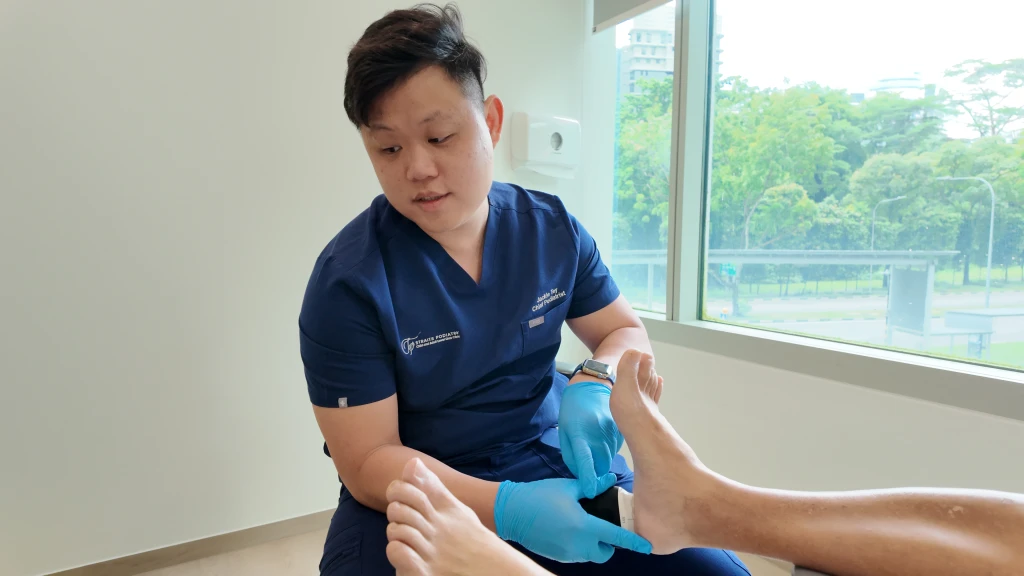
The heel works like a shock absorber with every step, and when a heel spur is present the pain usually comes from the irritated soft tissues that anchor to the heel bone rather than from the bony growth itself. Treatment is therefore aimed at reducing strain in those tissues, not at removing the spur. Care starts by settling the irritation, then rebuilds the strength and flexibility the heel needs to handle daily load more comfortably.
Conservative treatment
Most heel spur symptoms settle with a structured non-surgical plan that offloads the painful tissue and restores foot function.
- Supportive footwear: Shoes with cushioned soles soften impact at the heel and reduce the strain passing through the attached tissues.
- Custom insoles (orthotics): Offload the plantar fascia and redistribute pressure away from the sensitive point on the heel.
- Taping: Provides temporary support and relief during the more painful phases while the other measures take effect.
- Rehabilitation: Stretching and strengthening for the calf and foot muscles, gait retraining to address issues such as overpronation, foot mobilisation to improve flexibility, and graded adjustments to training load all reduce the repetitive stress on the heel.
- Focused shockwave therapy (ESWT): Stimulates stubborn tissues to heal where pain persists despite footwear, orthotics, and rehabilitation.
- Dry needling: Releases muscle tension around the heel to ease discomfort during recovery.
When conservative care isn’t enough
Surgery is rarely needed for a heel spur and is reserved for the uncommon case where well-followed conservative care has not settled the symptoms. When necessary, the common surgical approach orthopaedic surgeons perform is a Tenex procedure, which removes the spur along with the damaged tissue through a small incision.
Preventing Heel Spurs
Keeping the calves flexible and the feet strong, replacing worn or unsupportive shoes before the cushioning is lost, wearing cushioned shoes on hard floors at home, building training up gradually with low-impact sessions to share the load, and reviewing recurring heel pain early all help hold the result and reduce the risk of it returning.
Have Your Heel Spur Managed at Straits Podiatry
Hearing that you have a heel spur can feel alarming, especially if you picture a sharp bony spike causing every step to hurt. In reality, most spurs are painless, and the discomfort or pain often comes from the surrounding tissues rather than the spur itself. At Straits Podiatry we explain this clearly, so you understand what is really driving your symptoms and why procedures rarely target the bone directly.
From there our podiatrists assess your foot mechanics, footwear, daily activities and training load to identify the true source of stress on your heel. With these insights we craft a practical plan that reduces strain, restores comfort, and helps you move confidently again. If focused options such as ESWT are needed, they are added as part of a complete approach. Book a consultation today and take the next step toward clarity and pain relief.
Frequently Asked Questions About Heel Spurs
What causes heel spurs, and how can they be managed?
Heel spurs form when repeated stress on the plantar fascia creates strain where it attaches to the heel bone, often due to running, prolonged standing, or wearing unsupportive shoes. Management focuses on easing pressure through supportive footwear, custom orthotics, stretching, and physical therapy, with advanced options such as ESWT considered if discomfort or pain persists.
How are heel spurs diagnosed?
Heel spurs are often found on X-rays taken for heel pain, though the spur itself may not be the source of discomfort. A podiatrist will review your symptoms, activity history, and foot mechanics to determine whether the pain is coming from the spur or from nearby tissues such as the plantar fascia.
How do I know if I have a heel spur?
A heel spur may feel like a hard bump or a sharp, pointy spot when touching the heel. Many people notice pain when walking, running, or even standing, often described as a jabbing sensation. The bone itself does not hurt, but the surrounding tissues can become irritated, which is what leads to discomfort during movement.
What does plantar fasciitis have to do with heel spurs?
Heel spurs often develop in people who have long-standing plantar fasciitis, as the repeated pulling of the inflamed plantar fascia can encourage calcium buildup on the heel bone. While a spur does not cause plantar fasciitis, the two conditions frequently appear together and might produce similar heel pain symptoms, which is why they are often discussed side by side.
Will a heel spur resolve on its own?
Once a heel spur has developed, it does not shrink or disappear by itself. A podiatrist can assess whether the spur is contributing to pain or if the discomfort is coming from surrounding tissues such as the plantar fascia or Achilles tendon and then guide you on the best way to manage it.