
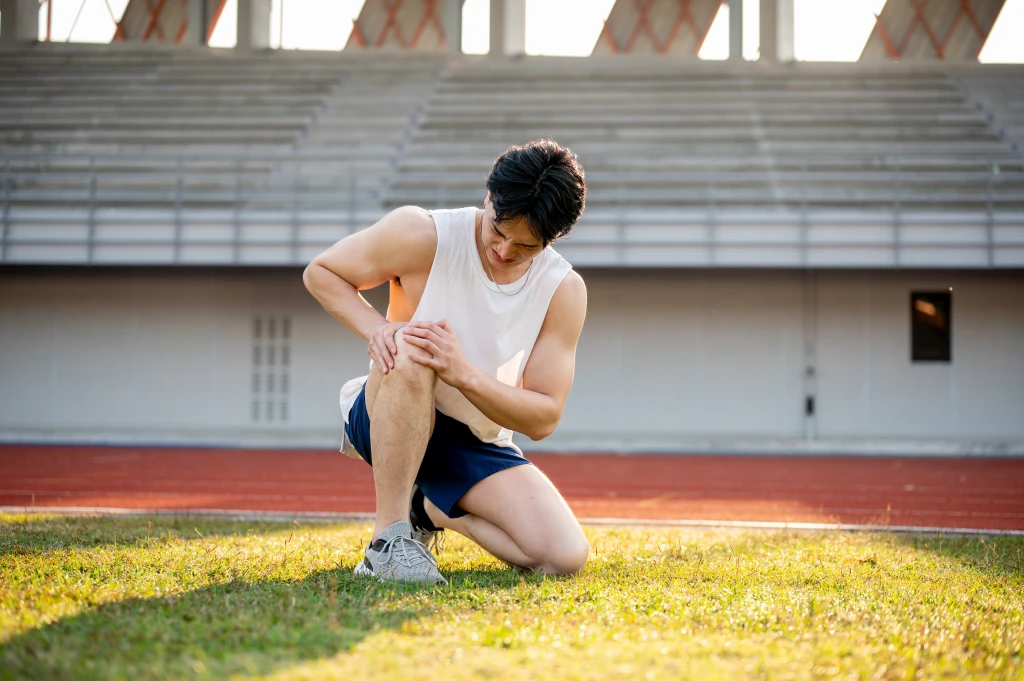
You finish a 5K loop around MacRitchie and feel a dull ache settling in around the front of the knee that lingers into the evening. Sitting through a long meeting afterwards makes it stiffer, and standing back up takes a moment of hesitation. Coming down the stairs at the MRT station now produces a sharper twinge around the kneecap. The pain is hard to pinpoint exactly, more of a vague ache deep to the kneecap.
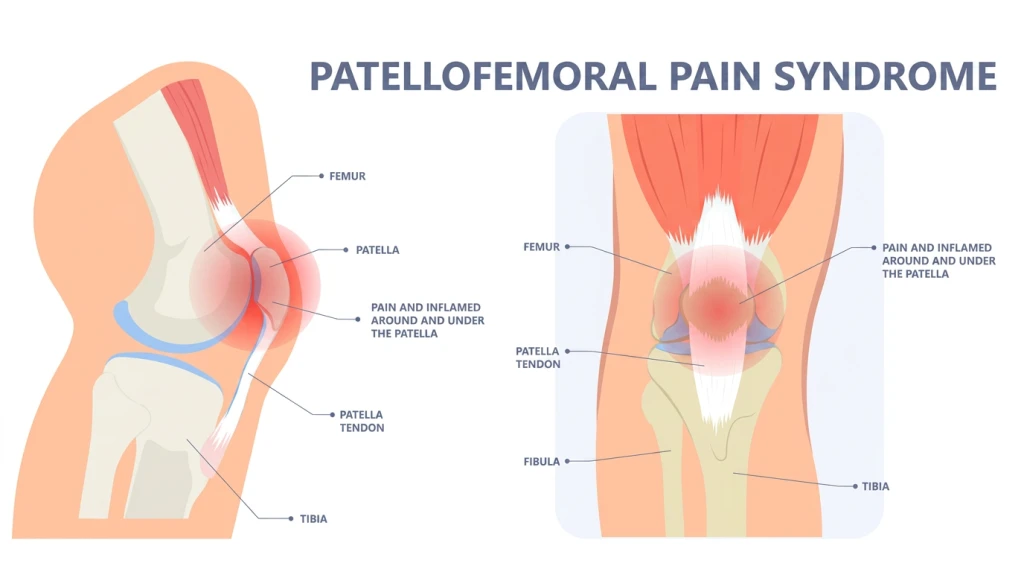
This pattern often points to runner’s knee, the common name for patellofemoral pain syndrome (PFPS). It is an overuse condition affecting the joint between the kneecap (patella) and the thighbone (femur), with pain around or behind the kneecap. While the name suggests it only affects runners, it shows up in anyone whose knee is loaded repeatedly through bent-knee positions: cyclists, hikers, climbers, footballers, basketballers, and office workers spending long hours seated. Left untreated, ongoing irritation can contribute to longer-term changes in the joint.
Symptoms of Runner’s Knee
The symptom pattern is often the easiest way to recognise runner’s knee, because the location can be hard to pinpoint:
- A dull, aching pain at the front of the knee, around or behind the kneecap.
- Pain that is difficult to point to exactly, often felt as “deep” rather than on a specific spot.
- Pain during running, jumping, squatting, or climbing stairs.
- The “movie sign”, where the knee aches after sitting with the knee bent for a long period.
- A cracking or popping sound during knee movement.
- The knee feeling like it is “giving way” on stairs or uneven ground.
- Worsening of symptoms with downhill activity or descending stairs.
Causes of Runner’s Knee
What Causes Runner’s Knee?
Runner’s knee occurs when there is increased pressure between the kneecap and the thighbone, with the kneecap not tracking cleanly in its groove. The increased pressure irritates the soft tissues and can cause changes in the cartilage on the back of the kneecap. The reasons vary from person to person, but the common thread is repeated load on a joint that is not absorbing it well.
- A sudden increase in running mileage, intensity, or hill work.
- Weakness in the quadriceps, especially the inner part (vastus medialis).
- Weakness in the hip abductors and gluteal muscles, which control how the leg tracks.
- Tightness in the iliotibial band, hamstrings, or calves.
- Foot biomechanics that change how the knee absorbs load, such as flat feet or excessive pronation.
- Hard training surfaces, including extended treadmill use.
- Worn or unsuitable footwear for the activity.
Who Carries a Higher Baseline Risk?
- Runners increasing weekly mileage or training for a race.
- Young, active adults, especially women, where Q-angle and hip alignment can play a role.
- People returning to sport after a break, where conditioning has been lost.
- People with longstanding flat feet or significant pronation.
- People with knock knees or joint hypermobility.
- People with desk-based work who train hard at the weekend without progressive build-up.
Conditions Commonly Mistaken for Runner’s Knee
Anterior knee pain is not always runner’s knee. A few other conditions around the kneecap produce a similar ache, and sorting between them matters because the rehab focus differs. A clinical assessment helps confirm which structure is actually involved.
Patellar tendonitis
Patellar tendonitis causes pain just below the kneecap on the tendon itself, rather than around or behind the kneecap where runner’s knee is felt. It is typically tender on a specific point of the tendon and is aggravated by jumping and explosive loading, which helps separate it from the more diffuse patellofemoral pain of runner’s knee.
Iliotibial band syndrome
Iliotibial band syndrome causes pain on the outer side of the knee rather than at the front, so the location is the main differentiator. ITBS pain tends to appear at a predictable point during a run and settles with rest, whereas runner’s knee is provoked by stairs, squatting, and prolonged sitting.
Fat pad impingement
Fat pad impingement can mimic runner’s knee but tends to localise just below the kneecap, and it is often aggravated when the knee is fully straightened, which pinches the fat pad. Runner’s knee pain sits more around or behind the kneecap and is provoked by loaded bending rather than by full extension.
Treating and Preventing Runner’s Knee
Treatment usually starts by reducing the activities that consistently provoke pain and addressing the factors that are loading the patellofemoral joint. Rest alone often settles the pain in the short term, but the symptoms tend to return at the same training load if the underlying contributors are not addressed.
The early focus is on activity modification: reducing running volume, avoiding the deep squat and stair pattern that aggravates the joint, and using over-the-counter pain relief in the short term where appropriate. Structured rehab is what carries the longer-term result. Strengthening the quadriceps, hip abductors, and gluteal muscles improves how the kneecap tracks. Stretching tight thigh and hip muscles reduces the lateral pull on the patella.
Where biomechanics is contributing, addressing the foot’s role matters. Excessive pronation increases internal rotation at the knee, which adds load on the patellofemoral joint. Footwear suited to your foot type and activity, paired with insoles where indicated, can change how the knee is loaded with each step. Returning to running should be graded by distance and intensity, not by feel. Building back gradually is what usually keeps runner’s knee from coming back.
Have Your Runner’s Knee Managed at Straits Podiatry
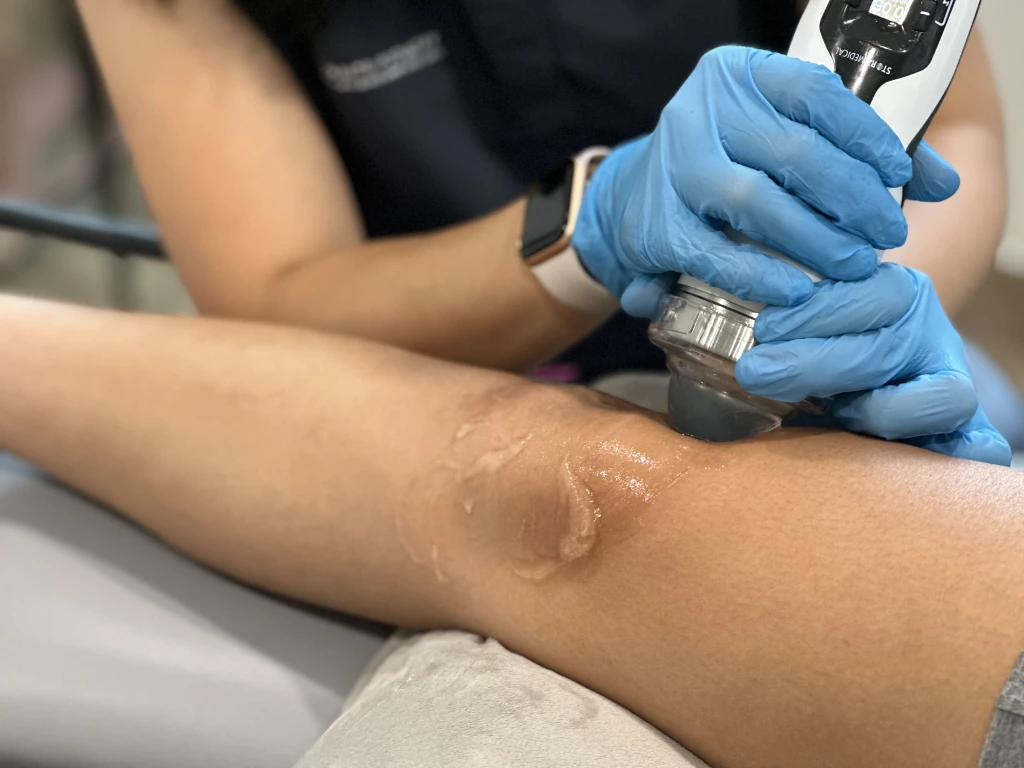
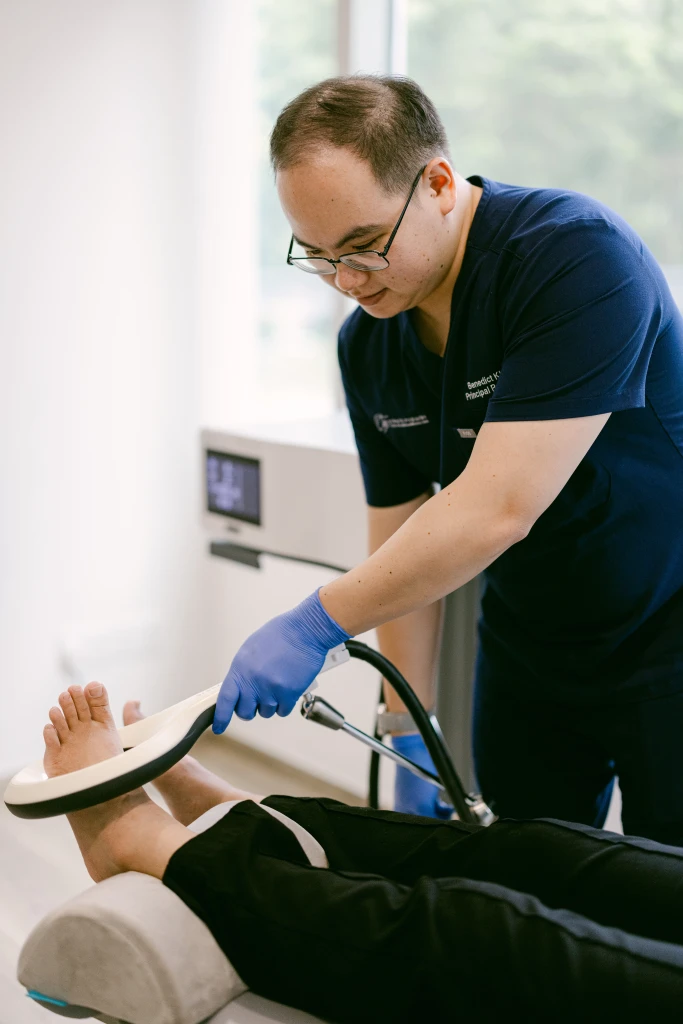
At Straits Podiatry, runner’s knee assessment includes a gait analysis and lower-limb biomechanical review to identify what is loading the joint. Care may involve custom foot orthoses to address foot mechanics contributing to knee load, focused shockwave therapy to support joint and tissue repair, radial pressure wave therapy for tight thigh and hip muscles, and EMTT for inflammation. Our physiotherapist supports the strengthening and return-to-running side.
Speak with Straits Podiatry or book a consultation for an assessment and a tailored approach to manage your runner’s knee.
Frequently Asked Questions About Runner’s Knee
How long does runner’s knee take to recover?
Recovery depends on how long the symptoms have been present and whether the underlying contributors are addressed. Mild cases caught early can settle in three to six weeks of reduced running and targeted rehab. More persistent cases that have been running through pain for months can take two to four months, because the joint has been chronically irritated and the surrounding muscles often need to be reconditioned. The recovery is faster when the cause, not just the symptom, is addressed.
Can I keep running with runner’s knee?
Running through runner’s knee pain tends to entrench the problem and lengthen recovery. A short period of reduced running, with cross-training in lower-impact activities such as swimming or pool running, often allows the joint to settle while keeping fitness up. Where running cannot be avoided, dropping the mileage and pace below the threshold that triggers pain is a more reasonable compromise than pushing through. A graded return guided by a clinician usually delivers a better long-term outcome.
Do I need custom orthotics for runner’s knee?
Custom orthotics can help where foot mechanics are contributing to load through the knee, particularly in patients with significant pronation, flat feet, or a leg length difference. They are not the answer for every case. A gait analysis and biomechanical assessment help work out whether orthotics will change how the knee is loaded for your specific foot type. Where the contribution is mostly muscle strength or flexibility, rehab tends to be the more important lever.
Will runner’s knee lead to arthritis?
Runner’s knee on its own does not necessarily progress to arthritis. What matters is whether the patellofemoral joint keeps being repeatedly irritated over years. Sustained pressure and friction can contribute to cartilage changes on the back of the kneecap, which is why managing the contributing factors matters even after symptoms settle. Addressing strength, biomechanics, and training load reduces that long-term risk.
How do I know if my knee pain is runner’s knee?
The pattern that points toward runner’s knee is a dull, aching pain located at the front of the knee around or behind the kneecap, that comes on during or after running and tends to worsen with downhill running, descending stairs, or sitting for long periods with the knee bent (the “theatre sign”). The pain is usually not associated with a single injury. It builds gradually with training load. Some people notice a grinding or clicking under the kneecap. Pain on the outer side of the knee at a consistent point in every run is more suggestive of iliotibial band syndrome. Pain just below the kneecap that worsens with jumping points toward patellar tendinopathy. Sharp catching or locking with swelling can indicate a meniscus or cartilage problem. The patterns overlap, which is why a clinical assessment is the reliable way to confirm what is driving the pain before treatment is set.