
Overview
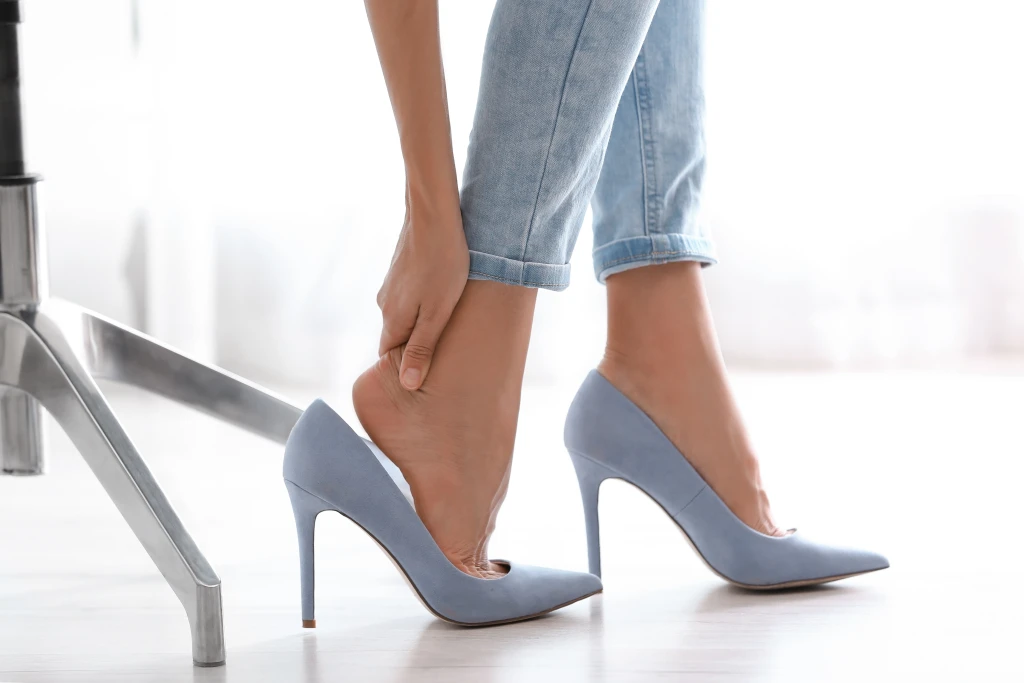
Heel pain is one of the most common presentations we see in clinic daily. It can happen to the young or old. It can appear as sharp first-step pain under the heel in the morning, a dull ache at the back of the heel that worsens through the day, or a deep bruised sensation after long walking on hard floors. Local triggers stack quickly: tiled flooring at home, slippers worn all day, NS run cycles, marathon training, and long retail or hawker shifts on unforgiving surfaces. Most cases settle well when the source is identified early and a paced plan is followed.
What Is Heel Pain?
Heel pain is discomfort at the back or underside of the heel bone (calcaneus) and the soft tissues anchored to it. Because the heel absorbs impact every step, the plantar fascia, Achilles tendon, fat pad, small joints, and nerves around it all share the load, and any one of them can be the source. The character of the pain (sharp, deep, burning, bruised), where it sits (under, behind, or to the side), and when it flares (first step, after activity, in shoes) all help narrow the cause before any imaging is needed.
Symptoms of Heel Pain
The pattern of pain often points to the underlying cause. Common patterns include:
- Sharp, stabbing pain under the heel with the first morning steps, easing slightly with movement.
- A deep aching pain that worsens with prolonged standing or walking on hard tiled floors.
- Pain at the back of the heel with morning stiffness, often linked to the Achilles tendon.
- A bruised, tender sensation under the heel, as if there is no longer any cushion.
- Tenderness and swelling at a specific spot, sometimes with a visible bony prominence.
- Burning, tingling, or numbness spreading from the heel into the arch or sole.
- Activity-related heel pain in children that worsens with running or jumping and eases with rest.
Conditions That Cause Heel Pain
Heel pain is grouped by the structure involved. Identifying the structure is the practical first step toward a treatment plan that actually works.
- Plantar fasciitis: irritation of the thick band of tissue under the arch where it attaches to the heel bone. Sharp first-step pain under the heel is the classic presentation.
- Heel spur: a bony outgrowth on the underside of the heel bone. Often coexists with plantar fasciitis but is rarely painful on its own.
- Achilles tendonitis: irritation of the tendon at the back of the heel, more common in runners and middle-aged adults.
- Heel bursitis: inflammation of the fluid-filled sacs around the heel, often from tight shoe backs or repetitive pressure.
- Haglund’s deformity: a bony enlargement at the back of the heel that rubs painfully against enclosed footwear (sometimes called “pump bump”).
- Heel fat pad syndrome: thinning or bruising of the natural cushion under the heel, causing a deep bruised ache rather than a sharp first-step pain.
- Calcaneal stress fracture: tiny cracks in the heel bone from cumulative impact, common in runners and NS trainees.
- Sever’s disease: irritation of the heel growth plate in active children, flaring with running and jumping.
- Baxter’s nerve entrapment: compression of the first branch of the lateral plantar nerve at the medial heel. Produces burning, tingling, or numbness at the heel itself. Often misdiagnosed as plantar fasciitis because the pain pattern overlaps.
Causes of Heel Pain
Most heel pain comes from cumulative load rather than a single injury. Singapore’s mix of hard tiled floors at home, slippers worn indoors, and seasonal training spikes around the Standard Chartered Marathon and NS IPPT cycles all add up.
What Causes Heel Pain?
- Long hours standing or walking on hard, unforgiving surfaces.
- Worn-out or unsupportive shoes that no longer absorb impact.
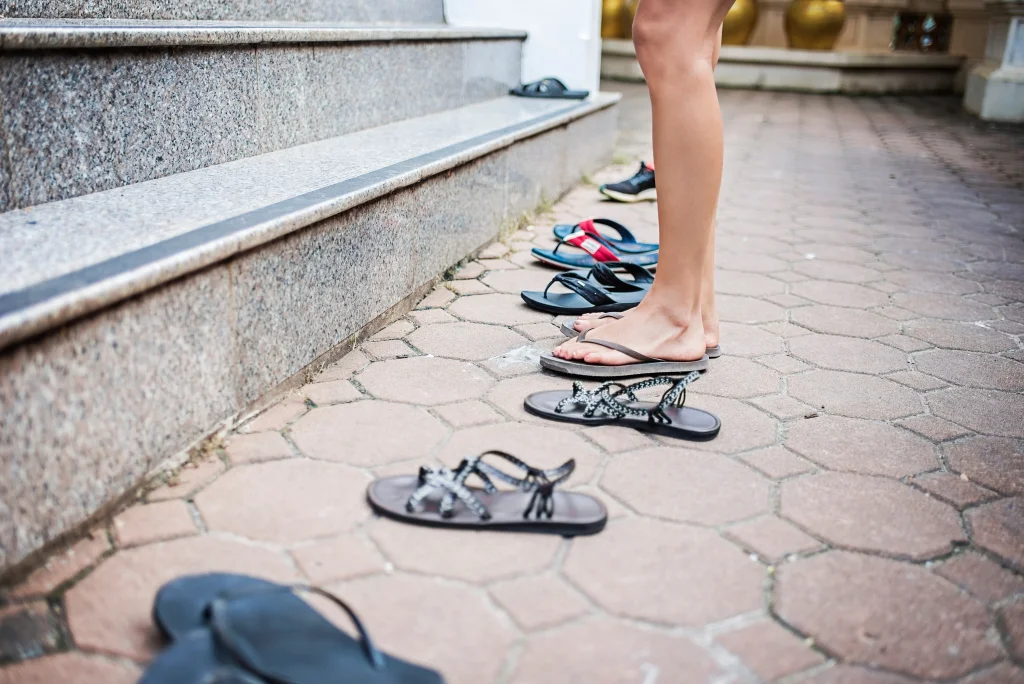
- Walking barefoot at home on tiled floors.
- A sudden rise in running, hiking, or jumping training without adequate recovery.
- Overpronation or a gait pattern that overloads the heel.
- Tight calves or limited ankle mobility.
- A previous foot or ankle injury that altered mechanics.
- Inflammatory drivers such as gout or rheumatoid arthritis.
Who Carries a Higher Baseline Risk?
- Adults aged 40 and above, as the heel fat pad thins with age.
- People with flat feet or high arches, which alter heel loading.
- People carrying excess body weight, which adds load with every step.
- Runners, hikers, and dancers with high training volumes.
- People with inflammatory conditions such as rheumatoid arthritis or gout.
- Active children in growth spurts, who are more prone to Sever’s disease.
- People with diabetes, where reduced sensation can mask early injury.
Diagnosis
A correct diagnosis is the practical first step toward effective treatment. A podiatrist typically works through the following:
- Patient interview: a structured review of when the pain started, what aggravates it, daily activity, footwear, and any prior foot or ankle injuries. The pattern often points strongly to the source before any imaging is needed.
- Physical examination: hands-on assessment to identify tender spots, test joint range, check foot shape and gait, and look for visible changes such as swelling, redness, or a bony prominence at the back of the heel.
- Imaging: X-rays for bony causes (heel spurs, stress fractures, arthritis). MRI for soft tissue involvement, suspected fat pad injury, occult stress fractures, or persistent pain that has not settled with standard care.
- Blood tests: when an inflammatory or systemic cause is suspected, such as gout or rheumatoid arthritis, blood tests help confirm or rule it out.
Treatment Options for Heel Pain in Singapore
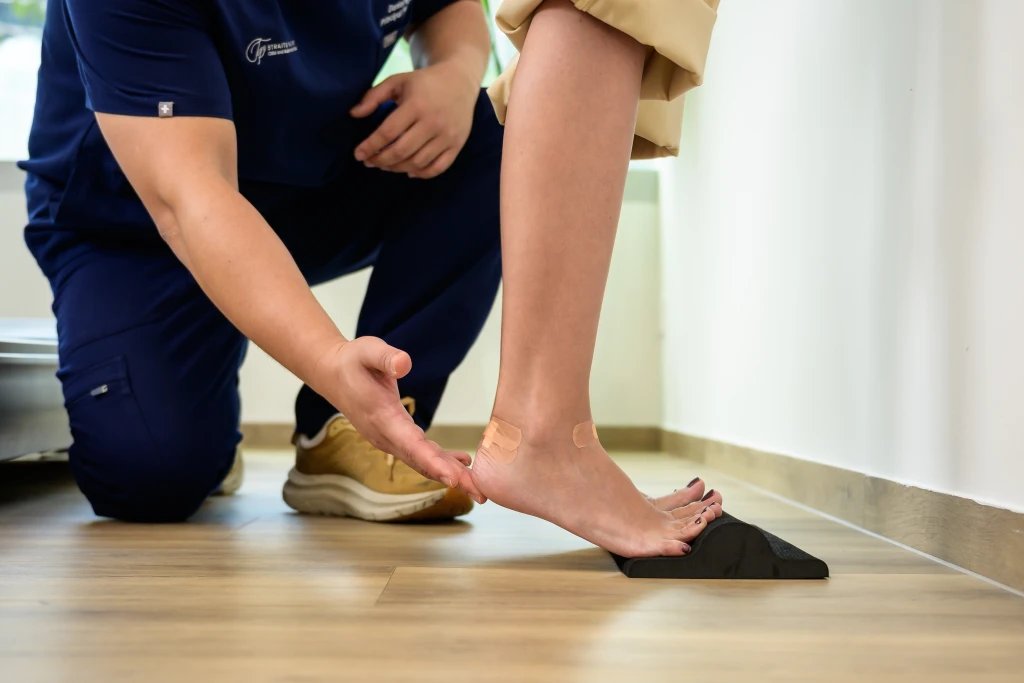
Most heel pain settles with a paced, structured plan that combines load reduction, supportive footwear, and rebuilding strength. The first phase calms the irritated tissue, the second restores mechanics so the same flare does not return, and the third escalates only when conservative care has been given a fair trial.
Conservative Management
To settle the pain:
- Reduce aggravating high-impact activity for a defined period, rather than pushing through it.
- Ice after activity and short-course anti-inflammatory measures during the painful phase, guided by a clinician.
- Supportive house shoes to limit barefoot loading on hard tiled floors at home.
- Calf, plantar fascia, and intrinsic foot stretching and strengthening.
To share the load and address mechanics:
- Supportive, cushioned footwear suited to your foot shape and daily use.
- Custom orthotic insoles where foot mechanics are contributing, to redistribute pressure across the heel and arch.
- A gradual return to running or sport with structured load progression, mixing in lower-impact training to share the work across the kinetic chain.
For cases that resist conservative care, focused ESWT and EMTT can stimulate stubborn tissue to heal where progress has stalled.
Surgical Intervention
Surgery for heel pain is uncommon. It is typically only considered when conservative management has been given a fair trial without improvement, or where structural damage requires direct repair (for example, Haglund’s deformity that has not settled with footwear modification, or a recalcitrant Achilles insertional issue). A podiatrist can advise when an orthopaedic surgical opinion is appropriate.
Prevention
Replace worn shoes early, before the cushioning collapses. Avoid extended barefoot walking on hard tiled floors at home. Build running, hiking, or court-sport training up gradually rather than in sudden jumps. Keep calves flexible and ankles mobile. Maintain a healthy weight to reduce day-to-day strain on the heel. Address foot mechanics through gait assessment if pain keeps returning rather than treating each flare in isolation.
Have Your Heel Pain Managed at Straits Podiatry
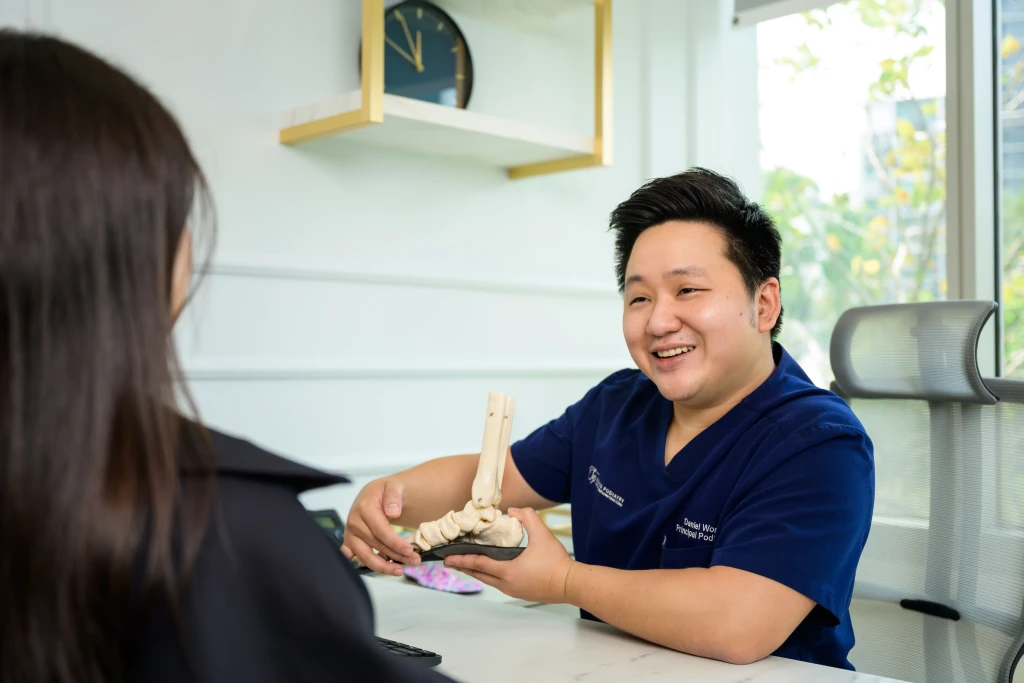
When heel pain starts dictating your morning and your daily routine, guesswork rarely shortens recovery. At Straits Podiatry, the assessment connects where the pain sits, when it flares, your footwear, your daily activity, and your foot mechanics, so the source is clear before any treatment begins.
From there, the plan is built around your daily routine. Services that may form part of your care include gait analysis, custom orthotic insoles, footwear guidance, and ESWT or EMTT for cases that have not settled with conservative measures. Speak with the team or book a consultation for a thorough assessment and a tailored path back to comfortable movement.
Frequently Asked Questions About Heel Pain
What is the most common cause of heel pain?
The most common cause is plantar fasciitis, an irritation of the thick band of tissue that supports the arch where it attaches to the heel bone. It presents as sharp pain under the heel with the first steps in the morning, easing slightly with movement and returning after prolonged standing or walking. Several other conditions can mimic it, however (heel fat pad syndrome, heel spurs, Baxter’s nerve entrapment, and calcaneal stress fractures all present in the same general area), which is why an assessment is the most reliable way to confirm the source.
Why does my heel hurt with the first step in the morning?
First-step pain typically points to plantar fasciitis. During the night the fascia tightens, and the first stretch as you stand up tugs at its attachment to the heel bone. The pain often eases after a few minutes of movement, but returns after long sitting or at the end of the day. A similar pattern can appear in Achilles tendonitis, except the pain is at the back of the heel rather than underneath, and in heel fat pad syndrome, where the sensation is more of a deep bruise than a sharp pull.
Will heel pain go away on its own?
Mild, recent-onset heel pain sometimes settles with rest, supportive footwear, and stretching. Heel pain that has been present for more than a few weeks tends to become chronic if the underlying mechanics, footwear, or training load are not addressed. The longer it has been present, the longer it typically takes to resolve, which is why early assessment is usually the faster route to recovery.
Do shoes matter when I have heel pain?
Yes. Unsupportive shoes, worn-out cushioning, and extended barefoot walking on hard tiled floors are common contributors to heel pain in Singapore, where most homes have tiled flooring. Supportive shoes with adequate heel cushioning reduce the load with every step. A podiatrist can recommend specific shoe categories suited to your foot shape and your activity pattern, rather than relying on the marketing language printed on the box.
When should I see a podiatrist for heel pain?
See a podiatrist if heel pain persists more than two weeks despite supportive shoes and reduced load, if it limits your daily activity, or if it comes with swelling, redness, or numbness. Earlier review is also worthwhile if the pain followed a specific injury, if it is in a child during a growth spurt, or if you have diabetes or another condition that affects sensation or healing.