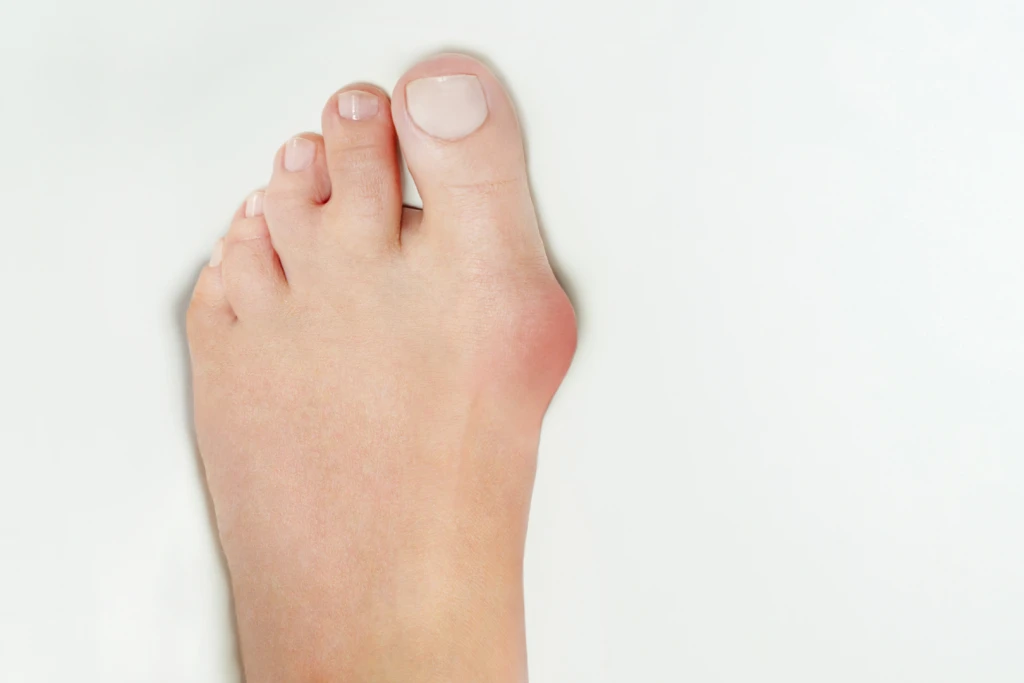
If you have noticed a bony bump starting to push out at the side of your child’s big toe, you are looking at what could be the early stages of a juvenile bunion (juvenile hallux abductovalgus). It is the same kind of joint deformity as an adult bunion, where the big toe drifts toward the second toe and the joint at its base becomes prominent. The difference is timing. Juvenile bunions appear in children and teenagers under 18, sometimes as early as the primary school years.
Juvenile bunions are progressive, meaning the angle tends to worsen as the foot grows. Early on, there is often no pain at all. Once the angle is wide enough to rub against shoes or strain the joint during sport, redness, aching, and discomfort follow. Catching it early gives you the most options to slow it down without surgery.
Symptoms of Juvenile Bunions
- A bony bump on the inner side of the big toe joint.
- The big toe angling toward the second toe.
- Redness, warmth, or swelling over the joint.
- Aching or burning pain at the joint, especially after sport or a long day in school shoes.
- Pain when wearing enclosed or pointed footwear.
- The second toe being pushed sideways or starting to claw over time.
- Calluses or rubbing on the bump from shoe pressure.
Causes of Juvenile Bunions
What Causes Juvenile Bunions?
- Inherited foot structure. Children do not inherit the bunion itself but the foot shape and joint mechanics that allow it to develop.
- Hypermobile, very flexible foot joints.
- Flat feet and excessive pronation, which place sideways force across the big toe joint.
- Structural alignment differences in the foot or lower limb.
- Connective tissue conditions that increase ligament laxity.
- Inappropriate footwear, especially narrow or pointed shoes that compress the toes during the growing years. Footwear does not cause juvenile bunions on its own but speeds up an existing one.
Who Carries a Higher Baseline Risk?
- Children with a parent who has bunions.
- Children with hypermobility or generalised ligament laxity.
- Children with flat feet or significant overpronation.
- Children with conditions affecting limb alignment, including scoliosis, where leg-length differences can drive a bunion on one side.
- Children who regularly wear narrow, pointed, or poorly fitting shoes during growth.
Conditions Commonly Mistaken for Juvenile Bunions
A few other conditions can cause a bump or pain around the toes that is mistaken for a juvenile bunion. A paediatric foot assessment differentiates these so the management plan is matched to the actual diagnosis.
Bunionette
A bunionette is a similar bony bump, but it sits on the outer edge of the foot at the little toe joint rather than at the big toe. The mechanism and appearance echo a bunion on the opposite side of the forefoot, so the differentiator is simply which toe joint carries the prominence.
Capsulitis of the big toe joint
Early capsulitis is inflammation of the soft tissue and lining around the big toe joint, which can cause pain there without the sideways drift of the toe that defines a bunion. The joint is tender and may feel sore with push-off, but the big toe stays in line rather than angling towards its neighbours, which is the key distinction.
Hallux limitus
In older teens, early hallux limitus is a stiffening of the big toe joint that limits how far the toe bends upward. The main symptom is reduced movement and pain on bending the joint rather than a widening bump and sideways angle, so it is told apart by how the joint moves rather than how it looks.
Treating and Preventing Juvenile Bunions
Surgery is the only way to correct an existing bunion structurally. Non-surgical treatment cannot reverse the angle, but it can do something almost as useful: slow the progression, reduce pain, and protect the joint while the foot finishes growing. Most painful juvenile bunions respond well to non-surgical care.
The starting point is correcting the mechanics that drive the bunion forward. Custom orthotics support the arch, reduce excessive pronation, and offload sideways force on the big toe joint during walking, running, and sport. Footwear changes matter a lot during the growing years. Shoes with a wider toe box, a stable midsole, and a low heel give the joint room to function without rubbing or being squashed. Splints worn at night or during rest can relieve soft tissue tension and ease pain, though they do not realign the bone. Targeted mobility and strengthening exercises for the foot and big toe support the joint over the long term. Activity modifications, especially during flares, reduce repeated joint stress.
Prevention overlaps with treatment. Well-fitting shoes throughout childhood, addressing flat feet or hypermobility early, and reviewing the foot if there is a family history of bunions all help.
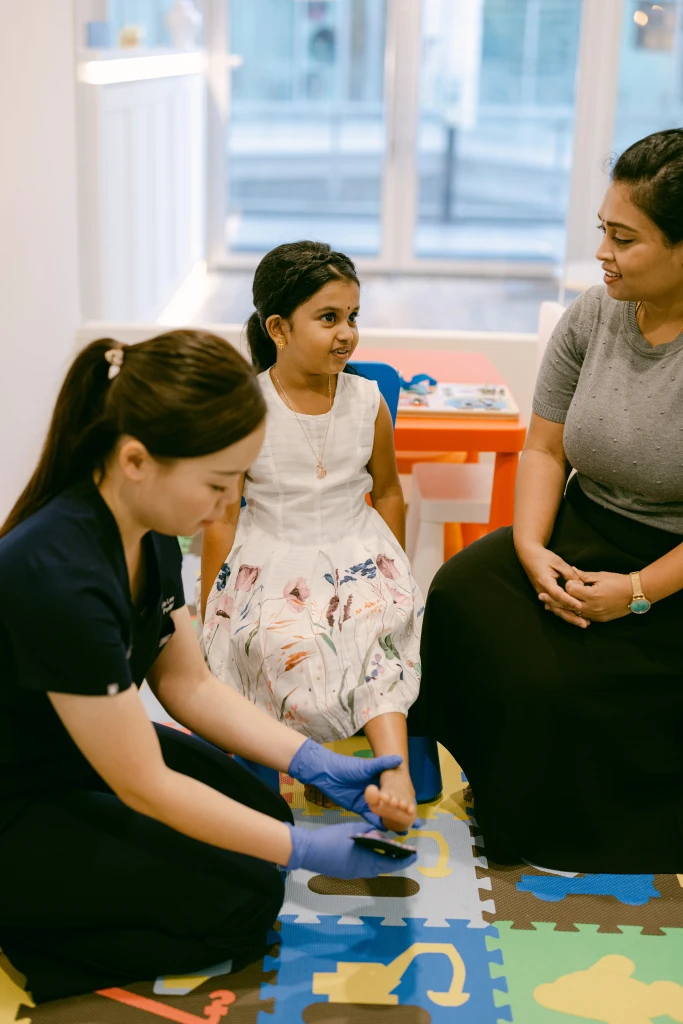
Have Your Juvenile Bunions Managed at Straits Podiatry
Paediatric foot conditions are seen at all three Straits Podiatry clinics in Buona Vista, Orchard, and Paya Lebar, where our podiatrists work with children of all ages. Straits Podiatry is part of Healthway Medical Group.
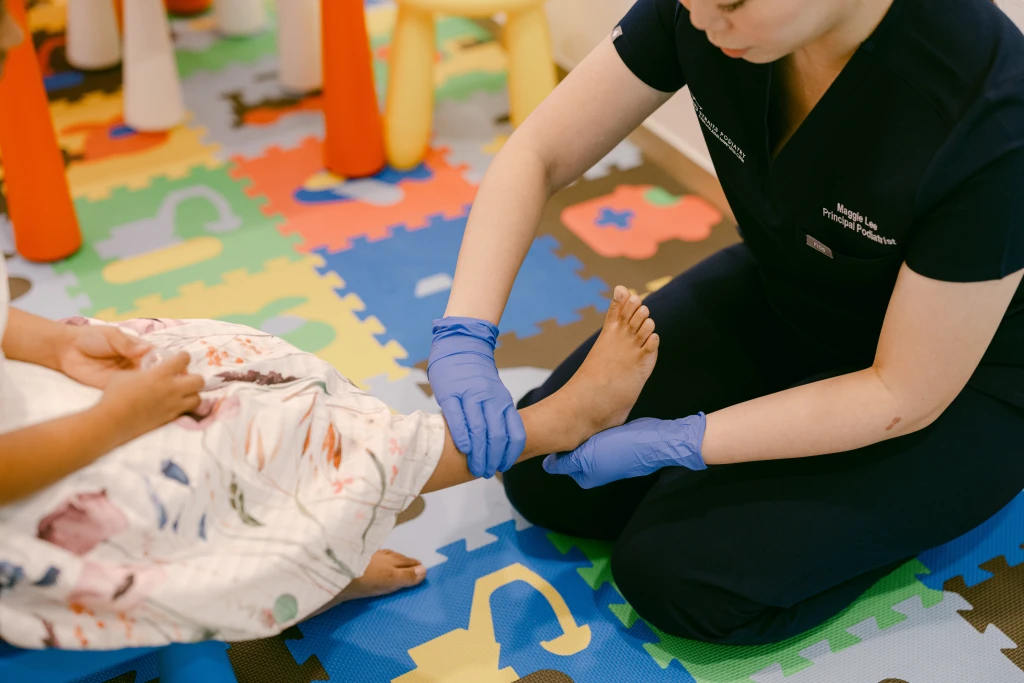
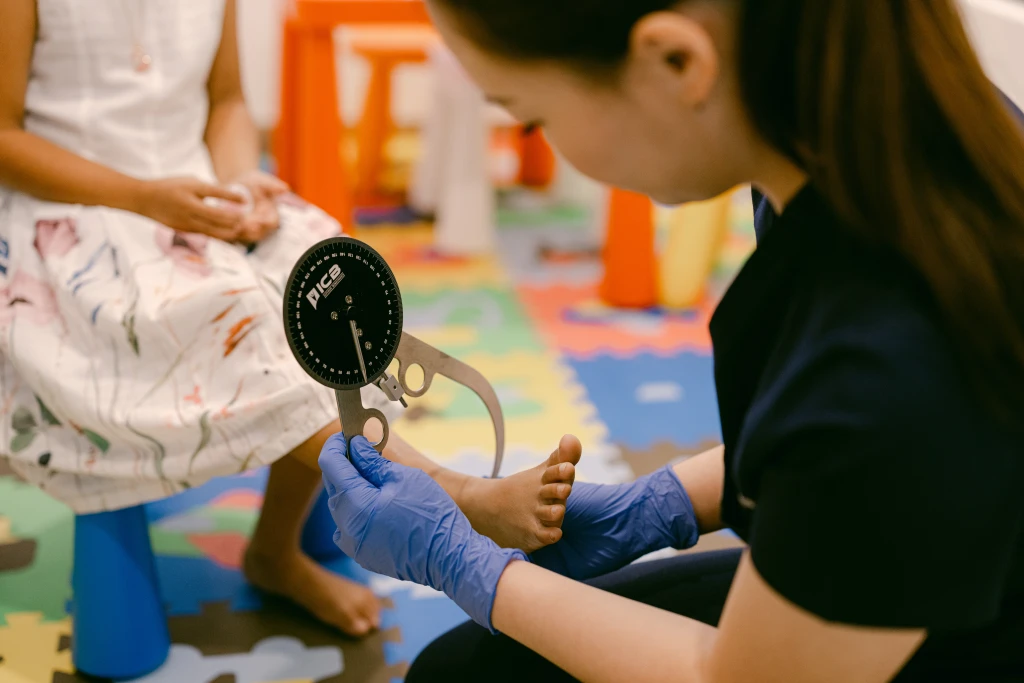
A juvenile bunion assessment includes a paediatric assessment, gait analysis, joint range and stability testing, footwear review, and where indicated, custom orthotics, footwear advice, splints, a strengthening programme, and a monitoring schedule as your child grows.
Speak with Straits Podiatry or book a consultation for an assessment and a tailored approach to manage your child’s juvenile bunions.
Frequently Asked Questions About Juvenile Bunions
Will my child’s juvenile bunion go away on its own?
No. Juvenile bunions do not spontaneously correct because they are a structural issue at the joint, and the growing foot tends to push the deformity along rather than reverse it. What can change is the rate of progression. Non-surgical treatment can slow how quickly the angle worsens, ease the pain, and reduce strain on the joint while your child is still growing. That often delays or avoids the need for surgery and protects the joint for the long term.
Does my child need surgery for a juvenile bunion?
Not usually. Most painful juvenile bunions are managed without surgery using orthotics, supportive footwear, exercises, and activity modifications. Surgery is reserved for cases where the deformity is severe, pain is not controlled by non-surgical treatment, the joint is damaging quickly, or function in school and sport is significantly limited. Even when surgery is considered, podiatrists often prefer to wait until skeletal maturity so the foot has finished growing before structural correction.
Are pointed shoes really causing the bunion?
Not on their own. Juvenile bunions develop because of inherited foot shape and joint mechanics, not because of a particular pair of shoes. Pointed, narrow, or rigid shoes do not start the bunion but they consistently speed up an existing one by squeezing the big toe inward, increasing pressure on the bump, and adding pain. Wider, well-fitting school shoes and sport shoes through the growing years are one of the most useful things parents can change at home.
Will my child be able to play sport with a bunion?
Yes, in most cases. Many children with juvenile bunions play sport without issue, especially when foot mechanics are supported with custom orthotics and appropriate shoes. Pivoting and jumping sports can flare the joint, so plan around that, modify training during flares, and use ice after sessions if needed. Sport itself is not the cause of the bunion and stopping all sport is rarely necessary.
Will my child’s juvenile bunion turn into an adult bunion?
The same bunion continues into adulthood once skeletal maturity is reached. Whether it becomes severe, painful, or limiting depends on how the joint mechanics, foot shape, and footwear are managed during the growing years. Children who get early treatment, supportive shoes, and orthotics where indicated often reach adulthood with a milder, more stable deformity than those whose bunion is left unmanaged through adolescence.