
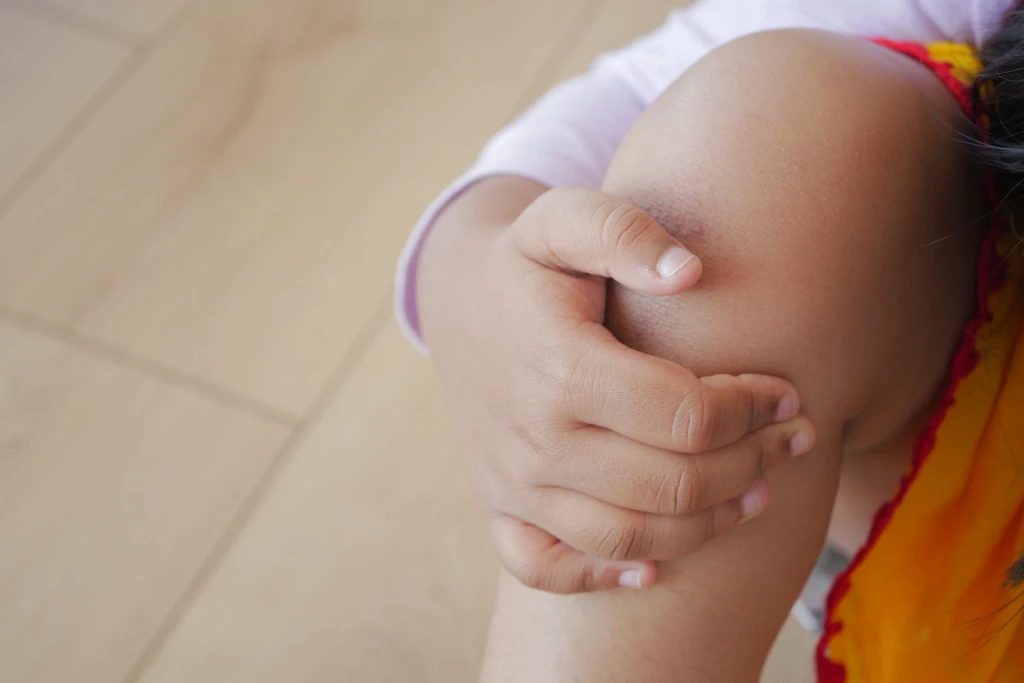
If your active child or teenager has started complaining of pain at the front of the knee, especially during or after football, basketball, or running, and there is a tender bony bump below the kneecap, Osgood-Schlatter disease is a common explanation. It is a type of osteochondrosis that affects the growth plate at the tibial tuberosity, the small bony point on the shin bone just below the kneecap where the patellar tendon attaches. It usually shows up between ages 10 and 15, often during a growth spurt, and is more common in boys.
The good news is that Osgood-Schlatter is self-limiting. Once the growth plate fuses at skeletal maturity, the condition resolves and most adolescents are left with no lasting trouble beyond a small permanent bump at the front of the shin. Treatment in the meantime focuses on calming the inflammation and keeping your child playing sport at a tolerable level.
Symptoms of Osgood-Schlatter Disease
- Pain and tenderness over the bony bump below the kneecap.
- Pain that worsens during and after sport, especially running and jumping.
- A visible or growing bony bump at the tibial tuberosity.
- Swelling or warmth around the bump.
- Stiffness of the knee, especially after sitting still.
- Pain when kneeling, climbing stairs, or squatting.
- Pain that eases with rest and returns with the next session.
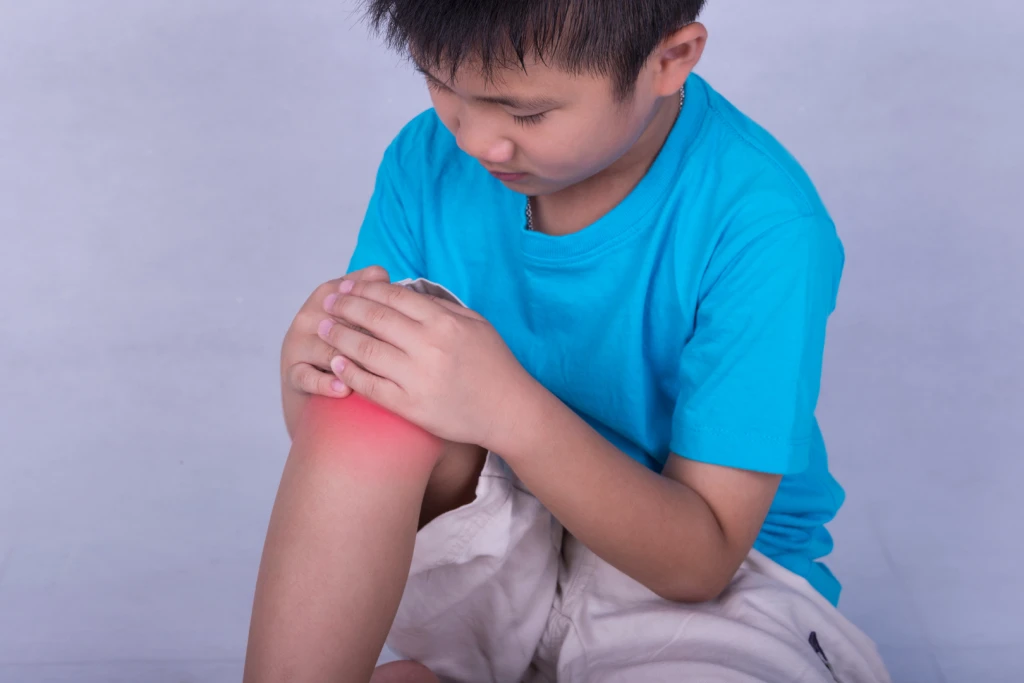
Causes of Osgood-Schlatter Disease
What Causes Osgood-Schlatter Disease?
- Repetitive traction from the patellar tendon on the growth plate at the tibial tuberosity during running and jumping.
- A growth spurt, where bones lengthen faster than the surrounding muscles and tendons stretch, increasing tension on the growth plate.
- Tight quadriceps and hamstrings, both of which increase pull on the tendon.
- Sudden increases in training load or sport frequency.
- Poor running or landing form that adds extra force across the knee.
- Inappropriate or worn-out footwear, especially without cushioning for hard surfaces.
Who Carries a Higher Baseline Risk?
- Active children and teenagers between ages 10 and 15 in a growth spurt.
- Children playing running, jumping, or pivoting sports such as football, basketball, netball, or athletics.
- Boys more than girls, partly because of higher exposure to high-impact sports.
- Children training intensively, especially across multiple sports in the same week.
- Children with tight quadriceps, hamstrings, or limited hip mobility.
Conditions Commonly Mistaken for Osgood-Schlatter Disease
Knee pain in children has several possible causes that can look similar at first. A paediatric assessment helps tell them apart from Osgood-Schlatter disease.
Patellar tendinitis
Patellar tendinitis is irritation of the tendon just below the kneecap, so the pain sits along the tendon itself. Osgood-Schlatter disease centres on the tibial tubercle, the bony bump lower down where that tendon attaches to the shin. That bump is often enlarged and tender in Osgood-Schlatter, which is the main way the two are told apart.
Sinding-Larsen-Johansson syndrome
Sinding-Larsen-Johansson syndrome affects the bottom tip of the kneecap where the tendon begins, rather than the bony bump lower down on the shin. Both are growth-related and appear in active children, so the location of the tenderness is the key to separating them.
Patellofemoral pain
Patellofemoral pain causes an ache around or behind the kneecap that worsens with stairs, squatting, or sitting for long periods. It is not focused on the tibial tubercle and does not produce the firm, tender bump below the kneecap that marks Osgood-Schlatter disease.
Sever’s disease
Sever’s disease causes heel pain in active children, and a child limping from a sore heel can look as though the problem is at the knee. Pinpointing where the tenderness actually sits, at the back of the heel rather than below the kneecap, separates the two.
Meniscal injury
A meniscal injury affects the cartilage cushion inside the knee joint and is a less common cause of knee pain in children. It usually follows a twisting incident and can cause catching, locking, or the knee giving way, none of which are features of Osgood-Schlatter disease.
Stress fracture
A stress fracture around the knee or upper shin comes from repetitive loading and is also less common. It tends to produce a more constant, focal bony tenderness away from the tibial tubercle, and imaging helps confirm it when the pattern does not fit Osgood-Schlatter disease.
Treating and Preventing Osgood-Schlatter Disease
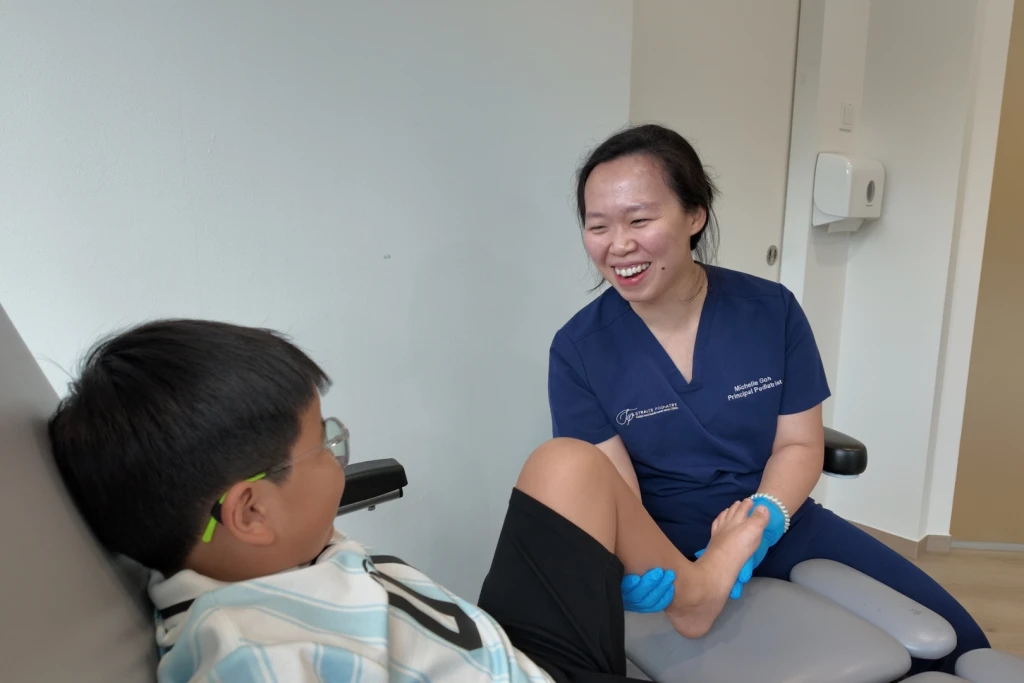
Treatment focuses on letting the growth plate settle while keeping your child as active as comfort allows. Relative rest is the foundation. That usually means cutting back the volume and intensity of the sport that flares the pain rather than full bed rest, and using ice and a short course of paracetamol or anti-inflammatory medication where appropriate and on medical advice.
Stretching the quadriceps, hamstrings, and calves reduces the pull on the patellar tendon. Strengthening exercises for the quadriceps, glutes, and core help the knee absorb load better during sport. Supportive footwear and, where biomechanics are part of the picture, custom orthotics can reduce stress through the knee by improving foot and lower limb alignment. A patellar tendon strap is sometimes used during sport to redistribute tendon load. For stubborn cases that are not settling with conservative care, shockwave therapy is sometimes considered to support healing at the growth plate.
Prevention overlaps with treatment. Gradual progression of training, adequate rest between sessions, regular stretching, and good running and landing form all reduce flare risk.
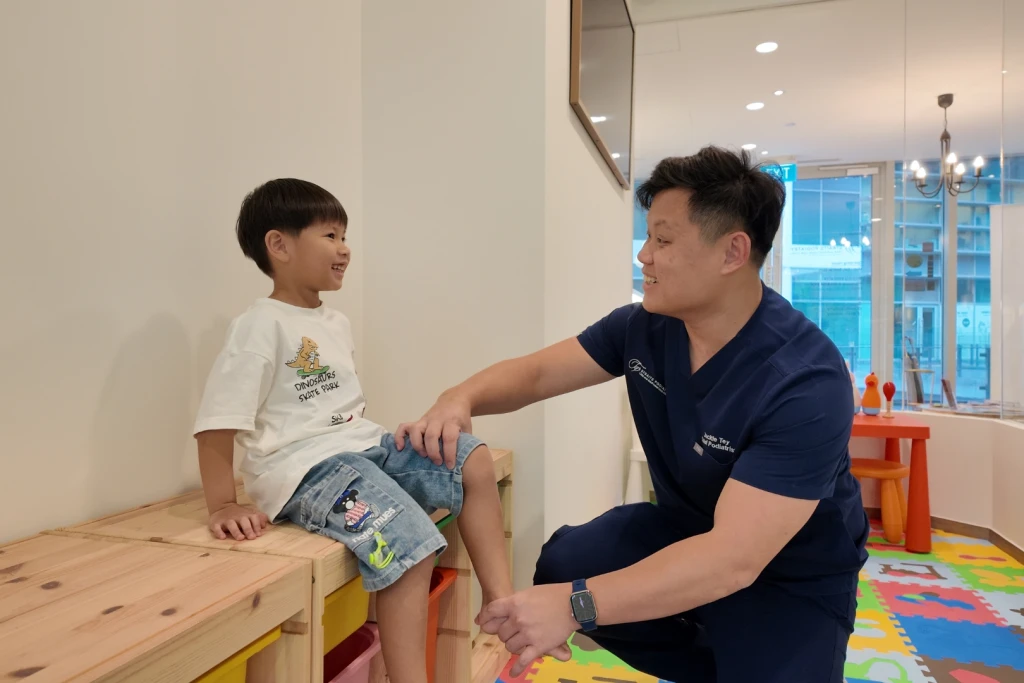
Have Your Osgood-Schlatter Disease Managed at Straits Podiatry
Paediatric musculoskeletal conditions are seen at all three Straits Podiatry clinics in Buona Vista, Orchard, and Paya Lebar, where our podiatrists work with children of all ages. Straits Podiatry is part of Healthway Medical Group.
A paediatric assessment for Osgood-Schlatter includes a paediatric assessment, gait analysis, lower limb flexibility and strength testing, sport and training review, and where indicated, custom orthotics, footwear advice, a stretching and strengthening programme, and a monitoring plan through the growing years.
Speak with Straits Podiatry or book a consultation for an assessment and a tailored approach to manage your child’s Osgood-Schlatter disease.
Frequently Asked Questions About Osgood-Schlatter Disease
Will my child grow out of Osgood-Schlatter disease?
Yes. Osgood-Schlatter is self-limiting and resolves once the growth plate at the tibial tuberosity fuses at skeletal maturity, usually in the mid-to-late teens. Most adolescents recover fully and return to sport without restriction. The bony bump at the front of the shin often remains permanently, but it usually causes no problems beyond occasional discomfort when kneeling. Outgrowing it is the expected path, but treatment in the meantime is what keeps your child playing sport at a tolerable level during the years it takes to resolve.
Does my child need to stop sport completely?
Usually not. Full rest is rarely needed and can be counterproductive for an active, growing child. What is needed is relative rest. That means cutting back the specific movements that flare the pain, easing total training volume, and substituting in lower-impact activities like cycling or swimming when needed. Most children continue playing sport at a modified level, with the rule of thumb being to stay below a “moderate” pain threshold rather than push through.
Does my child need orthotics?
Not every child does. Orthotics are considered when foot mechanics, lower limb alignment, or recurring flares suggest that load through the knee is the issue. By improving how the foot loads, orthotics can reduce the knee stress that feeds into the patellar tendon and the growth plate. For mild Osgood-Schlatter that settles quickly with rest, stretching, and strengthening, supportive footwear alone may be enough. A paediatric gait assessment guides whether orthotics will add value.
Will the bony bump go away?
Usually not entirely. The bump at the front of the shin is the body’s response to the repeated pulling at the growth plate, and a small permanent bump often remains into adulthood. It is mostly cosmetic and rarely causes problems. A larger bump can occasionally be sore when pressed against, for example, when kneeling, but pain typically settles after skeletal maturity even when the bump itself remains.
Will Osgood-Schlatter cause long-term knee problems?
For most children, no. Once the growth plate fuses, the knee functions normally and many adolescents return to high-level sport without lasting consequences. A small number experience ongoing discomfort over the bump, especially when kneeling, or occasional patellar tendon symptoms in adulthood. Steady management through the active phase, including stretching, strengthening, and biomechanical support where indicated, reduces those longer-term risks.