

You pivot on a planted foot during a futsal game, feel a pop, and the knee swells over the next twelve hours. Or you stand up from a low squat in the kitchen and the knee catches sharply on the inner side, then locks for a moment before releasing. For some patients, there is no specific incident at all, just a knee that has slowly started clicking and aching when bending or twisting. Each of these can point to a meniscus tear.
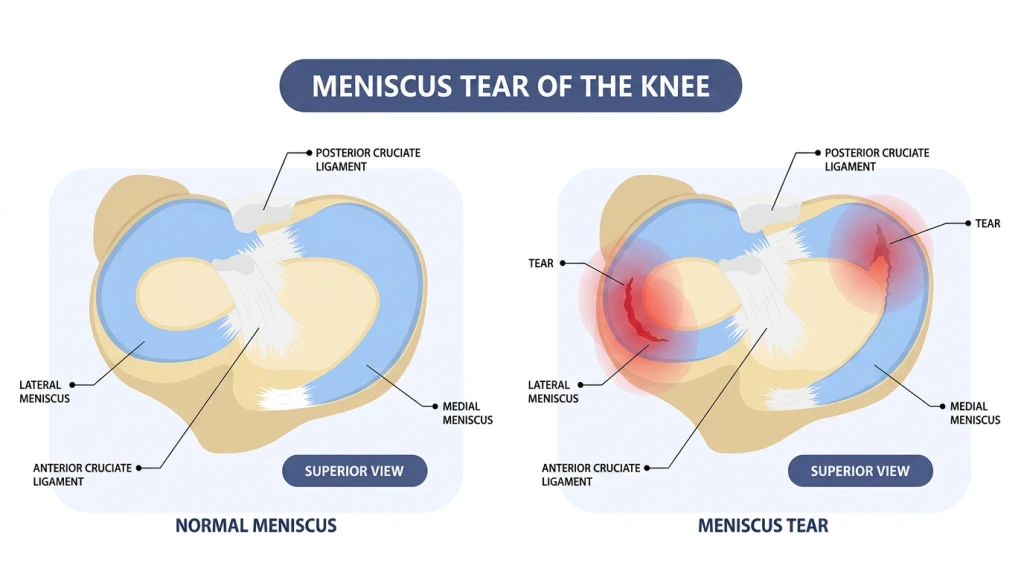
The meniscus is a wedge-shaped fibrocartilage structure inside the knee, with one on the inner side (medial) and one on the outer side (lateral). It cushions the load between the thighbone and shinbone, distributes pressure across the joint, and helps stabilise movement. When the meniscus is torn, the knee loses some of that shock absorption and stability, which is why pain, swelling, and a sense of catching or locking are common.
Symptoms of Meniscus Tear
Meniscus tear symptoms depend on the size, location, and type of the tear, but a recognisable pattern often emerges:
- Pain along the inner or outer side of the knee, often at the joint line.
- Swelling that develops within a few hours of the injury or after activity.
- A popping or clicking sensation at the moment of injury or with certain movements afterwards.
- A locking sensation where the knee gets “stuck” mid-bend and needs to be eased out.
- The knee feeling unstable or “giving way” when walking or turning.
- Difficulty fully straightening or fully bending the knee.
- Pain when squatting, twisting, or going up and down stairs.
Types of Meniscus Tear
Meniscus tears are commonly grouped into two broad categories. Acute traumatic tears tend to occur in younger patients after a twisting injury on a planted foot, often during sport. The tissue is otherwise healthy, and the tear is usually mechanical. Degenerative tears tend to occur in middle-aged and older patients where the meniscus has gradually weakened over time. These can develop with minimal trauma, sometimes just standing up from a deep squat. Within each category, tears can be described by shape, such as horizontal, radial, bucket-handle, or complex. The type matters because it influences the treatment pathway and how well the tear responds to conservative care.
Causes of Meniscus Tear
What Causes a Meniscus Tear?
A meniscus tear usually results from a force that exceeds what the cartilage can absorb. The classic mechanism is a twisting force on a knee that is bearing weight, but degenerative tears develop from cumulative load over time.
- Twisting or pivoting on a planted foot, often during football, basketball, badminton, or futsal.
- A direct blow to the knee, such as a tackle or fall.
- Squatting deeply, particularly with load.
- Age-related thinning and weakening of the meniscus, which makes it more prone to tearing with smaller forces.
- Pre-existing knee osteoarthritis, where the joint environment makes tears more likely.
Who Carries a Higher Baseline Risk?
- Athletes in pivoting sports such as football, basketball, badminton, and tennis.
- People over the age of 40, where degenerative meniscal change becomes more common.
- People with existing knee osteoarthritis or other joint changes.
- People with previous knee ligament injuries, particularly ACL injuries.
- People with occupations involving frequent deep squatting or kneeling.
Conditions Commonly Mistaken for a Meniscus Tear
Several other knee conditions can present in a similar way, and a clinical assessment, with MRI where indicated, is what sorts them out.
Collateral ligament strain
A medial or lateral collateral ligament strain can cause pain along the joint line that resembles a meniscus tear. The difference is usually the mechanism and the tenderness: a collateral ligament strain follows a sideways force to the knee and is tender over the ligament on the inner or outer side, whereas a meniscus tear more often follows a twisting movement and produces deeper joint-line pain with catching or locking.
Patellofemoral pain
Patellofemoral pain can produce vague pain with squatting and stairs that is sometimes mistaken for a meniscal problem. It differs in location and behaviour: the pain sits around or behind the kneecap rather than along the joint line, and it lacks the true locking or catching that a torn meniscus fragment can cause.
Loose body in the knee
A loose body, a small fragment of cartilage or bone floating within the joint, can cause locking that mimics a meniscus tear. The distinction is that a loose body tends to cause intermittent, unpredictable locking that can shift position, whereas meniscal locking is usually more consistent and tied to specific movements. Imaging helps confirm which is present.
Early knee osteoarthritis
Early knee osteoarthritis can also produce clicking and stiffness similar to a meniscus tear, and the two frequently overlap in older knees. Osteoarthritis pain is generally more diffuse, linked to activity and stiffness after rest, while a meniscus tear tends to give more focal joint-line tenderness and mechanical symptoms.
Treating and Preventing Meniscus Tear
The treatment plan depends on the type, size, and location of the tear, as well as the patient’s age, activity level, and overall knee health. The meniscus has a limited blood supply, with only the outer third (the “red zone”) having enough blood flow to heal well. Tears in the inner two-thirds (the “white zone”) have a more limited capacity to heal on their own.
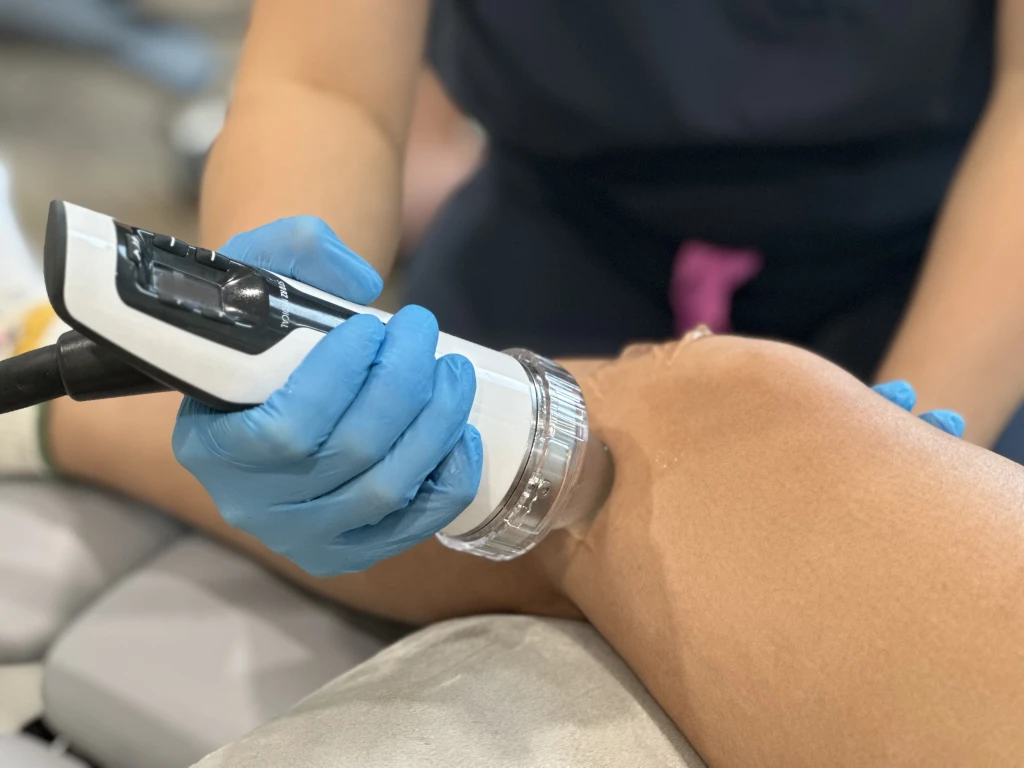
For small tears in the outer zone, or degenerative tears in a relatively stable knee, conservative care is often the starting point. The focus is on settling the irritated tissue, restoring range of motion, building strength around the knee, and addressing how the lower limb is loading the joint. Improving blood flow to the area through targeted therapy can support repair where the tear is in the vascular zone.
Where the tear is large, displaced, or causing mechanical locking that does not settle, surgery becomes the appropriate consideration. Most meniscal surgery is performed arthroscopically, either to repair the tear or to remove a damaged portion. The decision sits with an orthopaedic surgeon. The podiatry role is the conservative side and the post-surgical biomechanical follow-up. Reducing risk of re-injury involves maintaining strength around the knee, building back gradually after injury, and avoiding the pattern of deep squat and twist on a fully loaded knee.
Have Your Meniscus Tear Managed at Straits Podiatry
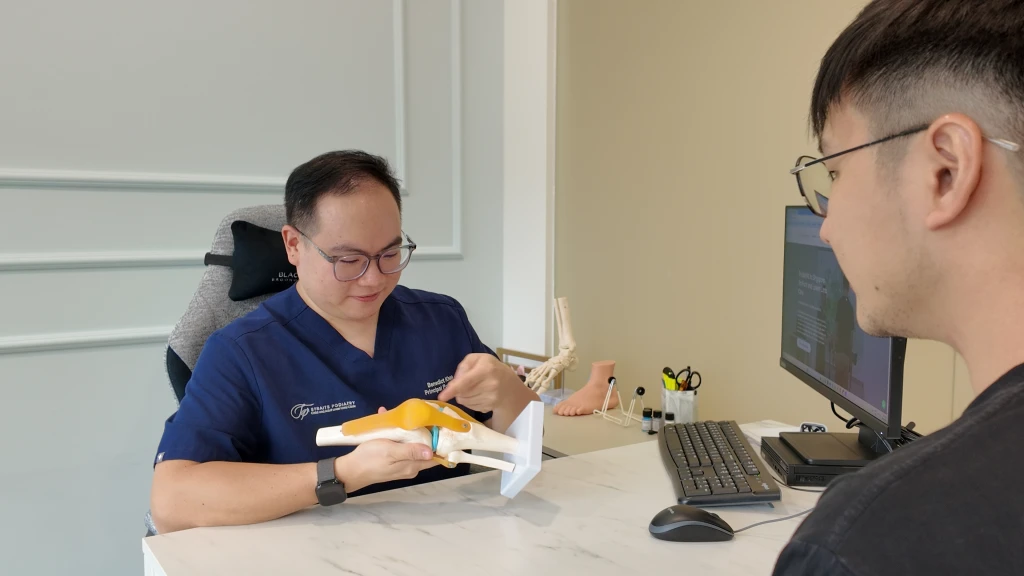
At Straits Podiatry, meniscus tear assessment includes a gait analysis and lower-limb biomechanical review to understand how the foot and ankle are loading the knee. Conservative care may involve focused shockwave therapy to stimulate blood flow and tissue regeneration, magnetotransduction therapy (EMTT) to reduce inflammation, and custom foot orthoses where biomechanics are loading the involved compartment. Where surgery is the appropriate next step, a referral to an orthopaedic surgeon is arranged.
Speak with Straits Podiatry or book a consultation for an assessment and a tailored approach to manage your meniscus tear.
Frequently Asked Questions About Meniscus Tear
Can a meniscus tear heal without surgery?
Some meniscus tears can heal or settle without surgery, particularly small tears in the outer vascular zone of the meniscus and degenerative tears that are not causing mechanical locking. Conservative care that includes activity modification, strengthening, and therapies that support blood flow to the area can be enough. Tears in the inner avascular zone, large bucket-handle tears, and tears causing persistent locking are less likely to heal on their own and usually require an orthopaedic opinion.
How do I know if my meniscus tear needs surgery?
The signs that surgery becomes a serious consideration include persistent locking of the knee, a tear that does not respond to a structured period of conservative care, significant instability during weight-bearing, or imaging that shows a tear pattern unlikely to heal. The decision sits with an orthopaedic surgeon based on clinical examination and imaging. A podiatrist’s role is to assess and manage the conservative and biomechanical side and to refer when the clinical picture calls for surgical review.
Will a meniscus tear lead to knee osteoarthritis?
A meniscus tear can increase the risk of developing knee osteoarthritis in the long term, because the meniscus normally distributes load across the joint and protects the cartilage. When meniscal tissue is lost or damaged, the cartilage on the underlying bone takes more load. The risk is influenced by how much meniscal tissue is preserved, how the knee is loaded afterwards, body weight, and the strength of the surrounding muscles. Conservative care that protects the joint and addresses biomechanics can help reduce that long-term risk.
How long is recovery from a meniscus tear?
Recovery time depends on the type of tear and the treatment pathway. A small, conservatively managed tear may settle in six to eight weeks of structured care. A meniscal repair surgery can take three to six months of graded rehab to allow the repair to heal. A partial meniscectomy, where torn tissue is removed, typically allows a faster return to activity, in the range of four to eight weeks, though the long-term implications for cartilage need to be considered. Your surgeon and rehab team will give you a more specific timeline based on your case.
Can I walk with a meniscus tear?
In most cases, yes, walking on level ground is appropriate and is usually encouraged once any acute swelling has settled. Walking maintains muscle tone, supports circulation, and helps preserve range of motion at the joint. The signs that walking should be limited or modified are the knee giving way under load, true mechanical locking where the joint cannot fully straighten, significant swelling after walking, or sharp pain that does not settle within a few hours of stopping. Stairs (particularly descending), uneven ground, and prolonged walking distances tend to load the meniscus more than level walking. Where walking is consistently painful, that usually indicates a tear pattern that warrants imaging and an orthopaedic opinion. Running, jumping, and sudden change of direction sports generally need to be paused until a clinical assessment confirms what the knee can tolerate, since these movements load the meniscus through deeper flexion and rotational patterns.