
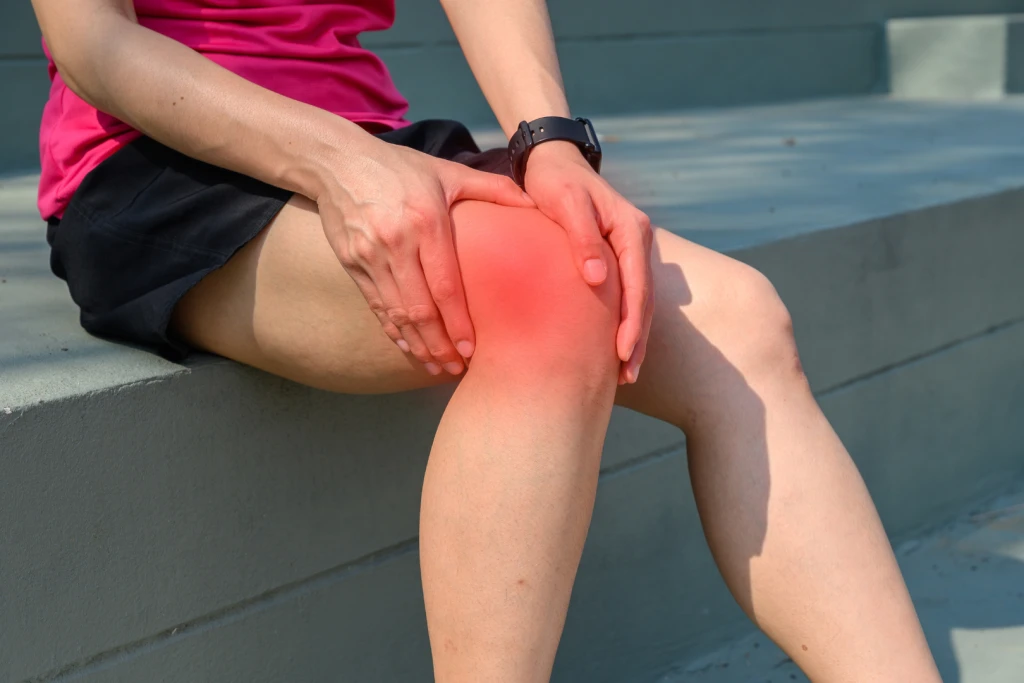
You finish a long run along East Coast Park, then a sharp, burning pain catches at the outside of the knee just as you slow down. It eases on rest but returns the moment you run again, often at around the same distance. For cyclists, the same pain can appear during the downstroke or when standing on the pedals. What started as a niggle has now turned into a stop signal at the same point every session.
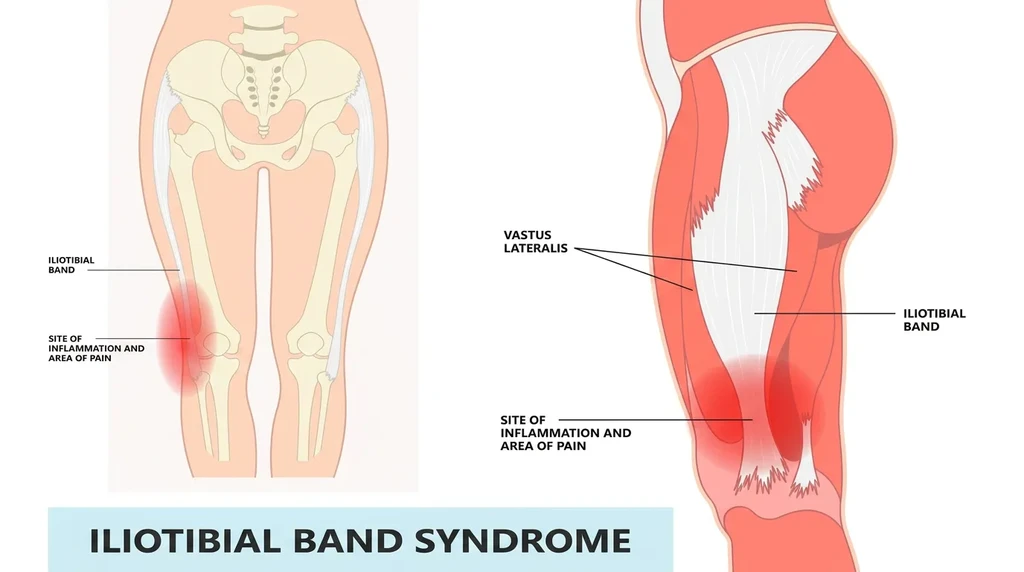
In many cases, this points to iliotibial band syndrome (ITBS), a common overuse condition that causes pain at the outer aspect of the knee. The iliotibial band (ITB) is a thick strip of fascia that runs from the outer hip to the outer knee and helps stabilise the rotation of the hip and lower limb. When the demand on the ITB outpaces what it can tolerate, it becomes painful and inflamed near the knee.
Symptoms of Iliotibial Band Syndrome
The way ITBS pain behaves often gives the clearest clue to what is happening at the outer knee:
- Sharp or burning pain on the outside of the knee, often appearing at a familiar point in a run or ride.
- Pain that radiates up the outer thigh or down the outer shin in some cases.
- Discomfort during running, cycling, descending stairs, or walking downhill.
- Tenderness when pressing on the outer knee, just above the joint line.
- Mild swelling or warmth at the outer knee in more irritated cases.
Causes of Iliotibial Band Syndrome
What Causes ITBS?
Two mechanisms are commonly described. Repetitive traction occurs when the ITB has to work harder to control rotation at the knee and hip during repetitive activity, such as long-distance running or where there is excessive foot pronation. Repetitive friction occurs as the ITB glides forwards and backwards over a bony point on the outer thighbone (the lateral femoral condyle). Both create irritation and inflammation around the outer knee.
- Sudden increase in training volume, frequency, or intensity without adequate recovery.
- Repeated running or cycling, especially on cambered roads or with poor pacing.
- Flat feet or excessive foot pronation that increases rotational load on the lower limb.
- Tightness in the hip, gluteal, or thigh muscles affecting how the leg tracks.
- Weakness in the hip abductors and gluteal muscles that normally control the leg’s alignment.
Who Carries a Higher Baseline Risk?
- Runners building up mileage, especially during marathon training cycles.
- Cyclists who increase distance or saddle time quickly without conditioning the hips.
- People with knock knees, bow legs, or a noticeable leg length difference.
- People returning to sport after time off, where the ITB and supporting muscles have lost conditioning.
- Office-based individuals taking up running suddenly, where hip and gluteal strength has not been built up.
Conditions Commonly Mistaken for ITBS
Outer knee pain is not always ITBS. A few other structures on the lateral side of the knee can produce a similar ache, and sorting between them matters because the treatment pathway differs. A clinical assessment helps confirm which structure is actually involved.
Lateral meniscus tear
A lateral meniscus tear causes pain on the same outer side of the knee, so it is easily confused with ITBS. The distinguishing feature is mechanical: a meniscus tear often produces locking, catching, or clicking within the joint, and the pain sits deeper in the joint line rather than over the bony point on the outer knee where the ITB crosses. ITBS pain is more superficial and tends to switch on at a predictable point during a run.
Biceps femoris tendinopathy
Biceps femoris tendinopathy causes pain slightly behind the outer knee, where this hamstring tendon attaches to the head of the fibula. It differs from ITBS in location and in what provokes it: the pain is more posterior and is aggravated by resisted knee bending and hamstring loading, rather than by the repetitive straightening and bending that irritates the ITB.
Lateral collateral ligament strain
A lateral collateral ligament strain can also feel similar, particularly after a twisting or sideways-stress injury to the knee. The differentiator is history and tenderness: a ligament strain usually follows a specific incident and is tender directly over the ligament on the outer knee, whereas ITBS builds up gradually with training load and has no single injury moment.
Treating and Preventing Iliotibial Band Syndrome
Treatment usually starts by reducing the load that keeps aggravating the ITB, then addressing the factors driving the load through the outer knee. Resting alone often gets the pain to settle in the short term, but the problem tends to come back at the same mileage if the underlying contributors are not addressed.
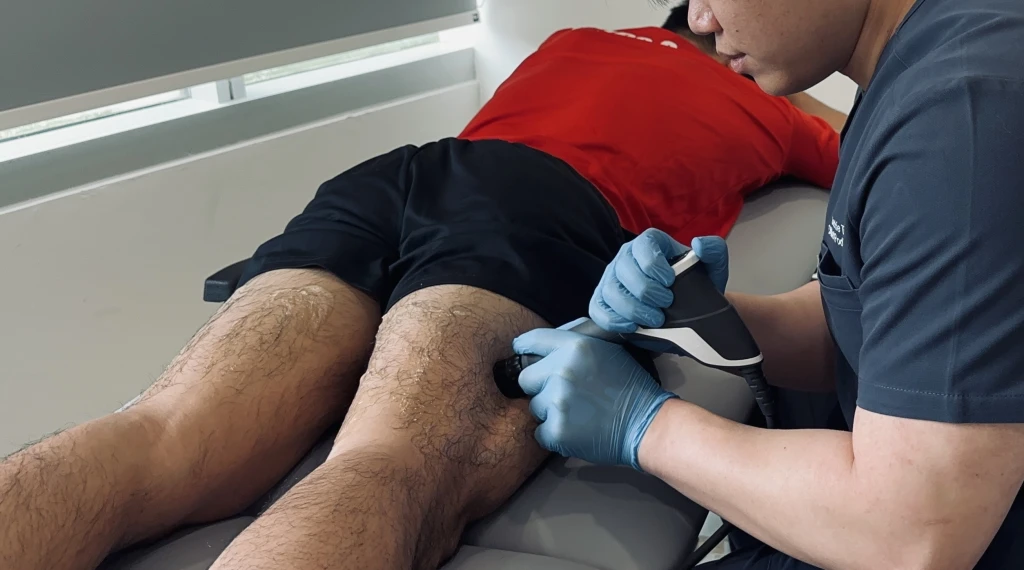
The early focus is on settling the irritated tissue with relative rest, ice after activity, and modifying the runs or rides that consistently provoke the pain. Stretching and strengthening work then targets the hip abductors and gluteal muscles, which control how the leg tracks and how much rotational stress the ITB has to absorb. Soft tissue work on the tight thigh and hip muscles can ease tension feeding into the band.
Where biomechanics is contributing, addressing foot posture and lower-limb alignment matters. Excessive pronation, leg length differences, and a high Q-angle each shift more rotational demand onto the ITB. Once the irritation has settled, return to running or cycling should be graded, with attention to weekly mileage, cadence, and the surfaces used. Building tolerance back gradually is what usually keeps ITBS from recurring.
Have Your Iliotibial Band Syndrome Managed at Straits Podiatry
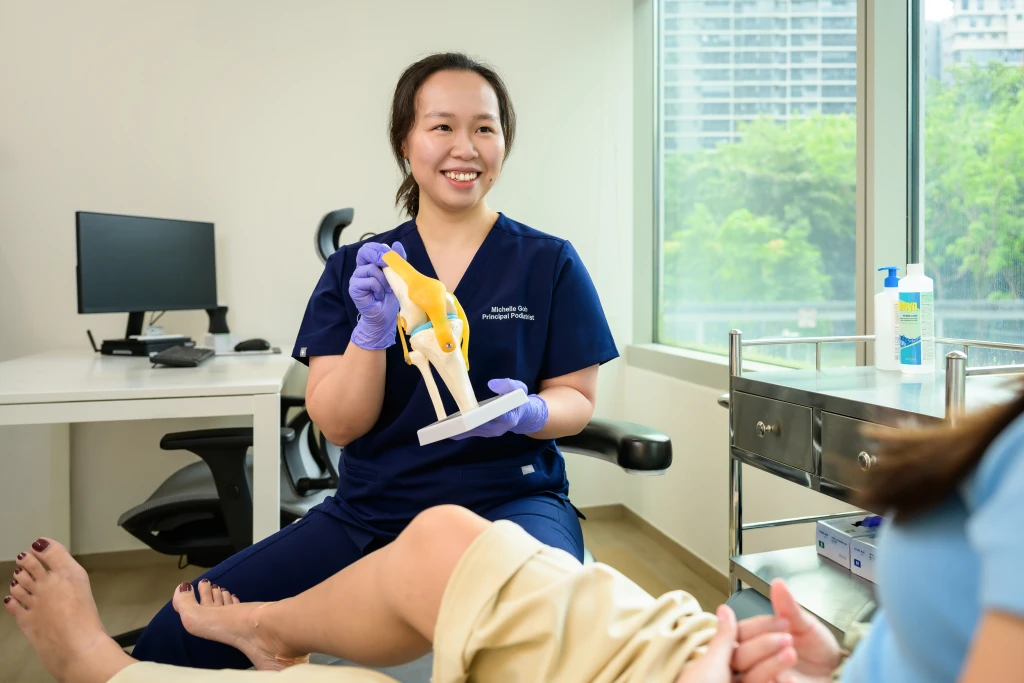
At Straits Podiatry, ITBS assessment starts with a gait analysis and a lower-limb biomechanical review to identify what is loading the ITB. From there, care may involve custom foot orthoses to control rotational forces from the foot, focused shockwave therapy to stimulate tissue repair in chronic cases, and radial pressure wave therapy to ease tension in the lateral thigh and hip muscles. Where rehab is needed, our physiotherapist supports strengthening and return-to-sport planning.
Speak with Straits Podiatry or book a consultation for an assessment and a tailored approach to manage your iliotibial band syndrome.
Frequently Asked Questions About Iliotibial Band Syndrome
How long does ITBS take to recover?
Recovery time depends on how long the symptoms have been present and whether the underlying contributors are addressed. Mild cases caught early can settle in two to four weeks of reduced activity and targeted rehab. More persistent cases that have been running through pain for months can take eight to twelve weeks, sometimes longer, because the tissue has been chronically irritated. The key factor is whether load is genuinely reduced during recovery and whether the hip strength and foot biomechanics driving the problem are addressed.
Can I keep running with ITBS?
Running through ITBS pain is generally not advisable because it tends to lengthen recovery and entrench the irritation. A short period of relative rest, cross-training with non-painful activities such as swimming or pool running, and a graded return once the knee settles tends to lead to a better outcome. If running is unavoidable, shortening the distance and pace below the threshold that triggers pain is a more reasonable compromise than pushing through.
Is foam rolling the ITB effective?
Foam rolling the iliotibial band itself does little to stretch the band, because the fascia is too dense to lengthen with pressure alone. Where rolling can help is by releasing tension in the muscles that feed into the ITB, such as the tensor fasciae latae and the lateral quadriceps. Strengthening the hip and gluteal muscles tends to address the cause more effectively than rolling alone.
When should I see a podiatrist for ITBS?
Outer knee pain that returns at the same point in every run, lingers more than two weeks despite reducing training, or interferes with everyday activities such as stairs warrants an assessment. Earlier review also helps where there is a known biomechanical contributor such as flat feet, a leg length difference, or weakness in the hips and glutes, because addressing these earlier shortens recovery.
How can I prevent ITBS from coming back?
Recurrence is mostly about what happens once the pain settles, not about the flare itself. The main levers are hip and gluteal strengthening (particularly the gluteus medius, which controls how the femur rotates and the knee tracks during running), gradual training progression that respects the ten percent rule for weekly mileage increases, varied running terrain rather than long stretches of cambered roads, and footwear that suits the foot type. Where flat feet, overpronation, or a leg length difference are part of the picture, custom foot orthoses can reduce the rotational load on the iliotibial band during stance phase. Maintaining the strength work after the symptoms settle matters more than people expect. ITBS often returns when the strength programme stops once running feels normal again. A gait analysis and biomechanical assessment can identify the specific drivers in your case, which makes the prevention plan more targeted than generic advice.