
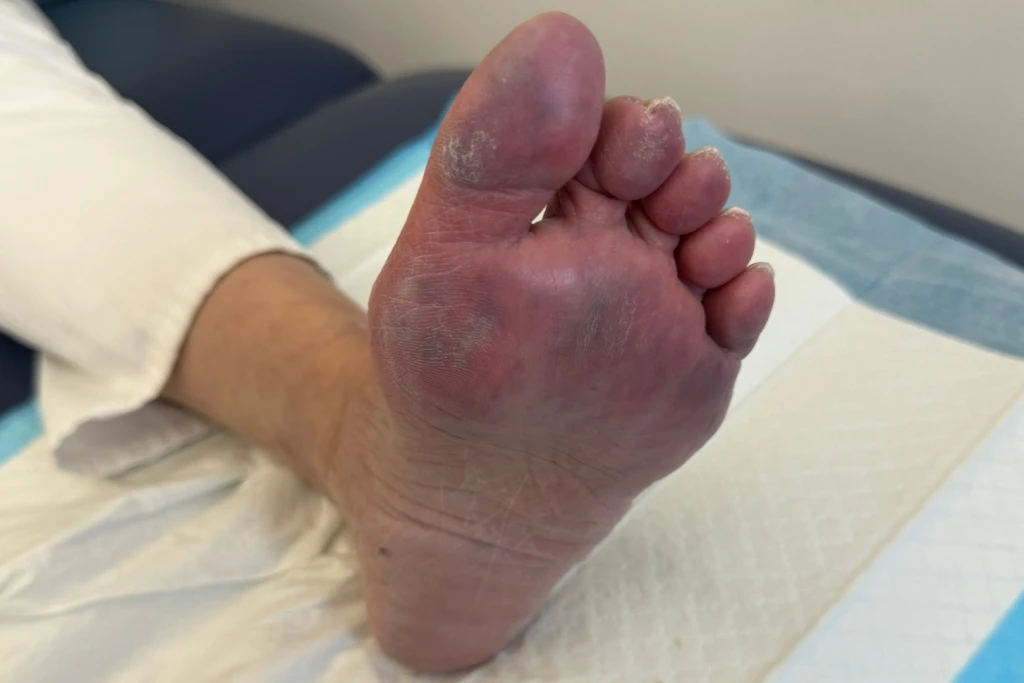
周围动脉疾病 (PAD) 是供应腿部与足部血液的动脉变得狭窄。动脉变窄后,抵达组织的氧气与养分减少,进而引起行走时的腿部疼痛、双脚冰冷或苍白,以及愈合缓慢或无法愈合的伤口。周围动脉疾病与造成心脏疾病的潜在病况息息相关:糖尿病、高血压、高胆固醇与吸烟。在新加坡,全国人口健康调查 2024 报告显示,9.1% 的 18 至 74 岁居民患有糖尿病(外部链接,于新分页开启),周围动脉疾病也成为足部并发症与下肢截肢的主要推手之一。
周围动脉疾病并非以足科主导的病况。负责诊断与治疗动脉狭窄本身的专科是血管外科,必要时由介入放射科协助进行血管内介入治疗。足科则位于足部一侧:筛查早期循环变化、照护血流不佳足部上的伤口、就鞋履与压力减压提供建议,并在血流需要恢复时协调转诊。在海峡足科诊所就诊、怀疑有周围动脉疾病的患者会被转介至血管科进行评估,海峡足科诊所则会与血管团队并行持续提供照护。
周围动脉疾病的症状
- 行走时出现、休息后缓解的小腿、大腿或臀部抽筋或酸痛(间歇性跛行)
- 一只脚或腿明显比另一只冰冷
- 足部皮肤苍白、暗沉或带紫色
- 小腿毛发生长减少或完全脱落
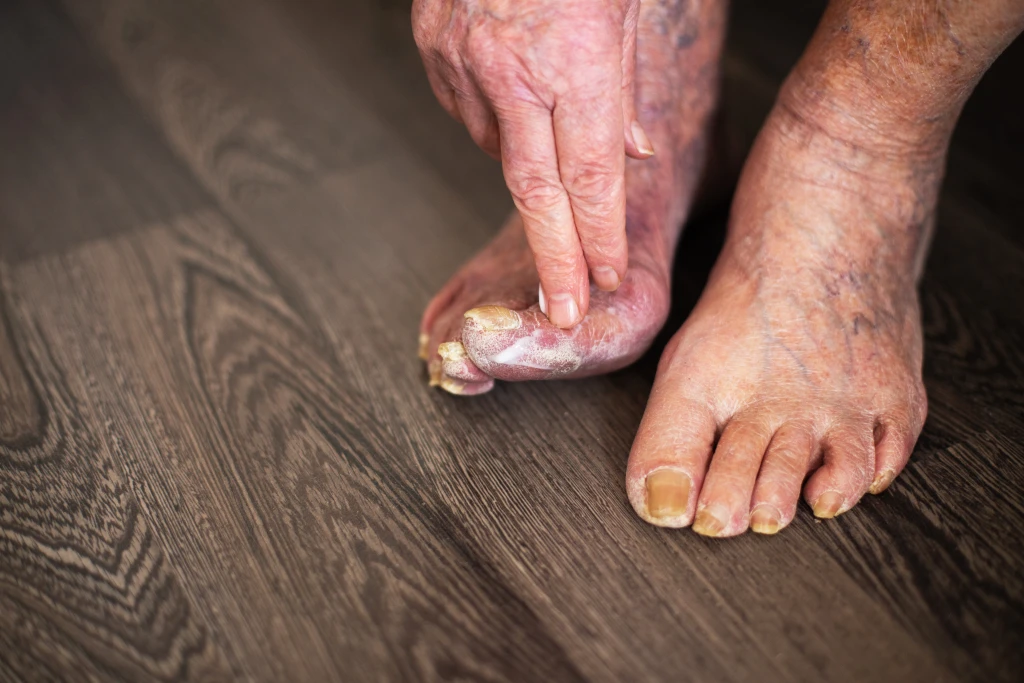
- 小腿皮肤变薄、发亮
- 脚指甲生长变慢或增厚
- 足部或小腿出现无法愈合的伤口或溃疡
- 进展期周围动脉疾病可在休息时出现足部疼痛,尤其是夜间(静息痛)
休息时疼痛、足部冰冷苍白,或伤口迟迟不愈合,都是更严重疾病的征兆,应及时就医评估,而非等待下一次例行复诊。
周围动脉疾病的成因
是什么造成周围动脉疾病?
周围动脉疾病几乎都由动脉粥样硬化引起:脂肪斑块在动脉壁内累积,使管腔变窄、血流减少。同样的过程也推动冠状动脉疾病与中风风险,这也是周围动脉疾病被视为更广泛心血管风险的标志,而非只是单纯腿部问题的原因。糖尿病会加速这个过程,尤其在膝关节以下较小的动脉。吸烟是最重要的单一可调整风险因子。较少见的成因包括血管炎、血栓或某些遗传性疾病,也可能呈现相似的临床样貌。
哪些人群基线风险较高?
- 罹患糖尿病者,尤其是病程长或控制欠佳者
- 现正吸烟或曾经吸烟者
- 高血压患者
- 高胆固醇患者
- 慢性肾病患者
- 既往有心脏疾病或中风病史者
- 有血管疾病家族史者
- 年龄超过 60 岁者
容易与周围动脉疾病混淆的病况
行走时小腿疼痛并不总是周围动脉疾病。另有数种病况会造成与活动相关或酸痛性的腿部疼痛,而区分它们相当重要,因为治疗方式完全不同。当临床表现不明确时,非侵入性血管检测(踝臂指数 (ABI)、多普勒超声)有助于区分周围动脉疾病与其他成因。对糖尿病患者或具有其他血管风险因子者而言,进行检测的门槛会更低。
腰椎神经压迫
下背部椎管狭窄可压迫神经,造成行走时出现的腿部疼痛、沉重感或抽筋,这种模式有时被称为神经源性跛行。与周围动脉疾病的区分点在于,疼痛通常在坐下或身体前倾时缓解,而非单纯站着不动即可缓解,并且常与背部症状有关。足部脉搏一般正常,这一点也指向循环问题以外的成因。
静脉疾病
静脉疾病源自腿部静脉功能不良,而非动脉狭窄,会引起酸痛、沉重感与肿胀,通常在一天结束时加重,抬高腿部后缓解。这与周围动脉疾病恰好相反:后者的症状由活动诱发,而腿部下垂时反而可能舒服一些。可见的静脉曲张、踝部周围的皮肤色素沉着与肿胀,都指向静脉而非动脉的成因。
肌肉骨骼性腿部疼痛
肌肉与肌腱问题,例如小腿肌肉拉伤或肌腱病变,也可能造成与活动相关的腿部疼痛,而被误认为循环不佳。线索在于这类疼痛通常与某个特定动作或近期活动量增加有关,按压受影响的肌肉或肌腱时会有压痛,并且不会遵循血管性跛行那种可预测的走走停停模式。这些情况下足部脉搏维持正常。
周围动脉疾病的治疗与预防
周围动脉疾病的治疗在两个层面同时进行:处理潜在疾病,以及保护足部不受血流减少所带来的后果影响。
血管与药物层面的照护由患者的家庭医生与血管外科主导。风险因子管理涵盖戒烟、控制血压、控制胆固醇,以及在患有糖尿病时收紧血糖控制。医疗团队所开立的药物可能包括抗血小板药、他汀类药物与降血压药。结构化步行运动能改善许多间歇性跛行患者的步行距离。血管重建手术,例如血管成形术、支架置入或绕道手术,当症状严重、伤口无法愈合或肢体存活受威胁时,由血管外科考虑施行。
足部照护一侧正是足科的角色。血流减少的足部更容易发生糖尿病足溃疡、感染与愈合缓慢。足科照护包括定期的皮肤与指甲护理以预防皮肤微小破损、合脚的鞋履、在压力分布不均时配置定制鞋垫、溃疡出现时的伤口照护,以及在循环恶化时及早转介至血管外科。预防与一般心血管预防大量重叠:不吸烟、控制血糖与血压、保持活动,以及在患有糖尿病时定期接受足部筛查。
海峡足科诊所为您管理周围动脉疾病
海峡足科诊所在周围动脉疾病中所扮演的角色,是以血管外科为主导的整体照护中,足部照护与筛查的一环。照护范畴包括纳入血管与神经评估的糖尿病足部筛查、定期皮肤与指甲护理以预防伤口、当血流减少延迟愈合时进行伤口与溃疡管理及合适的减压、鞋履建议与定制鞋垫,以及在动脉血流需要恢复时及时转介至血管外科。海峡足科诊所会与您的家庭医生、内分泌科与血管外科并肩合作,依您个别的风险等级,纳入持续的复查节奏。
请与海峡足科诊所联系,或预约咨询进行评估,并为您的周围动脉疾病拟定合适的应对方案。
关于周围动脉疾病的常见问题
我应该看血管外科医生还是足科医师来处理周围动脉疾病?
就动脉疾病本身而言,由血管外科主导。他们诊断病情严重程度、决定是否需要血管重建手术,并在需要恢复血流时执行相应手术(血管成形术、支架置入、绕道手术)。足科则在一旁支援,照护足部:筛查早期循环变化、在皮肤与指甲问题演变为伤口前加以处理、管理已出现的溃疡,以及在需要血管介入时协调转诊。多数周围动脉疾病患者,尤其是同时患有糖尿病者,从两者皆能获益。
治疗周围动脉疾病能否逆转我动脉所受的损伤?
已经形成的动脉粥样硬化狭窄无法借由药物逆转,但治疗可减缓或终止狭窄进一步发展,并降低重大事件的风险。戒烟、控制胆固醇、控制血压,以及收紧血糖控制,皆能改变疾病的发展轨迹。血管重建手术可打开特定狭窄的血管段以恢复血流,但潜在疾病过程仍需长期管理,才能维持治疗结果。足部照护一侧则并行进行:即使在成功完成血管重建之后,曾经历周围动脉疾病的足部仍属较高风险,会受益于持续的复查。
行走时小腿疼痛是否一定就是周围动脉疾病?
不一定。行走时小腿或大腿疼痛,也可能源自腰椎神经压迫、静脉疾病、小腿肌肉拉伤或肌腱病变。周围动脉疾病的疼痛通常会在可预测的步行距离后出现,停下几分钟内便能缓解,并以小腿或大腿的抽筋或酸痛感呈现。在站立不动时更明显、身体前倾后缓解的疼痛,则较符合脊椎相关疼痛。在临床表现不明确时,非侵入性血管检测有助于区分周围动脉疾病与其他成因。糖尿病患者进行检测的门槛较低,因为周围动脉疾病在此族群中更常见,且症状常较不明显。
周围动脉疾病若不治疗会如何?
未经治疗的周围动脉疾病多半会持续进展。轻度的间歇性跛行可能发展为静息痛,再演变为无法愈合的伤口,最终进展至坏疽,即血流已不足以维持组织存活。一旦严重周围动脉疾病的足部出现伤口,大幅截肢的风险便会明显上升。周围动脉疾病同时也是身体其他部位疾病的标志:在未经治疗的情况下,患者因相同的潜在动脉粥样硬化而出现心脏病发作与中风的风险也会升高。及早诊断与治疗,加上积极的风险因子管理,能够改变这一发展轨迹。
罹患周围动脉疾病后,我应该多久检查一次双脚?
复查间隔依个别风险而设定。同时患有周围动脉疾病与糖尿病、糖尿病神经病变、既往有伤口或明显畸形的患者,可能每数月便需复查一次。仅有轻度周围动脉疾病、无其他风险特征者,可能每年复查一至两次即可。其原因在于:血流减少的足部,从皮肤微小破损发展至严重感染的时间窗口较短。定期复查能在早期变化(厚茧分布改变、悄然出现的皮肤皲裂、脚趾颜色变化)仍易于处理的阶段便加以发现。