
First, why your current slippers are probably making things worse
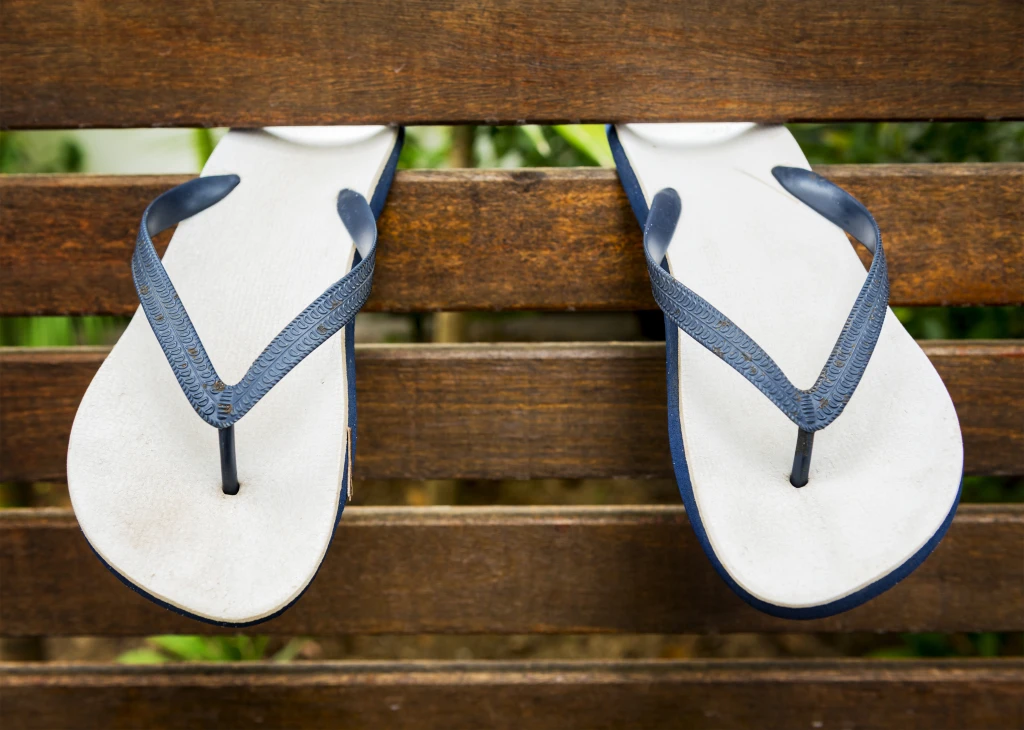
If you are like most working adults with heel pain, you likely have two or three pairs of flat rubber flip-flops in rotation. A nicer pair for going out, a cheaper pair by the door, and a third forgotten pair somewhere.
Your plantar fascia is the thick band of tissue running along the underside of your heel, from the heel bone forward to the toes. Every step, it takes some load. The shoe is supposed to absorb part of that load. A flat rubber sole absorbs almost none of it, which means your fascia absorbs all of it. Ten hours a day, on tile floors, day after day. That is the load pattern that causes the first-step morning heel pain you are walking into clinic with.
The fix is not to swear off slippers forever. It is to upgrade the pair you spend the most hours in.
So what should I actually look for when I buy a new pair?
Three things. Once you know what to check, you can spot a decent pair in about ten seconds, in any shop.
A defined heel cup. Slide your finger along the back of the footbed where your heel would sit. You should feel a slight depression that cradles the heel. Not a hard wall, but a contour that stops the heel from sliding around. That little detail keeps the heel aligned, your heel fat pad concentrated, and cushions the heel. Pure flat slippers do not have this at all.
An arch contour. Press your thumb into the inside middle of the footbed. There should be a visible bump that supports your arch. Firm enough that it does not flatten under your thumb, but not so rigid that it feels like a stone. Most flat rubber slippers, including Singaporeans’ favourites like Crocs or Havaianas, have nothing here.
A sole that bends in the right place. Hold the sandal at both ends and try to bend it. It should bend at the ball of the foot, roughly where your toes meet the rest of your foot. It should not fold easily in the middle of the arch. If you can twist it into a U-shape with no resistance, the foot gets no support from it.
If you find those three things, you have found a pair worth trying. The price tag, beyond a certain point, matters much less than people think.
Okay, but what kinds of sandals tick those boxes?
A few categories I usually point patients toward, without recommending specific brands.
Orthopaedic-style sandals and slides, usually in the $40 to $120 range. Designed with the heel cup, arch contour, and bendable forefoot built in. They look like normal sandals and work for daily Singapore wear. This is one of the defaults I suggest to patients who want something to replace their flip-flops without going down a $300 rabbit hole.
Recovery slides from running shoe brands, usually $50 to $90. Originally made for runners to wear after a long marathon, but they have evolved into a strong everyday option. Usually have a deep heel cup, good arch contour, and impact-absorbing soles. The look is sportier, but many find it difficult to accept for going out. The key thing to note here is that some recovery slides may make you feel unstable because of the rocker sole, making you feel like you are rocking back and forth.
Walking sandals with adjustable straps, around $60 to $150. Good if you walk longer distances on weekends or travel and want one pair that works for both city walking and indoor wear. The straps let you fine-tune the fit, which matters more as the day goes on.
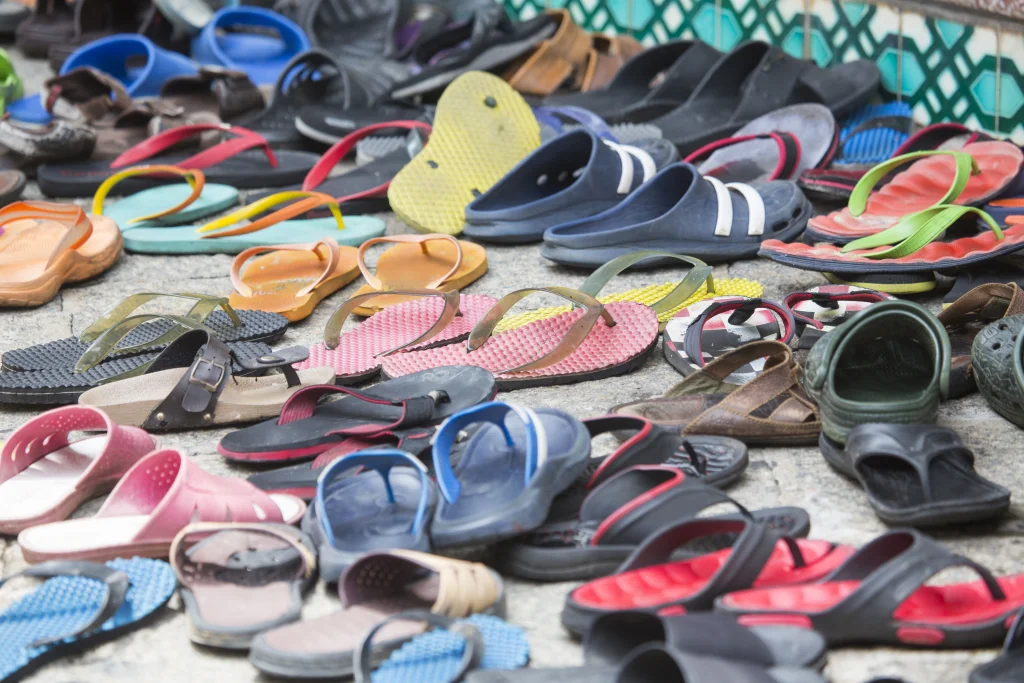
What I would avoid: the standard $5 rubber flip-flop, thin foam slides that compress flat the first time you stand on them, and anything where the design clearly prioritises looks over the three checks above.
What about at home? That is where I spend the most time
This is usually the next question, and it is the most important one. The “home slipper” category is where the worst footwear in most Singapore households lives. That is if you even wear slippers at home.
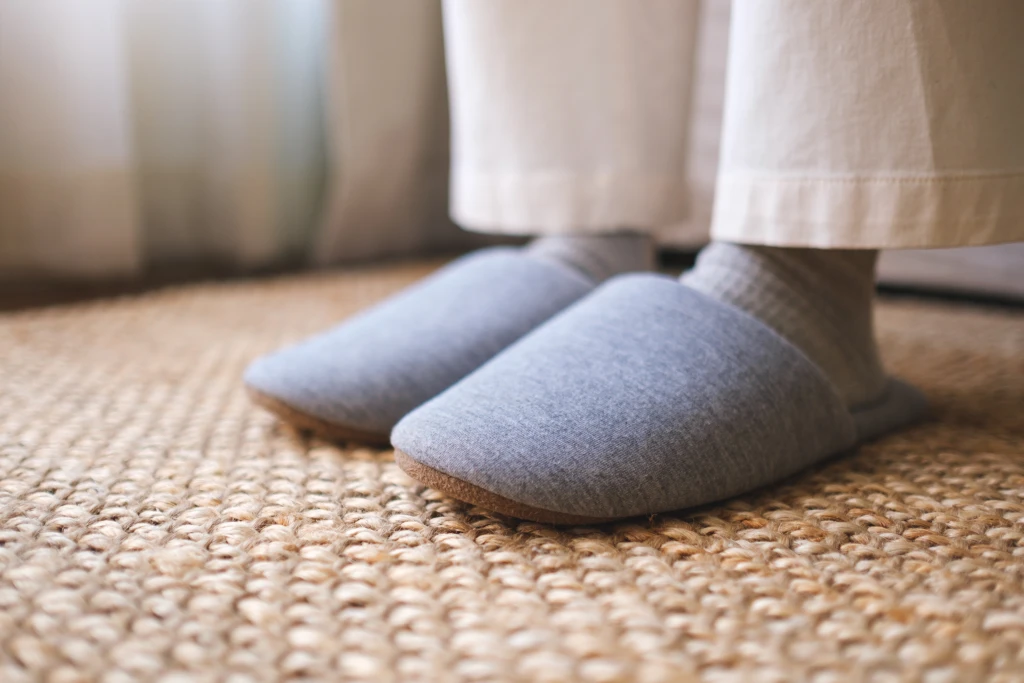
Most people would own those generic “hotel slippers”, and kept them by the door. They get worn occasionally for the four to six hours you are at home in the evening if they get remembered. Most patients think that those slippers help cushion the feet. But none of them have a heel cup, arch, or proper sole.
Here is my honest suggestion. Buy one pair of decent home slippers with the three features above. Keep them by the door. Use them every time you are at home. If you have tile floors, this single change matters more than almost anything else you can do with footwear. If your mum stands and cook for long hours, invest a pair for her too.
What about custom orthotics, do I need one or is a good sandal enough?
Honest answer: it depends on what is actually driving your plantar fasciitis.
If your symptoms are recent, mild, and not linked to a clear structural foot issue, a good supportive sandal plus changes to your daily footwear is often enough to make a meaningful difference within a few weeks.
If your fasciitis keeps coming back, or the shape of your arch is part of the cause (flat feet, high arches, a leg length difference, or significant overpronation), the sandal alone will only get you so far. That is where custom foot orthotics come in. They are prescribed after a gait and biomechanical assessment and built to redistribute load specifically based on how your foot is loading. They go into closed-back shoes, and certain styles can be designed to fit into specific sandal designs.
Not everyone with plantar fasciitis needs a pair of custom orthotics. They are needed by people whose foot structure is doing the work that no off-the-shelf sandal can address. The assessment is what tells us which group you are in.
Where do I actually go to buy these in Singapore?
I will give you a few practical tips from non-sponsored point of view.
The bigger shoe retailers across Singapore carry a reasonable selection of orthopaedic-style sandals. Department stores in Orchard, Suntec, and the larger neighbourhood malls usually have a footwear section worth checking.
Try sandals on at the end of the day when your feet are slightly swollen. A fit that feels perfect at 8am can feel tight at 6pm.
Wear the new pair indoors for two to four hours before you commit to outdoor use. Most retailers accept returns on shoes with unworn outdoor soles.
Be cautious with online-only purchases for your first pair. Sizing varies a lot between brands, and the arch and sole-flex check matter. Once you find a brand and size that works, online reordering is straightforward.
If you already wear orthotic insoles, bring them with you when trying sandals. Some sandal footbeds can be swapped out, although most cannot.
So what would you do this week if you were me?
Pick the pair of slippers you wear the most hours in. For most patients, that is the home pair. Replace it with one decent supportive pair in the $50 to $80 range that meets the three checks above. Keep using it every day. Give it two to four weeks.
Most patients I see who make that one change notice a meaningful reduction in morning heel pain over the next month, simply because the fascia is no longer taking all of the load for the five to eight hours they are at home.
If your symptoms have been going on for months, or you have tried the footwear change and the calf stretches that usually get recommended first, and the heel pain is not budging, that is the signal that something more specific is going on and the next step is a proper assessment. Book a consultation at any of our three Singapore locations, and our podiatrists can take it from there.