High Ankle Sprain (Syndesmosis Injury) Symptoms, Causes, and Management

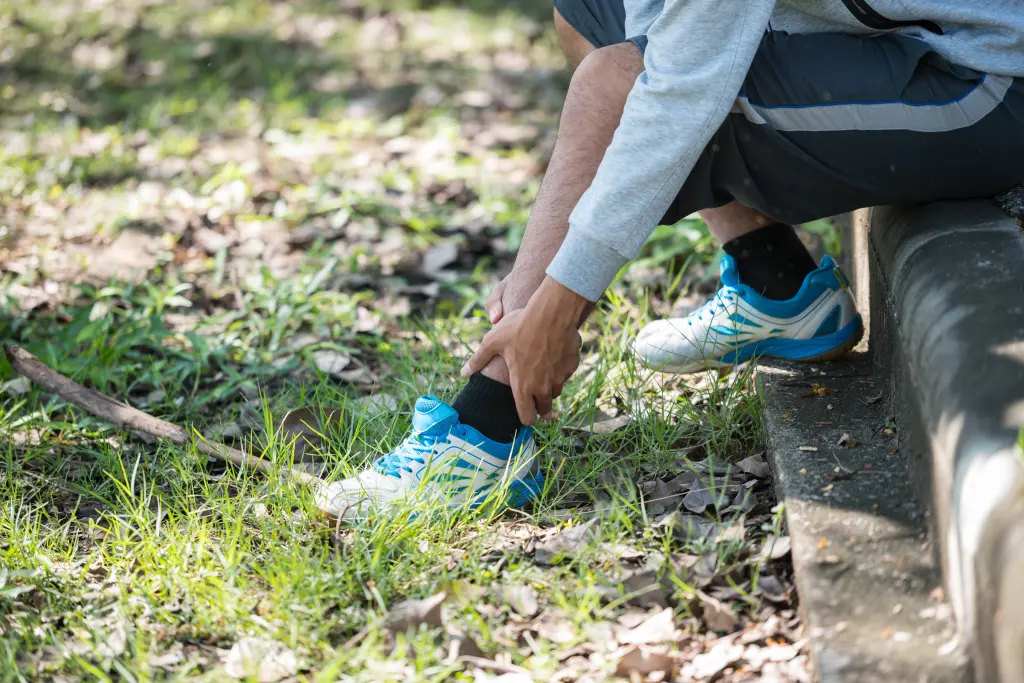
Person with ankle pain resulting from high ankle sprain

You rolled your ankle playing football two weeks ago. The X-ray came back clear, you started a typical ankle sprain rehab, and you assumed you would be back to training within a few weeks. Three weeks in, the ankle still does not feel right. The swelling has settled, but weight-bearing hurts in a way that does not match a typical inversion sprain. The pain sits higher up, closer to your shin. Going up stairs aggravates it. Pushing off to run is the worst.

This is the early presentation of a high ankle sprain we see in clinic regularly. The condition is often missed in its first 2 to 3 weeks because the initial mechanism looks like a normal ankle sprain, the X-ray is usually clear in mild cases, and the rehabilitation prescribed is the standard ankle sprain plan. By the time you realise the rehab is not working, the injury has been loaded for an additional 3 to 4 weeks.

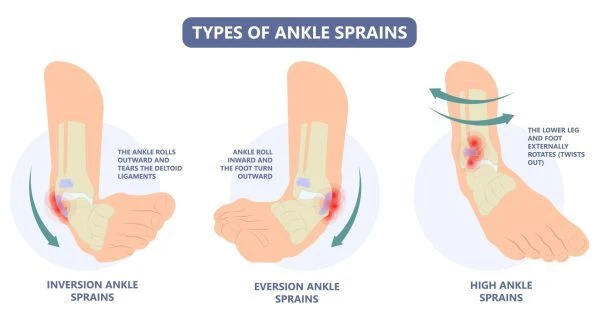
A high ankle sprain is an injury to the syndesmosis, the strong fibrous structure that holds the two lower leg bones (tibia and fibula) together just above the ankle. Unlike a regular acute ankle sprain, which involves the lateral ligaments on the outside of the ankle, a high ankle sprain involves the ligaments connecting the two leg bones above the ankle joint. The mechanism is different. The recovery timeline is different. The rehabilitation is different.

Since a high ankle sprain looks like a regular sprain in the first 1 to 2 weeks, recognising the distinguishing features early is what protects the ankle from a 3 to 6 month detour.

Symptoms of High Ankle Sprain

If you have never heard of high ankle sprain, it is easy for you to mistake the symptoms as an inversion ankle sprain. However, high ankle sprains do have its own recognisable pattern when you know what to look for. 

  • Pain higher up the leg, above the ankle joint – the most tender spot sits between the two leg bones, roughly 2 to 3 fingers above the outer-front (anterolateral) of the ankle.
  • Pain that worsens with push-off and changing directions – regular ankle sprains hurt most when ankle rolls inwards (inversion). High ankle sprains usually hurt with running, push-off, going up stairs, and any quick turns.
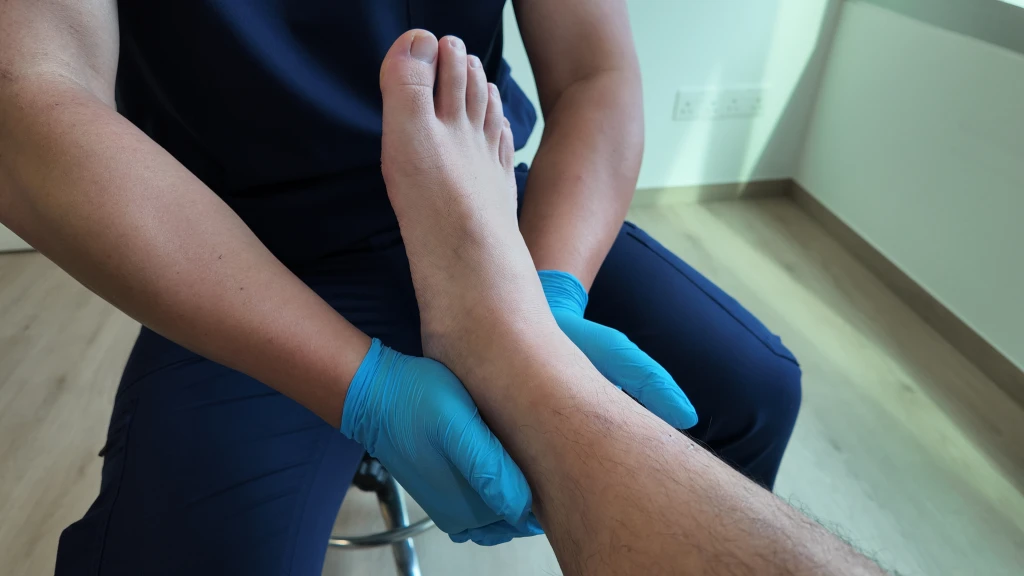
  • Pain reproduced by the calf squeeze test – compressing your calf at mid-level reproduces pain at your ankle. This is a clinical sign of syndesmotic injury, not lateral ankle sprain.
  • Pain reproduced by dorsiflexion plus external rotation – point the foot up towards you while rotating it outward reproduces the pain. The second clinical sign we look for.
  • Swelling that sits higher than a typical sprain – the swelling appears like a bump above the ankle joint rather than over the lateral ankle.
  • Pain when braking or lunging forward – less commonly mentioned, but sudden quick braking or heavy forward lunging puts stress on the syndesmosis, causing pain.

The most useful early signs we normally advice our patients are pain location (being higher than the ankle joint), pain with push-off rather than with inversion, and reproduced pain on either of the two clinical tests above.

Since the mechanism of injury is one of the strongest and distinct clues, the next section explains how high ankle sprains actually happen.

Anatomy of the ankle syndesmosis

Causes of High Ankle Sprain

The injury mechanism for a high ankle sprain is quite different from that of a regular sprain. Recognising the mechanism is one of the first clues that this is not a routine inversion injury.

What Causes a High Ankle Sprain?

  • Forced external rotation of the foot against a loaded leg– the classic mechanism, especially in footballers whom we see most. The foot rotates outward sharply against the leg when the leg is fully loaded. Common in football tackles, rugby scrums, and any contact sport.
  • Forced dorsiflexion with the foot planted– a direct fall forward over the front of the foot, common in sliding tackles, a sudden stop with the foot caught, or falls down stairs where the foot does not move but the body weight drives forward.
  • Following a high-energy ankle trauma – high ankle sprains commonly coexist with high-impact lateral ankle ligament injury or fibula fracture in serious ankle injuries. The forceful mechanism that produces one often produces the other.

Who Carries a Higher Baseline Risk?

  • Football and rugby players, where contact tackles and rotational forces through a planted foot are routine. The most common demographic we see in clinic for this injury.
  • Hyrox and CrossFit athletes whose training involves heavy loaded carries, jumping, and rapid changes of direction.
  • Hikers and trail runners on uneven ground where unexpected ankle rotation under load is more likely.
  • Dancers and ballet performers, particularly during landings and turns.
  • NS personnel during physical training, particularly obstacle courses and uneven terrain exercises.
  • Anyone with a previous chronic ankle sprain or general ankle instability, where the ankle’s protective response is already compromised

需要帮助?
立即预约足病医生

Conditions Commonly Mistaken for High Ankle Sprain

High ankle sprain is a condition that can get missed easily, and that is usually what we understood from our patients. This is because several conditions present similarly in the early weeks, and getting the diagnosis right matters because management is fundamentally different.

  • Inversion ankle sprain – by far the most common misdiagnosis we see. An inversion ankle sprain causes pain and swelling over the lateral ankle, which is fairly similar to the location where high ankle sprain hurts. Although the location is similar, the pain pattern is different and can be ruled out using specific clinical tests (calf-squeeze test and dorsiflexion-external rotation test). Where you have been rehabilitating an ankle sprain for weeks with no improvement, this is the diagnosis to rule out.
  • Fibular fracture – a high-energy ankle injury can produce both a syndesmotic injury and a fracture of the fibula. You may have one, the other, or both. X-ray and clinical examination can differentiate them.
  • Deltoid ligament injury (medial ankle sprain) – injury to the medial (inner) ankle ligament occurs through external rotation, which is the same mechanism as a high ankle sprain, and the two often coexist as well. The differentiator is location and the clinical tests.
  • Talar dome injury – a cartilage injury inside the ankle joint that can occur with the same high-energy mechanism. Deep dull pain within the ankle with ongoing locking or catching sensations point this way.
  • Ankle impingement – the long-term complication of an unresolved high ankle sprain is often anterior ankle impingement, as the unstable syndesmosis allows abnormal bony contact during ankle dorsiflexion. Persistent front-of-ankle pain months after the original injury can be impingement rather than ongoing sprain.
Podiatrist in Singapore assessing and treating high ankle sprain

Managing and Preventing High Ankle Sprain

The principle of high ankle sprain management is different from a regular ankle sprain. The syndesmosis is a structurally strong load-bearing joint between the two leg bones, not just a stabilising ligament on the side of the ankle. Loading it before it has healed stresses the two bones to drift apart and produces pain and instability that is much harder to fix later.

The acute phase, typically weeks 0 to 4, focuses on protected weight-bearing, provided that the diagnosis is captured early:

  • A walking boot or air cast with protected weight-bearing as tolerated. Crutches in the first 1 to 2 weeks may be necessary for severe pain
  • Cessation of running, jumping, and any sport
  • Ice and elevation, and even NSAIDs prescribed by your GP for swelling and inflammation control in the first week

The middle phase, from weeks 4 to 8, focuses on graduated reintroduction of motion and load:

  • Gentle ankle mobility work to regain the range of motion should begin, and a transition out of boot follows.
  • Calf and intrinsic foot strengthening, then progressive proprioception and balance work. We recommend single-leg balance first, then small hop work, then linear running, then change-of-direction work, in that order.
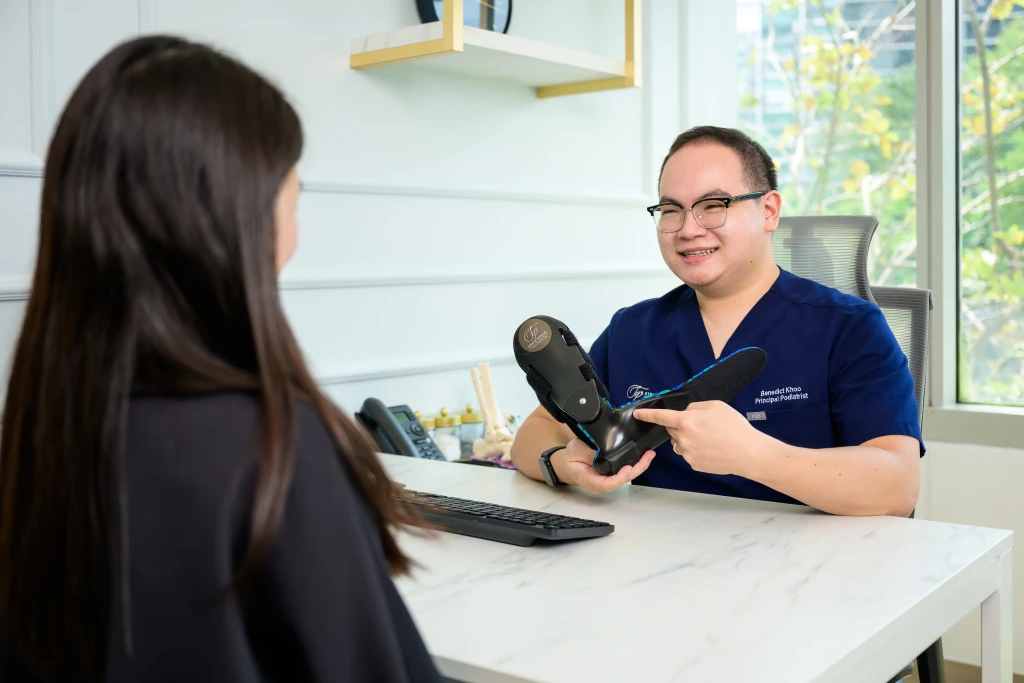
  • Use of an ankle-foot orthosis or supportive bracing during the early return-to-sport phase can limit external rotation while the syndesmosis consolidates.
  • Extracorporeal shockwave therapy and magentotransduction therapy can stimulate and accelerate body’s healing response if pain is showing limited progression.

The return-to-activity phase, typically weeks 8 to 16, focuses on sport-specific reintroduction. This is what we need our patients to be compliant and diligent for the best outcome:

  • Sport-specific movement drills before contact return. For example, football players should progress from linear running to turns, then turns to tackles, then tackles to progressive competitive play.
  • Continued strengthening and proprioception throughout the return period, in coordination with a physiotherapist.
  • Custom foot orthotics can be considered where biomechanical factors contributed to the original injury, to optimise loading and reduce recurrence risk.
  • Ankle bracing or taping during the initial return to contact sport is recommended, at least for the first 6 months of return.

For ongoing prevention after recovery:

  • You should continue ankle stability and proprioception training as part of your training routine.
  • Always wear appropriate footwear for the sport, particularly cleated boots that fit well and gives good grip on the field.
  • Work on your movement, reactions, and response when facing high-risk situations that often results in the mechanism of injury
  • Where ankle instability remains, ongoing bracing during high-impact activity

Surgery is uncommon in low-grade high ankle sprains and reserved for high-grade injuries with significant widening between the two leg bones on imaging, or for cases that have not stabilised after months of conservative management. Most low-grade cases recover fully with appropriate treatment, structured rehabilitation, and time.

Have Your High Ankle Sprain Managed at Straits Podiatry

High ankle sprain is a condition where early accurate diagnosis determines its recovery time and outcome. Patients who arrive within the first 2 to 3 weeks of injury, before he or she had time to do additional damage, have a fundamentally better prognosis than those who arrive after months of neglect. At Straits Podiatry, an assessment for suspected high ankle sprain focuses on the history, the clinical examination, and a clear discussion of whether imaging confirmation is needed.

Once the diagnosis is confirmed, a management plan is built around the specific grade of injury. This may include fitting and guidance on walking boot or bracing, custom foot orthotics for ankle stability, and structured rehabilitation and progressive loading work that helps you return to sport earlier.

If you have been rehabilitating an ankle sprain for 3 to 4 weeks without improvement, and the pain sits higher up the leg than you expected, book a consultation for an assessment at any of our 3 Singapore locations. Each additional week of inappropriate loading on an unresolved high ankle sprain meaningfully extends the eventual recovery.

Frequently Asked Questions About High Ankle Sprain

A high ankle sprain typically takes 6 to 12 weeks for low-grade injuries and up to 3 to 6 months for higher-grade injuries to heal sufficiently. The timeline may be longer if you include the rehabilitation required to return to specific sports, especially contact sports such as football or rugby. Loading the syndesmosis prematurely before it has consolidated, particularly with running, jumping, or high-impact sports, is the most reliable way to convert a 12-week recovery into a 6-month one. Patients with delayed diagnosis also tend to recover slower because the injury has been inappropriately loaded for weeks before correct management started.

Yes, but with appropriate protection. The standard early treatment is a walking boot or air cast with protected weight-bearing as tolerated, and removed only for sleep and bathing. Crutches may be added in the first 1 to 2 weeks for severe pain. Walking unprotected stresses the syndesmosis further and produces chronic instability that is much harder to resolve later. Once the acute phase has passed and pain has settled, you will be advised to transit into walking in supportive shoes.

A clear and normal X-ray result is common in low-grade and moderate high ankle sprains. This is because the injury is to the syndesmosis and its ligament (the anterior inferior tibiofibular ligament), and not to the bone itself. X-ray only shows bone, not ligament. However, if the syndesmotic injury is of higher-grade, the x-ray can show a widened gap between the shin bone (tibia) and the fibula. However, this is only visible if your clinician orders the correct ankle X-ray views. The more sensitive imaging option for diagnosis is MRI.

A regular inversion ankle sprain involves the ligaments on the outside of the ankle and produces pain over the lateral ankle ligaments (anterior talofibular ligament and calcaneofibular ligament). A high ankle sprain involves the ligaments and interosseous membrane holding the two leg bones together above the ankle and produces pain higher up the leg, above the ankle joint. The mechanism of injury, the pain location, the pain pattern, and the treatment plan is different.

Duration to return to sport really depends on the grade of injury and the sport you play. Low-grade injuries with appropriate management may allow return to non-contact running at 6 to 8 weeks and full contact sport at 10 to 12 weeks. Higher-grade injuries often require 3 to 6 months. The key lies in progressive rehabilitation. Returning too early often result in setbacks that delay your recovery longer, and is also the most common reason for re-injury and chronic instability.

把这个分享给你认识的人

有疑问?请发送邮件至
联系我们!

Latest Articles