

The inner side of your ankle starts to ache after a long day on your feet. The ache then takes on a different quality: a burning sensation under the arch, an electric-shock feeling that runs down toward the toes when you bend the foot upward, and a numb patch under the heel that comes and goes. Standing for long periods makes it worse. So does lacing up tight high-top boots. Walking on uneven surfaces brings it on quickly.
Tarsal tunnel syndrome is a compression of the tibial nerve as it passes through a narrow space behind the inner ankle bone, known as the tarsal tunnel. It is the lower limb equivalent of carpal tunnel syndrome in the wrist. Symptoms are neurological in character (burning, numbness, tingling, shooting pain) and they reflect irritation of the nerve, not damage to the joints or tendons themselves. The causes range from foot type to soft tissue swelling to a space-occupying lesion. Accurate diagnosis is essential because management differs from purely mechanical foot pain.
Symptoms of Tarsal Tunnel Syndrome
The symptom pattern is distinctive because the symptoms are mostly neurological. Those symptoms are not usually present in musculoskeletal conditions. The quality of pain, distribution, and aggravating factors all point toward a nerve-related diagnosis.
- Sharp, stabbing, or shooting pain along the inner ankle and arch.
- A burning sensation that builds with walking or standing.
- Numbness or tingling under the heel, arch, and into the toes.
- An “electric shock” sensation when the foot is bent upward or rolled inward.
- Pain that can radiate up into the lower leg or down into the foot.
- Symptoms worse with prolonged activity and sometimes worse at night.
- Tinel’s sign on examination: tapping over the tarsal tunnel reproduces the symptoms.

Causes of Tarsal Tunnel Syndrome
Tarsal tunnel syndrome develops when the tarsal tunnel becomes too small for the nerve passing through it. The narrowing can be due to swelling, biomechanical changes, an anatomical variant, or a space-occupying lesion. Several factors often combine.
What Causes Tarsal Tunnel Syndrome?
- Swelling around the ankle from any cause, including trauma, prolonged standing, and pregnancy.
- Inflammation of the surrounding tendons, such as posterior tibial tendonitis.
- Excess pronation in flat feet or excess supination in high arches, both altering tarsal tunnel space.
- Joint hypermobility around the ankle and rear foot.
- Tight-fitting high-top footwear pressing on the tarsal tunnel.
- Soft tissue growths within the tunnel (ganglion cyst, lipoma, tumour).
- Underlying tarsal coalition, a developmental fusion of foot bones.
- Systemic factors including obesity, diabetes, and inflammatory arthritis.
Who Carries a Higher Baseline Risk?
- People with flat feet or high arch feet.
- Runners and athletes with high training mileage.
- Patients with previous inner ankle injury or surgery.
- Adults with diabetes or inflammatory arthritis.
- Pregnant patients, due to fluid retention and altered biomechanics.
Conditions Commonly Mistaken for Tarsal Tunnel Syndrome
The clinical picture overlaps with several other inner ankle and foot conditions, and tarsal tunnel syndrome is often diagnosed late as a result.
Plantar fasciitis
Heel pain from plantar fasciitis can look similar when heel symptoms dominate. However, it rarely brings the tingling or burning of nerve compression. The symptoms of plantar fasciitis often present as a sharp stabbing heel pain that is worse on the first step in the morning.
Baxter’s nerve entrapment
Baxter’s nerve entrapment is a separate nerve compression closer to the heel, and it can produce a similar burning quality lower down in the foot. This is the closest to tarsal tunnel syndrome, except that its symptoms are often localised to the heel only and sometimes affect your ability to abduct the fifth toe.
Posterior tibial tendonitis
Pain and swelling along the inner ankle from posterior tibial tendonitis track the tendon rather than the nerve, so the symptom pattern differs on careful testing.
Flexor hallucis longus or flexor digitorum longus tendonitis
Irritation of the long toe flexor tendons runs through the same inner ankle region and can mimic nerve pain, particularly with repetitive push-off activity.
Lumbar spine nerve root compression
A pinched nerve root in the lower back can refer pain and altered sensation down the leg into the foot, mimicking a local entrapment at the ankle.
Treating and Preventing Tarsal Tunnel Syndrome
The principle of care is to reduce the compression on the tibial nerve and calm the surrounding inflammation, then remove the biomechanical drivers that narrowed the tunnel in the first place. The earlier the syndrome is recognised, the more likely it is to respond to conservative care. Where a space-occupying lesion such as a ganglion cyst is present, surgical decompression may eventually be needed.
Conservative treatment
Most cases respond to a structured non-surgical plan that decompresses the nerve, calms the irritation, and addresses the foot mechanics behind it.
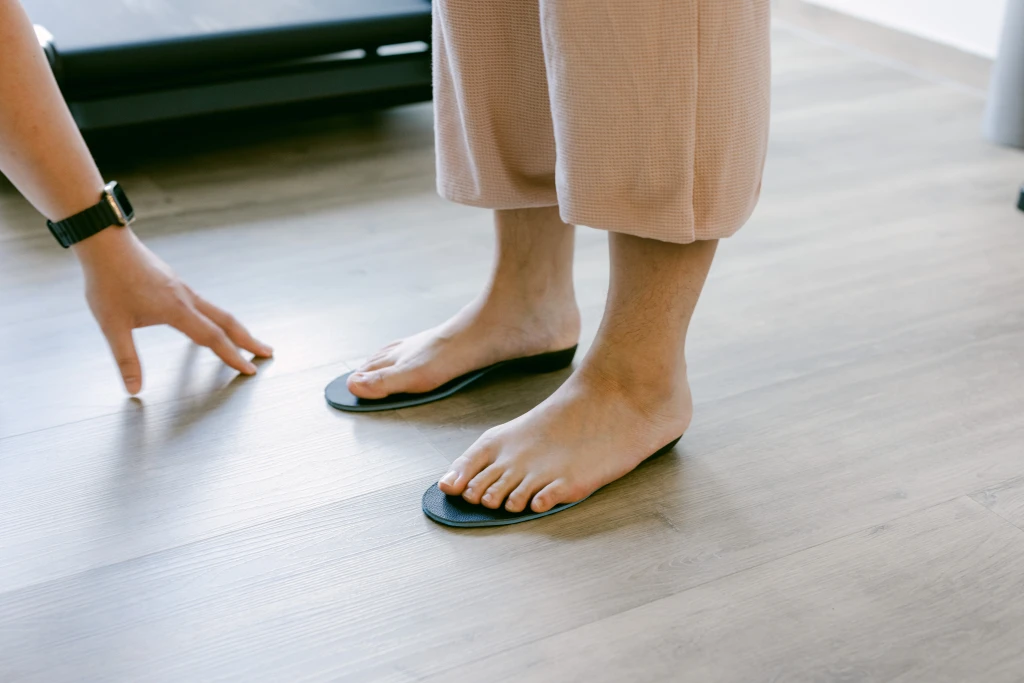
- Customised foot orthoses: Control overpronation and reduce strain on the tibial nerve as it passes through the tarsal tunnel, and are used longer term where biomechanical drivers persist.
- Footwear modification: A stable midsole and adequate arch support reduce load on the tunnel, while avoiding tight high-top boots that press directly on it.
- Activity modification: Relative rest from triggering activities such as long walks on uneven surfaces, alongside weight management where excess body weight is contributing to swelling and load.
- Ice and anti-inflammatory measures: Ice and elevation where ankle swelling is present, with anti-inflammatory medication or a selective nerve block under medical advice in selected cases.
- Rehabilitation and physiotherapy: Specific stretching and nerve gliding exercises where appropriate, plus strengthening of the posterior tibial tendon, intrinsic foot muscles, and gluteal muscles to support the rear foot.
- Extracorporeal shockwave therapy and magnetotransduction therapy: Used to reduce pain and neurological symptoms where the nerve stays irritated despite offloading.
Treating any coexisting tendon or fascial pathology to completion also lowers the chance of symptoms returning.
When conservative care isn’t enough
Surgical decompression of the tarsal tunnel is considered where symptoms persist despite a thorough trial of conservative care, particularly when imaging shows a clear cause such as a ganglion cyst. A referral to an orthopaedic surgeon is arranged where this pathway becomes appropriate, with imaging and nerve studies guiding the decision.
Have Your Tarsal Tunnel Syndrome Managed at Straits Podiatry
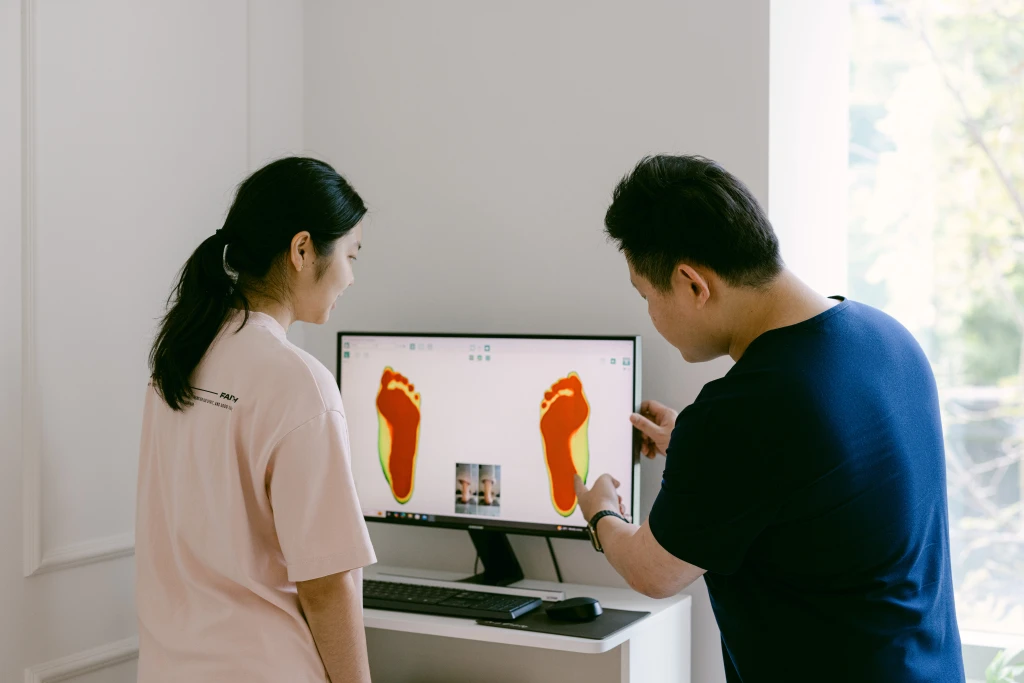
Because tarsal tunnel syndrome is a nerve problem rather than a mechanical one, telling it apart from the conditions it mimics is where care begins. At Straits Podiatry, our podiatrist examines the inner ankle, checks for Tinel’s sign and the pattern of numbness, and arranges gait analysis and imaging referral where the picture calls for it, so the true driver is identified before a plan is set.
From there, care is built around decompressing the nerve and removing what narrowed the tunnel, with custom foot orthoses, footwear guidance, activity changes, and modalities such as shockwave or EMTT where the nerve stays irritated. Speak with a podiatrist in Singapore or book a consultation for an assessment at any of our three clinics.
Frequently Asked Questions About Tarsal Tunnel Syndrome
How is tarsal tunnel syndrome diagnosed?
Diagnosis is primarily clinical. A podiatrist examines the inner ankle, checks for tenderness over the tarsal tunnel, and looks for Tinel’s sign, where tapping over the nerve reproduces tingling or shooting symptoms. The pattern of numbness, the position-related triggers, and the foot type all factor in. Imaging, particularly MRI, is added when the clinical picture is unclear or when a space-occupying lesion such as a ganglion cyst is suspected. Nerve conduction studies and electromyography can help confirm nerve compression in selected cases.
Is tarsal tunnel syndrome the same as Baxter’s nerve entrapment?
No, but they are related. Both involve nerve compression on the inner side of the foot. Tarsal tunnel syndrome involves the main tibial nerve as it passes behind the inner ankle bone. Baxter’s nerve entrapment involves the first branch of the lateral plantar nerve, lower down at the inner heel. The symptoms overlap and the conditions can coexist. The two are distinguished by location of tenderness, pattern of numbness, and findings on examination. Accurate diagnosis matters because treatment focus differs.
Will the symptoms come back after treatment?
It depends on the cause. Where a clear biomechanical driver is addressed with orthoses, footwear, and strengthening, many patients see lasting improvement. Where systemic factors such as diabetes or inflammatory arthritis contribute, ongoing management of those conditions is important. Where a space-occupying lesion is present, symptoms typically recur unless the lesion is treated. The most durable outcomes come from identifying every contributing factor at the start, rather than treating symptoms in isolation.
Can I keep exercising with tarsal tunnel syndrome?
Activity modification is usually preferable to complete rest. High-impact activities that worsen symptoms (long runs on hard surfaces, court sports with sudden direction changes) should be reduced or substituted during a flare. Lower-impact options including swimming and cycling are usually well tolerated. As symptoms settle and biomechanical management takes effect, graded return to higher-impact activity is built. Pushing through significant nerve pain typically extends recovery and may risk more persistent nerve symptoms.
When is surgery considered?
Surgery is considered when symptoms persist despite a thorough trial of conservative care, when imaging confirms a structural cause such as a ganglion cyst or tarsal coalition, or when nerve studies show clear and worsening nerve compression. The procedure (tarsal tunnel release) decompresses the nerve and removes any space-occupying lesion. Outcomes are good in well-selected cases but variable when the cause is purely biomechanical. As with any surgery, there are risks including incomplete relief, scarring, and a recovery period. A podiatrist coordinates with the relevant specialist if surgery becomes appropriate.