
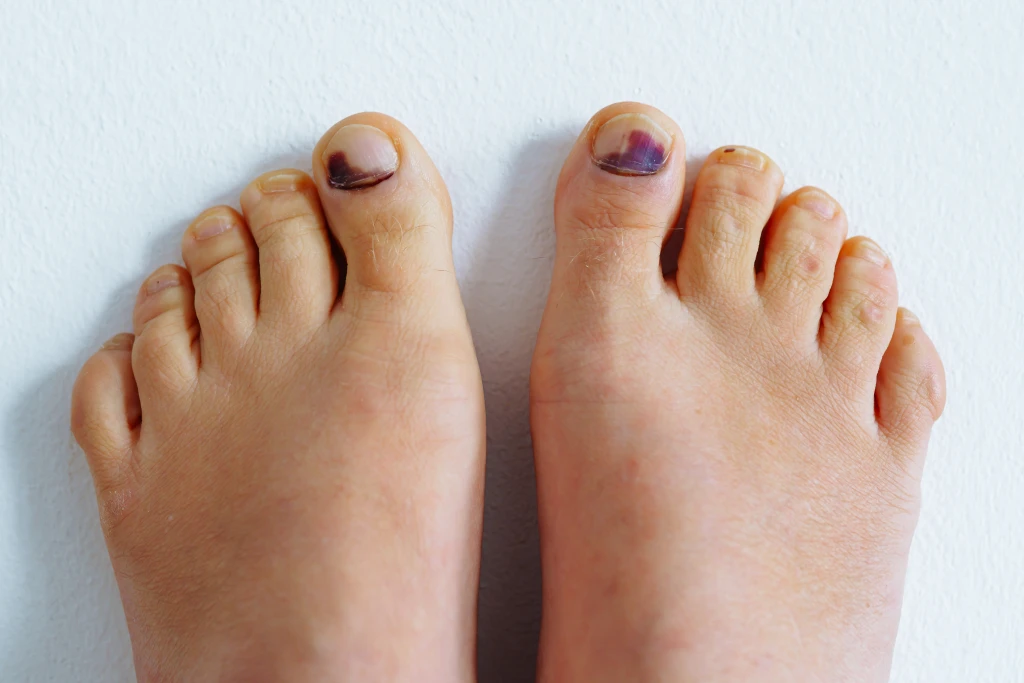
It often starts with a sudden misstep. You catch your big toe against the edge of a step, drive it into a table leg, or feel something heavy come down directly on the toenail. At once, the pain is sharp and arresting. Then, as the first shock settles, a deep throbbing can follow, pressure starts building beneath the toenail, and trapped blood in the nail bed can gradually turn the toenail black.
Even so, not every case begins with one clear accident. In some people, the problem takes shape through repeated stress on the toenail unit instead. Tight footwear, longer runs, abrupt stops in sport, or the constant force of the toes pressing into the front of the shoe can all strain the area over time. As a result, the toenail might become tender, loosen slightly, or begin to change without the same sudden jolt of a direct blow, so toenail trauma might not always present in the same way. In some cases, the effects are obvious soon after the injury. In others, the changes are subtle and only become clearer over time. Because the way the toenail presents can offer early clues to how significant the injury might be, symptoms are often the best place to start, while also helping to shape the kind of care that might be needed.
Symptoms of Toenail Trauma
Looking more closely at the symptoms can help shed light on how the toenail has been affected and how significant the injury might be. Some signs appear soon after trauma, while others become more noticeable with time as the toenail starts to change.
- Pain or throbbing in the toenail soon after injury.
- Pressure building beneath the toenail.
- Black, bluish, or purplish discolouration beneath the toenail.
- Bleeding beneath or around the toenail after injury.
- Swelling or tenderness around the toenail.
- Sensitivity when the toe is bumped or touched.
- Pain when walking or when shoes press against the toe.
- A feeling of the toenail becoming loose.
- Partial lifting of the toenail from the nail bed.
- Complete loosening or detachment of the toenail in more significant cases.
- Thickening, ridging, or distortion of the toenail as it grows out.
- A toenail that grows out unevenly following injury.
Note: Although darkened toenails often follow trauma, that’s not always the case. In rare instances, unexplained nail pigmentation might point to subungual melanoma, a serious condition that can affect the nail unit. When discolouration appears without a clear injury, develops gradually, or shows up as a dark streak rather than a bruise like patch, it shouldn’t be ignored. Prompt assessment by a doctor is important, as early diagnosis can lead to earlier treatment and better outcomes.
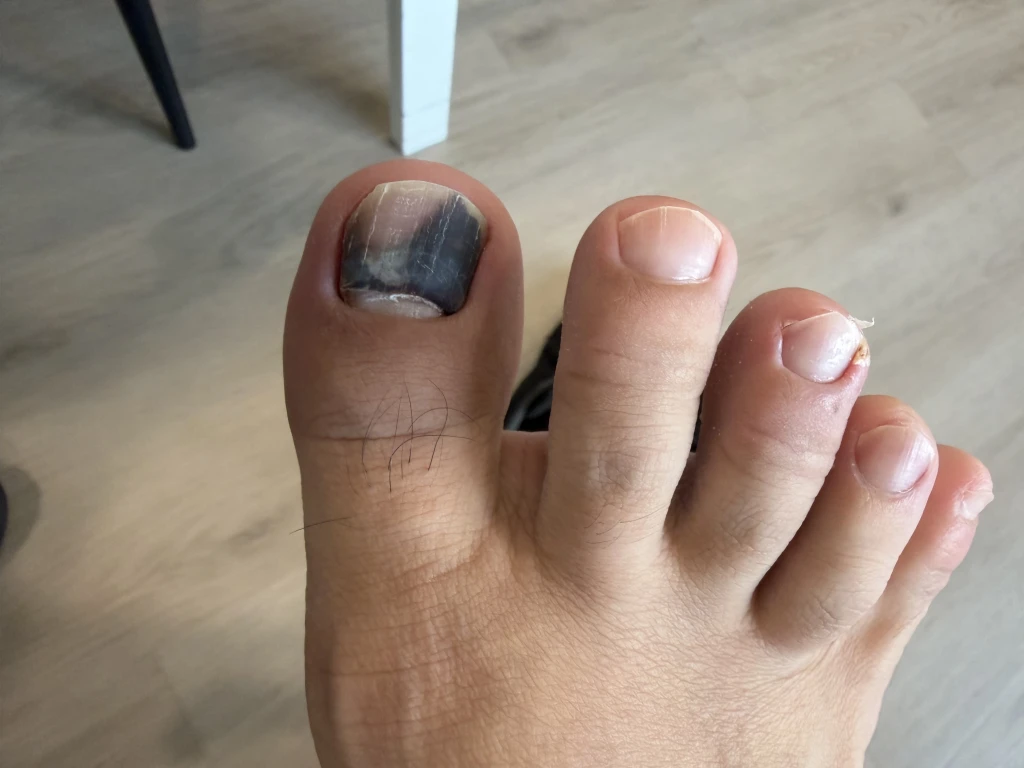
Types of Toenail Trauma
Depending on how the injury occurred and which part of the toenail unit was affected, toenail trauma can be grouped into a few distinct forms. Understanding these helps bring more clarity to what might be happening beneath or around the toenail, especially when the changes aren’t immediately obvious.
Subungual Haematoma
A subungual haematoma happens when blood becomes trapped beneath the toenail after trauma. This often causes dark discolouration under the toenail, along with pressure and throbbing that can become quite uncomfortable.
Nail Bed Lacerations
A nail bed laceration refers to a cut or tear in the tissue beneath the toenail. This can happen when the toe is crushed, struck with force, or injured badly enough for the nail bed itself to be damaged, which might also affect how the toenail grows later on.
Avulsed Nail
An avulsed nail happens when the toenail is partly or completely pulled away from the nail bed. This can follow a more forceful injury and might leave the nail bed exposed, tender, and more vulnerable while the area heals.
Nail Fracture
A nail fracture occurs when the toenail cracks or splits after trauma. Depending on the severity, this might involve only part of the toenail or contribute to a more obvious break and partial detachment.
Causes of Toenail Trauma
Toenail trauma can happen through direct impact, crushing force, repeated friction, or pressure that keeps affecting the same toenail over time. In some cases, the cause is obvious. In others, the injury builds more gradually through footwear, sport, or repeated contact during movement.
What Causes Toenail Trauma?
- Stubbing the toe against a hard surface can cause a sudden impact injury to the toenail.
- Dropping a heavy object on the toe can crush the toenail and the tissues beneath it.
- Tight or poorly fitted footwear can press the toenail against the shoe during movement.
- Repeated rubbing inside the shoe can keep irritating the toenail during daily activity.
- Running, hiking, football, or court sports can place the toenail under repeated stress over time.
- Abrupt stops, quick turns, or forward movement can keep driving the toes into shoes.
Who Is More Likely to Get Toenail Trauma?
- Wearing shoes with a tight, narrow, or shallow toe box might place the toenails under more pressure.
- Running regularly or taking part in impact sports might increase repeated stress on the toenails.
- Toes that keep pressing into the shoe during movement are more prone to repeated nail injury.
- Foot mechanics that keep shifting load onto the same toe might stress one toenail more than others.
- Underlying biomechanical factors might make repeated pressure on the toenail more likely over time.
- Recurring friction or pressure affecting the same toenail might make repeated trauma more likely.
Conditions Commonly Mistaken for Toenail Trauma
Different toenail and toe problems can present with similar pain or appearance changes. Telling them apart keeps treatment pointed in the right direction.
Ingrown toenail
An ingrown toenail is caused by the nail edge pressing or piercing into the surrounding skin, so the pain concentrates at the corner of the nail rather than under the whole nail plate. Discoloration usually stays around the nail fold and spreads as infection sets in. The pain and discoloration of toenail trauma sit beneath the nail plate instead, and there is usually a clear history of an impact or of repeated pressure.
Paronychia
Paronychia is an infection of the skin folds around the nail, showing as redness, swelling, warmth, and sometimes a discharge of pus. It can appear on its own after toenail trauma, or sit alongside an ingrown toenail. If redness or discharge at the nail fold persists after an injury, infection is the likelier explanation.
Subungual melanoma
Subungual melanoma is a rare but serious skin cancer that can appear as a dark streak or patch under the toenail. The key differences from a bruise are its history and its behaviour: there is usually no clear injury behind it, the colour deepens over time, and it does not travel outward as the nail grows. Where there is any doubt, it warrants early assessment.
Treating and Preventing Toenail Trauma
Treating toenail trauma usually involves caring for the injured toenail while also reducing the pressure, friction, or repeated stress that contributed to it. In milder cases, simple home care is adequate. In more significant injuries, treatment might also involve relieving pressure beneath the toenail, protecting the nail bed, and supporting proper healing.
Some common ways to treat toenail trauma include:
Conservative treatment
- RICE principle (rest, ice, compression, elevation): At home, the RICE principle of rest, ice, compression, and elevation can help ease the pain and swelling that follow toenail trauma, and can limit the early spread of bleeding.
- Protection and offloading: Avoiding further knocks or pressure on the affected toe gives the area a chance to settle and heal steadily. Choosing wider or open toed footwear reduces compression, and padding can be used to shield the nail fold and nail plate where needed.
- Subungual haematoma drainage: When a subungual haematoma is causing significant pressure and pain, and where the case is suitable, a podiatrist may drain the trapped blood while the haematoma is fresh to relieve the pressure and ease the symptoms. This does not change the direction of nail growth and does not remove the whole toenail. Whether draining the blood is appropriate depends on the injury, so it is assessed case by case rather than done as a routine step.
- Wound and skin care: For torn skin or damaged parts of the toenail, keeping the area clean and dry, and using an appropriate dressing where needed, helps reduce further irritation or the risk of infection.
- Custom foot orthoses: Where foot mechanics keep concentrating load on the same toe (for example a high arch, overpronation, or certain running patterns), custom foot orthoses can redistribute pressure to other areas and reduce how often the same toenail is knocked.
- Footwear and nail-trimming adjustment: Adjusting footwear so the toes have enough room during activity, and trimming the toenails to a sensible length, helps reduce catching, lifting, or repeated pressure on the nail.
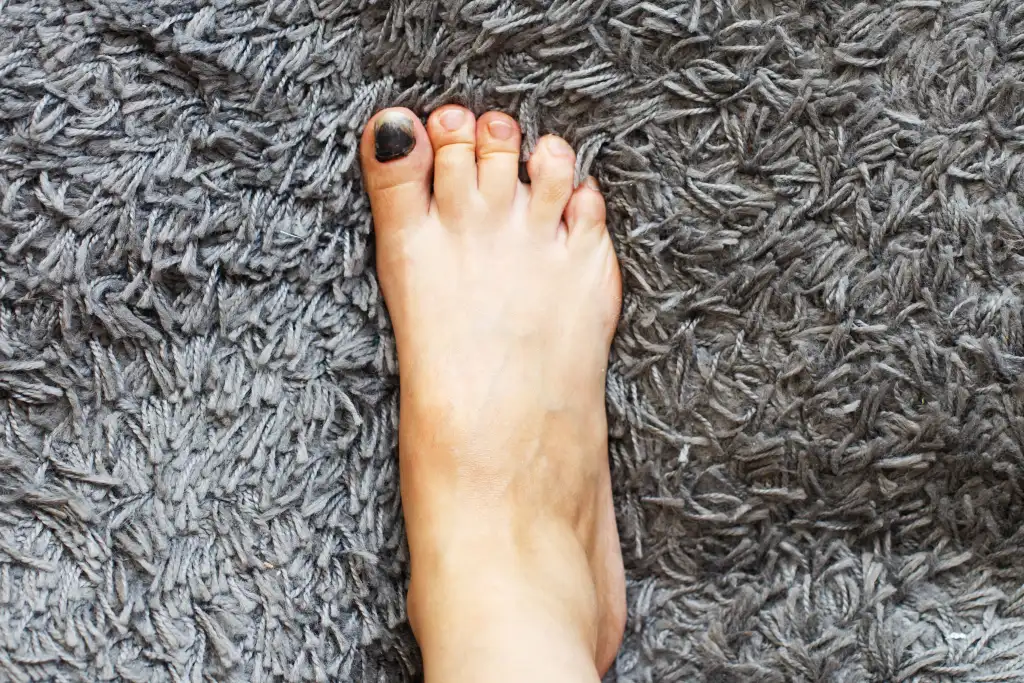
- A note on discolouration: It helps to understand that discolouration might remain for weeks or months, as the bruised toenail only replaces itself gradually through growth.
When conservative care is not enough
In more significant cases, or where the toenail is lifted or the nail bed is exposed, or suspected laceration, a nail avulsion might be needed to remove the damaged portion, protect the nail bed, and support the healing that follows. Where the nail bed is torn or shows signs of infection, further wound care might be needed, with antibiotics prescribed by a doctor where appropriate.
Note: In this section, nail avulsion refers to a procedure used to remove part or all of the toenail when needed for treatment. This is different from traumatic nail avulsion, which refers to the injury itself when the toenail has already been partly or fully pulled away from the nail bed.
To help reduce the risk of toenail trauma returning, it’s also worth paying attention to the daily habits, footwear choices, and activity patterns that keep stressing the nail unit over time:
- Watching where your feet are during walking, work, or manual tasks involving heavy objects or tools.
- Avoiding going barefoot or wearing open toed shoes when there’s a greater risk of something striking the toe.
- Wearing footwear that fits properly and gives the toes enough room during walking, work, or sport.
- Trimming your toenails to a sensible length so they’re less likely to catch, lift, or take repeated pressure.
- Paying attention when the same toenail keeps bruising or becoming injured during sport, longer runs, or repeated activity.
- Reviewing footwear, training load, foot mechanics, or biomechanics when repeated trauma keeps affecting the same nail.
When toenail trauma is more painful, keeps recurring, leads to more significant nail lifting, or doesn’t settle as expected, it’s worth having the toe properly assessed. This helps clarify the extent of the injury, while also guiding whether further care or changes in footwear, activity, or biomechanics are needed.
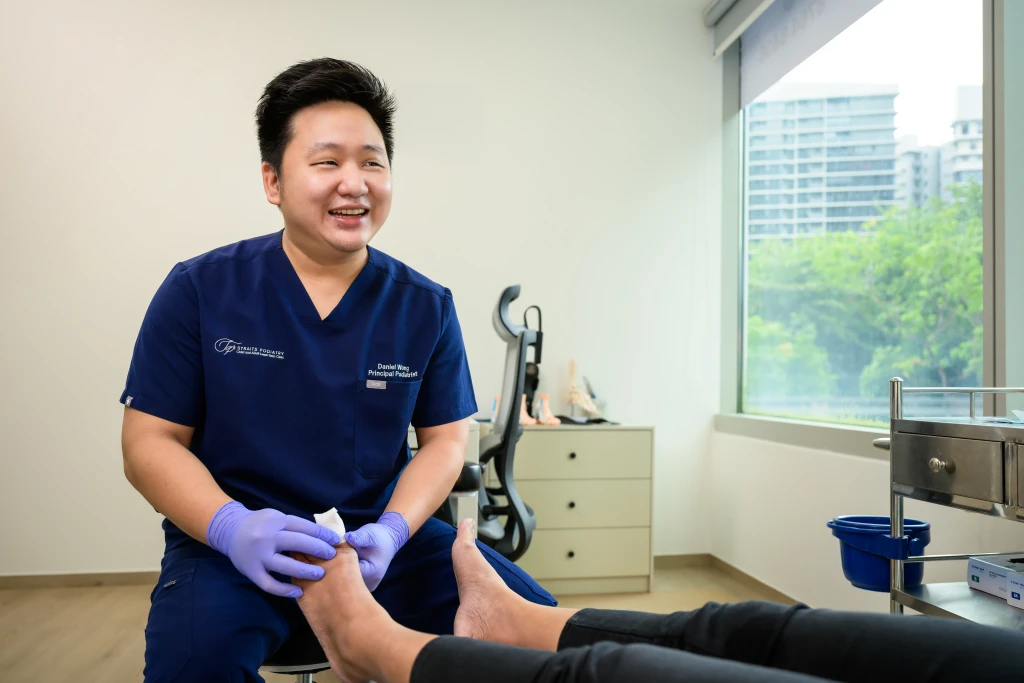
Have Your Toenail Trauma Assessed at Straits Podiatry
A bruised, blackened, painful, or lifting toenail can be more significant than it first appears. Beneath the toenail, there might be trapped blood, damage to the nail bed, or repeated stress that continues to affect the same toe. At Straits Podiatry, we can assess the injury properly, determine how the toenail has been affected, and look more closely at any footwear, activity, or biomechanical factors that might be contributing to the problem.
With a clearer understanding of the injury, we can then recommend an approach that matches its extent and what the toenail needs to heal well. This would include advice on home care, pressure relief where appropriate, drainage of trapped blood beneath the toenail, nail avulsion in more severe cases, and practical steps to help reduce the risk of the same problem returning. Speak with our team or book a consultation for an assessment and a tailored approach to manage your toenail trauma.
Frequently Asked Questions About Toenail Trauma
Can toenail trauma heal naturally, or is a visit to the podiatrist necessary?
Milder toenail trauma can often settle on its own, especially when the injury is limited to minor bruising, tenderness, or a small area of nail change. Even so, some cases deserve a closer look. When pain becomes more noticeable, pressure builds beneath the toenail, lifting develops, or deeper structures might have been affected, it’s worth seeing a podiatrist. Much depends on how severe the injury is and how much of the nail unit has been involved.
Is it okay to drain a subungual haematoma on my own?
It’s not advisable to try draining a subungual haematoma on your own. While the pressure beneath the toenail can be uncomfortable, this shouldn’t turn into bathroom surgery at home. Draining blood from under the toenail requires proper sterilisation, the right technique, and careful handling of the nail bed. Trying to do it yourself can worsen the injury, introduce infection, or damage the tissue beneath the nail. It’s safer to have it assessed by a podiatrist.
What is a nail avulsion procedure?
A nail avulsion is a procedure used to remove a toenail that has been badly damaged by trauma. It’s usually performed under local anaesthesia so that the procedure can be carried out more comfortably. A partial nail avulsion removes only part of the toenail, while a total nail avulsion removes it in full. This helps relieve pain, protect the nail bed, and support better healing. As the area recovers, a new toenail will usually grow back over time.
How long does recovery from toenail trauma usually take?
Recovery will depend on how much of the nail unit has been affected. Minor injuries might start settling within a few weeks, especially when the damage is limited and the nail remains stable. More significant trauma, particularly when the nail bed is involved or part of the nail has lifted, will require more time to heal. Even after the area feels better, the discoloured or damaged portion of the toenail often takes months to grow out, and full regrowth can be slow.
What should I take note of after seeking care for toenail trauma?
After care is administered for toenail trauma, the primary focus remains on creating the right conditions for the toe to settle and heal properly. This usually means keeping the area clean and dry while following advice on dressings or bandage changes and avoiding unnecessary pressure on the injured toe. You should opt for open toed or wider shoes so the toenail isn’t repeatedly compressed while it settles. At the same time watch out for any discharge, swelling, or worsening pain as these might suggest the need for another visit to the podiatrist.