
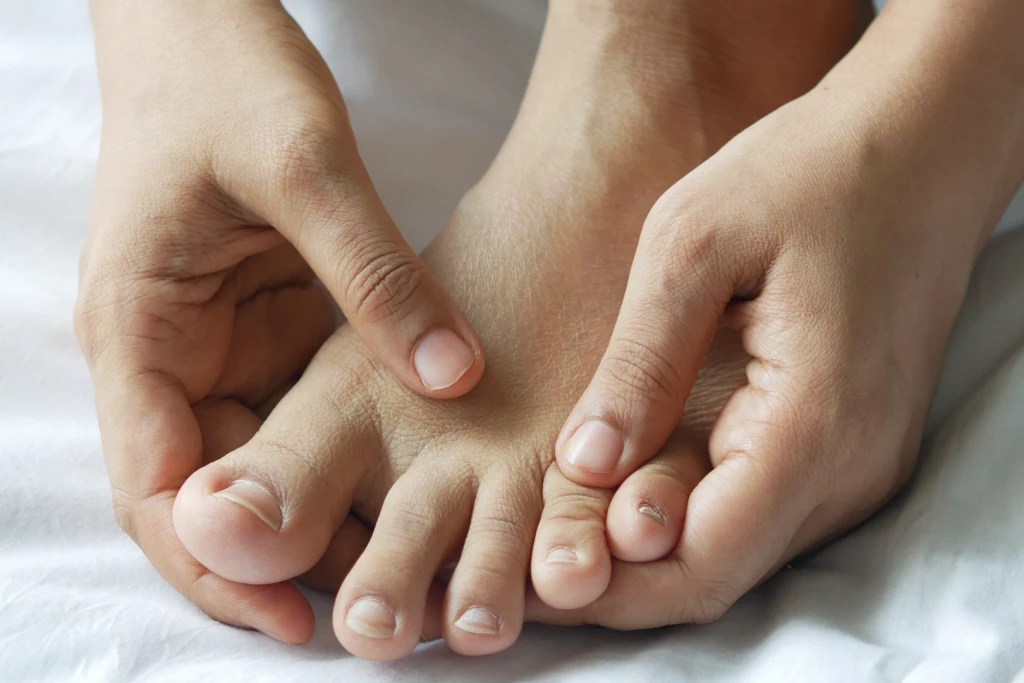
You feel a burning or tingling sensation under the ball of the foot, usually between the third and fourth toes. Tight enclosed shoes set it off. Pulling off your shoes and massaging the foot offers quick relief. As it progresses, the pain becomes sharp and shooting, radiating into the toes, and a numb patch develops between the toes. Walking long distances in dress shoes or high heels becomes something you start to avoid.
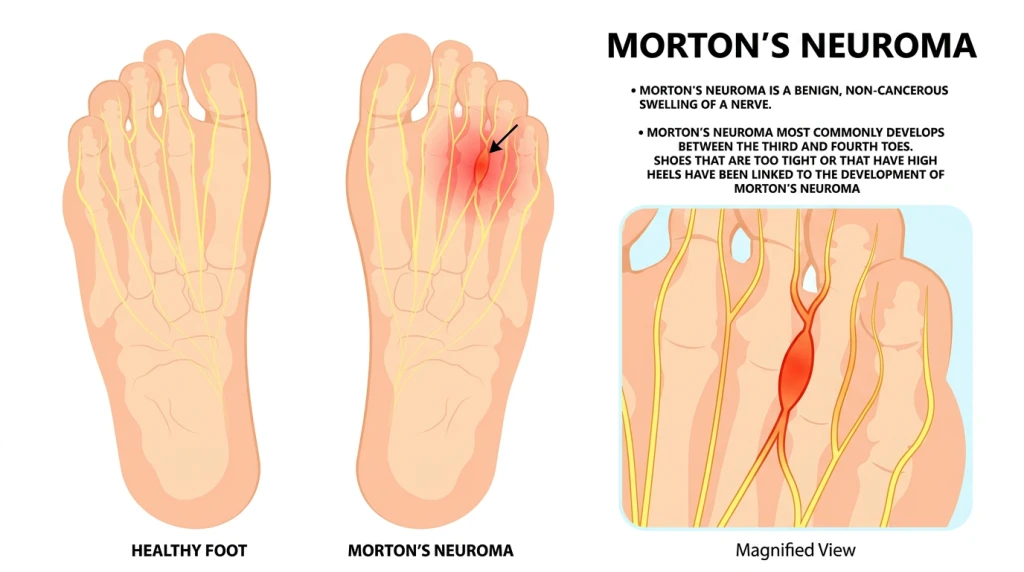
Morton’s neuroma is a thickening of the tissue surrounding one of the digital nerves in the forefoot, most often the nerve running between the third and fourth toes. It is sometimes described as a benign nerve growth, but the underlying problem is chronic mechanical irritation of the nerve, not a tumour. The symptoms are distinctly neurological, which sets it apart from other causes of forefoot pain. Identifying it early opens the door to conservative treatment before more invasive options are needed.
Symptoms of Morton’s Neuroma
The symptom pattern is fairly specific and helps separate Morton’s neuroma from other forefoot conditions. Pain is usually neurological in character rather than a deep ache.
- Sharp, stabbing, or shooting pain at the ball of the foot, often between the third and fourth toes.
- Burning sensation across the affected area, sometimes spreading into the toes.
- Numbness or tingling in the two adjacent toes.
- A feeling of standing on a fold in the sock or a small pebble.
- Symptoms worse in narrow, tight, or enclosed footwear, and improved by removing the shoe.
- A clicking or palpable lump (Mulder’s click) when the forefoot is squeezed side to side.
- Pain that may radiate proximally up into the foot during longer walks.
Causes of Morton’s Neuroma
Morton’s neuroma develops because the digital nerve is repeatedly irritated as it passes between the metatarsal heads. Anything that increases compression or stretch on the nerve raises the risk. Several factors typically combine before symptoms appear.
What Causes Morton’s Neuroma?
- Compression of the forefoot from narrow toe boxes, high heels, or tight enclosed shoes.
- Biomechanical instability of the forefoot, including excess pronation or first ray instability, which “pinches” the nerve during gait.
- Repetitive trauma from high-impact sports, running, and racquet sports.
- Direct trauma to the forefoot, including landing from a height or stubbing the toe.
- Forefoot deformities that crowd the metatarsal heads, including bunions and hammer toes.
Who Carries a Higher Baseline Risk?
- People with flat feet or high arch feet, both of which alter forefoot loading.
- Regular wearers of high heels or narrow-toed footwear.
- Runners, dancers, and racquet sport players.
- Women in their 40s and 50s, who are more commonly diagnosed.
- People with previous forefoot fractures or surgery.
Conditions Commonly Mistaken for Morton’s Neuroma
Pain in the same general area can come from several different structures. A careful examination separates the diagnoses.
Metatarsalgia
General pain across the ball of the foot from joint or fat pad irritation can mimic a neuroma, though metatarsalgia tends to spread across the forefoot rather than radiate into the toes.
Plantar plate injury
A plantar plate injury usually sits under the second toe and produces pain on the underside of the joint rather than the burning or tingling of a neuroma.
Metatarsophalangeal joint capsulitis or synovitis
Inflammation of the joint capsule or lining causes localised pain and swelling around a single toe joint, without the electric, radiating quality typical of a neuroma.
Stress fracture of a metatarsal bone
A stress fracture in one of the metatarsal bones produces pain that worsens with weight-bearing and often has a pinpoint tender spot over the bone itself.
Intermetatarsal bursitis
An inflamed bursa between the metatarsal heads can sit very close to where a neuroma forms, which is why the two are easily confused on symptoms alone.
Treating and Preventing Morton’s Neuroma
Treatment targets the irritation around the nerve and the mechanical factors that caused the irritation in the first place. Most cases respond well to conservative care, especially when symptoms are addressed early, so the priority is to take pressure off the nerve and calm it before more invasive options are considered.
Conservative treatment
Conservative care combines offloading the nerve, calming the irritation, and correcting the mechanics that drove it.
- Footwear: Switching to footwear with a wide and deep toe box and avoiding high heels and narrow shoes reduces compression on the nerve.
- Customised foot orthoses: With a metatarsal dome positioned to spread the metatarsal heads apart and offload the nerve.
- Activity modification: Relative rest from high-impact activities and avoiding barefoot walking on hard floors during a symptomatic period.
- Extracorporeal shockwave therapy: Used to reduce nerve irritation and inflammation.
- Magnetotransduction therapy (EMTT): Also used to reduce nerve irritation and inflammation.
- Anti-inflammatory medication: Where appropriate and under medical advice, to ease pain and inflammation.
When conservative care isn’t enough
Where symptoms persist despite footwear, orthoses, and the measures above, a steroid injection or an alcohol sclerosing injection may be offered in selected cases, generally after conservative care has been tried. Surgical excision of the neuroma is considered when symptoms persist despite a full course of conservative care. It carries a risk of permanent numbness in the affected web space, which is worth understanding before deciding (see side effects of Morton’s neuroma surgery). Where surgery is the right pathway, a referral to an orthopaedic surgeon is arranged.
Preventing recurrence
- Long-term footwear changes, particularly in working environments where heels or narrow shoes are habitual.
- Continued use of orthoses where biomechanical factors are unlikely to change.
- Reviewing training load and surfaces for athletes.
Have Your Morton’s Neuroma Managed at Straits Podiatry
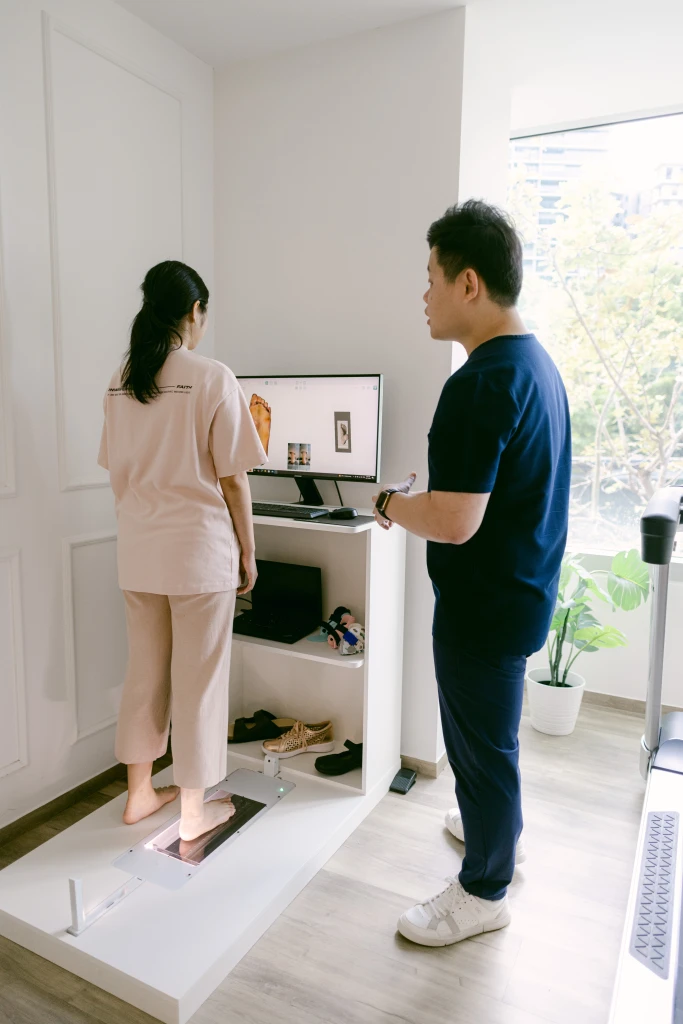
Straits Podiatry assesses the location, character, and provocation pattern of your forefoot pain, supported by gait analysis and imaging referral where needed to confirm the diagnosis. Treatment combines customised foot orthoses with metatarsal padding, footwear advice, and modalities such as extracorporeal shockwave therapy and magnetotransduction therapy to reduce nerve irritation.
Speak with Straits Podiatry or book a consultation for an assessment and a tailored approach to manage your Morton’s neuroma.
Frequently Asked Questions About Morton’s Neuroma
How is Morton’s neuroma diagnosed?
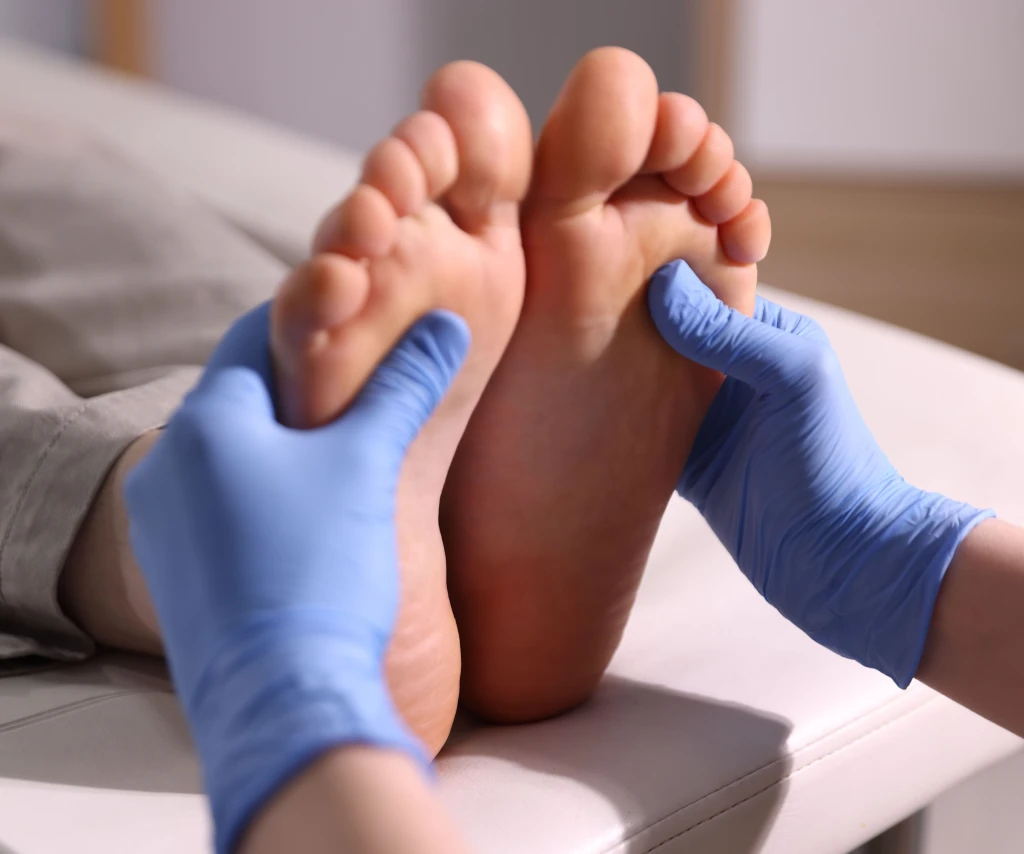
Diagnosis begins with a clinical examination. The location of pain, the character of the symptoms (sharp, burning, shooting), and provocation tests such as the Mulder’s squeeze are usually sufficient to make a working diagnosis. Imaging is added when the clinical picture is unclear or when a different forefoot pathology is suspected. Ultrasound is commonly used to visualise the thickened nerve tissue and measure it. MRI is reserved for more complex cases. Imaging is also useful for tracking change over time.
Can Morton’s neuroma resolve without surgery?
In many cases, yes. Conservative management resolves symptoms or reduces them to a level that no longer interferes with daily life for a significant proportion of patients. The earlier treatment starts, the better the response tends to be. Footwear change is usually the single highest-yield intervention, followed by orthoses with a well-placed metatarsal dome. Modalities such as shockwave and magnetotransduction therapy can help in selected cases. Surgery is reserved for symptoms that persist despite a fair trial of conservative care.
What footwear should I avoid?
Anything that crowds the forefoot. High heels shift load forward and compress the metatarsal heads together. Narrow-toed dress shoes and pointed fashion footwear do the same. Stiff thin-soled shoes provide little cushioning under the ball of the foot. Better options have a wide and deep toe box, a cushioned forefoot, and a low-to-moderate heel. Some patients find rocker-soled walking shoes helpful. Your podiatrist will recommend specific features based on your foot shape and activity profile.
Is the nerve actually a tumour?
No. Although Morton’s neuroma is sometimes described as a benign nerve tumour, the actual change is thickening of the connective tissue around the digital nerve from chronic mechanical irritation, not a true tumour growth. The thickened tissue does cause real symptoms because it adds bulk in a tight space and irritates the nerve, but the condition is not cancerous and does not behave like a tumour. This is why mechanical interventions, footwear, orthoses, and load management work for it.
Will an injection cure the neuroma?
Injections relieve symptoms in many patients, but the underlying thickened tissue and the mechanical factors that caused it remain. Steroid injections reduce inflammation around the nerve. Alcohol sclerosing injections aim to reduce nerve activity over a series of treatments. Both can be useful, particularly when conservative measures have been partial. Without addressing footwear and biomechanics, symptoms often recur after a temporary improvement. Your podiatrist will discuss whether and when injections fit into your overall plan.