
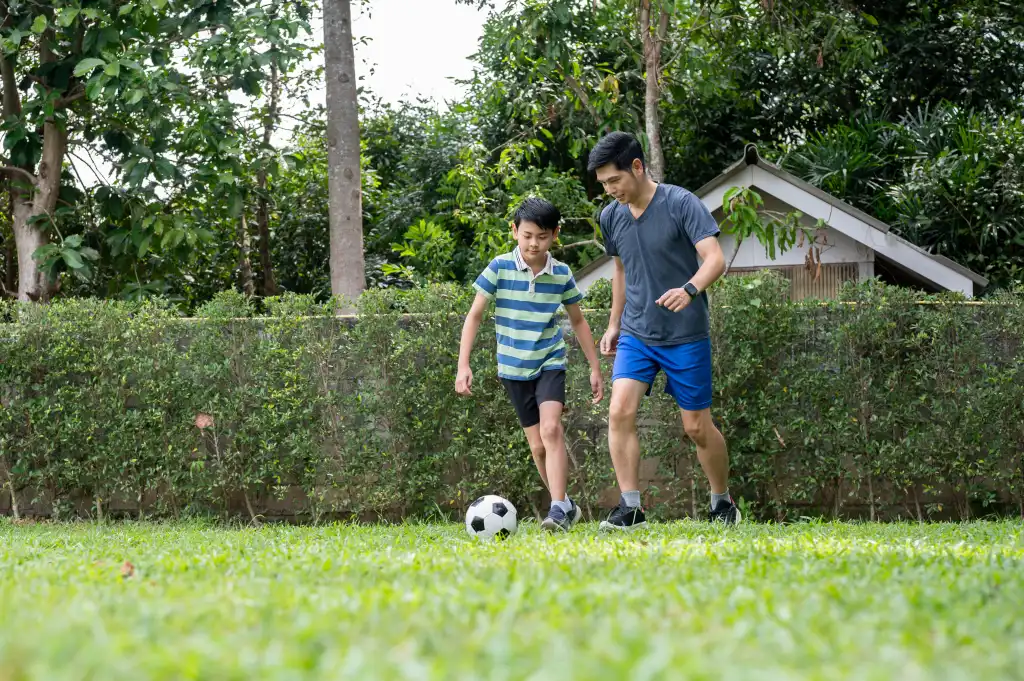
In Singapore football, most players know the tonjol kick, the toe poke that sends the ball forward with the front of the boot. Some use it in tight spaces, some use it when there’s no time to shape a proper shot, and some joke about it as the mark of a player that is not so skillful. Regardless of how it’s used, it highlights something footballers often overlook. The toes are constantly taking pressure inside football boots.
That pressure doesn’t only happen when striking the ball. During sprinting, sudden stops, tackles, and quick changes in direction, the toes can repeatedly hit the front or sides of the boot. Because the pain might appear only during play, toenail injuries can feel less serious than other football injuries such as ankle sprains, knee pain, or muscle strains. However, repeated pressure can turn a bruised or black toenail into a lifted or damaged nail, while an irritated edge of a toenail can become swollen, infected, or increasingly painful. To understand why this happens, it helps to first look at how football boots place pressure on the toenails.
How Football Boots and Match Play Can Injure the Toenails
Modern football boots are built to feel close to the foot, giving players better touch, traction, and control during quick movements. However, this tighter fit also means the toes have less room to move. During sprinting, sudden stops, kicking, tackles, and changes in direction, the toenails can be pushed against the front or sides of the boot repeatedly.
That pressure is one part of the problem. Toenail injuries can also happen when another player steps on the foot, when the toenail is already too long or curved, or when the edge of the toenail has started pressing into the surrounding skin. Because these injuries can come from both football contact and the player’s own nail shape or trimming habits, the symptoms might show up differently from one player to another.
Repeated Pressure at the Front of the Boot
The first way football can injure the toenail is through repeated impact at the front of the boot. Each time a player sprints, stops suddenly, shoots, or changes direction, the toes can slide forward and strike the end of the boot. If this happens repeatedly, the tissue under the toenail can become bruised, and bleeding might occur beneath the nail plate.
This is why a bruised toenail might start turning black after football. At first, it would only feel tender when the boot presses against it. However, as pressure builds under the toenail, the toe can feel tight, sore, or painful during play. In more significant cases, the toenail might also become lifted or damaged.
Direct Trauma During Football
Toenail trauma can also happen more suddenly during contact. For example, another player might clumsily step on your foot, catch your toe during a challenge, or land on the toenail during a tackle. In less friendly games, it might even come from a more deliberate stamp. Unlike repeated pressure from the boot, this type of toenail injury can cause pain, bruising, bleeding, or nail lifting soon after the incident.
Even then, players might still try to continue because the injury seems limited to the toenail. However, a damaged toenail can remain painful inside football boots, especially when the nail plate is cracked, loose, or pressing against the skin. If the area continues to be irritated, the risk of swelling, tenderness, or infection can increase.
Side Pressure Around the Toenail’s Edge
Toe pain can also develop from pressure around the sides of the boot. When the toes are squeezed together during running, cutting, tackling, or kicking, the edge of the toenail can press into the surrounding skin. This can irritate the nail fold and trigger discomfort, especially when the same area is compressed each time the player returns to football.
In some cases, the boot isn’t the only cause. A toenail that’s naturally curved, too long, cut too short, or trimmed too deeply at the sides can already be pressing into the skin before training starts. Once football boots add more pressure, that irritation can develop into an ingrown toenail, where the edge of the toenail digs into the surrounding skin and becomes increasingly painful. This is why a player might feel fine in slippers or wider shoes, but feel pain again the moment the toe is squeezed inside a boot.
Toenail Related Pain Should Never Be Ignored
With World Cup fever building, even casual football can start to feel more competitive, whether it’s indoor/street soccer, futsal, 7-aside, full field football, beach soccer, or a tournament run. When the game feels more intense, players are more likely to focus on finishing the match, helping the team, or staying available for the next fixture. However, toenail related pain shouldn’t be dismissed as “it’s only just a toe,” especially when the same pain keeps returning each time you play.
The risk can also look different depending on how the game is played. In street soccer, futsal, and field football, close fitting shoes or boots can keep squeezing or loading the same painful toe during running, kicking, and changes in direction. In beach soccer, the risk is different because barefoot play can leave the toenail more exposed to direct impact, awkward toe pokes, and contact from other players. If the toe is repeatedly irritated before it has time to settle, a bruised or black toenail might become lifted, cracked, or damaged, while an ingrown toenail can progress into redness, swelling, or infection. Rather than waiting until the pain affects footwear, kicking, running, or walking, it’s better to take it seriously once it keeps returning, worsens, or starts changing the way you play.
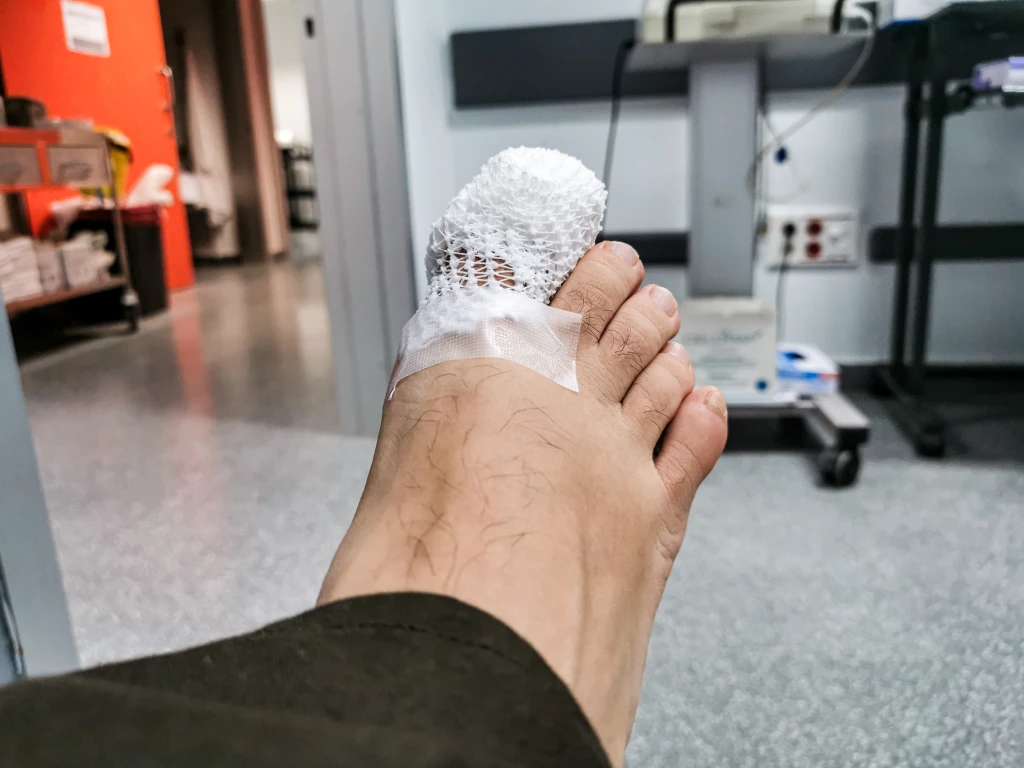
When Football Causes Pain Around the Toenail
Not every toenail injury needs urgent care, but pain around the toenail that keeps returning during football should be checked. This is especially important when the symptoms become more frequent, more painful, or harder to ignore after each session.
Signs that your toenail should be assessed include:
- Bruised toenail with pain that worsens under pressure.
- Blackened toenail with pain that doesn’t settle.
- Pain from an ingrown toenail that returns inside boots.
- A lifted, cracked, or increasingly tender toenail.
- Redness, swelling, or pus that might suggest paronychia.
- Pain affecting training, match play, footwear, or walking.
When these signs are present, the next step is to find out what’s causing the pain instead of waiting for it to settle on its own. Care might involve footwear advice, nail trimming guidance, pressure relief, infection care, or help for an ingrown toenail. If the toenail is badly damaged, infected, very painful, or repeatedly ingrown, nail avulsion might be considered as one possible option.
Have Your Toenail Injury Assessed at Straits Podiatry
Sure, it feels great to score a wonder goal, thread that perfect pass, or make a lung bursting run down the flank. However, it feels far less heroic when your toe is throbbing after every game. A blackened toenail, painful ingrown edge, or swollen nail fold becomes harder to brush off when boot pressure, ball striking, or movement starts making the pain worse.
At Straits Podiatry, the aim isn’t to look at your feet and guess. It’s to assess the toenail, surrounding skin, footwear pressure, and football demands to understand what’s driving the problem before it disrupts your next match. Care can then be recommended based on the cause, severity, and impact on play. Book an appointment today, explicitly if pain keeps returning during football, or if your toenail has become blackened, swollen, infected, lifted, or painful around the edge.