
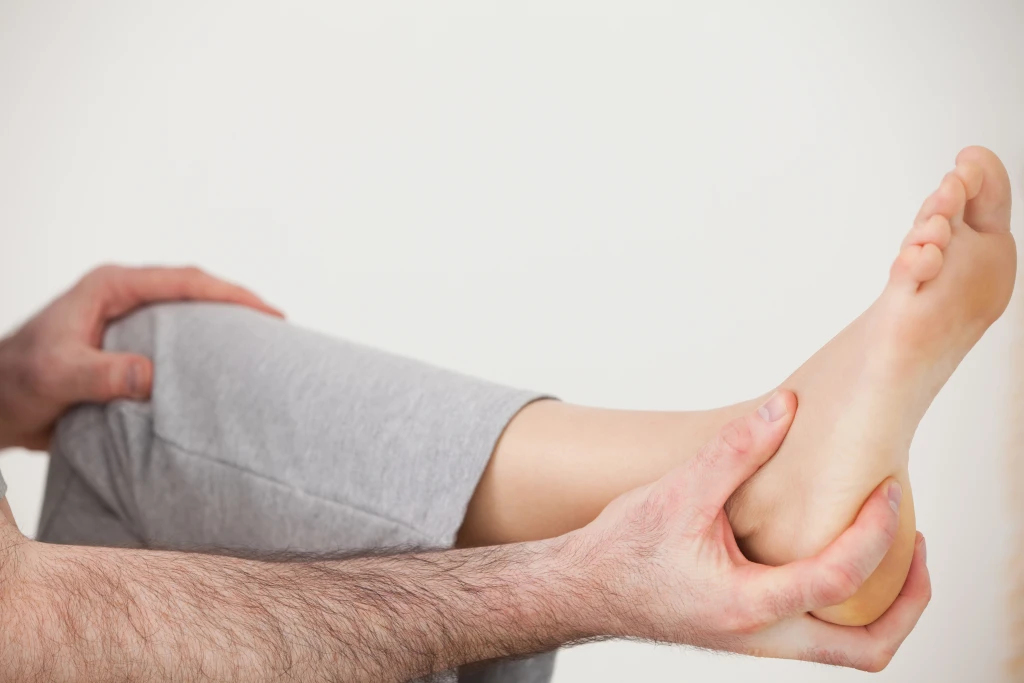
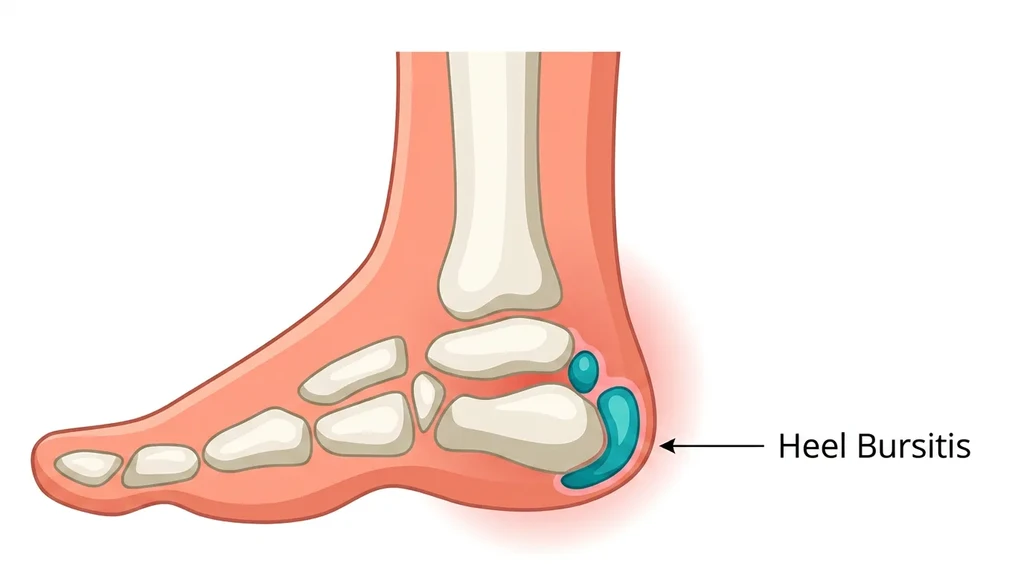
Pain at the back of the heel that flares with the first steps of a run, an incline walk along East Coast Park, or the rub of a stiff heel counter often points to inflammation of one of the small fluid-filled sacs that cushion the heel. Heel bursitis is inflammation of the bursae, small sacs between bones, tendons, and muscles that reduce friction during movement and cushion impact. We have multiple bursae in various locations of the foot, and additional bursae can form in areas of high friction.
The most common type affecting this region is retrocalcaneal bursitis, which occurs behind the heel where the Achilles tendon attaches to the heel bone (calcaneus). This condition can cause significant heel pain and swelling, particularly during activities that involve pressure on the heel. Movements such as incline walking, running, or jumping can make the pain worse, and some individuals also report pain when wearing shoes with stiff heel counters. Because the presentation overlaps with several other heel conditions, a careful assessment by a podiatrist helps confirm the source of pain and rule out look-alike conditions before treatment begins.
Symptoms of Heel Bursitis
- Pain: Sharp or aching pain at the back of the heel, especially with movement or pressure. Lifting the foot towards yourself (dorsiflexion) often reproduces the pain.
- Redness: Visibly red around the heel region, typically with increased warmth.
- Swelling: Noticeable swelling around the heel area, particularly at the back of the heel bone for retrocalcaneal bursitis.
- Stiffness: Difficulty moving the foot or a feeling of stiffness in the heel, especially after a period of rest.
- Pain with footwear: Discomfort when wearing shoes that press against the back of the heel, such as dress shoes or athletic shoes with firm heel counters.
Symptoms that come on rapidly with intense redness, warmth, and significant swelling can point to an inflammatory cause rather than mechanical overload, and these patterns warrant earlier review.
Causes of Heel Bursitis
Heel bursitis usually develops from a combination of repeated mechanical stress and individual traits that raise baseline risk. Understanding the contributors helps shape both treatment and prevention.
What Triggers Inflammation of the Heel Bursa?
- Overuse injury. Repetitive stress or excessive activity, such as running or jumping, can create too much friction between the Achilles tendon and the heel bone, leading to irritation and inflammation of the bursa.
- Poor-fitting or improper footwear. Shoes that do not provide adequate support or fit poorly can contribute to heel bursitis. Shoes that are too small can compress the heel area, increasing friction. Certain athletic shoes also feature heel counters that slope inwards at a slanted angle, which can increase pressure around the back of the heel.
- Injury or trauma. Direct trauma to the heel can cause inflammation of the bursae, causing redness, pain, and swelling.
- Foot structure differences. Foot structure heavily influences walking and running pattern. Variations such as high arches (pes cavus) or flat feet can alter foot mechanics and increase the pressure between the Achilles tendon and the heel bone, resulting in retrocalcaneal bursitis.
- Systemic inflammatory conditions. Systemic conditions such as rheumatoid arthritis, gout, or ankylosing spondylitis can trigger inflammation in the bursae. Heel bursitis caused by inflammatory conditions usually has a rapid onset and can be very painful, red, and swollen.
Who Carries a Higher Baseline Risk?
- Runners, hikers, and athletes who train on inclines or include frequent jumping.
- Individuals who have recently increased training volume or intensity.
- People with tight calf muscles or limited ankle dorsiflexion.
- Those wearing rigid dress shoes, ski boots, or athletic shoes with firm or inwardly slanted heel counters for long hours.
- Individuals with high arches or flat feet that alter loading at the back of the heel.
- People with rheumatoid arthritis, gout, or other inflammatory conditions.
- Heavier body weight, which places greater load through the heel during gait.
Conditions Commonly Mistaken for Heel Bursitis
Several conditions can produce pain at the back of the heel and are routinely confused with heel bursitis. A careful clinical assessment differentiates them so the right treatment is offered.
Insertional Achilles tendonitis
Pain sits at the same point where the Achilles tendon attaches to the heel bone. Tendonitis involves the tendon fibres themselves, whereas retrocalcaneal bursitis involves the bursa sitting just in front of the tendon insertion. The two can coexist.
Haglund’s deformity
A bony prominence at the back of the heel that rubs against shoes and can secondarily inflame the retrocalcaneal bursa.
Heel spur
A bony outgrowth on the heel bone that can sit at the Achilles insertion or under the heel and produce a similar pain pattern.
Distinguishing these conditions matters because their treatment differs. A clinical assessment by a podiatrist, supported by imaging where appropriate, clarifies which structure is driving the pain.
Treating and Preventing Heel Bursitis
To settle heel bursitis or retrocalcaneal bursitis, the irritation and the underlying mechanical cause are addressed at the same time. Most cases respond well to conservative measures that calm the inflamed bursa and reduce the load reaching the back of the heel, so invasive options are rarely required.
Conservative treatment
Conservative care starts by settling the acute irritation, then shifts the footwear, loading, and foot mechanics that keep provoking the bursa.
- Rest and ice: Resting the affected foot and applying ice and compression early reduces inflammation and pain.
- Anti-inflammatory measures: Over-the-counter anti-inflammatory or pain medication can help, though it should not be used as a workaround to continue activity, since masking the pain risks further damage.
- Supportive footwear: Shoes that provide adequate support and cushioning reduce pressure on the heel, and soft, well-padded heel counters are preferred while the bursa is irritated.
- Padding and heel lifts: Small heel lifts or pads inside the shoe shift the back of the heel away from the friction point and reduce load through the Achilles insertion.
- Custom orthotics: Customised orthotic devices correct foot mechanics and alleviate stress on the bursa, which is particularly relevant for high arches or flat feet, where loading at the back of the heel is altered.
- Activity modification: Switching temporarily to a lower-impact activity such as swimming or cycling keeps training continuity while removing the repetitive overload at the heel.
- Rehabilitation and loading: A graded programme to strengthen the calf and foot muscles and improve ankle flexibility reduces strain on the bursa over time.
- Radial pressure wave therapy: Trigger point release and dry needling can release calf muscle tension that feeds ongoing irritation at the back of the heel.
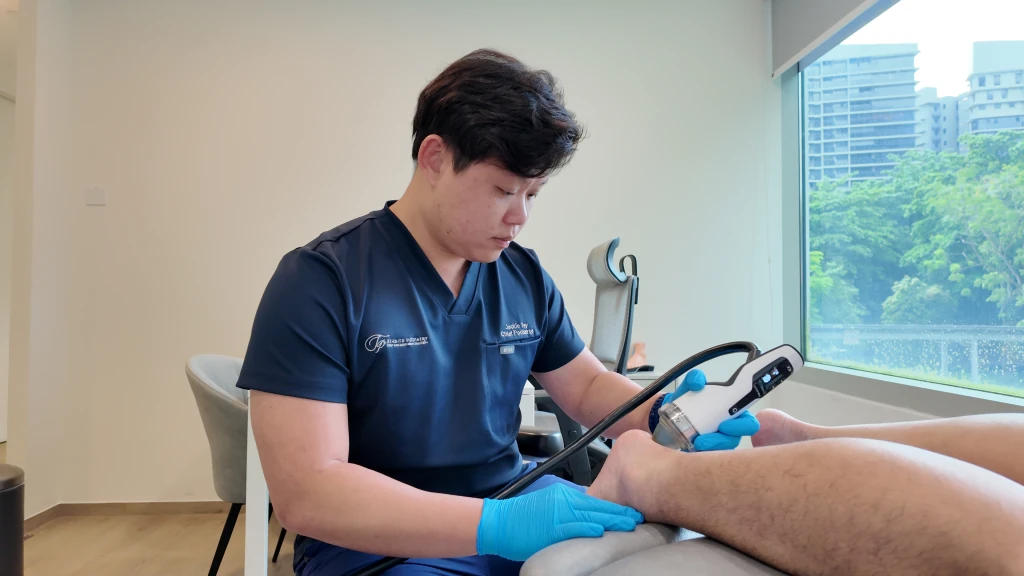
- Focused shockwave therapy (ESWT): Shockwave therapy can stimulate the natural healing process in stubborn cases that have not settled with footwear and loading changes.
When conservative care isn’t enough
In rare cases where conservative measures are ineffective, a medical professional may consider a corticosteroid injection. This is not a first-line option and is used selectively, because injection into or near the Achilles insertion has been associated with tendon weakening. Surgery is rarely considered and is reserved for cases where a structural driver such as Haglund’s deformity requires correction, where a referral to an orthopaedic surgeon is arranged.
Preventing heel bursitis
Prevention matters once symptoms settle, since the same loading pattern can flare the bursa again.
- Wear supportive footwear: Choose shoes with proper heel and arch support and avoid heel counters that press into the back of the heel.
- Manage training load: Increase mileage, hill work, and jumping volume gradually, as sudden spikes are a common trigger.
- Stretch regularly: Calf and Achilles stretching maintains ankle mobility and reduces strain on the bursa.
- Address foot structure early: Where high arches or flat feet drive repeated flares, custom orthotics help redistribute load over the long term.
Have Your Heel Bursitis Managed at Straits Podiatry
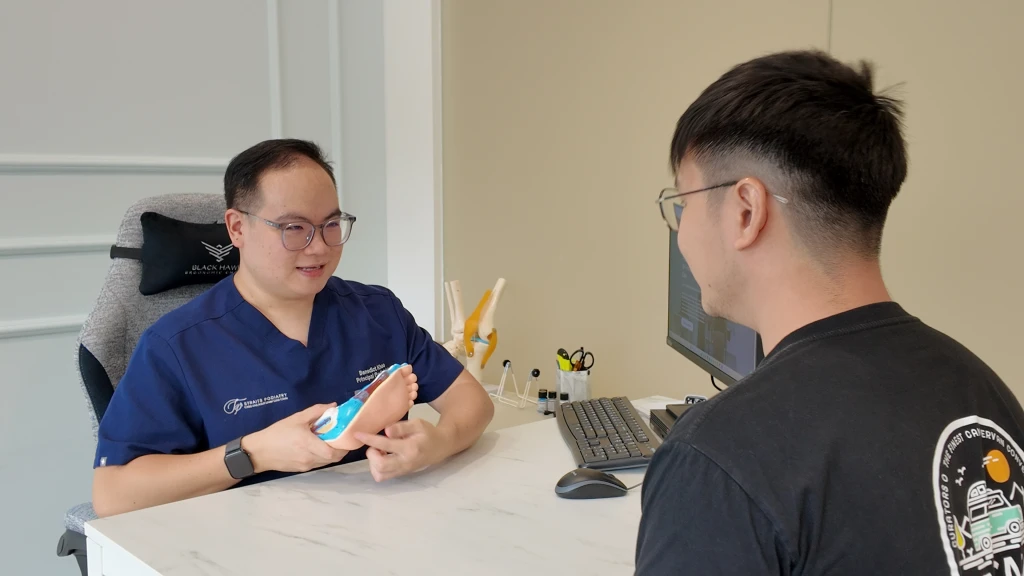
Heel bursitis often starts as a niggle at the back of the heel that flares with certain shoes or after harder training, then settles into a more persistent ache that limits running, walking, and shoe choice. Because back-of-heel pain has several look-alike causes, the first step is to confirm which structure is driving the pain. At Straits Podiatry, we begin with a thorough assessment that looks at the heel itself, calf flexibility, ankle range, footwear, training load, and foot structure, so the underlying contributors are clear before treatment begins.
Once the picture is clear, we work with you to build a plan that fits your week. This usually combines footwear adjustments, padding or heel lifts in the early phase, custom orthotics where foot structure is a driver, and a graded calf and foot loading programme to rebuild tolerance. For cases that have not settled with conservative care, ESWT and radial pressure wave therapy are available as part of the broader pathway. Book an appointment with us today and let’s take the first step toward easing the pain and helping you move with comfort, confidence, and freedom.
Frequently Asked Questions About Heel Bursitis
What is the difference between retrocalcaneal bursitis and Achilles tendonitis?
Retrocalcaneal bursitis is inflammation of the bursa located behind the heel bone where the Achilles tendon attaches. Achilles tendonitis refers to inflammation or degeneration of the Achilles tendon itself. Both conditions can cause heel pain in the same area and they can coexist, but they involve different structures and treatment is tailored to which structure is the primary driver.
How is retrocalcaneal bursitis different from superficial calcaneal bursitis?
Retrocalcaneal bursitis affects the deeper bursa sitting between the Achilles tendon and the heel bone, irritated by friction at the tendon insertion. Superficial (subcutaneous) calcaneal bursitis affects the more surface-level bursa between the skin and the back of the Achilles tendon, irritated by shoe friction. They feel similar but the swelling sits at different depths.
Will heel bursitis go away on its own?
Mild cases may settle with rest, ice, footwear changes, and reduced activity. Persistent or recurrent heel bursitis usually needs targeted treatment to address the mechanical driver, such as footwear modification, custom orthotics, calf loading work, or shockwave therapy for stubborn cases. Ignoring the pain often allows the irritation to become chronic.
Can I continue to run or exercise with heel bursitis?
High-impact activity that triggers heel pain should be reduced while the bursa is irritated. A switch to lower-impact options such as swimming, cycling, or the elliptical can preserve fitness without aggravating the heel. Returning to running is usually a graded process once pain has settled and loading capacity has been rebuilt.
When is a corticosteroid injection appropriate for heel bursitis?
Injections are not a first-line treatment. They are considered selectively in cases that have not responded to footwear changes, offloading, loading programmes, and shockwave therapy. The decision factors in the proximity of the bursa to the Achilles tendon, since steroid near the tendon has been linked to tendon weakening, and is made after a careful clinical assessment.
How long does it take to recover from heel bursitis?
Recovery time varies with severity and how long the bursa has been irritated. With appropriate management, many individuals notice improvement within a few weeks. Cases that have been ongoing or that involve a stronger mechanical or inflammatory driver may take several months and require a more structured loading and footwear plan.