
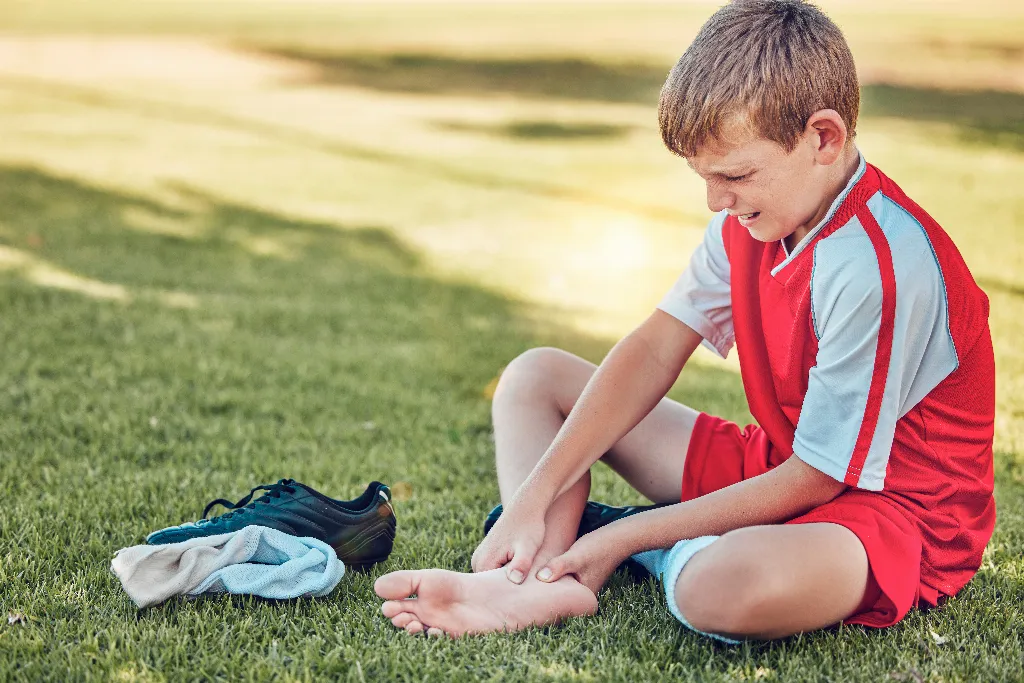
If your active child between 8 and 14 has started limping after football, basketball, or PE, and they keep pointing to the back or underside of their heel, Sever’s disease is the most likely explanation. It is a type of osteochondrosis in which the growth plate at the back of the heel becomes irritated by repeated pulling from the Achilles tendon. It is one of the most common causes of heel pain in children, and a frequent reason for parents to ask whether something serious has gone wrong.
The reassuring part is that Sever’s disease is self-limiting. Once the growth plate fuses, usually around ages 14 to 15, the condition resolves completely with no lasting damage. The active phase can still be painful and disruptive, so the goal of treatment is to control the pain, calm the growth plate, and let your child stay in sport during the growing years.
Symptoms of Sever’s Disease
- Pain at the back of the heel or under the heel, especially after sport.
- Pain that increases during running, jumping, or sprinting.
- A limp after activity, sometimes lasting hours or into the next day.
- Tenderness when the sides of the heel are squeezed.
- Walking on tiptoes to avoid heel contact.
- Reluctance to walk barefoot on hard floors.
- A pattern where pain eases overnight and returns with the next session.
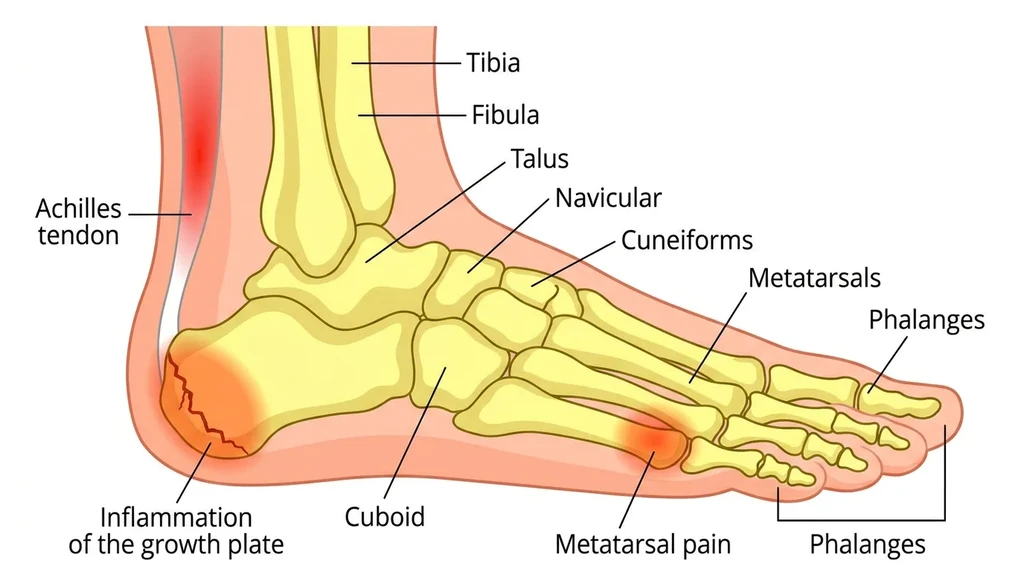
Causes of Sever’s Disease
What Causes Sever’s Disease?
- Repetitive traction from the Achilles tendon on the heel growth plate during running and jumping.
- A growth spurt, where the heel bone grows faster than the surrounding muscles and tendons can stretch, increasing tension on the growth plate.
- Tight calf muscles and limited ankle mobility.
- Sudden increases in training load, sport frequency, or hard-surface play.
- Poor running and landing form that adds load through the heel.
- Inappropriate or worn-out footwear, especially with thin or hard soles.
Who Carries a Higher Baseline Risk?
- Active children and adolescents aged 8 to 14 in a growth spurt.
- Children playing running and jumping sports such as football, basketball, netball, or athletics.
- Boys more often than girls, partly because of higher exposure to high-impact sports. Some studies report boys affected two to three times as often.
- Children training intensively across multiple sports in the same week.
- Children with tight calves or limited ankle mobility.
- Children with flat feet or high-arched feet, which alter how load passes through the heel.
Conditions Commonly Mistaken for Sever’s Disease
Several other conditions can cause heel pain in active children. A paediatric assessment helps tell them apart from Sever’s disease, and imaging is sometimes needed to confirm.
Plantar fasciitis
Plantar fasciitis causes pain under the heel and along the arch, and is far more common in adults than in children. Its classic first-step pain under the sole in the morning differs from Sever’s disease, where the tenderness sits at the back of the heel and is brought on by squeezing the sides of the heel bone.
Achilles tendonitis
Achilles tendonitis affects the tendon just above the heel rather than the growth plate at the back of the heel bone. Pain follows the tendon line and worsens with rising onto the toes. Sever’s disease reproduces with side-to-side compression of the heel bone itself, not with loading the tendon.
Heel stress fracture
A heel stress fracture produces a more constant, focal pain in the heel bone from repetitive loading. Unlike Sever’s disease, the tenderness is pinpoint over one spot and can be reproduced by a hopping test, and it usually shows on imaging.
Retrocalcaneal bursitis
Retrocalcaneal bursitis is inflammation of the small fluid-filled sac between the heel bone and the Achilles tendon, causing swelling and tenderness at the very back of the heel. It sits higher and more superficially than the growth plate involved in Sever’s disease, and any swelling tends to be more visible.
Bone tumours
Rarely, a bone tumour can cause heel pain in a child. Pain that is present at rest or at night, that keeps worsening rather than settling with rest, or that comes with unexplained swelling is a reason for prompt review and imaging, since this pattern is not typical of Sever’s disease.
Treating and Preventing Sever’s Disease
Treatment focuses on letting the growth plate settle while keeping your child as active as comfort allows. Relative rest is the foundation, which usually means cutting back the sport sessions that flare the pain rather than full bed rest, alongside ice and a short course of paracetamol or anti-inflammatory medication where appropriate and on medical advice.
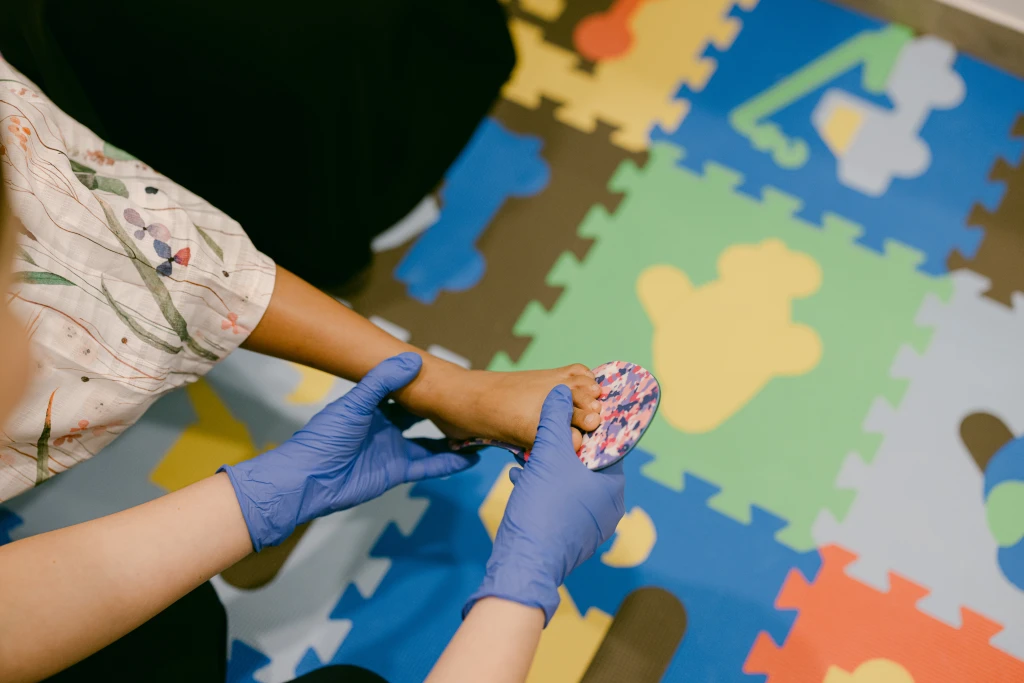
Stretching the calves and the Achilles tendon reduces the pull on the growth plate. Strengthening exercises for the foot, calf, and core help the heel absorb load better during sport. Supportive footwear with a slight heel rise and good cushioning takes some of the strain off the Achilles, and proper training form during running and landing reduces repeated stress. Custom orthotics with a small heel raise are one of the most useful tools for active children because they offload the growth plate during walking and sport. For stubborn cases that are not settling, shockwave therapy and EMTT are sometimes considered to support healing at the growth plate.
Prevention overlaps with treatment. Gradual progression of training, adequate rest between sessions, regular stretching, and sport-appropriate footwear all reduce flare risk.
Have Your Sever’s Disease Managed at Straits Podiatry
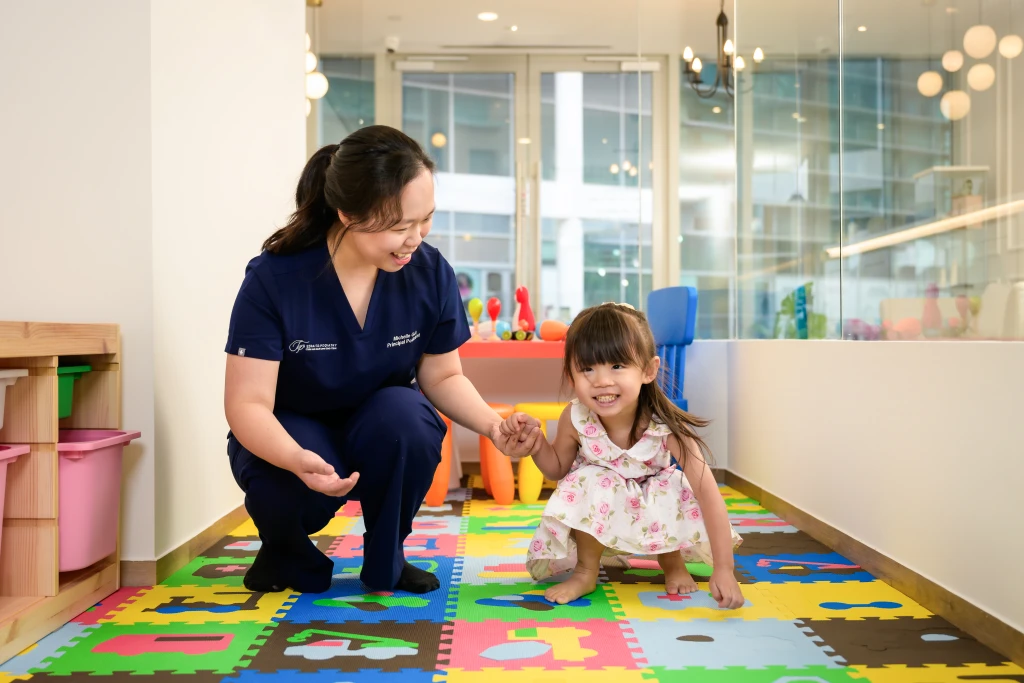
Paediatric foot conditions are seen at all three Straits Podiatry clinics in Buona Vista, Orchard, and Paya Lebar, where our podiatrists work with children of all ages. Straits Podiatry is part of Healthway Medical Group.
A paediatric assessment for Sever’s disease includes a paediatric assessment, gait analysis, calf and ankle flexibility testing, sport and training review, and where indicated, custom orthotics, footwear advice, a stretching and strengthening programme, and a monitoring plan through the growing years.
Speak with Straits Podiatry or book a consultation for an assessment and a tailored approach to manage your child’s Sever’s disease.
Frequently Asked Questions About Sever’s Disease
Will my child grow out of Sever’s disease?
Yes. Sever’s disease is self-limiting and resolves completely once the growth plate at the back of the heel fuses, usually around ages 14 to 15. There is no lasting damage and most children return to full sport without restriction. Outgrowing it is the expected path. The job of treatment in the meantime is to control the pain, support healing of the growth plate, and let your child stay active during the years it takes to settle, rather than simply waiting it out in pain.
Does my child need to stop sport completely?
Usually not. Full rest is rarely needed and can be counterproductive for an active, growing child. Relative rest is more useful, where the specific movements that flare the pain (long sprints, jumping, hard-surface play) are eased back while other activity continues. Many children continue playing sport at a modified level throughout, with the focus on staying below the pain threshold rather than pushing through. Stopping all sport often leads to more deconditioning than help.
Does my child need orthotics?
Many children with Sever’s disease benefit from a custom orthotic with a small heel raise. By offloading the growth plate and supporting the foot during sport, orthotics often produce noticeable relief within weeks and let your child train at a higher level than they could without one. For mild Sever’s that settles quickly with rest and stretching, supportive footwear alone may be enough. A paediatric gait assessment guides whether orthotics will add value.
Why does my child’s pain keep coming back?
Sever’s disease has a tendency to flare and settle in cycles, especially during growth spurts, after a busy sport week, or when training spikes. The growth plate stays sensitive while it is still open, so the trigger can repeat. Steady management through the growing years (stretching, supportive footwear, orthotics where indicated, and pacing of training) usually keeps the flares smaller and shorter. The flares typically stop once the growth plate fuses around age 14 to 15.
Will Sever’s disease cause long-term heel problems?
For almost all children, no. Once the growth plate fuses, the heel functions normally and most reach adulthood without ongoing heel pain. A small number can develop adult heel issues such as Achilles tendinopathy or plantar fasciitis later in life, often linked to the same biomechanical patterns (tight calves, foot shape) rather than the Sever’s itself. Addressing those factors during the growing years reduces both short-term flares and long-term risk.