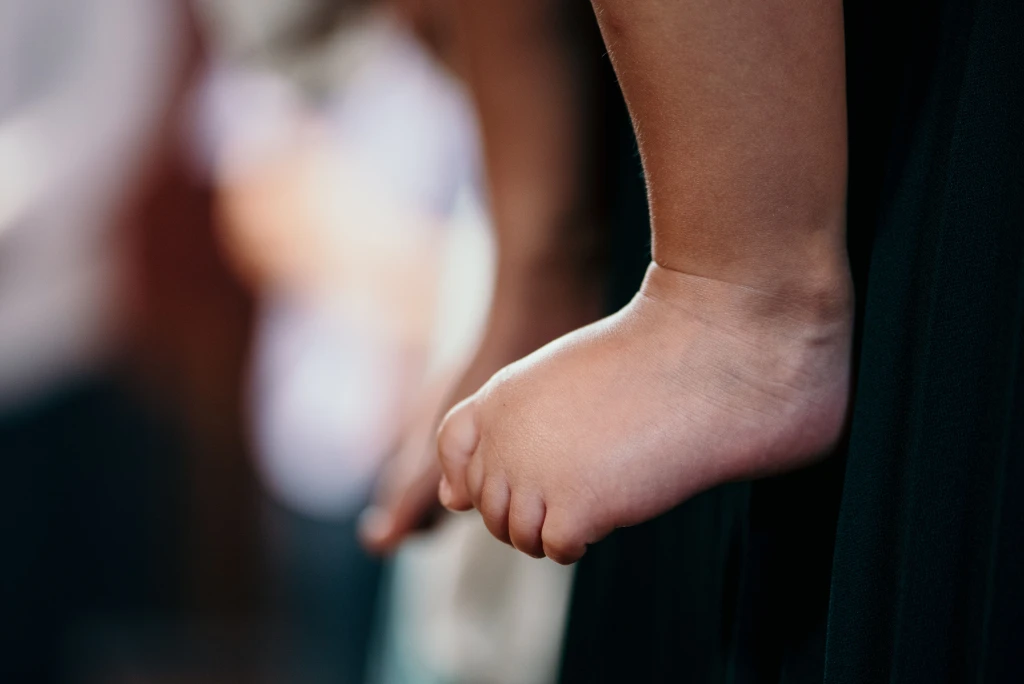
If you have noticed that one of your child’s smaller toes sits curled underneath the next toe, the most likely explanation is curly toes (sometimes called congenital curly toe or overlapping toe). It is a common paediatric foot finding in Singapore, often picked up by parents during a bath or when a new pair of shoes does not seem to fit quite right.
The reassuring part is that most curly toes are painless, do not interfere with walking, and straighten on their own as the foot grows. The reason to have it reviewed is not urgency, it is to confirm the diagnosis, rule out look-alike conditions, and put a sensible footwear and monitoring plan in place while your child grows through it.
Symptoms of Curly Toes
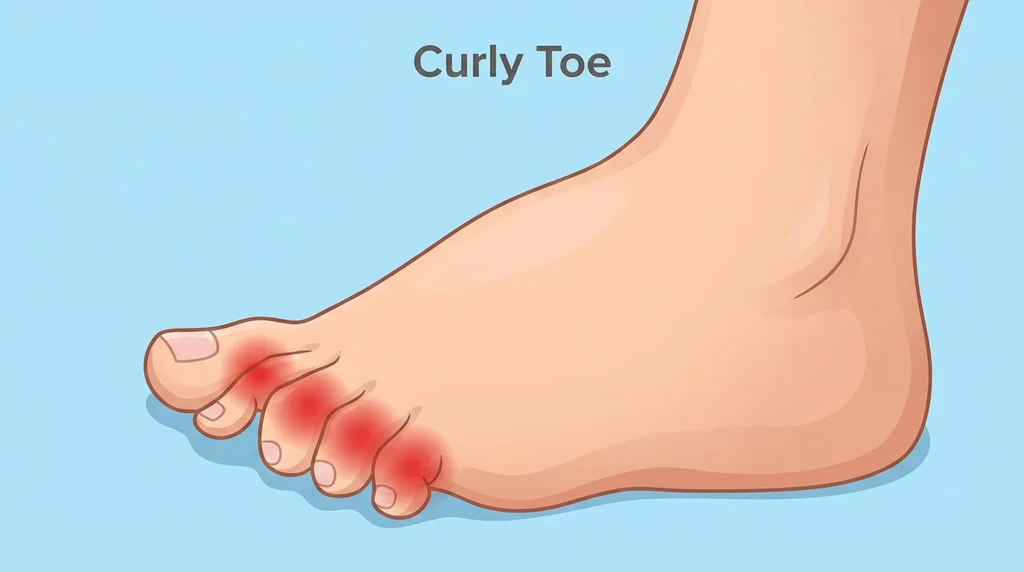
- One or more of the third, fourth, or fifth toes sits curled underneath the adjacent toe.
- The pattern is often symmetric across both feet.
- The toenail of the affected toe is more visible from the side than from the top.
- The toe is flexible and can usually be straightened gently by hand.
- The child is typically comfortable barefoot but may complain in enclosed or narrow shoes.
- Tripping or stumbling is sometimes noticed in the first months of independent walking.
- In older children, a callus or pressure mark may appear on the top or tip of the curled toe.
Causes of Curly Toes
What Causes Curly Toes?
Curly toes are congenital, meaning your child was born with them, even if the curl only became obvious once they started bearing weight. The most accepted explanation is a mild tightness in the small flexor tendons that bend the lesser toes. The tendon pulls the toe into a curled position at rest, while the bones, joints, and growth plates themselves are usually normal.
Common contributors include:
- Inherited flexor tendon tightness, which is why curly toes often run in families.
- Foetal positioning in the womb, where the toes were held in a curled posture for an extended time.
- Normal variation in how the small muscles of the foot mature in the first years of walking.
Curly toes are not caused by carrying your baby, by the type of socks or booties used in infancy, or by early shoe wear. Parents often blame themselves for these, and there is no evidence to support it.
Who Carries a Higher Baseline Risk?
- Children with a parent or older sibling who had curly toes as a child.
- Children whose siblings already show the same pattern, since the condition is frequently bilateral and familial.
- Children born with other mild positional findings, such as metatarsus adductus, which share a similar developmental origin.
Conditions Commonly Mistaken for Curly Toes
A curled lesser toe in a young child is usually congenital curly toes, but a few other conditions can look similar and need to be ruled out at the first review.
Adult-onset clawed, hammer, or mallet toes
Adult-onset clawed, hammer, or mallet toes are mechanically different and usually appear later in life from footwear pressure, biomechanical imbalance, or arthritic change rather than from a congenital tendon imbalance.
In-toe walking
In-toe walking is a different pattern, where a child’s foot turns inward as a whole. That is a rotational gait pattern, not a curled toe. The two can sometimes coexist, which is one reason a paediatric assessment looks at the whole leg rather than the toe in isolation.
Overlapping toes from systemic or neuromuscular conditions
Rarely, a curled or overlapping toe can be one feature of a broader condition affecting muscle tone or connective tissue. A paediatric podiatry review screens for the red flags that would prompt an onward referral.
Treating and Preventing Curly Toes
The main message for parents is the most important one: most curly toes resolve on their own. A reasonable proportion straighten by age three, and a majority of the remainder by age six. Active treatment during this window is about keeping your child comfortable while their feet do the work themselves.
Conservative care during the watch-and-wait period usually includes:
- Footwear with a wide, deep toe box. Narrow or pointed shoes pinch the curled toe against the next one and create the rub marks that bring most parents in. A roomy toe box removes the source of discomfort without trying to force the toe straight.
- Passive stretches. Gentle, brief stretches that lift the curled toe up and back, done at nappy changes or after a bath, help maintain the flexibility of the toe. They are unlikely to “cure” the curl on their own but they keep the joint mobile while growth does its work.
- Taping in selected cases. For some children, a soft strapping technique that holds the toe in a corrected position for part of the day can be useful. It is not appropriate for every child and is decided case by case.
- Paediatric assessment and monitoring. A first review confirms the diagnosis, screens for look-alike conditions, and sets the schedule for the next check. Most families come back every six to twelve months rather than weekly.
- Footwear guidance for the parent. Singapore’s climate means many children spend long stretches in sandals and slippers, which is generally kind to curly toes. The conversation is usually about the pair of school shoes or sports shoes, where toe-box shape matters most.
Where there is a wider foot posture issue contributing to discomfort, paediatric supramalleolar orthoses may be considered as part of the plan, though they are not a routine treatment for curly toes themselves.
Surgical release of the tight flexor tendon is a recognised option, but it is reserved for older children (usually from age six onwards) whose toe is still rigidly curled and is causing footwear pain, repeated calluses, or nail damage that conservative care has not resolved. It is the exception, not the rule.
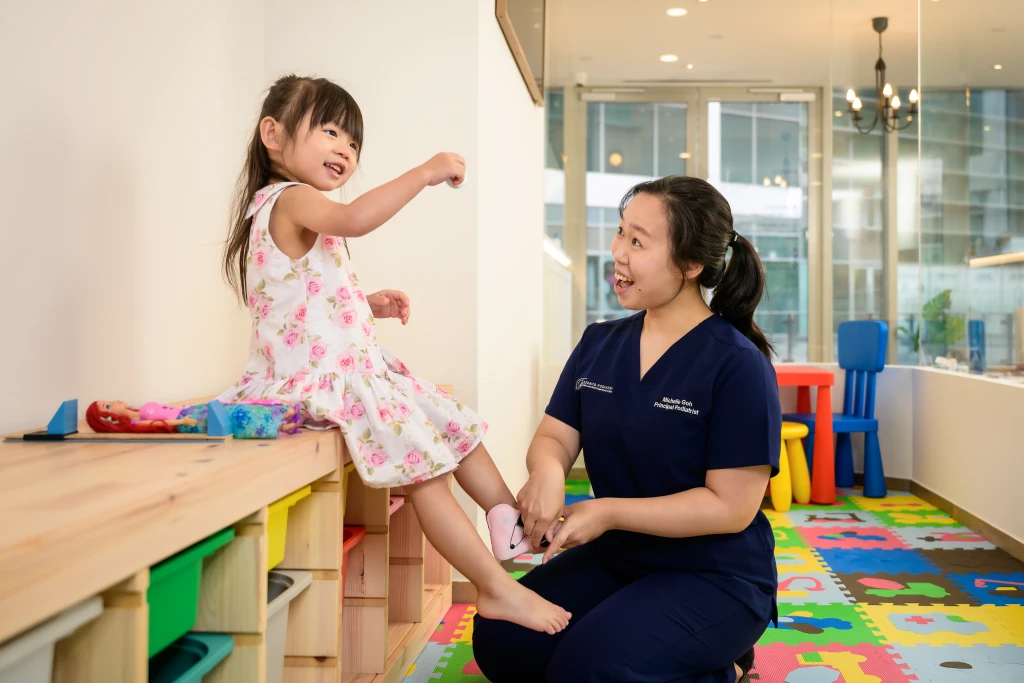
Have Your Child’s Curly Toes Managed at Straits Podiatry
Paediatric foot conditions are seen at all three Straits Podiatry clinics in Buona Vista, Orchard, and Paya Lebar, where our podiatrists work with children of all ages. Straits Podiatry is part of Healthway Medical Group.
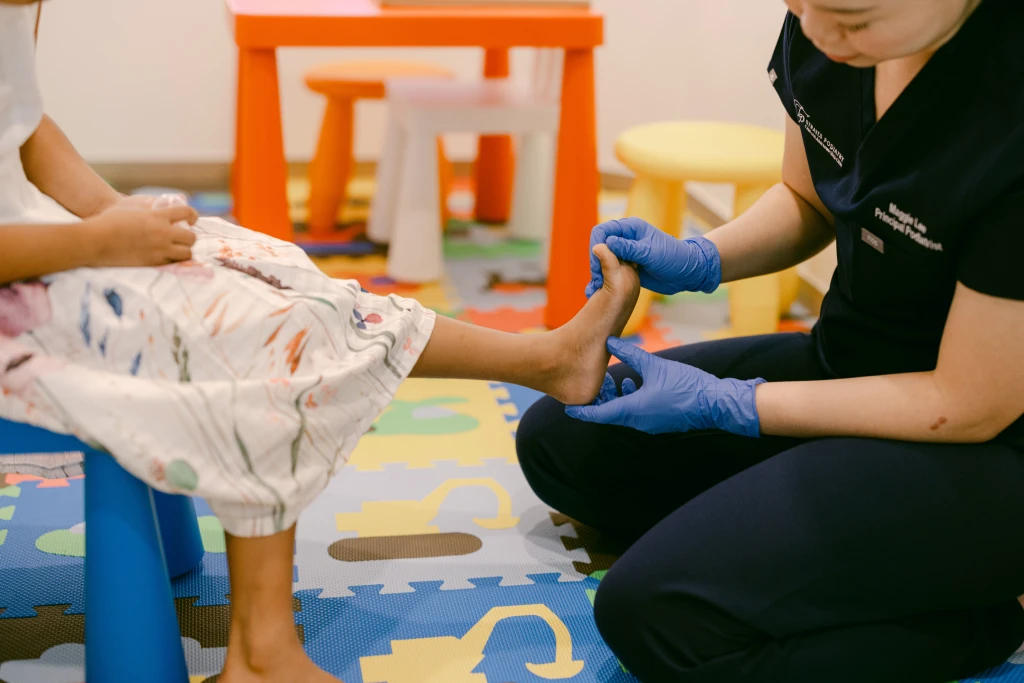
A paediatric curly toes assessment includes a paediatric examination, a check of the toe’s flexibility and joint range, a footwear review, screening for look-alike conditions, and where appropriate a stretching, taping, or monitoring plan that fits your child’s age and the stage of the toe.
The honest message for parents: most children with curly toes do well without intervention. The value of a review is the reassurance of a clear diagnosis, a plan that keeps your child comfortable in shoes through the watch-and-wait years, and a sensible check-in schedule so you know when (and if) anything more is needed.
Speak with Straits Podiatry or book a consultation for an assessment and a tailored approach to manage your child’s curly toes.
Frequently Asked Questions
At what age should I get my child’s curly toes checked?
It is reasonable to mention curly toes at a routine check-up any time after you first notice them, and to book a dedicated paediatric podiatry assessment if the toe is causing footwear discomfort, calluses, or visible nail problems, or if you would simply like a clear diagnosis and a monitoring plan. There is no urgency in the first weeks of life, and there is no benefit to waiting if your child is uncomfortable in shoes.
Will my child’s curly toes straighten on their own?
Most do. A reasonable proportion straighten by around age three, and a majority of the remaining cases settle by age six. The toes that do not fully straighten are often still painless and cosmetically subtle, and many children grow up without ever needing treatment. The honest caveat is that outcomes vary from child to child, which is why a periodic review is more useful than a single prediction.
Can curly toes cause walking problems?
Usually no. Curly toes rarely affect how a young child walks, and tripping in the first few months of independent walking is more commonly down to general motor development than to the toe itself. If your child is falling frequently, walking with the feet turning inward, or complaining of leg pain, those features point towards other conditions such as in-toe walking and are worth assessing in their own right.
What is the difference between curly toes and hammer toes?
Curly toes are a congenital paediatric condition, usually picked up in infancy or early childhood, where a small flexor tendon tightness curls the lesser toe under its neighbour. The toe is typically flexible and the surrounding joints are normal. Hammer toes (and the related clawed and mallet toes) are usually adult-onset, develop over years from footwear pressure or biomechanical imbalance, and become progressively more rigid. The mechanisms are different, the age groups are different, and the management plans are different.
Do orthotics help curly toes?
Custom foot orthoses are not a routine treatment for curly toes themselves, because the curl comes from a tendon imbalance in the toe rather than from the foot posture below. Orthoses (including paediatric supramalleolar orthoses) may still be considered when there is a wider paediatric foot posture or gait issue contributing to discomfort, but for an isolated curly toe the higher-value interventions are footwear with a roomy toe box, gentle stretches, and in selected cases taping.