
Overview
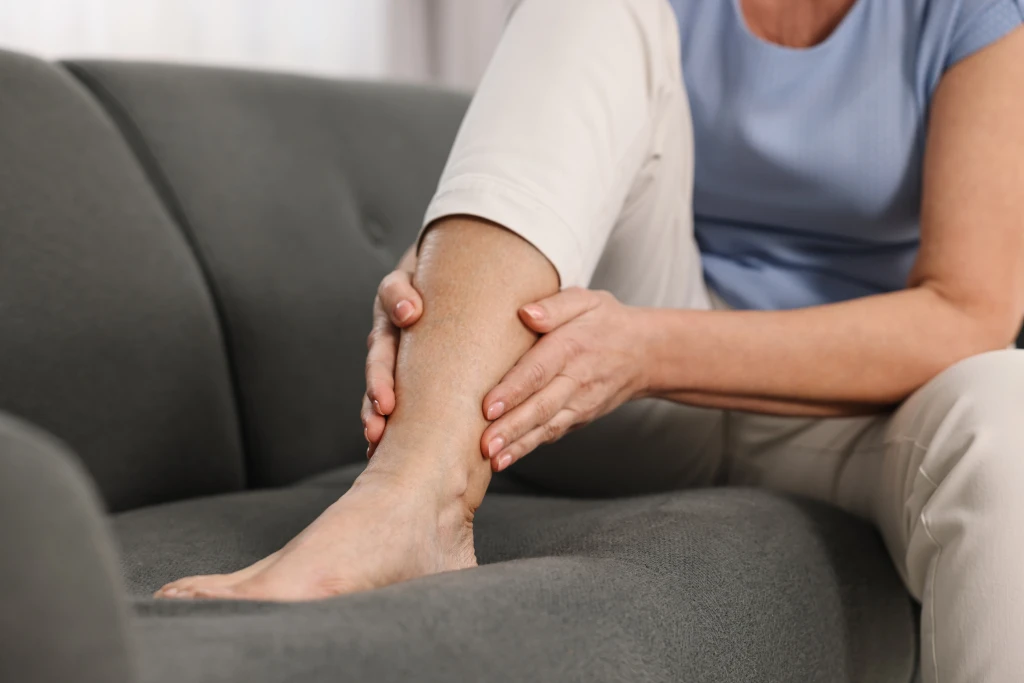
Leg pain is broad. It can show up as a sharp ache along the shin during a Sunday morning run, a deep cramp in the calf that wakes you at 3am, a pulled feeling at the back of the thigh after a quick sprint between MRT platforms, or a burning that radiates from the lower back down the leg during the daily commute. In Singapore, active lifestyles, NS running, marathon training, prolonged standing in retail and hospitality, and the daily MRT-and-walk routine all load the legs in ways that produce a wide range of pain patterns. The right care depends on the right diagnosis, and the source is not always where the pain is felt.
What Is Leg Pain?
Leg pain refers to any discomfort between the hip and the ankle, covering the thigh, knee, shin, calf, and Achilles. The source can be muscle, tendon, bone, nerve, or blood vessel, and these tissues often refer pain in patterns that do not match where the problem sits. A shin ache may come from training overload or from a hairline crack in the bone. A calf cramp on walking may be muscular, or it may signal reduced blood flow. Burning down the leg often traces back to nerve compression in the lower back rather than anything in the leg itself. Sorting which tissue is involved is the practical starting point for treatment.
Symptoms of Leg Pain
The character and location of leg pain often point to the underlying cause. Common patterns include:
- Sharp pain along the shin during or after running.
- Cramping or tightness in the calf during walking, at night, or both.
- Burning, tingling, or numbness shooting down the leg.
- A pulled or torn sensation in the back of the thigh or calf, often during a sprint or sudden push-off.
- Aching pain along the outer side of the thigh, worse when descending stairs.
- Swelling, warmth, or visible bruising over a specific area.
- Foot drop or weakness lifting the foot.
- One leg suddenly cold, pale, or numb (urgent: seek emergency care).
Conditions That Cause Leg Pain
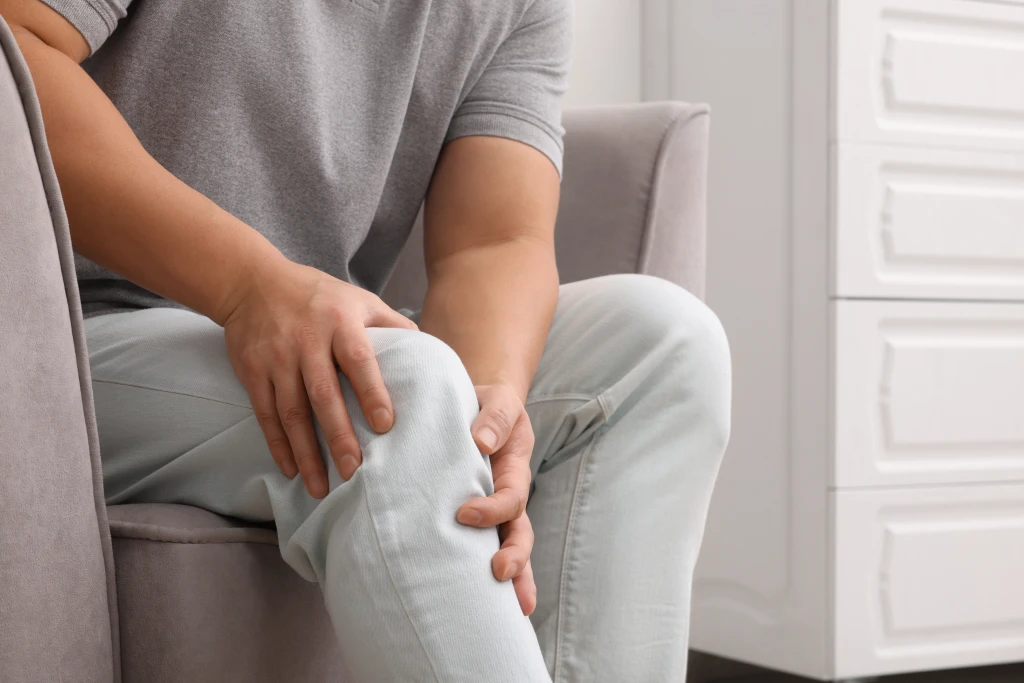
Leg pain has a wide differential. Below are the most common drivers seen at podiatry and lower-limb clinics in Singapore, plus the urgent vascular and neurological causes that need to be ruled out first.
- Shin splints / Medial Tibial Stress Syndrome: pain along the inner shin from training overload, common in runners and NS trainees.
- Calf strain: sudden sharp pain in the calf during sprinting, jumping, or push-off, with tightness and tenderness in the days that follow.
- Hamstring strain: a pulled or torn sensation in the back of the thigh, often during sprinting or stretching beyond usual range.
- Iliotibial band syndrome (ITBS): outer thigh and outer knee pain that worsens with running or descending stairs, common in distance runners and cyclists.
- Achilles tendonitis: pain at the back of the heel where the Achilles tendon attaches to the heel bone, often gradual in onset.
- Tibial stress fracture: a hairline crack in the shin bone from repetitive impact. Pain is more focal than shin splints and persists at rest. Confirmed on MRI or bone scan. X-ray often misses it early.
- Foot drop: weakness lifting the foot, usually from nerve compression (common peroneal nerve at the fibular head, or lumbar nerve root) or from injury further up the chain.
- Leg length discrepancy: uneven leg lengths that drive asymmetric loading, often surfacing as one-sided leg, hip, or back pain over time.
- Knee pain: knee-specific causes such as patellofemoral pain, meniscal injury, and patellar tendinopathy are covered on their own hub.
- Sciatica / lumbar radiculopathy: nerve-root irritation in the lower back that refers pain, numbness, or weakness down the leg. Typically needs GP, physiotherapy, or specialist spine input rather than podiatry-led care.
- Peripheral arterial disease (PAD): cramping calf pain that comes on with walking and eases with rest (claudication). Caused by narrowed arteries. Needs medical assessment, not load-management.
- Deep vein thrombosis (DVT): sudden one-sided calf pain with swelling, warmth, and sometimes redness. This is a medical emergency. Go to A&E or call 995. Do not massage the leg, do not wait it out.
Causes of Leg Pain
What Causes Leg Pain?
- A sudden rise in running, jumping, or walking volume (training spike).
- Long hours standing or walking on hard floors.
- Worn-out or unsupportive footwear.
- Tight calves, weak hips, and limited ankle motion.
- Biomechanical asymmetries such as leg length discrepancy or pronation differences between sides.
- A previous foot, ankle, or knee injury that has altered the way the leg loads.
- Direct trauma (kick, fall, contact during sport).
- Reduced blood flow from peripheral arterial disease, often linked to smoking, diabetes, high blood pressure, or high cholesterol.
- Nerve-root irritation from the lower back.
Who Carries a Higher Baseline Risk?
- Runners, hikers, footballers, and court-sport players.
- NS trainees and people early in a new training programme.
- Adults aged 40 and above, as tendons stiffen and recovery slows.
- People in jobs that involve long hours standing on hard floors.
- People with diabetes, high blood pressure, high cholesterol, or a history of smoking (vascular risk).
- People with a prior history of DVT, recent long-haul travel, or recent surgery (DVT risk).
- People with a prior back injury or known lumbar disc issues (sciatica risk).
Diagnosis
Sorting the cause of leg pain is the first step toward the right treatment. A podiatrist typically works through the following, and refers onward when the picture points outside podiatry’s scope:
- Patient interview: a structured review of when the pain started, what brings it on, what eases it, training and footwear history, prior injuries, medical history, and any red-flag features (sudden swelling, one cold pale leg, weakness, severe rest pain).
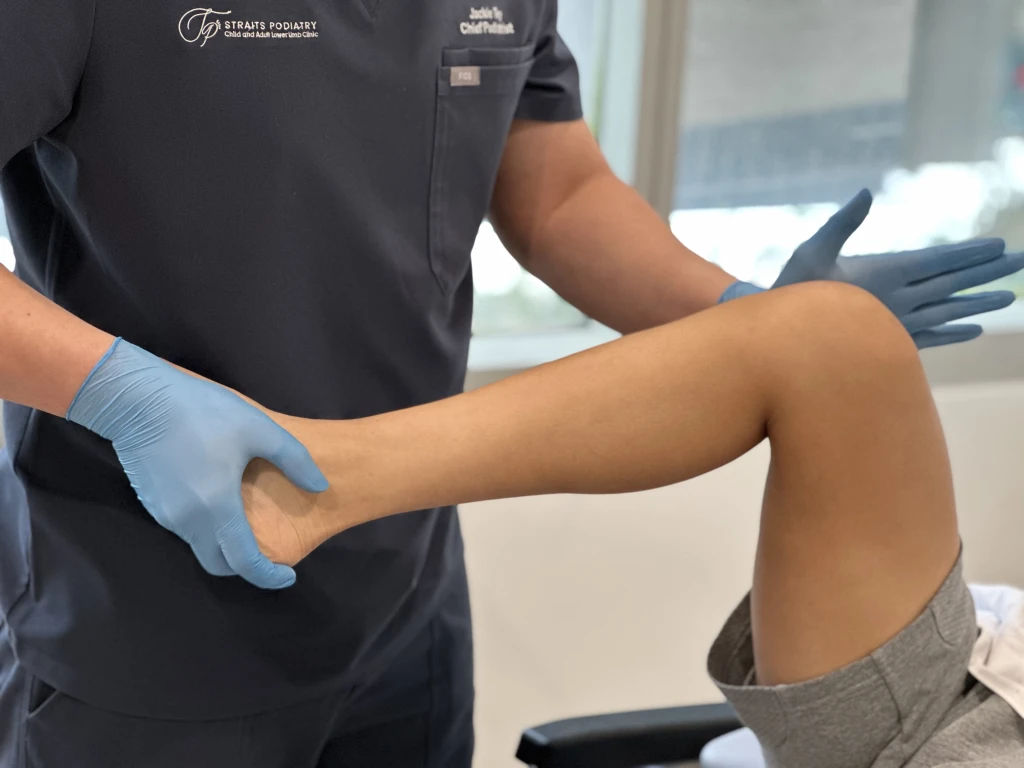
- Physical examination: hands-on assessment to localise tender areas, test joint range, check strength and reflexes, assess gait, and look for swelling or asymmetry between sides.
- Imaging: X-rays for bony causes (fractures, arthritis, bone spurs). MRI for soft tissue injuries, occult stress fractures, and persistent pain that has not settled with standard care.
- Blood tests: when an inflammatory or systemic cause is suspected, such as gout, rheumatoid arthritis, or infection.
- Ankle-Brachial Index (ABI): a simple non-invasive blood-flow test where peripheral arterial disease is on the differential. Cramping calf pain that comes on at a consistent walking distance and eases with rest is the classic presentation that triggers an ABI.
Where the picture suggests sciatica, DVT, peripheral arterial disease, or another non-podiatric cause, the appropriate referral is made (GP, vascular specialist, neurologist, or A&E for emergencies) before any leg-loading treatment begins.
Treatment Options for Leg Pain in Singapore
Treatment depends on the underlying cause. For the biomechanical and overuse causes that fall within podiatry’s scope, most leg pain settles with a paced, structured plan that calms the irritated tissue, restores the mechanics that drove the flare, and rebuilds capacity gradually.
Conservative Management
To settle the pain:
- Reduce aggravating high-impact activity for a defined period rather than pushing through it.
- RICE (rest, ice, compression, elevation) for acute muscle and tendon injuries in the first 48 to 72 hours.
- Supportive footwear that suits the activity and the foot type.
- Avoiding long barefoot walking on hard floors at home during the flare.
To restore mechanics and share the load:
- Calf, hamstring, and hip flexibility work.
- Foot, calf, and gluteal strengthening to build capacity for impact.
- Custom orthotic insoles for biomechanically-driven cases, particularly where foot posture or leg length discrepancy is loading one side of the leg more than the other.
- A graded return to running or sport, mixing in lower-impact training (cycling, swimming, elliptical) so the work is shared across the kinetic chain.
Targeted Therapies
For tendinopathy and chronic soft-tissue cases that resist conservative care:
- Focused Extracorporeal Shockwave Therapy (ESWT) for stubborn tendinopathy such as chronic Achilles tendonitis or persistent insertional tendon pain.
- Magnetotransduction Therapy (EMTT) for chronic tissue pain that has stalled in standard rehab.
Surgical Intervention
Surgery for leg pain is uncommon and reserved for specific situations: full tendon rupture, complete stress fracture, severe nerve compression that has not responded to conservative care, or vascular surgical indications such as critical limb ischaemia. Referral to an orthopaedic surgeon, neurosurgeon, or vascular surgeon is arranged when the picture warrants it.
Prevention
- Build training volume gradually rather than in sudden jumps. The classic guideline is no more than a 10% weekly increase in running distance.
- Replace worn shoes early. Most running shoes have a useful life of 500 to 800 km depending on the model and your gait.
- Keep calves flexible and ankles mobile. Both are commonly limited in people who sit for most of the day.
- Address biomechanical asymmetries (leg length, pronation difference, hip weakness) with a gait assessment, rather than treating each flare in isolation.
- Move during long flights and long workdays. Calf pump activity reduces DVT risk.
Have Your Leg Pain Managed at Straits Podiatry
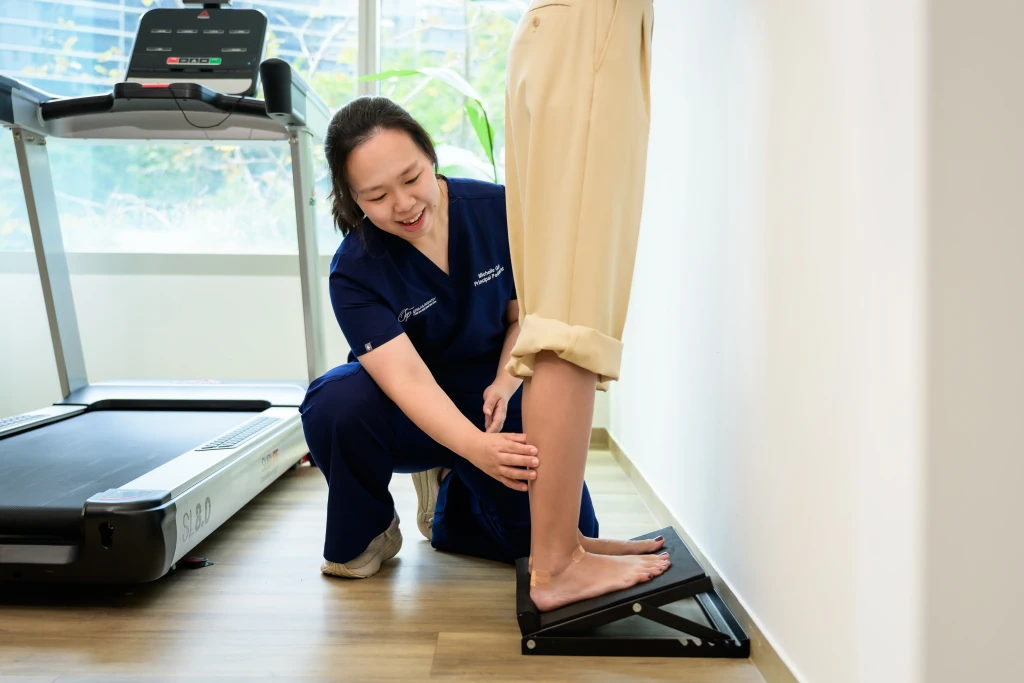
Leg pain has a wide differential, and the right starting point depends on what is driving it. At Straits Podiatry, the assessment connects where the pain is, when it occurs, your training and footwear history, and your foot and lower-limb mechanics, so the source is clear before any treatment begins. Where the picture points outside podiatry’s scope, the referral pathway is just as important as the treatment itself.
For the biomechanical and overuse causes that fall within podiatry’s lane, services that may form part of your care include gait analysis, custom orthotic insoles, footwear guidance, and ESWT or EMTT for cases that have not settled with conservative measures. For muscle and tendon rehabilitation, our physiotherapist works alongside the podiatry team on the loading and strengthening phase of recovery. For vascular cases, suspected DVT, or nerve-root pain referred from the lower back, a GP, vascular specialist, or A&E is the right first point of contact. Speak with the team or book a consultation for an assessment and a plan that fits the cause.
Frequently Asked Questions About Leg Pain
What is the difference between leg pain from muscle strain and nerve pain?
Muscle strain tends to be sharp at the moment of injury, then settles into a dull ache or tightness in a specific area, and worsens with use of that muscle. Nerve pain has a different character: burning, tingling, electric-shock sensations, or numbness, and it often follows a line down the leg rather than sitting in one spot. Nerve pain is usually referred from somewhere else, most often the lower back, so the source is rarely where the pain is felt. The treatment paths are different too, which is why the distinction matters.
When is leg pain a medical emergency?
Seek emergency care immediately if you have sudden one-sided calf swelling with warmth and pain (possible DVT), a leg that becomes cold, pale, or numb (possible acute arterial blockage), severe pain following a high-energy injury, or sudden foot drop with weakness. Cramping calf pain on walking that eases with rest (intermittent claudication) is not an emergency, but it should be reviewed by a GP or vascular specialist promptly rather than ignored.
Why do my calves cramp at night?
Night-time calf cramps are common and usually benign. Common contributors include dehydration, prolonged standing during the day, tight calf muscles, electrolyte imbalance, and certain medications. Stretching the calves before bed, staying hydrated, and addressing any daytime overload often help. Persistent or severe night cramps, or cramps that come on during walking and ease with rest, warrant a medical review to rule out vascular causes.
Should I see a podiatrist, physiotherapist, or GP for leg pain?
It depends on the pattern. For pain that started with running, sport, or a training spike, and that sits in the shin, calf, Achilles, or outer thigh, a podiatrist or physiotherapist is a suitable first point of contact. For burning or tingling shooting down the leg from the lower back, a physiotherapist or GP is usually more appropriate. For cramping calf pain on walking, sudden one-sided swelling, or signs of reduced blood flow, see a GP first so vascular causes can be ruled in or out before any loading-based treatment begins. Where the picture points outside podiatry’s scope, onward referral is arranged.
How long does leg pain take to settle?
Most acute muscle strains and overuse leg pain settle within a few weeks once the load is reduced and the right supportive measures are in place. Tendinopathies (Achilles, hamstring origin, ITB) and stress fractures take longer, typically six weeks to three months for stress fractures and three to six months for chronic tendinopathy. The earlier the assessment, the shorter the recovery tends to be, since paced care almost always resolves faster than a stop-start cycle of self-managed flare-ups.