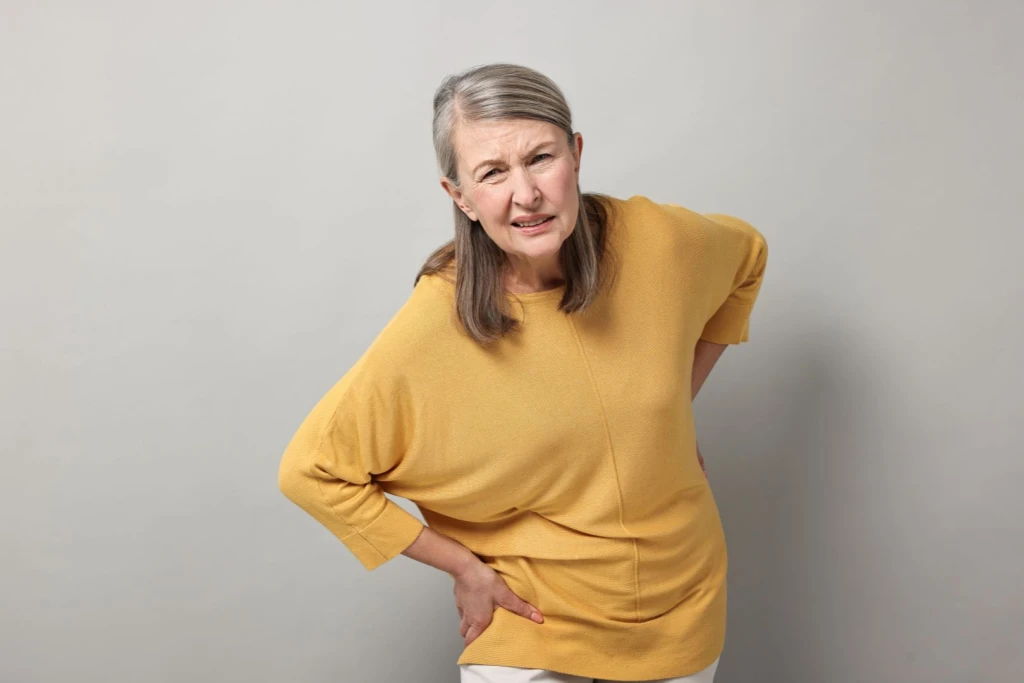
Getting up from a low chair now takes a moment, and the first few steps come with a deep ache in the groin before the hip loosens. Reaching down to put on socks or clip your toenails has become awkward on one side. A longer walk around the neighbourhood or the park connector leaves the hip stiff and sore that evening, and the stairs at home are slower than they used to be. For many Singaporeans past their fifties, this is the early picture of hip osteoarthritis settling into the joint.
Hip osteoarthritis is a degenerative condition of the ball-and-socket hip joint, where the cartilage that lines the head of the thighbone and the socket of the pelvis gradually thins and the joint space narrows. As the smooth surface wears, the underlying bone takes more load and responds with stiffness, aching, and a slowly shrinking range of motion. Because the joint sits deep, its hip pain is often felt in the groin, the buttock, or even referred down to the knee, which is exactly why an accurate assessment matters. Pain around the hip can come from the joint itself, the surrounding soft tissue, or the lower back, and sorting out which one is driving the symptoms shapes the whole care plan.
Symptoms of Hip Osteoarthritis
Hip osteoarthritis tends to come on gradually, and the pattern of symptoms is often as telling as the symptoms themselves.
- Deep groin or front-of-hip pain: the most characteristic location. The ache sits deep in the groin or the front of the hip and builds with weight-bearing activity such as walking, standing, and climbing stairs.
- Buttock or lateral hip ache: some patients feel it more in the buttock or the outer side of the hip rather than the groin, which is one reason it can be mistaken for a back or bursal problem.
- Reduced internal rotation of the hip: one of the earliest and most reliable signs. Turning the thigh inward becomes limited and uncomfortable, often noticed when crossing the legs or getting in and out of a car.
- Morning stiffness that eases within 30 minutes: the joint feels stiff first thing in the morning or after sitting, then loosens with gentle movement. Stiffness that lasts much longer points more towards an inflammatory cause.
- Difficulty with socks, shoes, and toenails: reaching the foot on the affected side becomes harder as hip flexion and rotation reduce.
- Pain referred to the knee: the hip commonly refers pain down the thigh to the knee, so some patients arrive convinced the knee is the problem when the hip is the source.
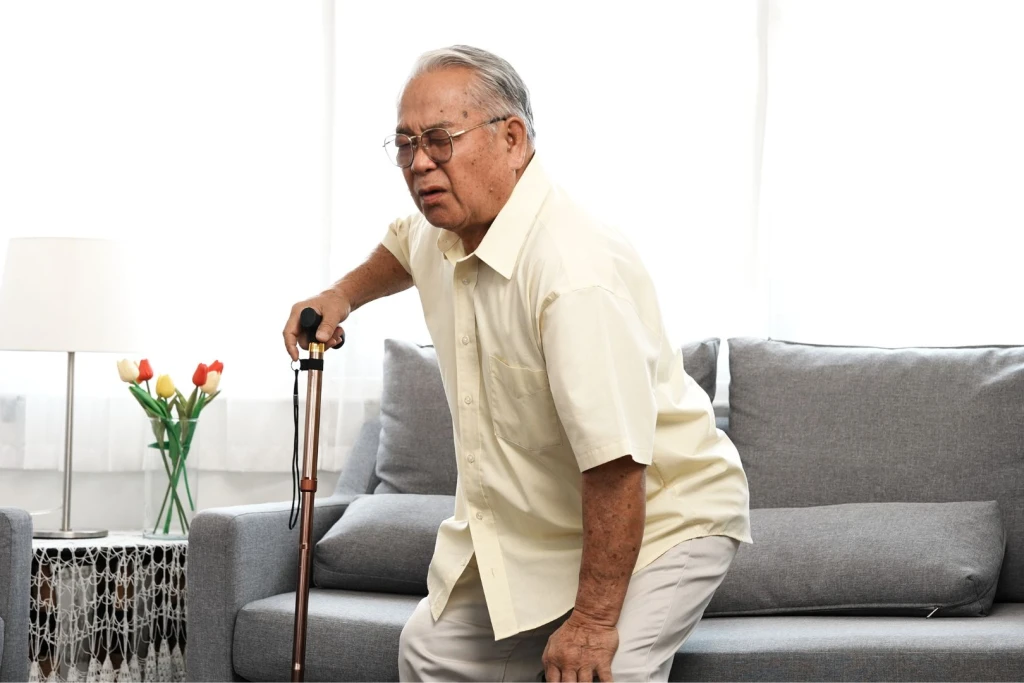
- A limp or altered gait: as the joint stiffens and loading becomes uncomfortable, many people unconsciously shorten their stride or shift weight away from the painful side.
From what we see in clinic, the combination of deep groin pain, reduced internal rotation, and activity-related aching in an older adult is the pattern that most often points towards hip osteoarthritis rather than a soft-tissue or referred cause.
Causes of Hip Osteoarthritis
The hip is a large weight-bearing joint that carries load with every step, and several factors influence how quickly its cartilage wears.
What Causes Hip Osteoarthritis?
- Cumulative age-related cartilage wear: over decades of loading, the cartilage surface thins, the joint space narrows, and the underlying bone remodels. This is the most common pathway and the reason the condition is far more prevalent in older adults.
- Previous hip injury or childhood hip conditions: an earlier fracture, dislocation, or a developmental problem such as hip dysplasia or a childhood growth-plate condition can leave the joint slightly less congruent, which accelerates wear years later.
- Structural shape variants of the hip: abnormal bony shapes at the ball or socket, including the pattern seen in femoroacetabular impingement, change how the surfaces meet and can drive earlier cartilage damage.
- Sustained excess body weight: additional load through a weight-bearing joint increases the compressive force on the cartilage with every step and every stair.
- Lower-limb loading asymmetry: a significant leg-length discrepancy or a longstanding gait asymmetry can load one hip more than the other over many years, contributing to uneven wear.
- Inflammatory joint disease: rheumatoid and other inflammatory arthropathies can damage the hip cartilage and lead to secondary osteoarthritic change in the same joint.
Who Carries a Higher Baseline Risk?
- Adults over the age of 50, with prevalence rising further past 60.
- People with a family history of osteoarthritis.
- Anyone with a previous hip injury, hip surgery, or a childhood hip condition such as hip dysplasia.
- People carrying excess body weight.
- Workers in physically demanding jobs involving heavy lifting, prolonged standing, or repetitive load over many years.
- People with a marked leg-length difference or a long-standing altered gait pattern.
Conditions Commonly Mistaken for Hip Osteoarthritis
Pain in and around the hip has several possible sources, and osteoarthritis shares the territory with soft-tissue, structural, and referred causes. A clinical assessment, with imaging where indicated, is what sorts them out.
Femoroacetabular impingement
Femoroacetabular impingement arises when an abnormal bony shape at the ball or socket causes the surfaces to pinch during deep hip movement. It tends to affect younger, active adults and produces groin pain with deep flexion, squatting, and pivoting, rather than the load-related aching and morning stiffness of established osteoarthritis. The two are linked, because long-standing impingement can contribute to cartilage wear over time, but the age group and the provoking movements usually differ.
Greater trochanteric pain syndrome
Greater trochanteric pain syndrome, sometimes called trochanteric bursitis, produces pain over the bony point on the outer side of the hip. The giveaway is that the area is tender to direct touch and often painful when lying on that side in bed, whereas osteoarthritis pain sits deeper in the groin and is provoked by loading rather than by pressure on the outer hip. The two can coexist, particularly in older adults.
Hip labral tear
A tear of the labrum, the ring of cartilage around the rim of the socket, can cause groin pain, clicking, catching, and a sensation of the hip locking. It is more common in younger and more active patients and in those with an impingement-shaped hip. The mechanical catching and clicking help distinguish it from the steadier, activity-related ache of osteoarthritis, though imaging is usually needed to confirm it.
Referred pain from the lower back
Problems in the lumbar spine can refer pain into the buttock, the outer hip, and down the leg, mimicking a hip source. The clue is that hip rotation is usually comfortable and full while back movements or nerve-tension tests reproduce the symptoms. This is why the assessment looks beyond the hip when the local joint findings do not fit the pain the patient describes.
Knee osteoarthritis
Because the hip refers pain down the thigh to the knee, some patients assume the knee is the culprit and arrive expecting a knee problem. Knee osteoarthritis is a genuine and common condition in the same age group, so the two are easily confused and can occur together. Examining hip rotation alongside the knee helps identify which joint is actually driving the pain.
Treating and Preventing Hip Osteoarthritis
Hip osteoarthritis is managed by reducing the load the joint has to absorb and supporting the structures around it, so the cartilage that remains is protected and the hip stays as functional as possible. There is no conservative treatment that reverses cartilage loss, and the joint itself is led by an orthopaedic team, but a well-structured plan can ease pain, maintain movement, and keep people active in the earlier and middle stages. The podiatry contribution is the biomechanical side of that plan: understanding how the foot, gait, and lower-limb alignment load the hip, and reducing the mechanical stress where it can be modified.
Conservative treatment
These measures are usually combined, and they work best when matched to the individual pattern of loading and the stage of the joint.
- Load and weight management: taking meaningful load off the joint is one of the most effective steps. Where excess body weight is a factor, reducing it lowers the compressive force through the hip with every step, and pacing higher-load activities across the week helps keep symptoms settled.
- Activity modification and joint-friendly exercise: swapping repetitive high-impact loading for lower-impact activity such as swimming, cycling, and level-ground walking maintains fitness and joint movement without the aggravation. Staying active matters, because deconditioning tends to make the hip feel worse, not better.
- Gait aids: a walking stick used in the hand opposite the affected hip can offload the joint noticeably during walking, and is a simple way to reduce pain and improve confidence on longer distances or uneven ground.
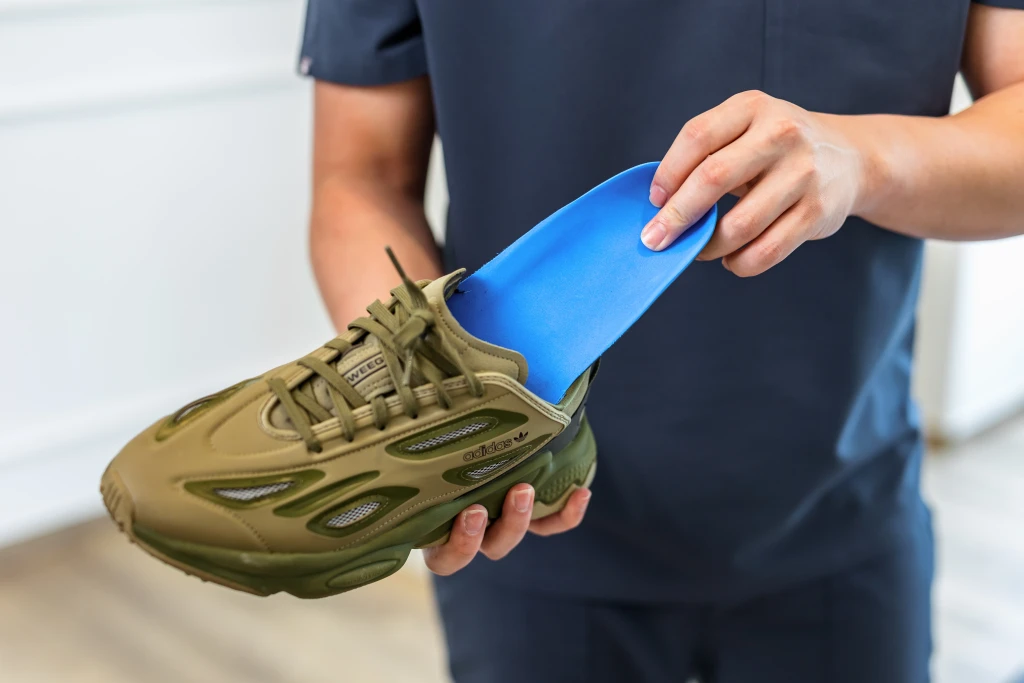
- Lower-limb biomechanical correction and custom foot orthoses: where a leg-length difference or a gait asymmetry is loading one hip unevenly, addressing how the foot and lower limb load the joint can ease the mechanical stress. A heel raise or an orthotic adjustment is considered only where the assessment shows a genuine leg-length or loading factor, not as a routine measure.
- Strengthening and mobility through physiotherapy: targeted work for the gluteal, hip, and core muscles supports the joint and improves how it tolerates load, while gentle mobility work helps maintain range. Our physiotherapy service is the rehabilitation arm of Straits Podiatry and can guide a graded programme.
- Adjunct therapy for peri-articular soft tissue: where the tendons and soft tissue around the hip have become irritated, radial pressure wave therapy or magnetotransduction therapy (EMTT) may help settle that component. These target the surrounding soft tissue rather than the joint cartilage itself, so they are used as a supporting measure alongside load and biomechanical management.
When conservative care isn’t enough
When pain is no longer controlled by conservative measures, when function is significantly limited despite activity modification, gait aids, biomechanical correction, and physiotherapy, or when imaging shows advanced joint changes, an orthopaedic opinion is the appropriate next step. Options at that stage sit with the orthopaedic surgeon and may include intra-articular injections or, in end-stage disease, a total hip replacement. Hip replacement is a well-established procedure with a strong track record for restoring pain-free movement in advanced osteoarthritis. The decision belongs to the orthopaedic team, and the podiatry role remains the conservative, biomechanical side both before surgery is needed and during the return to activity afterwards.

Have Your Hip Osteoarthritis Managed at Straits Podiatry
At Straits Podiatry, care for hip osteoarthritis begins with a gait analysis and a lower-limb biomechanical review to understand how the foot, ankle, and leg-length alignment are loading the hip. Where a modifiable factor is found, care may involve custom foot orthoses or a heel raise to even out loading, footwear guidance, advice on gait aids and activity pacing, and physiotherapy support for strengthening and mobility.
Our podiatrists focus on the conservative, biomechanical part of the picture and work alongside your orthopaedic team where the joint itself needs their input. If a deep groin ache, stiffness, or a reduced hip range is starting to limit how you move, book a consultation for an assessment at any of our three Singapore clinics.
Frequently Asked Questions About Hip Osteoarthritis
Can a podiatrist help with hip osteoarthritis?
A podiatrist manages the biomechanical side of hip osteoarthritis rather than the joint surgery itself. The assessment looks at how the foot, gait, and lower-limb alignment load the hip, and where a factor such as a leg-length difference or a gait asymmetry is loading the joint unevenly, addressing it can reduce the mechanical stress. Care may include custom orthoses or a heel raise where indicated, footwear and gait-aid advice, activity guidance, and physiotherapy support. The joint itself is led by an orthopaedic team, so the podiatry role sits alongside that care, not in place of it.
Can foot orthotics help hip osteoarthritis?
Foot orthotics can help where the way the lower limb is loading is contributing to stress on the hip, most clearly when there is a genuine leg-length difference or a marked gait asymmetry. In those cases, a heel raise or an orthotic adjustment can even out the loading between the two sides. Orthotics are not a routine fix for every hip, and the benefit depends on the individual pattern of loading, which is why a gait analysis and a lower-limb assessment come before any prescription.
Is walking good or bad for hip osteoarthritis?
For most people, staying active with the right kind of walking is helpful rather than harmful. Level-ground walking within a comfortable distance maintains joint movement and muscle strength, both of which support the hip. The activities that tend to provoke symptoms are repetitive high-impact loading, long walks on hard or uneven ground, and prolonged stair use. A gait aid such as a walking stick on the opposite side can make longer distances more comfortable, and pacing activity across the week usually works better than either resting completely or overloading the joint in one go.
Does hip osteoarthritis always need a hip replacement?
No. Many people manage hip osteoarthritis for years with conservative measures such as load and weight management, activity modification, gait aids, biomechanical correction, and physiotherapy. A hip replacement becomes a reasonable consideration only when pain is no longer controlled, when function is significantly limited despite those measures, or when imaging shows advanced end-stage change. That decision is made with an orthopaedic surgeon, and conservative care remains worthwhile both in delaying that point and in preparing for and recovering from surgery if it is eventually needed.
How do I know if my hip pain is arthritis or something else?
The pattern offers clues, though only an assessment confirms it. Osteoarthritis usually produces deep groin pain, reduced internal rotation, morning stiffness that eases within about 30 minutes, and aching that builds with loading. Pain that is tender to touch on the outer hip points more towards a soft-tissue or bursal cause, while pain reproduced by back movements rather than hip rotation suggests a referred source from the lower back. Because the hip also refers pain to the knee, the knee is sometimes blamed when the hip is the driver. Examining hip range alongside the back and knee is how the source is sorted out.
Can a leg-length difference cause hip osteoarthritis?
A significant leg-length difference can load one hip more than the other over many years, and that uneven loading is one of the modifiable factors that can contribute to wear on the more heavily loaded side. It is rarely the sole cause, since age, genetics, body weight, and previous injury all play a part, but where a genuine and meaningful difference is present, evening out the loading with a heel raise or an orthotic adjustment can reduce the mechanical stress going forward. A lower-limb assessment confirms whether a true leg-length difference exists before anything is prescribed.