
Overview
Toe pain rarely stays a minor problem for long. A single sore toe changes how you walk, sends pressure into the rest of the foot, and can turn a familiar pair of shoes into something you brace against by mid-morning. Because the toes carry the body forward at every push-off, a problem in one small joint is quickly felt across the whole foot.
What makes toe pain tricky is that very different problems can feel similar at first. Which toe is involved, when it hurts, and what makes it worse are what point to the actual cause, and each cause responds to a different kind of care. This page covers the common causes of toe pain we see at Straits Podiatry, how a podiatrist works out which one applies to you, and the treatment options available in Singapore. If the pain spreads more broadly across the foot, our foot pain page may be a better starting point.
What Is Toe Pain?
Toe pain is any discomfort in one or more of the toes, the joints connecting them to the rest of the foot, the soft tissue underneath, or the nails and skin surrounding them. Each toe is made of small bones called phalanges. The big toe has two. The other toes have three. Beneath the big-toe joint sit two small sesamoid bones embedded in tendon, which act as a pulley during push-off. Under each toe joint there is a thick band of soft tissue called the plantar plate, which stabilises the toe against the ground. Between the long bones of the forefoot run the nerves that supply sensation to the toes. On top sit the nails, and around each nail is a fold of skin that can become inflamed or infected.
Because all of these structures sit in a small space, the source of toe pain is rarely obvious from the symptom alone. Sharp pain at the big-toe joint can come from a bunion, hallux rigidus, sesamoiditis, gout, or turf toe. Burning pain between the third and fourth toes commonly points to a neuroma. Throbbing pain around a toenail points to an ingrown nail or an infection of the surrounding skin. The location, timing, and character of pain are what separate one cause from another.
Symptoms of Toe Pain
The character and timing of toe pain often point to the underlying cause. Common patterns include:
- Sharp pain at the big toe joint, worse in tight shoes or during push-off.
- A visible bony bump at the base of the big toe or on the side of the little toe.
- Redness, warmth, and swelling localised to a single toe, sometimes severe enough that a bedsheet touching the toe is uncomfortable.
- Burning, tingling, or shooting pain between the toes, often the third and fourth, that worsens in narrow shoes.
- A throbbing, hot pain around the side or corner of a toenail, sometimes with discharge.
- A dull ache deep in the ball of the foot near the base of a toe, often with the toe drifting upward over time.
- Sharp first-step pain under the big-toe joint after long sitting or sleeping.
- A pulling or tearing sensation at the big-toe joint after a forced upward bend during sport.
- Pain on the top of a toe where it rubs against the shoe, often with a corn or callus forming.
- A dark-coloured nail after a stub or a long downhill run.
- Stiffness in the big-toe joint that limits how far the toe can bend up during walking.
Sharp or throbbing pain that makes walking uncomfortable is the most common presentation across all of these causes. Swelling, warmth, and redness signal inflammation and warrant earlier review.
Conditions That Cause Toe Pain
Toe pain is a symptom shared by many distinct conditions. Each behaves differently and needs different treatment. The most common causes we see in Singapore are listed below.
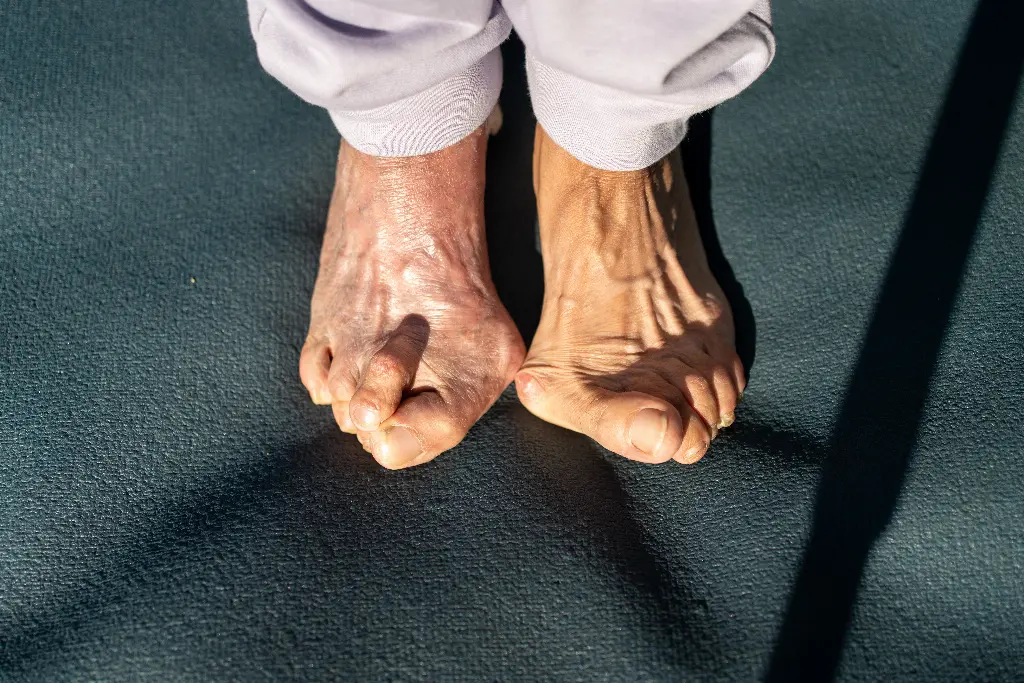
- Bunions: a bony bump at the base of the big toe, often painful in enclosed shoes and progressive over time.
- Sesamoiditis: inflammation of the small sesamoid bones beneath the big-toe joint, common in dancers, sprinters, and people who spend long hours on the ball of the foot.
- Hallux rigidus: arthritis of the big-toe joint, leading to stiffness, loss of upward bend, and pain during push-off.
- Plantar plate injury: a strain or tear of the soft tissue under a toe joint (most often the second toe), with the toe gradually drifting upward or sideways.
- Morton’s neuroma: nerve irritation between the long bones of the forefoot, classically between the third and fourth toes, producing burning, tingling, or shooting pain into the toes.
- Ingrown toenail: a nail edge that grows into the surrounding skin, producing sharp pain, redness, and sometimes infection. Very common in Singapore’s humid climate and in NS trainees.
- Paronychia: infection of the skin fold around the toenail, often as a consequence of an ingrown nail or aggressive home trimming.
- Subungual haematoma (nail trauma): blood collecting under the toenail after a stub, dropped object, or repetitive impact in tight shoes, producing throbbing pain and a dark nail.
- Gout: a sudden, intense inflammatory attack from uric-acid crystals, classically affecting the big toe with severe pain, redness, and warmth. The pain can be extreme enough that even a blanket touching the toe at night is unbearable.
- Hammer, claw, and mallet toes: progressive bending deformities of the smaller toes, often painful where the bent joint rubs against the top of the shoe.
- Juvenile bunions: bunions that begin in childhood or adolescence, often with a stronger genetic component than the adult form.
- Turf toe: a sprain of the big-toe joint caused by a forced upward bend, classically when the toe jams into the ground during sport or kicks against a hard surface. Common in football, rugby, and court sports.
- Toe fractures and stress fractures: hairline cracks from a single trauma or repeated overload, often producing focal pain and swelling that does not settle with rest alone.
- Corns, calluses, and friction blisters: skin problems where the toe rubs against the shoe or against another toe, surprisingly painful and quick to limit daily activity.
If you are not sure which of these applies to you, a podiatry assessment is the practical way to narrow it down before starting treatment.
Causes of Toe Pain
What Causes Toe Pain?
The mechanism behind toe pain usually falls into one of a few categories:
- A sudden rise in walking, running, jumping, or pivoting volume, especially on hard surfaces.
- Long hours in narrow, pointed, or high-heeled shoes that compress the toes.
- Footwear with a stiff or thin sole that fails to absorb load through the forefoot.
- Foot shape factors such as flat feet, high arches, a long second toe, or hypermobile joints, which change how load is distributed across the toes.
- Tight calves and limited ankle motion, which push more pressure into the forefoot during push-off.
- A previous injury (sprain, fracture, or surgery) that altered the mechanics of the toe.
- An ingrown nail or aggressive home trimming that breached the skin around the nail.
- A systemic inflammatory cause such as gout or rheumatoid arthritis.
- A single trauma such as kicking against a wall, stubbing the toe, or dropping a heavy object onto it.
Who Carries a Higher Baseline Risk?
- Adults aged 40 and above, as the joints stiffen and the fat pad under the forefoot thins.
- People with a family history of bunions, hallux rigidus, or hammer toes.
- Runners, hikers, dancers, footballers, and court-sport players.
- NS trainees and people in standing or walking-heavy jobs.
- Women who wear narrow, pointed, or high-heeled shoes for long periods.
- People with diabetes, where reduced sensation can mask serious toe problems.
- People with gout, rheumatoid arthritis, or other inflammatory conditions.
- People with a history of recurrent nail problems or fungal nail infection.
Diagnosis
Getting the correct diagnosis is the practical first step toward effective toe pain treatment. A podiatrist typically works through the following:
- Patient interview: a structured review of which toe is involved, when the pain started, what aggravates it, footwear, activity level, prior injuries, and any signs of a systemic cause such as recent gout attacks or morning joint stiffness. The pattern of pain often points strongly to the cause before any imaging is needed.
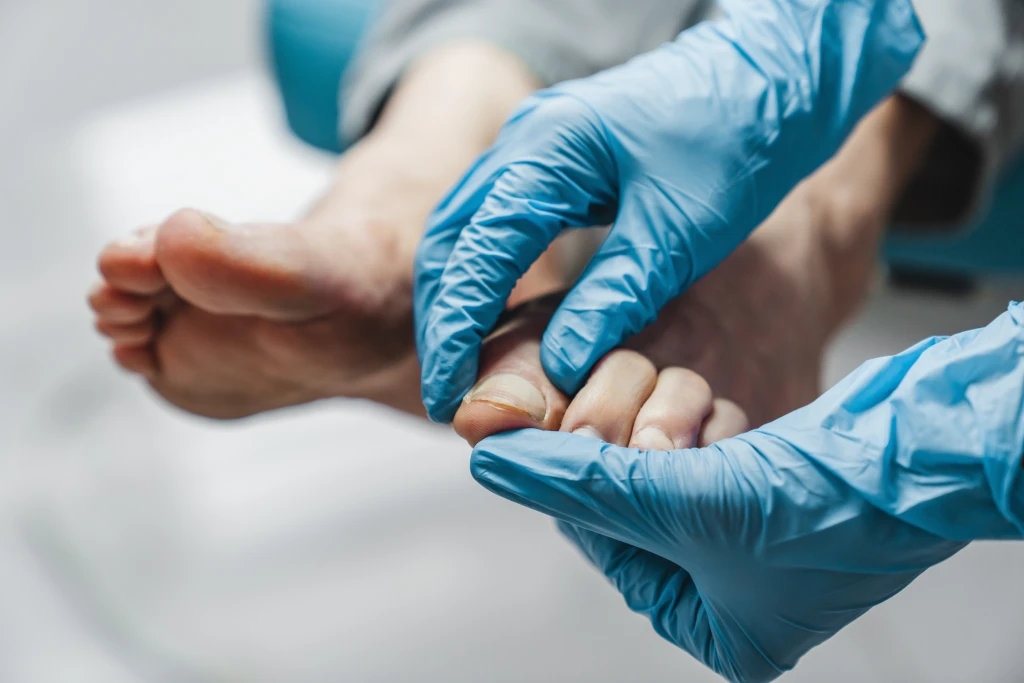
- Physical examination: hands-on assessment to identify the exact tender area, test joint range at the big-toe and lesser-toe joints, check toe alignment, and look for visible changes such as swelling, redness, deformity, nail involvement, or skin breakdown. Gait is assessed to see how the toe behaves during push-off.
- Imaging: X-rays for bony causes such as bunions, hallux rigidus, fractures, and joint arthritis. MRI is used for soft-tissue causes (plantar plate injury, neuroma, occult stress fracture) or for persistent toe pain that has not settled with standard care.
- Blood tests: when an inflammatory or systemic cause is suspected, such as gout or rheumatoid arthritis, blood tests help confirm or rule it out. A GP or rheumatologist usually orders these alongside podiatry care.
- Nail assessment: where toe pain involves the nail, the nail edge and surrounding skin are examined directly, with fungal sampling if a long-standing fungal cause is suspected.
Treatment Options for Toe Pain in Singapore
Treatment depends on which condition is driving the pain, but most toe pain responds to a paced, structured plan that combines load reduction, footwear changes, and rebuilding mechanics. The first phase calms the irritated tissue. The second restores how the toe shares load with the rest of the foot. The third escalates only when conservative care has been given a fair trial.
Conservative Management
To settle the pain:
- Reduce aggravating activity for a defined period rather than pushing through it. For sport-related toe pain, this often means swapping court sports or running for lower-impact training during the irritable phase.
- Ice the painful toe for 15 to 20 minutes at a time, several times a day, during the acute phase.
- Switch to shoes with a wider, deeper toe box and a more supportive sole. Avoid narrow, pointed, or high-heeled shoes during recovery.
- For nail-related toe pain, keep the area clean and dry, and avoid cutting the nail edge yourself if it has already become painful.
- Short-term over-the-counter pain relief may be appropriate, guided by your GP or pharmacist. Prolonged self-medication is a signal to seek a proper assessment rather than a treatment plan in itself.
To restore mechanics and share the load:
- Toe and forefoot stretching and strengthening, including specific exercises for the big-toe joint, the intrinsic foot muscles, and the calf.
- Custom orthotic insoles to redistribute pressure away from the painful toe or joint. For bunions, sesamoiditis, hallux rigidus, plantar plate injury, and neuroma, the right insole design often makes a meaningful difference.
- Toe spacers, padding, or strapping where a specific deformity or rub is the driver.
- Footwear guidance tailored to your foot shape and daily activity, including work-shoe and sport-shoe choice.
- A gradual return to load, building back walking, running, or sport volume in stages rather than in sudden jumps.
Targeted Therapies
For cases that resist conservative care, focused Extracorporeal Shockwave Therapy (ESWT) can stimulate stubborn tissue to heal where progress has stalled. ESWT is commonly used for sesamoiditis, persistent plantar plate irritation, and certain forefoot tendon problems that have not settled with standard rehabilitation.
For ingrown toenail pain, a partial nail avulsion procedure removes only the offending nail edge under local anaesthetic, with a chemical step to prevent regrowth of that strip. This is a same-day in-clinic procedure for chronic or recurrent ingrown nails.
For acute gout flares, the medical management (urate-lowering therapy, anti-inflammatories) is led by a GP or rheumatologist. Podiatry care addresses the footwear, offloading, and joint protection during and after the flare.
Surgical Intervention
Surgery is typically only necessary when conservative management has been given a fair trial without improvement, or where structural damage requires direct repair. Examples include bunion correction, hallux rigidus surgery, plantar plate repair, and toe deformity correction. A podiatrist can advise when an orthopaedic surgical opinion is appropriate, and what conservative options remain worth trying first.
Prevention
Replace worn shoes early rather than pushing them through a final season. Choose a shoe with a toe box wide enough that the toes are not pressing against each other or against the front of the shoe. Build training up gradually rather than in sudden jumps in distance, intensity, or surface. Keep calves flexible and ankles mobile so push-off does not overload the forefoot. Trim toenails straight across rather than rounding the corners. If toe pain keeps returning rather than settling, a gait assessment is the practical way to identify what is driving the cycle.
Have Your Toe Pain Managed at Straits Podiatry
When toe pain starts to change how you walk, guesswork rarely shortens recovery. At Straits Podiatry, the assessment connects which toe is involved, what the pain pattern is, your footwear, your daily activity, and your foot mechanics, so the source is clear before any treatment begins.
From there, the plan is built around your daily routine. Services that may form part of your care include gait analysis, custom orthotic insoles, footwear guidance, partial nail avulsion for chronic ingrown toenails, and focused ESWT for cases that have not settled with conservative measures. Speak with the team or book a consultation for a thorough assessment and a tailored path back to comfortable movement.
Frequently Asked Questions About Toe Pain
What are the most common causes of toe pain in Singapore?
In our clinics, the most common causes of toe pain are bunions, ingrown toenails, gout flares affecting the big toe, sesamoiditis, hallux rigidus (big-toe joint arthritis), plantar plate injury of the second toe, and Morton’s neuroma between the third and fourth toes. Footwear pressure (especially from dress shoes and pointed work shoes), court-sport pivoting, and long hours of standing or walking are the most common drivers. Toe pain after a single trauma (kicking a wall, dropping something, stubbing the toe) raises the suspicion of a fracture or a turf-toe-type sprain.
How do I know if my toe pain is serious enough to see a podiatrist?
Seek help if toe pain has lasted more than a week without improving, if there is significant swelling, redness, or warmth, if you have a wound or discharge around the nail, if walking has become noticeably uncomfortable, or if the toe is visibly deformed. Toe pain in people with diabetes always warrants earlier review, since reduced sensation can mask a serious problem. Sudden severe pain in the big toe with redness and warmth, especially overnight, is a classic gout presentation and is worth investigating early.
Why does my big toe hurt when I walk or push off?
Pain at the big toe during push-off most often points to one of four causes: a bunion, hallux rigidus (arthritis of the big-toe joint), sesamoiditis (inflammation under the joint), or a turf-toe-type sprain after a sudden forced bend. The pattern is informative. A bony bump at the side of the joint points to a bunion. Stiffness and loss of upward bend point to hallux rigidus. Tenderness directly under the joint, especially in dancers and sprinters, points to sesamoiditis. A specific incident with a forced upward bend points to turf toe. A podiatrist can differentiate these on examination and imaging.
Can I treat ingrown toenail pain at home, or do I need a procedure?
Mild, early ingrown toenail pain often responds to warm soaks, careful nail trimming, well-fitting shoes, and keeping the area clean and dry. Once the nail edge has broken the skin, become infected, or recurred more than once or twice, a podiatry assessment is the practical next step. For chronic or recurrent cases, a partial nail avulsion removes only the offending nail edge under local anaesthetic in clinic. This addresses the underlying cause rather than the symptom, and reduces the risk of recurrence at that nail edge.
Are bunions and toe pain hereditary?
Bunions, hallux rigidus, hammer toes, and juvenile bunions all have a hereditary component. Foot shape factors (the angle of the big-toe joint, the length of the second metatarsal, joint laxity) are passed down within families, and these factors influence which toe problems tend to develop. Footwear and activity then shape how quickly and how painfully they present. Family history is not destiny, but if a parent has a bunion or hallux rigidus, it is worth being more deliberate about footwear and forefoot care earlier in life. A podiatry assessment can identify whether you are showing the early mechanical signs and what changes are worth making now.