
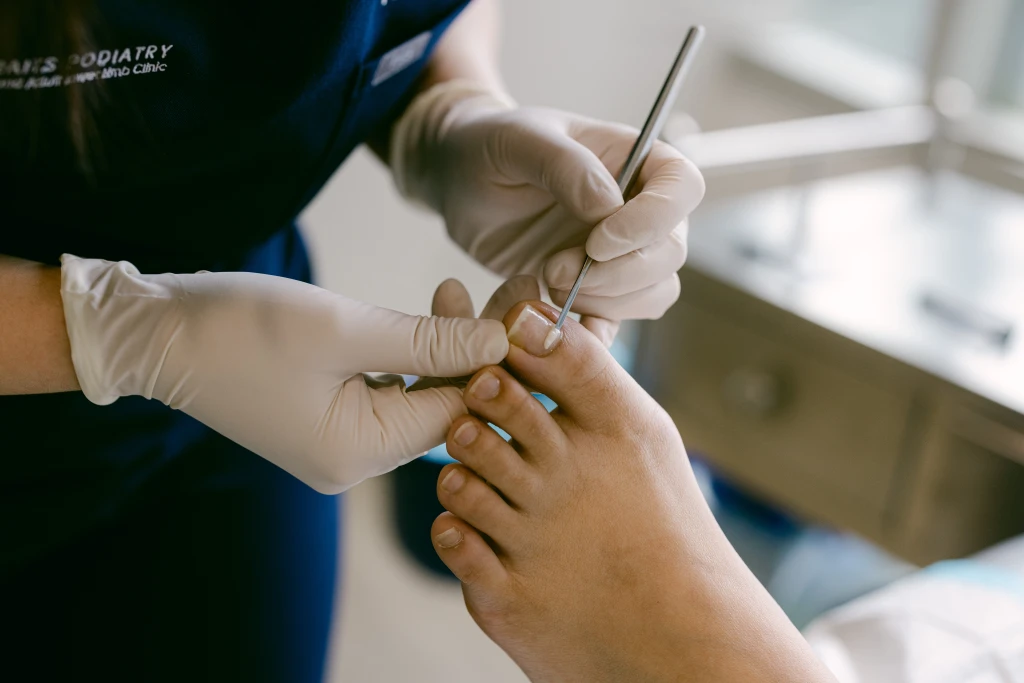
Nail bracing is a non-surgical way to correct an ingrown or curling toenail so it stops digging into the skin, without an injection and without cutting the nail. A thin brace is bonded onto the surface of the affected nail, and rather than pulling on it, the brace holds the flatter part of the nail and guides it to keep that shape as it grows out. It is the option to consider when you want to correct the nail itself and avoid surgery, and it is one of the ways ingrown toenails and involuted nails can be managed conservatively.
It suits nails that are curling inward or causing a mild to moderate ingrown toenail, particularly where the skin is irritated but not badly infected. It does not suit every case, and part of the assessment is telling you honestly whether a brace is the right path for your nail or whether a procedure will serve you better.
What Is Nail Bracing?
Nail bracing is a conservative correction for a nail that curves too far inward at the edges. That inward curl is what drives a nail edge into the surrounding skin, producing the pain, redness, and irritation of an ingrown toenail. Rather than repeatedly removing the offending edge, a brace works on the nail plate itself and coaxes it toward a flatter shape over time.
In our clinic, we use the Onyfix nail correction system. This is a composite brace, a small band of hard-wearing resin bonded across the widest part of the nail and set with a curing light. It is fitted flat, in the nail’s own shape, and it does not hook under the edges or pull them upward. That is the key difference from older wire braces: there is no spring, no tension, and nothing tugging on the nail, which is why the fitting is painless and needs no anaesthetic.
The correction happens through growth, not force. Because the brace is bonded to the flatter portion of the plate, it acts as a template that the new nail follows as it grows forward. Worn over several months, that gentle guidance trains the fresh nail to grow in a flatter pattern. As the curl eases, the edges stop pressing into the skin fold and the discomfort settles. The change is slow because nail tissue remodels slowly, so most people wear a brace for several months, and it is replaced along the way as the nail grows out. Since nothing is cut and no flesh is touched, nail bracing appeals to people who want to correct the nail without an invasive procedure, and to those who cannot easily take downtime.
Because it works without tension, a brace can often be placed even where the toe is a little irritated, and it can be applied at the corner that is pinching to take pressure off that spot early. A brace still needs a sound nail to bond to, so the assessment is what confirms whether your nail is ready for one.
The Nail Bracing Process
A typical course of nail bracing in our clinics runs through these steps.
- Assessment. Your podiatrist examines the nail, the surrounding skin, and the degree of curvature, and confirms whether bracing is suitable or whether a different path fits your case better.
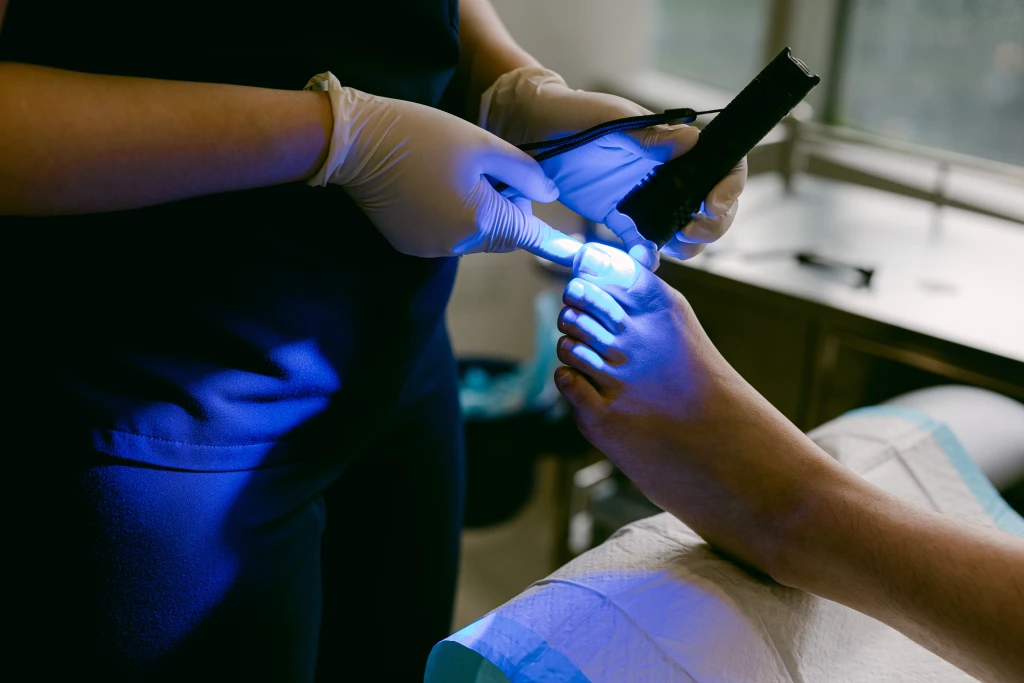
- Fitting. The nail is cleaned and dried, the composite brace is shaped onto the nail, and a curing light sets it firmly in place. There is no injection and no cutting, and the fitting itself is painless.
- Working with your nail growth. From that point the brace simply stays put and guides the nail as it grows. There is no tension to feel and nothing to adjust day to day.
- Follow-up. The nail is reviewed periodically. As it grows forward, the brace is replaced so the guidance stays where the new nail needs it.
- End of the course. Once the nail has grown out in a flatter, corrected shape, no further brace is needed. Aftercare and trimming technique are discussed to reduce the chance of the curl returning.
Living with a brace day to day
Most people carry on normally with a brace in place. You can walk, work, and exercise as usual, and there is no wound to protect. Avoid shoes that press hard on the toes, such as narrow trainers or tight heels, because they can knock the brace and shorten its life. In Singapore’s climate this is easy to manage. Open or roomy footwear is comfortable and puts no pressure on the brace. Showering and swimming are fine, since the brace is water resistant. Very long soaks in hot water are best avoided in the first day or so while the bond sets. Any mild awareness of the brace in the first few days normally settles quickly. Sharp pain, spreading redness, or a brace that has lifted are reasons to come back for a review.
How Nail Bracing Compares to Partial Nail Avulsion
Nail bracing and partial nail avulsion both address an ingrown toenail, but they work in opposite ways. Bracing corrects the whole nail conservatively over months, while partial nail avulsion is a minor procedure that removes the offending strip of nail in one visit. The right choice depends on how severe the nail is, whether you want to avoid a procedure, and how much follow-up time you can commit to.
| Feature | Nail bracing | Partial nail avulsion |
|---|---|---|
| Approach | Non-surgical, no cutting, no injection | Minor in-clinic procedure |
| Anaesthetic | None required | Local anaesthetic to numb the toe |
| How it works | A composite brace guides the nail to grow flatter over months | The offending nail edge is removed and the matrix treated so it does not regrow |
| Comfort | Painless to fit, with little or nothing to feel afterward | Numb during the procedure, with some soreness as the toe heals |
| Time frame | Several months of brace wear, replaced along the way | One visit, then a wound healing period of about two to four weeks |
| Best for | Curling or involuted nails, mild to moderate ingrown toenails, keeping the nail intact | Recurrent, severe, or infected ingrown toenails where a definitive result is preferred |
| Recurrence risk | Possible if the underlying cause is not addressed | Low when a matrixectomy is included |
Nail bracing is certainly the gentler route but asks for patience. Partial nail avulsion is more definitive but is a procedure. Neither is automatically better, and your podiatrist will walk you through which suits your nail and your situation.
When Is Nail Bracing Not Suitable?
Nail bracing is gentle, but it is not right for every nail. Being clear about when it will not work is part of choosing the correct path.
- Severe or deeply embedded ingrowth. When the nail edge is buried deep in the skin fold, or the ingrowth is severe and recurring, a brace acts too slowly to give relief. These cases are usually better suited to partial nail avulsion, which addresses the offending edge directly.
- Active infection. If the toe is infected, with pus, spreading redness, or significant swelling, the infection is settled first, often with drainage and antibiotics, before any brace is considered.
- Broken skin with the nail edge lodged in the tissue. An edge that is already piercing the skin usually needs to be lifted or removed first so the skin can heal, because a brace cannot correct a nail that is embedded in the flesh.
- Very damaged, brittle, or fungal nails. A brace needs a sound nail plate to bond to. Nails that are thin, crumbling, or affected by fungal infection often cannot hold a brace, and bonding one on can weaken the nail further. If you are actively treating the fungal infection, applying a brace over the nail can affect the success rate.
- Nails that are entirely involuted. A nail that is significantly curved inward from the root does not provide a flat surface for the brace to hold the shape as it grows, so a brace will simply not work in this case.
At your assessment, your podiatrist checks the nail against these points and tells you plainly whether bracing is worth trying or whether another path will serve you better.
Have Your Ingrown Toenail Managed at Straits Podiatry
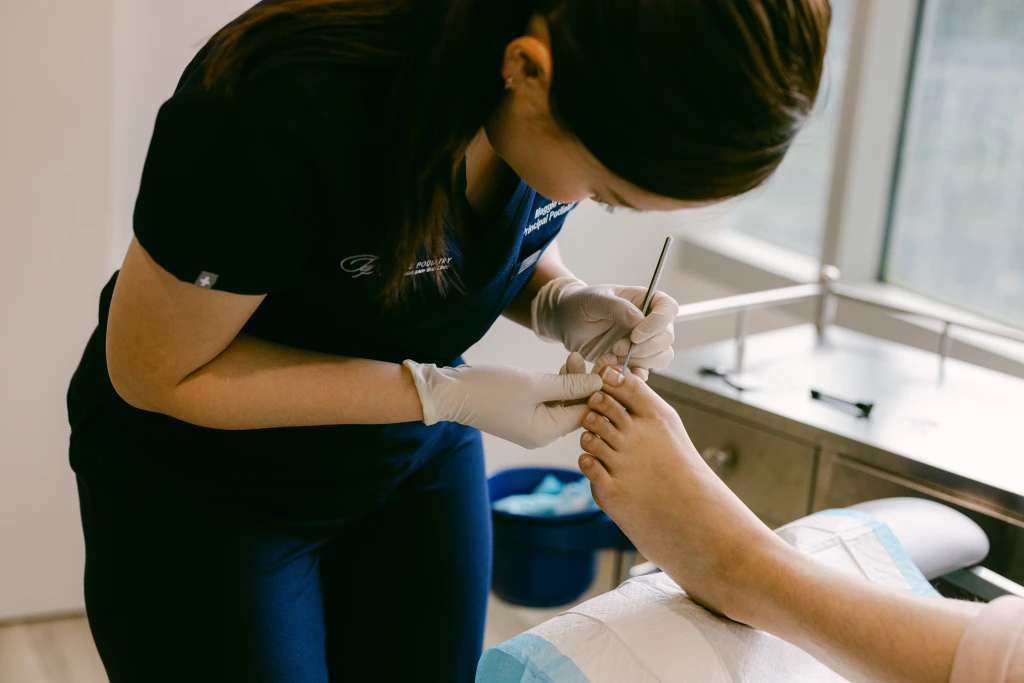
If you are weighing nail bracing for an ingrown toenail or for a nail that is curling inward, book an assessment at any of our three Singapore clinics. Our podiatrists will first assess the nail shape and the severity of the ingrowth, fit the tension-free composite brace where the nail is suitable, and follow you through the full correction period instead of fitting and forgetting. Our podiatrists will also set out the alternatives honestly, so you can make an informed choice.
Speak with our team today or book an assessment to get started.
Frequently Asked Questions About Nail Bracing
Does nail bracing hurt?
The fitting is painless. The brace is bonded flat onto the nail and set with a curing light, with no injection, no cutting, and no pulling on the nail. Because there is no tension, there is very little to feel afterward. If the ingrown toenail is already sore, placing the brace can take pressure off the pinching corner and relief often comes within days.
How can I fix an ingrown toenail without surgery?
Nail bracing is the main non-surgical way to correct an ingrown toenail by reshaping the nail itself. A composite brace is bonded to the nail and guides it to grow into a flatter shape, easing the edge away from the skin as the nail grows out. It suits curling and mild to moderate ingrown toenails. A very severe, deeply embedded, or infected nail is usually better managed with a procedure. An assessment confirms which category your nail falls into.
How long does nail bracing take to work?
Nail bracing works over months, not weeks. Most people wear a brace for around three to six months, sometimes longer for thicker or more curled nails, and it is replaced as the nail grows. The nail has to grow out in its new shape, and that timeline is set by your own nail growth rate. Relief from the pressure often comes much sooner than full correction. Your podiatrist gives you a realistic estimate at your assessment.
Can I walk, work, and exercise with a nail brace on?
Yes. There is no wound and no downtime, so you can walk, work, and exercise the same day. It helps to avoid shoes that press hard on the toes, since they can knock the brace, but normal daily activity, showering, and swimming are all fine.
Will the ingrown toenail come back after the brace is removed?
Often it does not, especially when the cause of the curl has been addressed. Bracing corrects the nail as it grows, but it does not change the underlying nail anatomy, so if the original cause is still active (an inherited nail shape, repeated trauma from footwear, or skin growing over the edge) the curl can slowly return. Long-term results are best when bracing is paired with roomy footwear, gentle nail-cutting technique, and the occasional podiatry review to catch early signs before they become painful.
Nail bracing or ingrown toenail surgery, which should I choose?
It depends on the nail. Bracing is the gentler, non-surgical option and is a reasonable first choice for curling nails and mild to moderate ingrown toenails when you want to avoid a procedure and can commit to a few months of follow-up. Partial nail avulsion is more definitive because it removes the offending edge, and it suits recurrent, severe, or infected nails. Your podiatrist will compare both against your nail so you can decide.
Is nail bracing safe for diabetics?
It can be, but it is assessed individually. In someone with well-controlled diabetes, good circulation, and healthy skin, a brace may be appropriate. Where there is poor circulation, reduced sensation, or a slow-healing history, any nail intervention carries higher risk and a more cautious monitoring plan is usually safer. This is exactly the kind of judgement the assessment is for.