
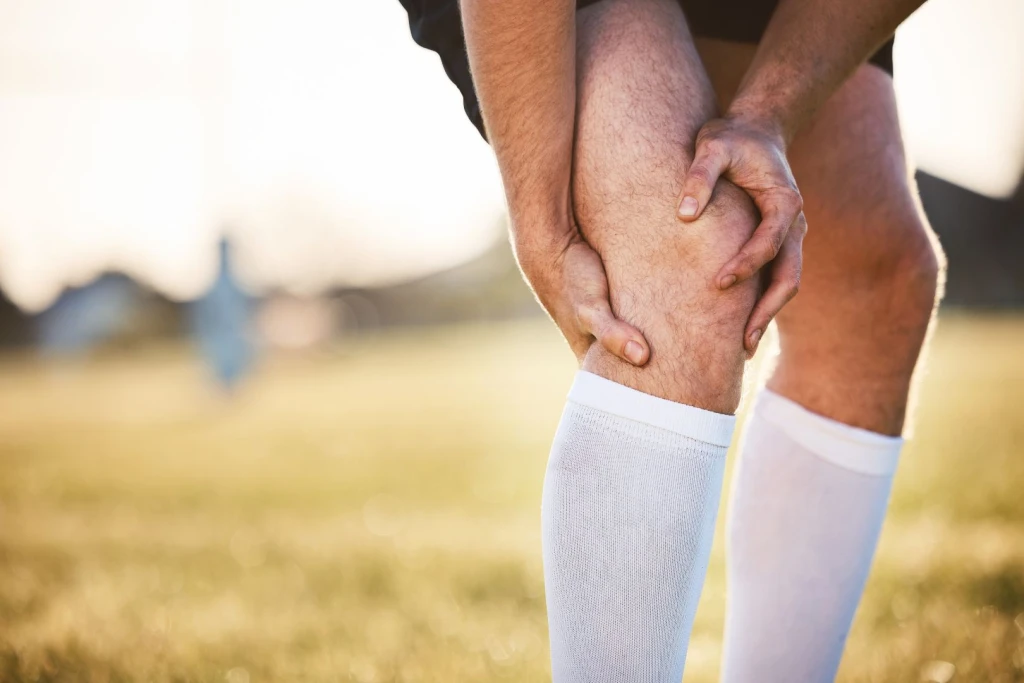
You spend the day on your knees. Maybe you lay flooring or tiles, fix pipework under sinks, tend a garden, or scrub floors at home, or you kneel for long stretches in prayer. Over a few days you notice a soft, squashy swelling ballooning over the front of one kneecap. It looks alarming, like half an egg sitting under the skin, but it often does not hurt much. Kneeling on it is uncomfortable and the knee feels tight when you bend it fully. If this sounds like you, the likely cause is prepatellar bursitis, still widely known by its old name, housemaid’s knee.
A bursa is a thin, slippery fluid sac that lets skin and tissue glide over a bony point without friction. The prepatellar bursa sits right in front of the kneecap, between the bone and the skin. Repeated kneeling, a direct knock, or a graze that lets bacteria in can irritate or inflame this sac so it fills with fluid and swells. Getting the diagnosis right matters for one reason above all others: most prepatellar bursitis is a simple friction problem that settles with sensible load management, but a bursa that is hot, red, and acutely painful may be infected, and an infected (septic) bursa needs urgent medical assessment rather than watchful waiting. It is also one of several causes of front-of-knee pain and swelling that are worth telling apart.
Symptoms of Prepatellar Bursitis
The pattern is usually distinctive because the swelling sits right on the front of the kneecap, in the skin layer, rather than deep inside the joint. Timing and the look of the skin are the most useful early clues.
- A fluctuant swelling over the front of the kneecap: a soft, fluid-filled lump that sits directly on top of the kneecap and can feel like it moves under the fingers. It is superficial, in the tissue between skin and bone, not a deep joint swelling.
- Often little pain when the bursa is not infected: many patients are surprised by how much it swells while hurting relatively little. The main discomfort is a stretched, tight feeling and pain when kneeling directly on it.
- Discomfort at the end of knee bend: bending the knee fully stretches the swollen sac and feels tight or tender, while the joint itself moves normally.
- Tenderness localised to the front of the kneecap: pressing the lump is tender, but the sides and back of the knee are usually comfortable.
- A clear link to kneeling or a knock: the swelling usually follows a spell of heavy kneeling, a fall onto the knee, or repeated pressure, rather than appearing out of nowhere.
- Warmth, redness, and marked pain suggest infection: a bursa that becomes hot, red, very tender, or is accompanied by fever or feeling unwell points towards a septic (infected) bursitis and needs urgent medical review the same day.
From what we see in clinic, the reassuring picture is a soft swelling that is only mildly sore after a bout of kneeling. The picture that must not be sat on is a red, hot, painful knee, particularly if there is a recent graze or cut over the kneecap or the person feels feverish.
Causes of Prepatellar Bursitis
The prepatellar bursa sits in an exposed spot, directly under the skin at the front of the knee, so it takes the brunt of anything that presses or rubs on the kneecap. A few different pathways can inflame it.
What Causes Prepatellar Bursitis?
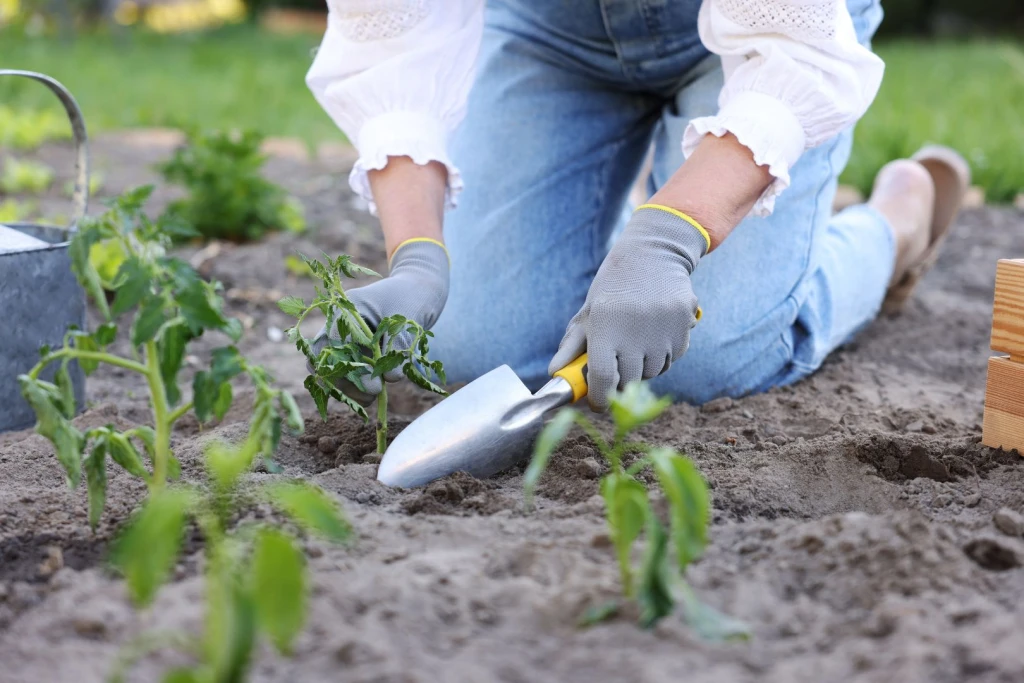
- Repeated kneeling and direct pressure: the classic cause, and the reason for the old name. Flooring and carpet laying, tiling, plumbing under sinks, roofing, gardening, and floor scrubbing all load the front of the knee for long stretches. The bursa responds to the repeated friction and pressure by filling with fluid.
- An acute knock or fall onto the kneecap: a single hard impact, a fall onto a hard floor, or a sports collision can bruise and inflame the bursa, sometimes with a rapid swelling over hours.
- Repetitive friction in sport: activities with frequent kneeling, crawling, or falls onto the knee, such as wrestling, volleyball diving, and some martial arts, can produce a chronic friction bursitis over time.
- Infection through a break in the skin: a graze, cut, or insect bite over the kneecap can let bacteria into the bursa, producing a septic bursitis. This is more likely when there is any skin breach over a swollen, warm, red knee.
- Underlying inflammatory conditions: gout and rheumatoid arthritis can inflame the bursa without any kneeling history, and are worth considering when there is no obvious mechanical trigger.
Who Carries a Higher Baseline Risk?
- Trades that involve sustained kneeling: carpet and flooring layers, tilers, plumbers, roofers, electricians, and cleaners.
- Keen gardeners and people who kneel for long periods in prayer or worship.
- Athletes in sports with frequent kneeling, diving, or knee contact.
- People with gout or an inflammatory arthritis such as rheumatoid arthritis.
- Anyone with a recent graze, cut, or skin infection over the front of the knee, who carries a higher risk of the infected form.
Conditions Commonly Mistaken for Prepatellar Bursitis
Swelling and pain at the front of the knee has several possible sources, and some of them are managed very differently. The most important distinction is whether the swelling sits superficially in front of the kneecap or deep inside the joint, and whether the bursa is infected. The common points of confusion are below.
Septic (infected) prepatellar bursitis
This is the same location as ordinary friction bursitis but a different problem, and it is the one differential that changes urgency. An infected bursa tends to be hot, red, very tender, and may come with fever, spreading redness, or feeling generally unwell, often after a graze or cut over the knee. Non-infected friction bursitis is usually only mildly sore and the skin looks normal in colour and temperature. Because the two can look similar early on, any swollen knee bursa that is warm, red, or acutely painful should be assessed by a doctor urgently, as an infected bursa may need drainage and antibiotics.
Infrapatellar bursitis
Sometimes called clergyman’s knee, this affects a different bursa sitting just below the kneecap, over or beneath the patellar tendon, rather than in front of the kneecap. The cause is similar, from kneeling in a more upright position, but the swelling and tenderness sit lower down. Telling them apart comes down to the exact location of the swelling relative to the kneecap.
Patellar tendinopathy
Pain at the front of the knee can also come from patellar tendinopathy, an overload problem of the tendon just below the kneecap that is common in jumping and running sports. The difference is that patellar tendinopathy produces pain on loading the tendon (jumping, squatting, stairs) with little or no visible fluid swelling, whereas prepatellar bursitis produces an obvious soft swelling with comparatively little pain.
An intra-articular knee effusion
Fluid can also collect inside the knee joint itself rather than in the surface bursa, which is a deeper swelling that makes the whole knee look puffy and stiff. This intra-articular effusion is often driven by something within the joint, such as knee osteoarthritis or a meniscus tear, rather than pressure on the front of the kneecap. The clue is that a joint effusion sits all around and inside the knee, while a prepatellar swelling sits as a discrete lump on the front of the kneecap.
Gout or pseudogout
A crystal arthritis such as gout can inflame the bursa or the knee joint and produce a hot, red, painful swelling that mimics an infection. It usually comes on rapidly, can affect people with a history of gout elsewhere, and is diagnosed by examining the joint fluid. Because it looks so similar to a septic bursitis, medical assessment is needed to tell them apart safely.
Treating and Preventing Prepatellar Bursitis
Once infection has been ruled out, most non-infected prepatellar bursitis is a load problem, so the treatment logic is simple: take the repeated pressure off the front of the knee, protect the bursa while it settles, and change the kneeling habits or movement patterns that inflamed it in the first place. The swelling can take a while to fully resolve even after it stops being sore, so patience with the protection phase matters. Infected bursitis is a separate pathway and is led by medical care, not by watchful conservative management.
Conservative treatment
These measures are usually combined, and they work best when the knee is genuinely offloaded rather than pushed through.
- Kneeling and direct-pressure modification: the single most important step. Reducing or interrupting sustained kneeling, taking regular breaks, and changing position frequently removes the driver of the inflammation. Where kneeling is unavoidable at work, spreading the load and limiting continuous kneeling time helps the bursa settle.
- Protection and cushioning: kneepads with good padding, a cushioned kneeling mat, or a folded towel spread the pressure over a wider area and shield the bursa. This is both a settling measure and the main way to prevent it coming back once the swelling has gone.
- Relative rest, ice, and compression: easing off the aggravating activity, applying ice to a sore or swollen bursa, and using a light compression sleeve can reduce the swelling and discomfort in the early phase. Elevating the leg when resting also helps the fluid drain.
- Rehabilitation and load management: where the knee has been guarded for a while, a graded return through our in-house physiotherapy service can restore comfortable knee bend, quadriceps strength, and confident loading, and can review the movement and lower-limb loading patterns that place extra demand on the front of the knee.
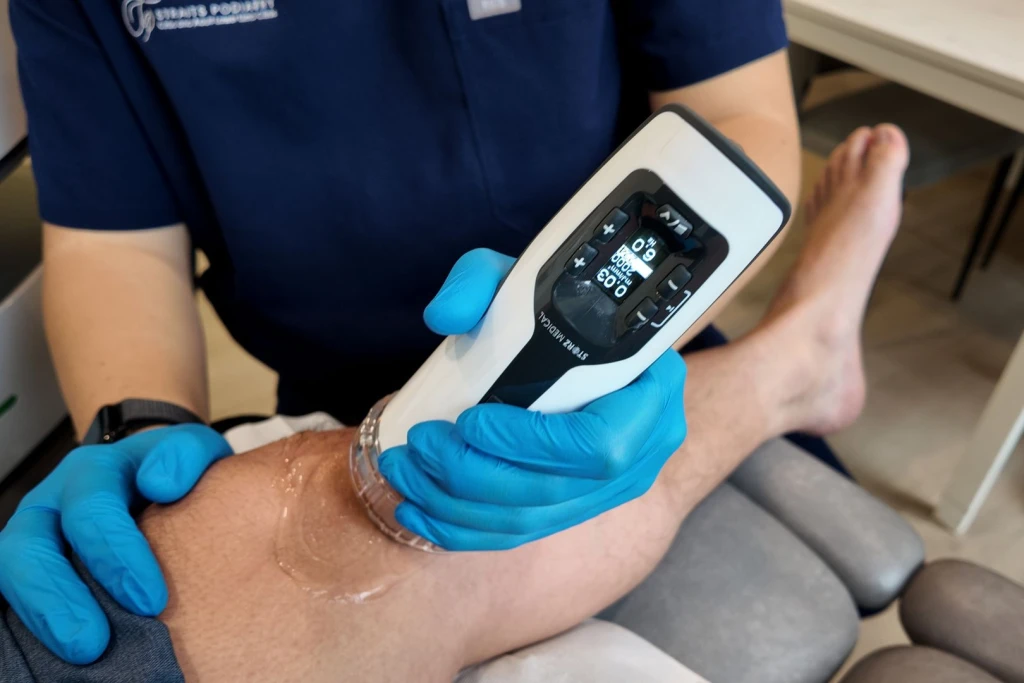
- Focused shockwave therapy for persistent non-infected cases: where a friction bursitis has become chronic and thickened and has not settled with offloading and protection, focused shockwave therapy may help settle the stubborn soft-tissue component. It is only appropriate once infection has been excluded and is used alongside load management, not instead of it.
When conservative care isn’t enough
If the swelling is hot, red, and painful, or there is any sign of infection, the pathway is different and urgent: a doctor may need to draw off fluid from the bursa (aspiration) to test it and may start antibiotics for a septic bursitis. For a stubborn but non-infected bursa that keeps refilling despite offloading and protection, a GP or an orthopaedic doctor may consider aspiration or, in selected cases, a corticosteroid injection, though injections carry their own risks around the superficial bursa and are used selectively. Surgery to remove a chronically troublesome bursa (bursectomy) is uncommon and reserved for recurrent cases that have not responded to everything else. Where an underlying condition such as gout or rheumatoid arthritis is driving the inflammation, managing that condition is part of the picture.
Have Your Prepatellar Bursitis Managed at Straits Podiatry
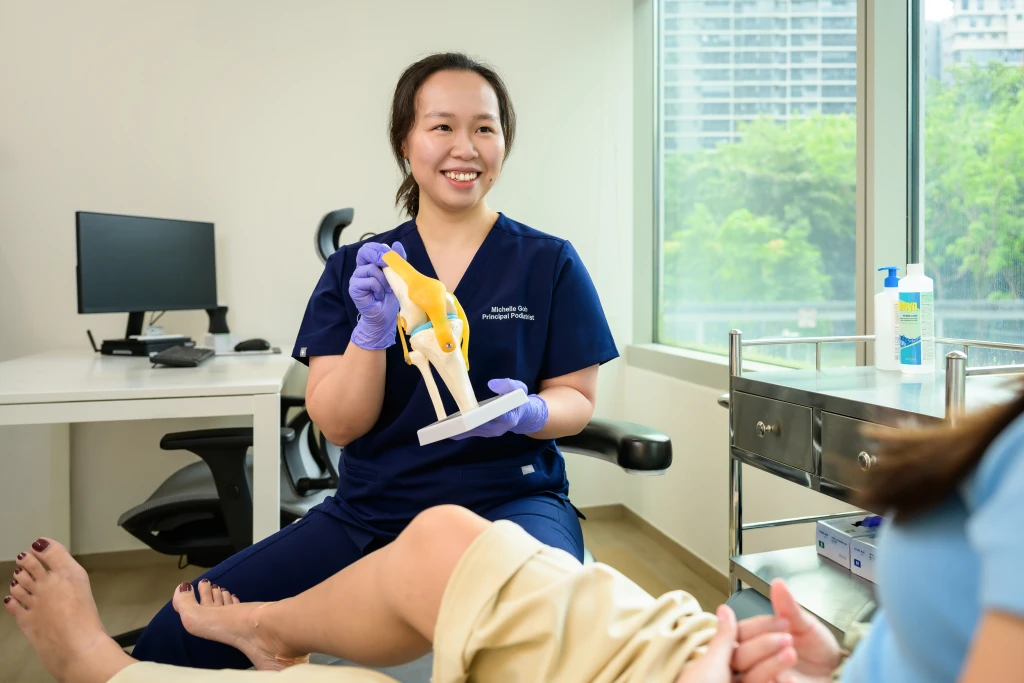
Prepatellar bursitis usually settles well once the front of the knee is genuinely offloaded and protected, but the swelling is often slower to disappear than people expect, and recurrence is common when the old kneeling habits return unchanged. At Straits Podiatry, an assessment for a swollen, non-infected knee bursa looks at how you kneel, work, and load the lower limb, and pairs practical kneeling and protection advice with graded rehabilitation through our physiotherapy service so the knee can be loaded with confidence again.
If your knee bursa is hot, red, acutely painful, or you feel unwell, please seek urgent medical care first, as an infected bursa is treated differently. For a soft, settling swelling that keeps coming back after kneeling, book a consultation for an assessment at any of our three Singapore clinics.
Frequently Asked Questions About Prepatellar Bursitis
How do I know if my knee bursitis is infected?
The warning signs of an infected (septic) bursa are warmth, redness, and marked pain over the swelling, sometimes with fever, spreading redness, or feeling generally unwell. A recent graze, cut, or skin infection over the kneecap raises the risk. A non-infected friction bursitis is usually only mildly sore, and the skin looks normal in colour and temperature. Because the two can look alike early on, any knee bursa that is hot, red, or acutely painful should be assessed by a doctor the same day, as an infected bursa may need drainage and antibiotics.
How long does prepatellar bursitis take to settle?
A non-infected friction bursitis often becomes comfortable within a couple of weeks once the kneeling stops and the knee is protected, but the visible swelling can take several weeks longer to fully drain away. Cases that have been grumbling for months, or that keep being re-irritated by a return to heavy kneeling, take longer. The swelling settling slowly on its own, without heat or increasing pain, is not a cause for alarm.
Can I keep kneeling or working with prepatellar bursitis?
Continuing to kneel directly on the swollen bursa tends to keep it inflamed and slows recovery. Where kneeling is part of your job, the practical approach is to protect the knee with well-padded kneepads or a cushioned mat, interrupt long spells of kneeling with breaks, and change position often. Removing or cushioning the direct pressure is what lets the bursa settle, so working with proper protection is very different from kneeling unprotected on a sore knee.
Do I need my knee bursa drained?
Not usually. Most non-infected bursitis settles with offloading and protection alone, and the fluid gradually reabsorbs. Drainage (aspiration) is mainly used when infection is suspected, so the fluid can be tested and treated, or occasionally for a large, persistent non-infected swelling that is not improving. A doctor makes that call after examining the knee, because draining a bursa carries a small infection risk of its own and is not done routinely.
Can prepatellar bursitis come back?
Yes, recurrence is common when the original cause returns unchanged, because the bursa stays sensitive to repeated pressure. The most reliable way to prevent it coming back is to protect the front of the knee whenever you kneel, using padded kneepads or a cushioned mat, take regular breaks from sustained kneeling, and address any movement or loading patterns that add extra demand to the knee. Managing an underlying condition such as gout also reduces the chance of it returning.
Is housemaid’s knee the same as prepatellar bursitis?
Yes. Housemaid’s knee is the traditional name for prepatellar bursitis, from the historical link with occupations that involved long hours kneeling to scrub floors. The medical term describes the same thing: inflammation and swelling of the prepatellar bursa, the small fluid sac in front of the kneecap. You may also see the closely related infrapatellar bursitis called clergyman’s knee, which affects a different bursa just below the kneecap.