
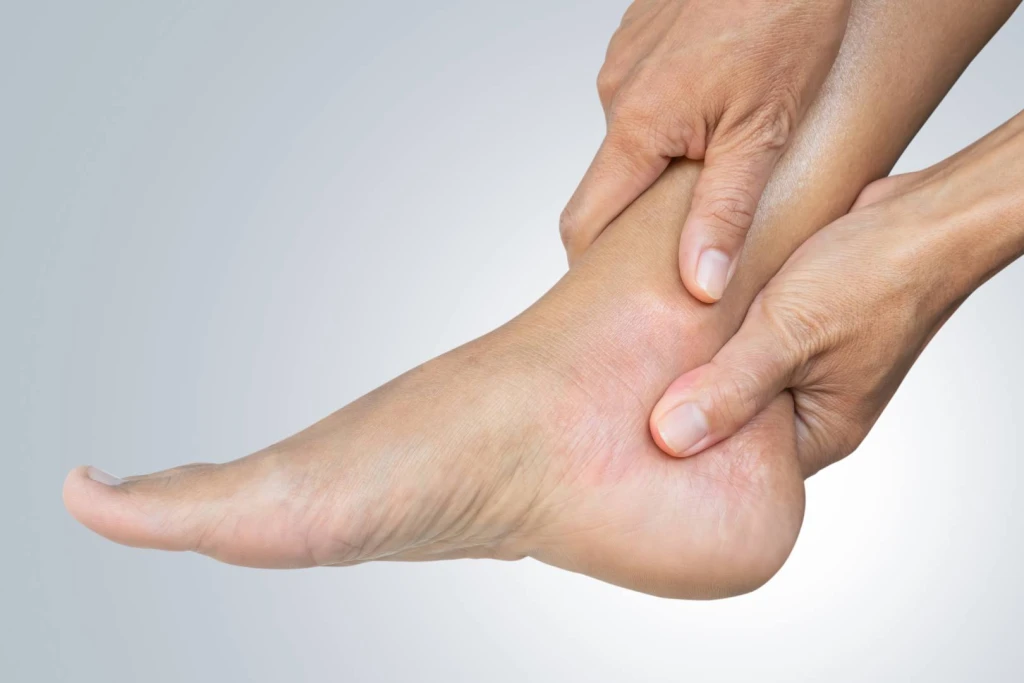
You sprained your ankle six weeks ago, did the rehab, and the swelling has settled. But the lateral side of the ankle, specifically the small dimple between the outer ankle bone and the heel, still aches. Uneven ground makes it worse, and the ankle sometimes feels unsteady on grass or stepping off a kerb, but the formal ankle-instability rehab you did is not fixing the problem. This is the pattern we recognise as sinus tarsi syndrome in clinic.
The sinus tarsi is a small bony tunnel on the outside of the foot, sitting just below the outer ankle bone (lateral malleolus) and slightly toward the toes. It contains stabilising ligaments, a small fat pad rich in sensory nerve endings, and a network of fine blood vessels. When a lateral ankle sprain damages those structures, or when ongoing foot mechanics keep loading them irregularly, the result is a localised pain pattern that fits neither a healed sprain nor true ankle joint pathology. The condition is often missed because it sits on the boundary between an ankle problem and a foot problem, and recognising the pattern early is what shortens recovery from months to weeks.
Symptoms of Sinus Tarsi Syndrome
The pain pattern of sinus tarsi syndrome is distinctive once you know where to look. It is the most reliable early differentiator from a residual lateral ankle sprain.
- Pain located in the dimple just below the outer ankle bone: the most tender spot sits roughly 1 to 2 fingers in front of and below the bony bump on the outside of the ankle, on the soft area where the foot meets the ankle.
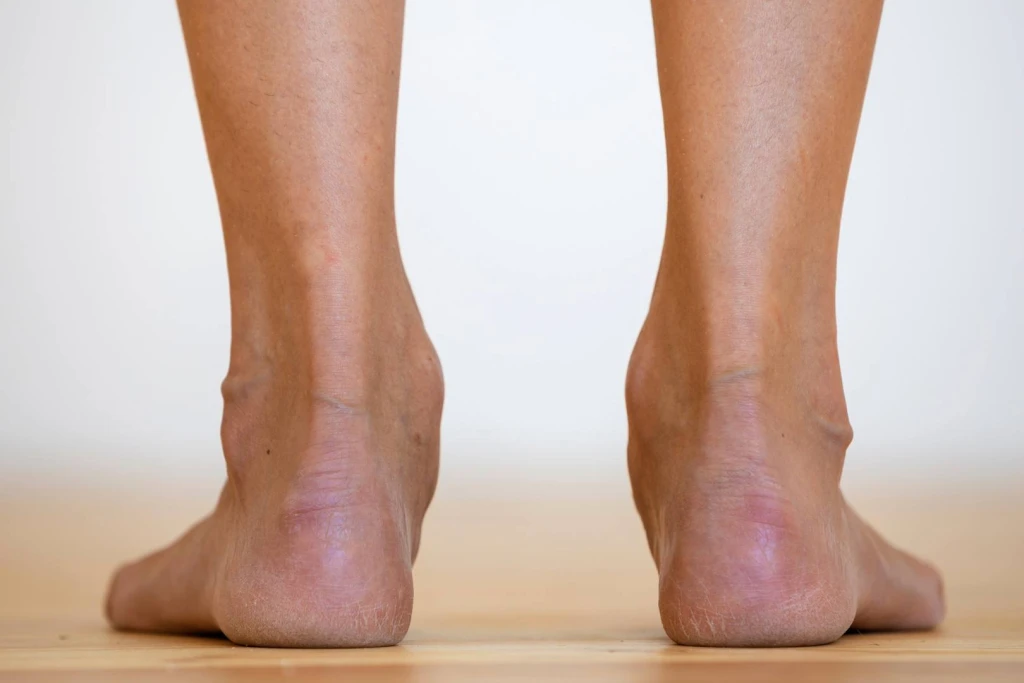
- Pain that worsens on uneven ground: patients often describe pain on grass, sand, gravel, or sloped pavements. The pain is more pronounced when the foot is forced into a pronated position (rolled inwards) by the uneven ground, as the sinus tarsi is compressed.
- A sense of instability without a true giving-way pattern: the ankle feels weak or wobbly but does not actually give way the way chronic ankle instability would. The instability sensation comes from disrupted sensory feedback in the sinus tarsi rather than true ligament laxity.
- Pain reproduced by pressure and compression: pressing into the small dimple and moving the ankle into pronation makes the pain worse. This is the single most useful clinical sign in clinic.
- Pain reproduced by passive subtalar inversion: when we passively turn the heel inwards while you sit, the pain may also reproduce because the tissues in the sinus tarsi are stretched.
- Pain when running but not when walking: pain tends to come on during a run, especially with a heel-striking pattern. Normal walking tends to feel better for most.
Although sinus tarsi syndrome is commonly associated with a history of ankle sprain, a person without a sprain can also suffer it. This condition has an underlying mechanical cause rather than just overstretched tissues.
Causes of Sinus Tarsi Syndrome
The sinus tarsi is a small but biomechanically loaded space. Most cases trace back to one of two main pathways.
What Causes Sinus Tarsi Syndrome?
- Following a lateral ankle sprain: by far the most common pathway we see in clinic. The same inversion mechanism that tears the lateral ankle ligaments also damages the ligaments within the sinus tarsi (the interosseous talocalcaneal and cervical ligaments). When the ankle ligaments heal but the sinus tarsi structures continue to be loaded irregularly, persistent pain follows. This pathway accounts for around three quarters of the cases we see.
- Chronic overpronation: when the foot rolls inwards excessively during walking or running, the sinus tarsi is repeatedly compressed and irritated with every step. Over months to years, the tissues within the tunnel become inflamed even without a single triggering injury.
- Repeated ankle sprains: a history of multiple lateral ankle sprains progressively damages the sinus tarsi structures, even when each individual sprain seems to recover.
- Rigid flatfoot or other structural foot conditions: uncommon, but a rigid flatfoot can produce chronic sinus tarsi loading that becomes symptomatic in adulthood.
Who Carries a Higher Baseline Risk?
- Anyone with a history of one or more lateral ankle sprains, particularly sprains that were not formally rehabilitated.
- Runners, especially heel strikers.
- Contact sports such as basketball and football, which involve a lot of pivoting movement.
- People with significant overpronation in their gait, including those with flexible flat feet.
- Dancers and figure skaters whose subtalar joints work through extreme ranges.
- NS personnel and obstacle-course athletes whose training involves uneven terrain and rapid changes of direction.
Conditions Commonly Mistaken for Sinus Tarsi Syndrome
Lateral ankle and foot pain has several possible structural causes. Two patterns of confusion are the most common: a sinus tarsi syndrome being treated as a chronic ankle sprain, and vice versa. The clinical distinction matters because the treatment can differ greatly.
Chronic ankle sprain or lateral ankle instability
The most frequent misdiagnosis. A chronic ankle sprain involves recurrent or persistent laxity of the lateral ankle ligament. Pain and swelling sit over the lateral ankle ligament itself, just below the bony bump and slightly toward the front of the ankle. Sinus tarsi pain sits a finger lower, in the dimple. Tenderness over the sinus tarsi dimple with reproduction on ankle inversion points to sinus tarsi syndrome instead.
Acute ankle sprain residual swelling
A recently resolved acute ankle sprain can leave mild lateral ankle tenderness for up to eight weeks. The differentiator is location and timeline. Sinus tarsi pain typically persists past 8 to 12 weeks, even with adequate rehab, and reproduces on direct dimple pressure rather than over the ligament itself.
Peroneal tendonitis
Peroneal tendonitis involves the two tendons that run behind and below the lateral ankle bone, into the lateral foot. Pain follows the tendon line and worsens with active foot eversion against resistance. Sinus tarsi pain is localised to the front of the lateral ankle bone, not behind it.
Ankle impingement
Anterior or posterior ankle impingement produces pain at the front or back of the ankle joint with deep flexion or extension. Sinus tarsi pain sits laterally, below the joint line, and reproduces with subtalar joint testing rather than ankle joint testing.
Talar dome injury
A cartilage injury inside the ankle joint that produces deep, vague ankle pain with intermittent locking or catching. The pain location is deeper, usually difficult to locate through palpation, and not reproducible on sinus tarsi pressure.
Treating and Preventing Sinus Tarsi Syndrome
Sinus tarsi syndrome usually responds well to conservative care when the underlying biomechanical driver is identified and addressed. The plan of treatment is to offload or decompress the subtalar joint and sinus tarsi, allow the chronic inflammation in the tunnel to settle, and rebuild proprioception around the foot and ankle. Surgery is very rare.
Conservative treatment
- Custom foot orthotics: For a large majority of patients, custom foot orthotics are the centrepiece of recovery. Orthotics are designed to control the subtalar position during walking and running. By limiting excessive pronation and preventing lateral instability, the tissues in the sinus tarsi are no longer compressed or stretched with every step. Off-the-shelf insoles hardly deliver the same specific control needed, because they lack the precision required to decompress the sinus tarsi.
- Targeted rehabilitation and proprioception work: Structured rehab focuses on three layers. First, peroneal and intrinsic foot strengthening to restore active control of the lateral ankle. Second, single-leg balance and proprioception work to retrain the disrupted sensory feedback in the sinus tarsi. Third, sport- or activity-specific drills to load the subtalar joint progressively without flaring the tunnel. Patients who skip the proprioception layer are the ones most likely to re-injure.
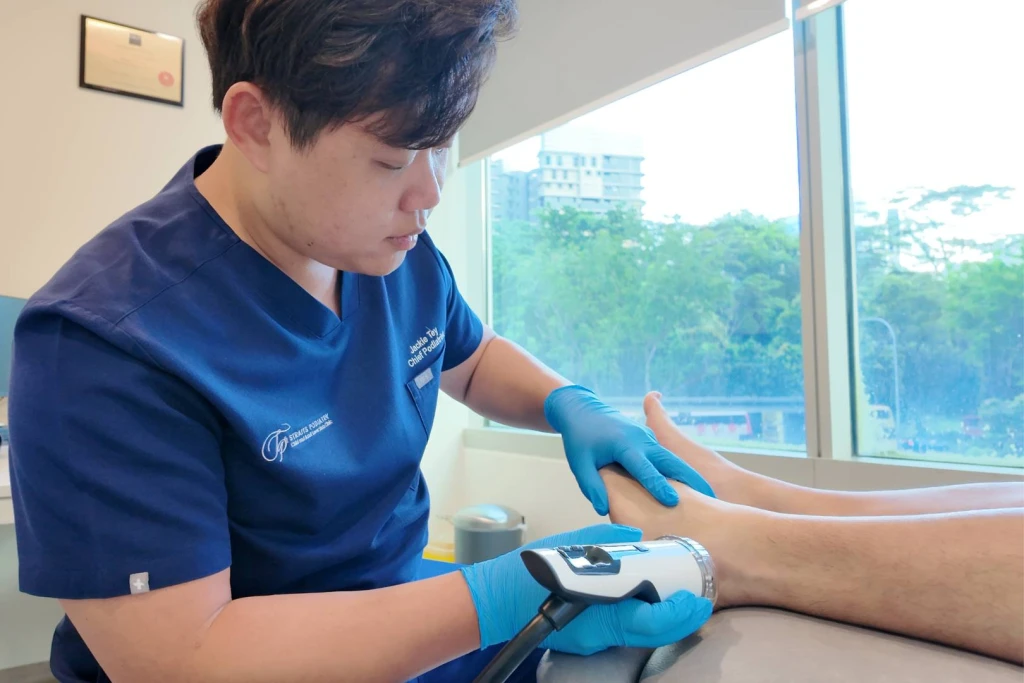
- Focused shockwave therapy and EMTT: Where chronic inflammation has set in and conservative care has plateaued, focused shockwave therapy or magnetotransduction therapy can stimulate the body’s healing response in the sinus tarsi tissue. ESWT is the more common choice for sinus tarsi syndrome and is delivered as a course of 4 to 6 sessions spaced one week apart, alongside the structured rehab. EMTT pairs well with shockwave for stubborn cases.
- Activity modification during the settling phase: Patients are advised to step back from uneven-ground activities (trail running, hiking, beach running) for 4 to 6 weeks while inflammation settles. Replace with flat-surface running or low-impact cardio. Once the pain has eased on direct pressure, uneven-ground load is reintroduced gradually.
When conservative care isn’t enough
A small proportion of cases do not settle with structured conservative care. Where the sinus tarsi inflammation is chronic and unresponsive after 4 to 6 months, an orthopaedic opinion is appropriate. Options at this stage include corticosteroid injection delivered under imaging guidance, or in very rare cases, surgical clean-out of the sinus tarsi. We would refer patients to orthopaedic colleagues with experience in subtalar and hindfoot surgery when this is necessary. However, most patients do not reach this stage with appropriate early management.

Have Your Sinus Tarsi Syndrome Managed at Straits Podiatry
Sinus tarsi syndrome rewards early accurate diagnosis, since the pain settles faster before the inflammation becomes chronic. At Straits Podiatry, an assessment for suspected sinus tarsi syndrome combines focused history, palpation of the sinus tarsi dimple, subtalar joint testing, and a full biomechanical evaluation of how the foot is loading. From there, a management plan is built around the underlying driver, your activity goals, and how long the inflammation has been running, typically drawing on custom foot orthotics, a structured rehabilitation programme, and where indicated, focused shockwave therapy.
If you have been chasing lateral ankle pain that fits the pattern above, particularly pain that started after a sprain and has not settled with standard rehab, speak with our team or book a consultation for an assessment at any of our podiatrists in Singapore to manage your sinus tarsi syndrome.
Frequently Asked Questions About Sinus Tarsi Syndrome
How long does sinus tarsi syndrome take to heal?
Most patients see meaningful improvement within 6 to 12 weeks of starting structured care, with full settling between 3 to 6 months. The timeline depends on how long the inflammation has been running before treatment started, how compliant the patient is with the orthotic and rehab plan, and whether the underlying biomechanical driver has been addressed. Patients whose syndrome stems from a single recent ankle sprain tend to recover faster than those with a multi-year history of repeat sprains.
Can I keep running with sinus tarsi syndrome?
Most patients can continue running during recovery, but with adjustments. Flat-surface running on track or treadmill is usually tolerated. Trail running, beach running, and hill repeats should be paused for the first 4 to 6 weeks until the sinus tarsi tenderness eases. Once the dimple pain has settled on direct pressure, uneven-ground running is reintroduced gradually. Continuing to run on uneven ground through the early flare often extends the eventual recovery.
Is sinus tarsi syndrome the same as a chronic ankle sprain?
No. A chronic ankle sprain involves persistent laxity of the lateral ankle ligaments and tends to produce a giving-way pattern with active inversion. Sinus tarsi syndrome involves inflammation of the structures within the small tunnel below the ankle bone and produces a localised, reproducible pain on direct pressure of the sinus tarsi dimple. The two can coexist, which is partly why the diagnosis is often missed.
Do I need an MRI for sinus tarsi syndrome?
Not always, because most cases can be diagnosed clinically without imaging. A careful history, palpation of the sinus tarsi, and clinical testing of the subtalar joint usually settle the diagnosis. MRI is used in selected cases where the clinical picture is unclear, where the pain has not responded to several weeks of structured care, or where other lateral ankle pathology (talar dome injury, occult fracture) needs to be ruled out.
Will custom orthotics fix sinus tarsi syndrome on their own?
For some people, custom orthotics alone can be enough, but not for everyone. Custom orthotics are the mainstay treatment for addressing the biomechanical loading of the sinus tarsi. However, patients who develop sinus tarsi syndrome from an ankle sprain still need a structured rehabilitation programme alongside, especially for the proprioception and lateral foot strengthening layers. Without rehab, orthotics can make them feel better, but the recovery may plateau at some point. If the underlying driver is overpronation, custom orthotics alone usually provide a good outcome.