
What Is Wart Cryotherapy?
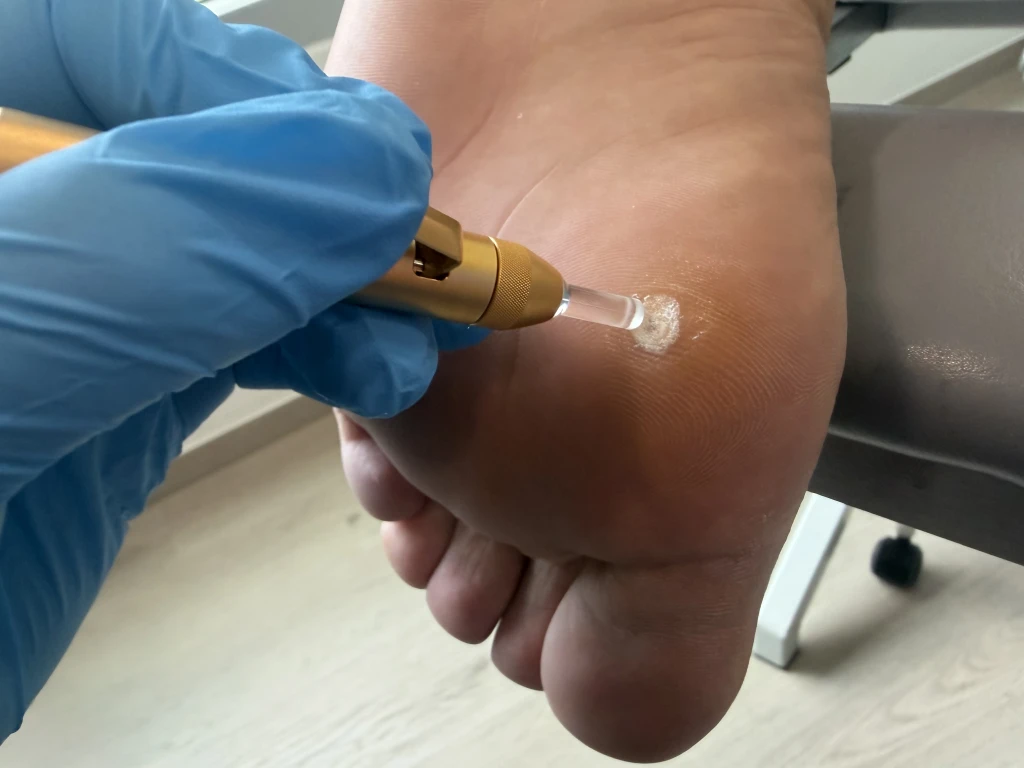
Wart cryotherapy is a clinical way to clear a plantar wart by freezing it. The cold destroys the layer of skin cells that the wart virus has taken over, and the small, controlled injury it leaves behind nudges your own immune system into finishing the job. It is one of the more common reasons people visit a podiatrist in Singapore for a foot lesion that will not shift, and it is also one of the more misunderstood, because the wart you can see on the surface is usually only part of what is going on underneath.
A plantar wart, also called a verruca, is caused by the human papillomavirus (HPV). The virus enters through tiny cuts or softened skin and is most often picked up barefoot on wet shared surfaces: swimming-pool decks, changing rooms, gym floors, and the communal shower areas that are hard to avoid in Singapore’s climate and HDB living. Because HPV lives inside the skin cells rather than sitting on top of them, over-the-counter remedies frequently fall short on warts that have been present for a while. Wart freezing is designed to reach that infected tissue directly, which is why plantar warts (verrucae) that have resisted pharmacy products are the classic reason it is considered.
How Wart Freezing Works
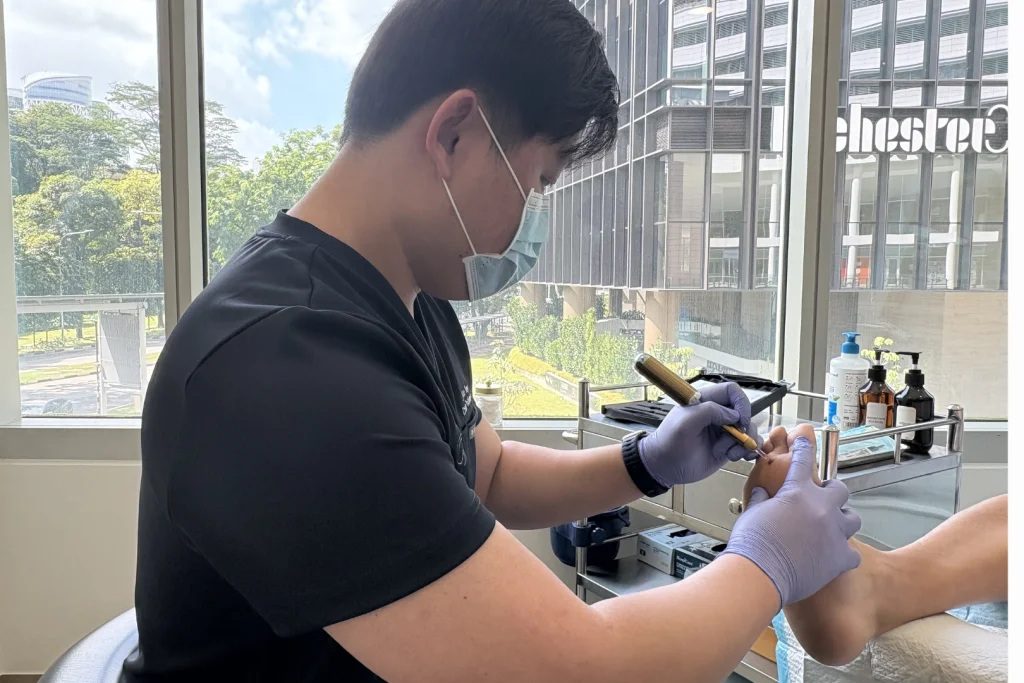
Cryotherapy uses an intensely cold agent applied straight onto the wart. Traditionally this is liquid nitrogen, which reaches around -196 degrees Celsius. Newer clinic devices use agents in the -60 to -90 degrees Celsius range. Whichever is used, the extreme cold forces ice crystals to form inside and around the wart-infected cells. Those crystals rupture the cell membranes and destroy the affected tissue in a tightly localised patch, without disturbing the healthy skin around it any more than necessary.
Plantar warts sit on weight-bearing skin and tend to grow deeper and tougher than warts on the hands. To reach that depth, a freeze-thaw-freeze technique is often used: the agent is applied until a small white halo forms around the wart, the tissue is allowed to thaw fully, then the freeze is repeated. Cycling the freeze increases how deep the cell destruction goes, which matters because a plantar wart usually extends further below the surface than it looks.
There is a second mechanism that is easy to miss. The controlled injury also raises a local immune response. By drawing the body’s attention to the treated spot, freezing can help the immune system finally recognise the HPV-infected cells it had been failing to detect, since the virus is good at hiding from immune surveillance. This is why some people see nearby satellite warts settle even though only the main one was frozen.
Who Wart Cryotherapy Helps
Wart cryotherapy may suit you if a plantar wart has stayed put on its own or has not cleared with pharmacy products. It is most commonly considered when:
- The wart has been on your foot for several weeks or months with no sign of improvement.
- Over-the-counter salicylic acid gels, plasters, or paints have not worked.
- The wart is growing, or it hurts when you walk, stand, run, or train.
- There are several warts, or a mosaic wart (a cluster of small warts that have merged).
- The wart sits on a load-bearing area such as the heel or the ball of the foot, and you have started changing how you walk to avoid it.
Plantar warts are especially common in school-age children and teenagers in Singapore, particularly those who swim, play sport, or spend time barefoot in shared facilities, so cryotherapy is often asked about for younger feet as well. For a young child, your podiatrist will weigh the child’s age, the wart itself, and whether the child can stay still and comfortable for the freeze before recommending it.
What to Expect During Wart Cryotherapy
Here is what a wart-freezing appointment usually involves from start to finish.
Step 1: Assessment first
Your podiatrist starts by examining the lesion, because not everything that looks like a plantar wart is one. Corns, calluses, and some other skin lesions can look almost identical, and they call for very different care, so getting the diagnosis right comes before anything is frozen. Your podiatrist will also review your medical history and ask how long the wart has been there, what you have already tried, and whether any health conditions might affect how your skin heals.
Step 2: Debridement before the freeze
Before the cold is applied, your podiatrist pares away the overlying callus and thickened skin with a sterile blade. This step is sometimes skipped in quicker approaches, but it matters: removing the hardened outer layers lets the freezing agent reach the living wart tissue instead of being wasted on dead skin, and it gives a clearer view of the wart’s true size and depth. It is done carefully to keep you comfortable.
Step 3: Applying the freeze
The freezing agent is delivered through a controlled applicator tip. You will feel an intense cold, then a stinging or burning sensation that most people describe as sharp but brief. For plantar warts the freeze is typically held for around 10 to 30 seconds depending on size and depth, and a freeze-thaw-freeze cycle may be used on more established warts. The freeze itself takes only a few minutes per wart.
After the session
Some soreness and tenderness in the treated area is normal and may last up to 48 hours. A blister often forms within a day, which is an expected part of the healing response and should not be popped. It usually settles over the following week or two. Your podiatrist will give you clear aftercare instructions, including how to keep the area clean, whether to cover it, and which signs would be worth a call.
How Many Sessions Will I Need?
Wart freezing is rarely a single-session fix, and it is fairer to think of it as a short course. Smaller or more superficial warts may clear in two or three sessions. Deeper, older, or more stubborn plantar warts usually need more. Sessions are generally spaced two to four weeks apart so the treated tissue can heal and the response can be judged before the next freeze.
How your wart responds depends on its size, depth, how long it has been there, and your own immune system, which is genuinely variable from person to person. At each follow-up your podiatrist reviews progress and advises whether to keep freezing, add or switch to another method, or simply monitor if the wart has cleared. This is exactly why a podiatrist-led plan beats a fixed protocol: the number of sessions is matched to your wart, not decided in advance.
Wart Cryotherapy vs Other Wart Options
Freezing is one of several ways to manage a plantar wart. Knowing where it fits, and where it may not be the best first step, is part of what separates podiatrist-led care from reaching for the nearest pharmacy product.
Over-the-counter freezing kits and acid products
Home freezing sprays and salicylic acid gels, plasters, and paints are sold across Singapore pharmacies and are usually the first thing people try. Acid products slowly soften and break down the wart over weeks of daily use, and for small, superficial, or recent warts in otherwise healthy feet they can work. The catch is compliance: they need consistent daily application over a long stretch, and they are far weaker on deep, old, or weight-bearing plantar warts. Home freezing kits also reach nowhere near the temperatures a clinic device does, so they often only skim the surface. Used incorrectly, either can over-damage the surrounding skin and lead to breakdown or infection, which is a real risk on a diabetic or poorly circulated foot.
Wart needling and curettage
For warts that have not responded to freezing or topical products, wart needling and curettage is another option. It is done under local anaesthetic and works by repeatedly puncturing the wart to drive HPV proteins into the deeper skin, where the immune system is more active, so the body learns to clear the virus. It is often a single-session procedure and suits stubborn, larger, or deeper warts, which makes it a natural next step when a course of cryotherapy has stalled.
Choosing the right approach
There is no single method that works equally well on every plantar wart. Size, depth, how long it has been present, whether it hurts, and your immune health all shape which approach is most likely to clear it. Some people do well on freezing alone. Others need a combination, or benefit from switching methods if the first response is limited. That decision is made after examining your wart, not before.
When Is Wart Cryotherapy Not Suitable?
Cryotherapy is safe for most people, but it is not right for every foot, and a few situations call for extra thought.
If you have diabetes or any condition that affects circulation or sensation in your feet, freezing needs careful consideration before it goes ahead. Reduced feeling, slower healing, and a higher infection risk all change the balance, so please tell our team at the time of booking if this applies to you, and we can plan accordingly.
Cryotherapy is also generally not recommended for people who are immunocompromised, or who have a condition affecting cold tolerance such as Raynaud’s phenomenon or cryoglobulinaemia. For very young children who cannot stay still and comfortable for the freeze, a gentler method may be more appropriate. In any of these cases your podiatrist will talk you through the alternatives rather than push ahead with freezing.
Have Your Plantar Wart Assessed at Straits Podiatry
Plantar warts rarely improve faster by waiting. The longer one is left, the more established it tends to become, and the harder it is to shift. If you have a wart on your foot that has held on despite self-treatment, is starting to hurt, or is simply not going away, a proper podiatrist assessment is the most reliable next step.
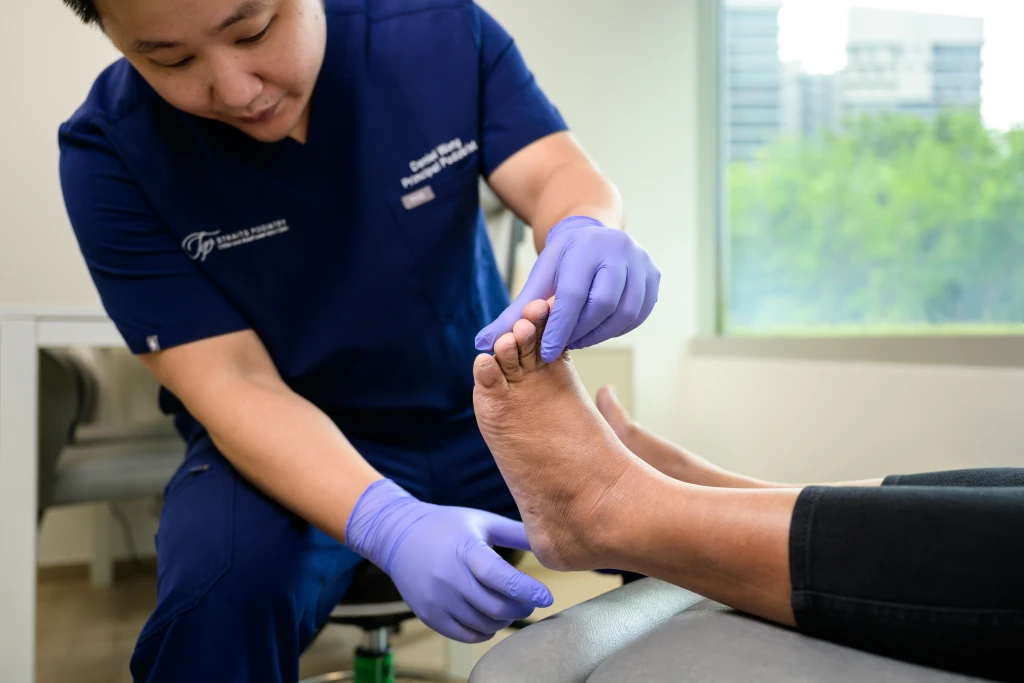
Not every wart responds best to freezing, which is why our podiatrists assess the wart first and match the method to it. We examine the lesion, confirm it is actually a wart and not a corn, callus, or other skin lesion, review how long it has been there and what you have already tried, then explain the options that suit your situation. Because we offer cryotherapy alongside wart needling and curettage, the plan can shift with your response rather than being locked to a single method. You will get a realistic picture of what to expect, with no pressure to commit on the day. Management decisions are always made after examining your wart, not before.
Speak with Straits Podiatry or book a consultation at our clinics in Buona Vista (serving the West), Orchard (serving Central), and Paya Lebar (serving the East), and we can help you find the right approach for your feet.
Frequently Asked Questions About Wart Freezing
Does wart freezing hurt?
Most people find it uncomfortable rather than severely painful. You feel an intense cold, then a brief stinging or burning that usually passes within a minute or two. Afterwards, some aching and tenderness in the treated spot is normal and can last up to 48 hours, and it tends to be more noticeable on a weight-bearing area like the heel or ball of the foot. If you are worried about pain, tell your podiatrist at the start so they can talk you through it and keep you as comfortable as possible.
How many sessions of cryotherapy will I need to clear a plantar wart?
It varies with the wart and with your own immune response. Smaller or more superficial warts may clear in two or three sessions. Deeper, older, or more stubborn ones usually need more. Sessions are typically two to four weeks apart so the area can heal before the next freeze. Your podiatrist gives you realistic expectations at the first visit and reviews the plan at each follow-up based on how the wart is responding.
Can I walk normally after wart cryotherapy?
Yes, most people walk out and carry on with their day, though the treated area may feel sore for a day or two, especially with direct pressure on it. Comfortable, well-cushioned shoes help in the days after a session. If a blister forms, do not burst it. Your podiatrist will advise how to protect the area and when it is safe to return to sport or exercise.
Will the plantar wart come back after freezing?
It can. HPV can linger in the surrounding skin even after the visible wart has gone, so recurrence is possible with any wart method, not just cryotherapy. Your podiatrist will suggest aftercare that lowers the risk, such as keeping your feet clean and dry and not going barefoot in communal wet areas. If a wart does return, it can be cleared again, and an approach like wart needling may be considered if freezing alone has not given a lasting result.
Is wart cryotherapy safe for my child?
It can be suitable for children and teenagers, which is helpful because plantar warts are common in school-age children in Singapore who swim or play sport in shared facilities. Suitability depends on the child’s age, the size and site of the wart, and whether the child can stay still and comfortable during the freeze. If you are bringing a child in, your podiatrist will assess whether freezing is the right option and will keep the experience as calm as possible, or suggest a gentler method if it is not.
How is wart freezing different from wart needling?
Both aim to clear a stubborn plantar wart, but they work differently. Cryotherapy freezes the wart over a short course of sessions spaced a few weeks apart, and is a common first clinical step after pharmacy products fail. Wart needling is done under local anaesthetic and is often a single session, driving HPV proteins into deeper skin to trigger an immune response, which suits deeper or more resistant warts. Which one fits your foot is decided at the assessment, after your wart has been examined.