
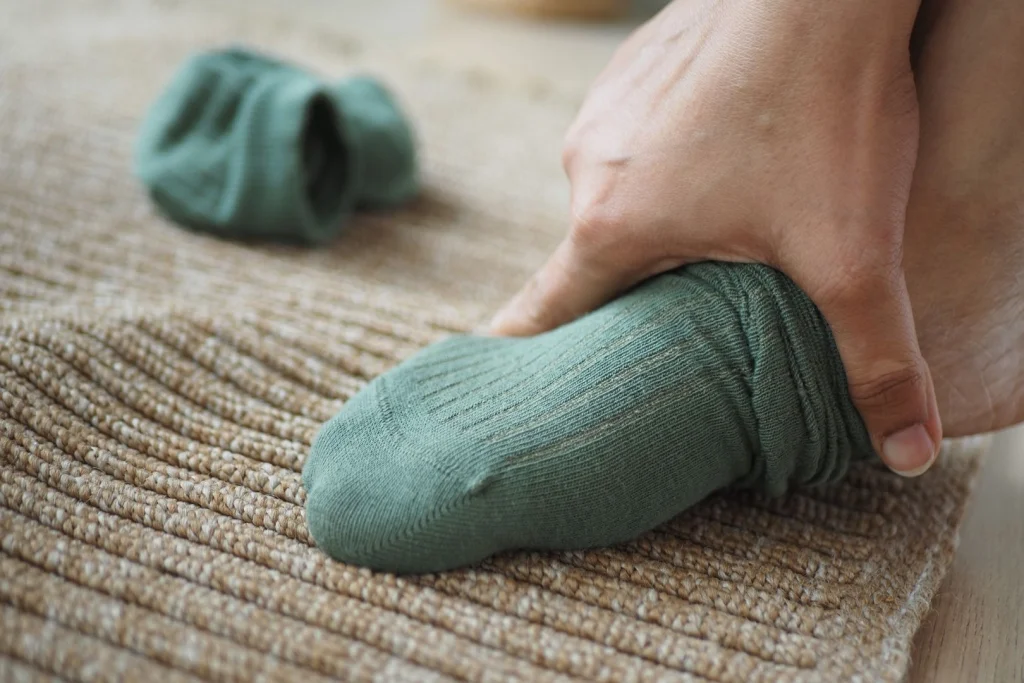
You peel off your socks at the end of the day and they are damp all the way through. Even in Singapore’s heat your soles feel cold and clammy rather than warm, the skin looks pale and waterlogged, and there is a smell that soap does not seem to shift. In slippers or court shoes your feet slide around, and you have started choosing footwear based on what hides the problem rather than what you actually want to wear. Many people put all of this down to the weather and leave it there.
Plantar hyperhidrosis is excessive sweating of the soles, driven by sweat glands that produce far more moisture than the skin needs to regulate temperature. The constant wetness softens and macerates the skin, which is what leaves the soles pale and peeling, and it creates the warm, damp environment that bacteria and fungi settle into. Reading the picture accurately matters, because the sweating, the odour, and the skin problems that follow are each managed differently, and a similar-looking foot can sometimes point to a skin condition or a whole-body cause rather than the sweat glands on their own.
Symptoms of Plantar Hyperhidrosis
The sweating itself is only part of what patients notice. Much of what brings people in is the knock-on effect on the skin, the footwear, and daily confidence.
- Persistently wet or clammy soles: the soles feel moist through most of the day, often regardless of activity or air-conditioning, and socks are visibly damp when removed.
- Cold, pale, softened skin: constant moisture cools the feet and macerates the skin, so the soles and the spaces between the toes can look whitish, wrinkled, or waterlogged rather than dry.
- Foot odour: damp skin lets odour-producing bacteria flourish, which is why sweaty feet and smelly feet so often go together. The smell tends to build through the day inside enclosed shoes.
- Slipping inside footwear: wet soles slide against insoles and sandals, which affects grip and comfort and can make some sports or dress shoes feel unwearable.
- Peeling or breaking-down skin: softened skin peels, splits, or breaks down more easily, particularly between the toes and around the ball of the foot.
- Recurrent skin infections: the persistently moist surface predisposes the feet to fungal infection and to bacterial skin problems, which can keep returning while the underlying wetness is left unaddressed.
- Social and daily-life impact: many patients describe avoiding taking their shoes off at friends’ homes, feeling self-conscious in sandals, or planning around the smell, which is a genuine part of the condition rather than a vanity concern.
Causes of Plantar Hyperhidrosis
Sweat glands on the soles are among the densest in the body, so the feet are naturally prone to sweating. Plantar hyperhidrosis is what happens when that output is turned up well beyond what temperature control requires.
What Causes Plantar Hyperhidrosis?
- Primary focal hyperhidrosis: in most cases there is no underlying disease. The eccrine sweat glands of the soles are simply overactive, the nervous signalling that drives them runs high, and the pattern often runs in families and starts in childhood or the teenage years.
- An overactive stress and emotional response: the same nerve pathway that fires with anxiety, nervousness, or concentration also drives the sole glands, so many patients notice the wetness spikes with stress rather than only with heat or exercise.
- Secondary hyperhidrosis from a systemic cause: newer or whole-body sweating can be driven by thyroid overactivity, hormonal changes such as menopause, some medications, infections, or blood-sugar-related conditions. This pattern usually affects more than just the feet and is worth a doctor’s review.
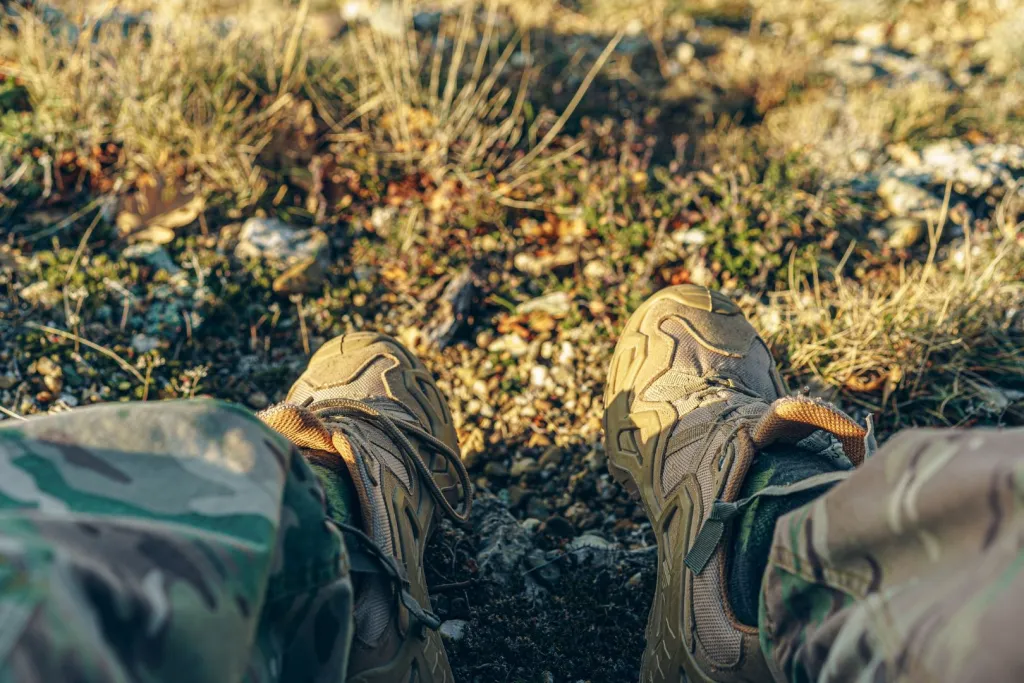
- Occlusive footwear in a hot, humid climate: enclosed synthetic shoes and non-breathable socks trap heat and moisture against the skin. Singapore’s year-round humidity means the sweat has little chance to evaporate, so the feet stay wet for longer and the skin consequences are magnified. This aggravates rather than causes the condition, but it is often what tips it from a nuisance into a skin problem.
Who Carries a Higher Baseline Risk?
- People with a family history of excessive sweating.
- Those whose sweating started in childhood or adolescence and has continued.
- Anyone in enclosed footwear for long stretches: students, office workers in covered shoes, and NS personnel in boots.
- Athletes and physically active people who spend hours in sweaty shoes.
- People who are prone to anxiety or who sweat noticeably with stress.
- Those with a thyroid, hormonal, or other systemic condition, where the foot sweating is one part of a broader pattern.
Conditions Commonly Mistaken for Plantar Hyperhidrosis
Wet, smelly, macerated feet can come from more than sweat alone, and the sweating often sits alongside a skin condition rather than fully explaining it. The most common points of confusion are below.
Pitted keratolysis
A strong smell blamed on “sweaty feet” is frequently pitted keratolysis, a bacterial process that thrives on damp soles and eats small pits or shallow craters into the surface of the skin, usually on the weight-bearing areas. The sweating creates the moist environment the bacteria need, so the two travel together, but the odour and the pitting are the bacterial layer. Recognising it matters because it responds to antibacterial measures alongside drying the feet, not to antiperspirant alone.
Athlete’s foot
Whitish, soft, peeling skin between the toes is often athlete’s foot, a fungal infection, rather than sweat maceration on its own. Because persistent moisture is exactly what lets the fungus take hold, sweaty feet and athlete’s foot commonly coexist. The differentiator is that fungal skin tends to itch, flake, and have a defined edge, and it needs antifungal management to settle, whereas plain maceration improves once the skin is kept dry.
Dyshidrotic eczema
Small, deep, itchy blisters along the soles and the sides of the feet can look like a sweat problem, and the older name for dyshidrotic eczema even links it to sweating. It is an eczema rather than simple overactive sweat glands, though heat and moisture can trigger flare-ups. The clue is the crop of tense, intensely itchy blisters that later peel, a pattern plantar hyperhidrosis does not produce on its own.
Secondary hyperhidrosis from a systemic cause
When sweating is new, worsening, generalised over the body rather than confined to the soles, or accompanied by symptoms such as weight change, palpitations, or night sweats, the cause may be a thyroid, hormonal, or other systemic condition rather than primary focal hyperhidrosis. This pattern belongs with a GP or specialist for a proper work-up, because managing the feet alone will not address the driver.
Treating and Preventing Plantar Hyperhidrosis
Most plantar hyperhidrosis is managed conservatively, and the logic is layered: reduce the moisture load on the skin first, control the odour and any secondary infection that the wetness has caused, and only escalate to the medical sweat-reducing options when the everyday measures are not enough. Singapore’s climate makes the moisture-control layer harder to keep on top of, so consistency with the routine matters more here than in a temperate country. It is also worth being honest about roles: podiatry cares for the skin, the footwear, and the secondary infections, while the procedures that switch off the sweating itself sit with a dermatologist or doctor.
Conservative treatment
These measures are usually combined, and the drying routine underpins everything else.
- Daily foot hygiene and thorough drying: washing the feet daily and, above all, drying them completely, especially between the toes, removes the standing moisture the skin and any bacteria or fungi depend on. A few minutes of proper drying after showering does more than most single measures.
- Moisture-wicking socks and breathable footwear rotation: natural fibres or technical wicking socks pull moisture off the skin, changing damp socks through the day helps, and rotating shoes so each pair fully dries out between wears breaks the cycle of putting feet back into a wet shoe. Open or breathable footwear where the setting allows gives the soles a chance to dry.
- Topical antiperspirants: aluminium chloride-based antiperspirants, applied to clean dry soles at night, reduce sweat output by acting on the gland openings. They are the mainstay non-prescription option, and stronger preparations are available where the standard strength is not enough. Some people find them mildly irritating, so application technique and frequency are worth getting right.
- Absorbent powders and insole choices: absorbent foot powders and moisture-managing insoles help keep the shoe environment drier through the day, which supports the antiperspirant and sock measures rather than replacing them.
- Managing secondary skin infection: where the wetness has already led to a fungal infection or to the bacterial odour and pitting of pitted keratolysis, that layer is addressed directly with the appropriate antifungal or antibacterial measures, because drying the feet alone will not clear an infection that has already set in.
When conservative care isn’t enough
Where the soles stay drenched despite consistent hygiene, antiperspirants, and footwear changes, the next options move into the medical and dermatology space. Iontophoresis passes a weak electrical current through water to reduce sweat gland activity over a course of sessions, botulinum toxin injections can quieten the glands for several months, and oral anticholinergic medication is sometimes used for stubborn generalised sweating. These are led by a dermatologist or doctor rather than by a podiatrist. Separately, sweating that is new, worsening, or affecting the whole body should be reviewed by a GP to rule out a thyroid, hormonal, or other systemic cause before it is treated as a local foot problem. A podiatrist can help you recognise when your picture has crossed from an everyday hygiene issue into one of these situations and point you to the right referral.
Have Your Plantar Hyperhidrosis Managed at Straits Podiatry
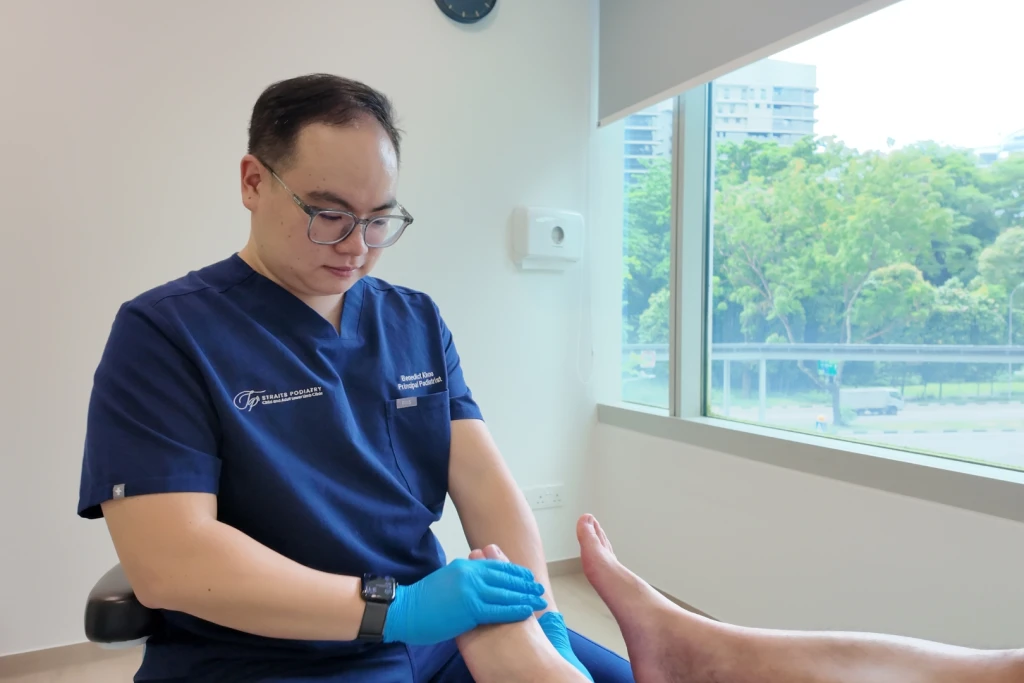
Sweaty feet are easy to dismiss as just the climate, but the maceration, odour, and recurring skin infections that follow are worth having looked at properly. At Straits Podiatry, an assessment for plantar hyperhidrosis looks at the state of the skin, checks for the secondary fungal or bacterial problems that so often ride along with it, and reviews your footwear, socks, and daily routine to find where the moisture is being held against the skin.
From there we can help with a practical drying and antiperspirant plan, footwear and hygiene guidance, and care for any secondary infection, including PACT antifungal therapy where a fungal infection has taken hold. Where the sweating itself needs a dermatology-led option, we will point you to the right pathway. If damp, cold, or smelly feet are affecting your day, book a consultation for an assessment at any of our three Singapore clinics.
Frequently Asked Questions About Plantar Hyperhidrosis
Why are my feet still sweaty in air-conditioning?
Plantar hyperhidrosis is not only a response to heat. The sweat glands on the soles are among the densest in the body, and in this condition the nerve signalling that drives them runs high regardless of the temperature around you. That is why the feet can stay wet in an air-conditioned office or overnight, and why sweating often spikes with stress, nervousness, or concentration rather than only with warmth or exercise. If the sweating is new or affecting your whole body rather than mainly the feet, it is worth a doctor’s review to check for an underlying cause.
Are sweaty feet and smelly feet the same problem?
Not quite. Sweat itself is largely odourless. The smell develops when the persistently damp skin lets odour-producing bacteria flourish, and in many cases the strong smell is actually pitted keratolysis, a bacterial condition that thrives on wet soles. So the sweating is the setting, and the odour is a bacterial layer on top of it. This matters for care, because keeping the feet dry reduces the moisture the bacteria need, but an established bacterial or fungal problem usually needs to be addressed directly as well.
Do antiperspirants actually work on feet?
For many people, yes. Aluminium chloride-based antiperspirants act on the sweat gland openings and can meaningfully reduce output when applied to clean, dry soles at night. They are the mainstay non-prescription measure, and stronger preparations exist for cases where the standard strength is not enough. They work best as part of a routine that also includes thorough drying, moisture-wicking socks, and rotating footwear, rather than on their own. Some people find them mildly irritating, so how and how often you apply them is worth getting right.
Will sweaty feet lead to a fungal infection?
They raise the risk. Fungi and bacteria both favour warm, moist skin, so persistently wet feet are more prone to athlete’s foot and to bacterial skin problems, and these can keep returning while the underlying wetness is left unaddressed. In Singapore’s humidity the feet have little chance to dry out between wears, which adds to the risk. Keeping the feet dry, changing damp socks, and rotating shoes all reduce the chance of a secondary infection taking hold.
Can a podiatrist stop my feet from sweating?
A podiatrist’s role is caring for the consequences of the sweating: assessing the skin, managing secondary fungal or bacterial infection, and guiding you on hygiene, antiperspirants, socks, and footwear that keep the moisture down. For many people that is enough to make the problem manageable. The procedures that reduce the sweating at its source, such as iontophoresis, botulinum toxin injections, and oral medication, are led by a dermatologist or doctor. A podiatrist can help you judge when your case has reached the point of needing one of those referrals.
When should I have sweaty feet assessed?
It is worth having your feet assessed when the wetness is affecting daily life, when the skin is peeling, breaking down, or smelling despite a good drying routine, or when fungal or bacterial infections keep returning. It is also sensible to see a doctor if the sweating is new, worsening, or spreading beyond the feet to the rest of the body, since that pattern can point to an underlying cause that needs its own work-up rather than local foot care.