
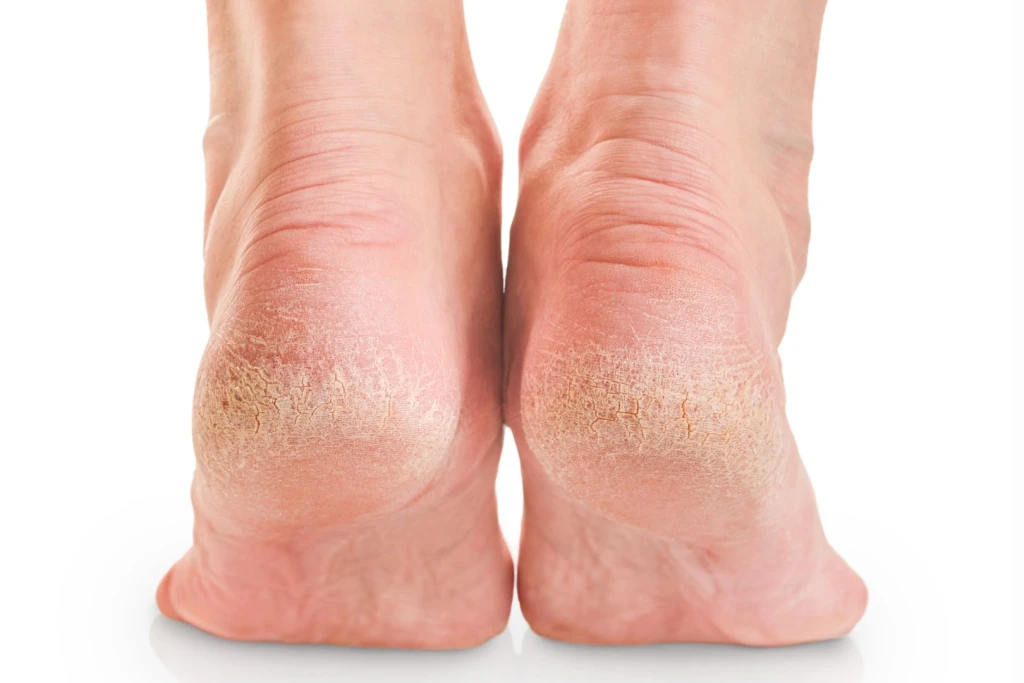
Your heels have been catching on the bedsheet at night. In the mirror the skin around the back rim of each heel looks thick, dry, and yellowed, and a few fine lines have opened into deeper splits. Standing barefoot on the kitchen tiles first thing in the morning sends a sharp sting through one of them, and today there was a spot of blood in the crack. If you live in your open-back sandals or slippers, spend long days on your feet at work, and only really notice your heels when they start to hurt, this is a pattern we see often in Singapore.
Cracked heels, known clinically as heel fissures, start as a rim of hardened callus around the weight-bearing edge of the heel. The heel fat pad spreads outward every time you load it, and skin that has become thick and dry has lost the elasticity to stretch with that movement, so it splits rather than flexes. A shallow fissure sits only in the dead surface layer and is mostly a cosmetic nuisance. A deep one reaches the living skin beneath, which is why it stings, bleeds, and can become a doorway for infection. Working out how deep the fissures go, what is drying the skin in the first place, and whether there is any circulation or sensation concern behind it is what turns cracked heels from a recurring annoyance into something that stays managed.
Symptoms of Cracked Heels
Cracked heels usually announce themselves gradually, starting as dryness and rough skin long before the first painful split. The signs below tend to build in the same order.
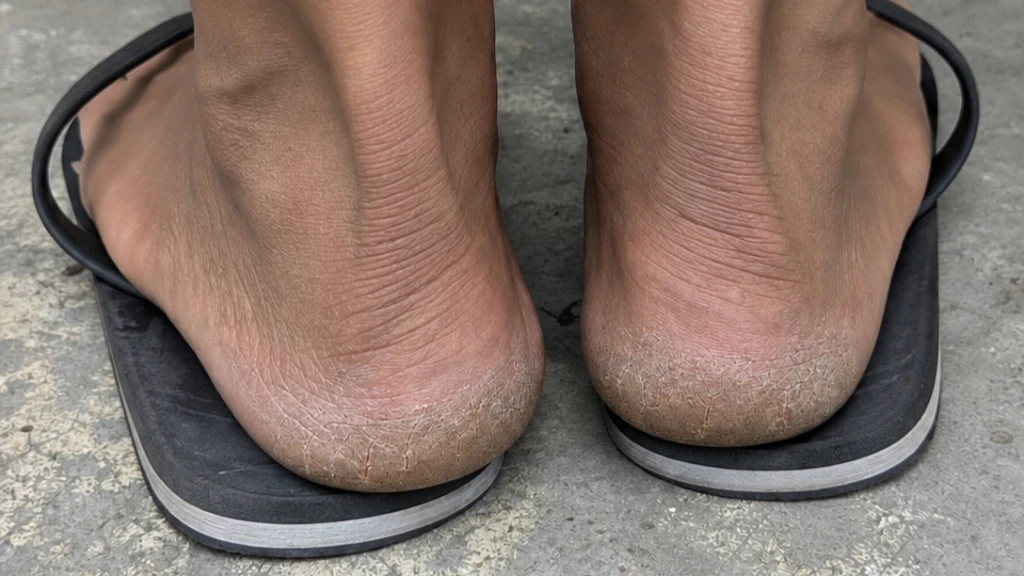
- A rim of thick, dry skin around the heel: the hardened band follows the weight-bearing edge of the heel, often looking yellow or greyish and feeling rough or leathery to the touch.
- Fine surface lines that deepen into fissures: early cracks look like shallow scratches in the callus. As the skin keeps drying and loading, they open into deeper vertical splits.
- Pain on standing and walking: deep fissures hurt most when you first put weight through the heel, particularly barefoot on hard floors or first thing in the morning.
- Bleeding from the base of a crack: once a fissure reaches the living skin beneath the callus, it can bleed, weep, or feel raw.
- Catching and snagging: the hard edges catch on socks, bedsheets, and towels, which many people notice before the pain starts.
- Redness, swelling, or discharge around a split: these point to an infected fissure and need prompt attention rather than more moisturiser.
- Little to no discomfort despite deep cracks in some people: reduced sensation, particularly with diabetes, can mean a fissure is not felt until it is already an open wound.
From what we see in clinic, the people who leave it longest are usually the ones whose heels crack but do not hurt much. A painless deep fissure is not a milder problem, it is a wound you cannot feel, and that is exactly when it matters most to have it looked at.
Causes of Cracked Heels
Skin around the heel cracks when two things line up: the skin has become thick and dry enough to lose its stretch, and it is being pushed outward by load. Most cases are a mix of what is drying the skin and what is loading it.
What Causes Cracked Heels?
- Open-back footwear: sandals, slippers, and mules let the heel fat pad spread sideways with every step because there is no back to hold it in. The skin at the rim is stretched repeatedly and thickens, then splits. This is the single most common contributor we see in Singapore’s sandal-and-slipper climate.
- Dry skin and low humidity exposure: skin that lacks moisture is stiff and inelastic. Long hours in air-conditioned offices, hot showers, and soap that strips natural oils all pull moisture out of already-thick heel skin.
- Prolonged standing on hard floors: teachers, nurses, retail and F&B staff, and anyone on their feet all day loads the heel rim for hours, driving the callus to build and eventually crack.
- Thickened callus left to build up: a heel callus that is never reduced keeps getting thicker and less flexible, which is the exact tissue that fissures. Cracked heels are often the next stage of an untreated heel callus.
- Higher body weight: more load through the heel with each step spreads the fat pad further, so the skin at the rim has to stretch more than it can.
- Reduced natural oil and skin ageing: oil glands are sparse on the sole, and skin becomes drier and thinner with age, so heels crack more readily in later years.
- Medical dryness of the skin: underactive thyroid, some skin conditions, and the skin changes that come with diabetes all reduce the skin’s moisture and make fissuring more likely.
Who Carries a Higher Baseline Risk?
- People who wear open-back sandals or slippers as their main footwear.
- People who stand for long stretches on hard surfaces at work.
- People with diabetes, who may have both drier skin and reduced sensation, so a fissure becomes a wound-risk before it is felt.
- People with reduced circulation to the feet, in whom any skin break heals slowly.
- Older adults, whose heel skin is naturally drier and thinner.
- People carrying extra body weight, and anyone prone to recurrent heel callus.
Conditions Commonly Mistaken for Cracked Heels
Not every patch of dry, scaly, or splitting skin on the heel is a simple fissure. A few conditions look similar early on, and because the care differs it is worth being sure what is actually driving the skin change.
Athlete’s foot on the heel
A moccasin-pattern of athlete’s foot spreads dry, flaky, silvery scaling across the sole and heel and can be mistaken for ordinary dryness. The clue is the distribution and the itch. Fungal scaling tends to cover the whole sole in a slipper-shaped pattern, often with itchiness and sometimes involvement between the toes, whereas plain cracked heels stay concentrated at the weight-bearing rim. A fungal cause will not settle with moisturiser alone.
Heel callus without fissures
A thick heel callus is the stage before cracking. It is the same hardened, dry skin at the rim, but the surface has not yet split. It is worth naming separately because reducing the callus early is often what stops it progressing to a painful fissure, so a heel that is thick but not yet cracked is a chance to intervene before the skin gives way.
Eczema or psoriasis of the heel
Inflammatory skin conditions such as eczema and psoriasis can produce dry, scaly, cracking skin on the heels and soles. These are typically itchy or inflamed, may appear on both feet symmetrically, and often show up elsewhere on the body too. When the skin change looks more like a rash than a rim of load-driven callus, or does not respond to standard heel-care, a dermatological cause is worth considering.
Pitted keratolysis
Pitted keratolysis is a bacterial condition of the sole that creates small shallow pits and craters in the surface skin, often with a strong odour and worse in sweaty, enclosed footwear. It can be confused with dry cracking because the surface looks broken up, but the pattern is small punched-out pits rather than deep vertical splits at the heel rim, and the driver is moisture and bacteria rather than dryness.
Treating and Preventing Cracked Heels
Cracked heels respond well to care when the approach matches the cause, and the logic is simple. Reduce the hard skin that has lost its stretch, put moisture back into what remains, and stop the load and dryness that are drying and splitting it in the first place. Care is conservative and skin-focused rather than energy-based, and the aim is not only to close the current fissures but to keep the heel supple enough that it stops cracking. Where diabetes or poor circulation is part of the picture, the same fissure is treated more cautiously because it counts as a wound.
Conservative treatment
These measures work best together, usually starting with reducing the thickened skin so moisturiser can actually reach softer tissue.
- Professional debridement of the hard skin: careful reduction of the thick callus rim by a podiatrist, using appropriate instruments, lowers the tension in the skin so it stops splitting and lets moisturiser penetrate. This is the step that gives the quickest relief, and it is done without cutting into living tissue. Trying to pare it down yourself with a blade or razer at home risks going too deep and creating the wound you were trying to avoid.
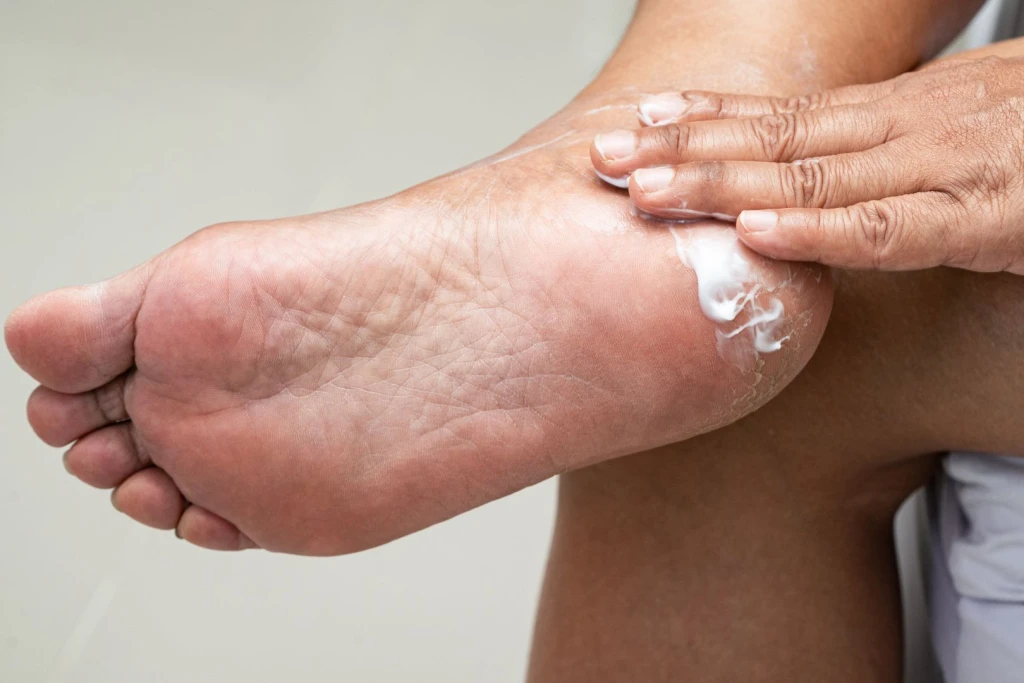
- A urea-based moisturising regime: heel skin needs a heavier, humectant moisturiser rather than a light lotion. Creams in the urea or lactic-acid category both soften and help shed thickened skin, and applying morning and night, especially after showering, keeps the skin supple enough to flex instead of crack. Consistency matters more than any single product.
- Footwear change away from open-back styles: swapping daily open-back sandals and slippers for a shoe or sandal with a firm, enclosed or strapped heel stops the fat pad spreading sideways and takes the repeated stretch off the rim. This is often the change that keeps cracked heels from returning.
- Gentle home skin maintenance: using a pumice stone or foot file on softened skin after a shower, a few times a week rather than aggressively, keeps callus from rebuilding between visits. Pair it with moisturiser straight afterwards.
- Padding, heel cups, or pressure relief where load is the driver: where a specific pressure pattern or heel position is loading the rim, a cushioning heel cup or padding can spread the load and protect a healing fissure.
- Addressing the underlying dryness: where a medical cause such as a thyroid or skin condition, or the skin changes of diabetes, is drying the skin, managing that alongside the local heel-care is what stops the fissures simply returning.
When conservative care isn’t enough
Most cracked heels settle with debridement, moisture, and a footwear change. Some do not, and a few should be seen sooner rather than later. A fissure that is red, swollen, warm, weeping, or increasingly painful may be infected and needs prompt medical attention, sometimes including antibiotics, rather than more cream. Anyone with diabetes, reduced sensation, or poor circulation to the feet should have even a small heel fissure looked at early, because a split that would be trivial in another person is a genuine ulcer-risk when healing and sensation are impaired, and it may need wound care and closer monitoring. Where the skin change does not behave like a simple load-driven fissure, or does not respond to standard heel-care, referral to a dermatologist for a skin diagnosis is the sensible next step.
Have Your Cracked Heels Managed at Straits Podiatry
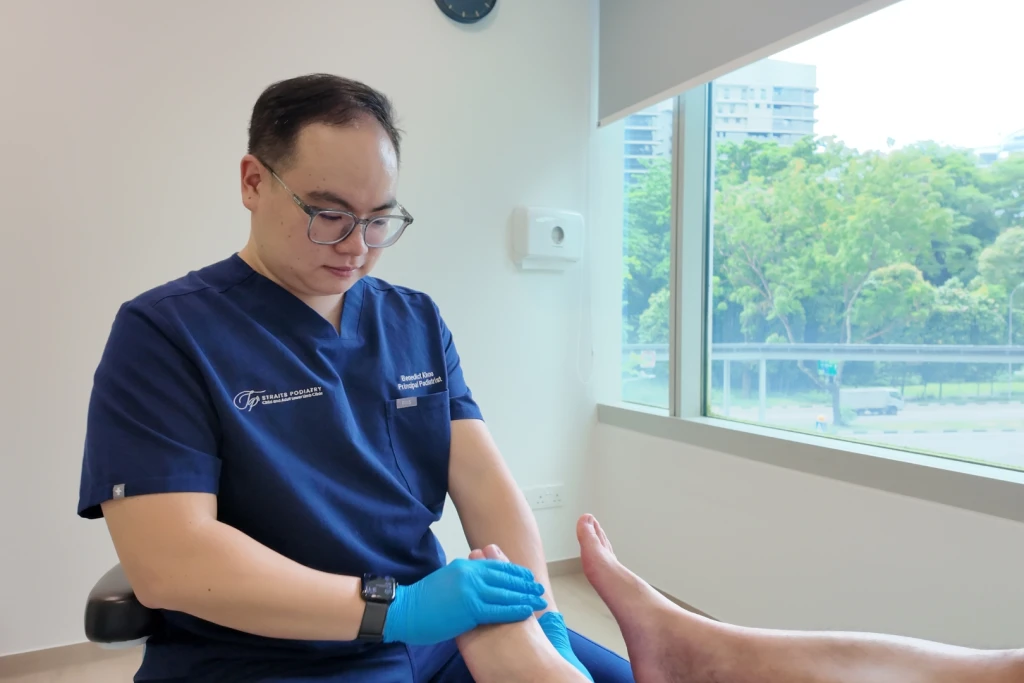
Cracked heels are easy to keep ignoring until one splits deep enough to sting with every step or starts to bleed. An assessment at Straits Podiatry looks at how deep the fissures actually go, what is drying and loading the skin, and whether there is any circulation or sensation concern sitting behind them. From there, care usually begins with debridement of the hard rim, followed by a moisturising regime and footwear advice matched to how you spend your day, plus diabetic foot screening where it is relevant.
If your heels are thick, dry, and starting to split, or a crack has begun to bleed, book a consultation for an assessment at any of our three Singapore clinics. Getting the hard skin reduced and the moisture back early is far easier than closing a deep fissure once it has set in.
Frequently Asked Questions About Cracked Heels
What causes cracked heels?
Cracked heels form when thick, dry skin around the rim of the heel loses its elasticity and splits under load. The two ingredients are dryness, which makes the skin stiff, and pressure, which pushes the heel fat pad outward with every step. Open-back sandals and slippers, long hours standing on hard floors, air-conditioned dryness, ageing skin, higher body weight, and medical causes such as diabetes or thyroid problems all feed into it. In most people it is a combination rather than a single cause, which is why care addresses both the skin and the load.
How do I get rid of cracked heels?
Getting cracked heels to close and stay closed usually means reducing the thickened skin first, then keeping the remaining skin soft, then removing what is loading and drying it. A podiatrist can carefully debride the hard callus rim so moisturiser can reach softer tissue, and a heavier urea-based cream applied morning and night keeps the skin supple. Switching out of open-back footwear takes the repeated stretch off the heel. If a fissure is deep, bleeding, or infected, or you have diabetes, have it assessed rather than treating it at home.
Are cracked heels dangerous?
For most people cracked heels are uncomfortable rather than dangerous, but a deep fissure is an open break in the skin and can become infected, especially if it bleeds or weeps. The picture changes with diabetes or poor circulation. There, reduced sensation can mean a fissure is not felt, and impaired healing means a small split can turn into a slow-healing wound or ulcer. That is why anyone with diabetes should treat even a painless heel crack as something to have looked at early.
Why do my heels keep cracking even when I moisturise?
Moisturiser alone often is not enough when the heel skin is already thick, because the cream cannot penetrate a hard callus rim and the underlying load is still splitting it. Two things are usually missing: reducing the thickened skin so moisture can actually reach softer tissue, and changing the footwear or pressure pattern that keeps stretching the heel. A urea or lactic-acid based cream works better than a light lotion, and pairing it with professional debridement and a switch away from open-back shoes is what breaks the cycle.
Can a podiatrist help with cracked heels?
Yes. A podiatrist can reduce the thickened callus rim safely, which most people cannot do well at home, and this alone often relieves the pain quickly. Beyond that, an assessment looks at what is drying and loading the skin, advises on a moisturising regime and footwear, and screens for circulation or sensation concerns, which matters most in people with diabetes. Where a fissure is infected or a skin condition such as eczema or psoriasis is the real cause, a podiatrist can direct you to the right onward care.
Is it safe to cut or shave cracked heels at home?
Cutting or shaving the hard skin yourself with a blade or razer is not recommended. It is easy to remove too much and create an open wound in skin that is already dry and prone to cracking, which is the opposite of what you want. Gentle filing with a pumice stone on softened skin after a shower is fine as maintenance, but reducing a thick, established callus is better done by a podiatrist who can take it down to the right level without breaking the living skin beneath.