

Stretching is probably the first thing most people try when they develop heel pain.
Calf stretches. Rolling the foot on a bottle or a massage ball. Pulling the toes back.
If you’ve been told you have plantar fasciitis, stretching is almost always part of the advice. Your physiotherapist will say this, your personal trainer will say this, your GP will say this, and even ChatGPT will say this.
But here’s the honest truth:
Stretching helps some people. For others, it does very little. And in some cases, it can even aggravate symptoms.
So why the difference?
First of all, what stretching is actually trying to do
Plantar fasciitis involves irritation of the tissue under the foot that supports your arch.
When the calf is tight or the ankle doesn’t move well, the plantar fascia can be placed under extra tension, especially during standing or walking.
Stretching is meant to:
- improve calf flexibility
- reduce tension through the heel
- ease that sharp “first step” pain in the morning
- address the common underlying cause of plantar fasciitis
And for some patients, that works.
Why stretching alone isn’t always enough
In our clinic, we often see people who have diligently stretched for weeks or months, but their heel pain just hasn’t improved much.
That’s usually because plantar fasciitis isn’t just about tightness. It’s also about:
- load management
- walking mechanics
- footwear support
- how much time you spend standing daily
If someone frequently walks between MRT stations, stands for long hours at work, or suddenly increases weekend activity, the heel may continue to be overloaded, regardless of stretching.
The tissue needs to tolerate load and not just lengthen.
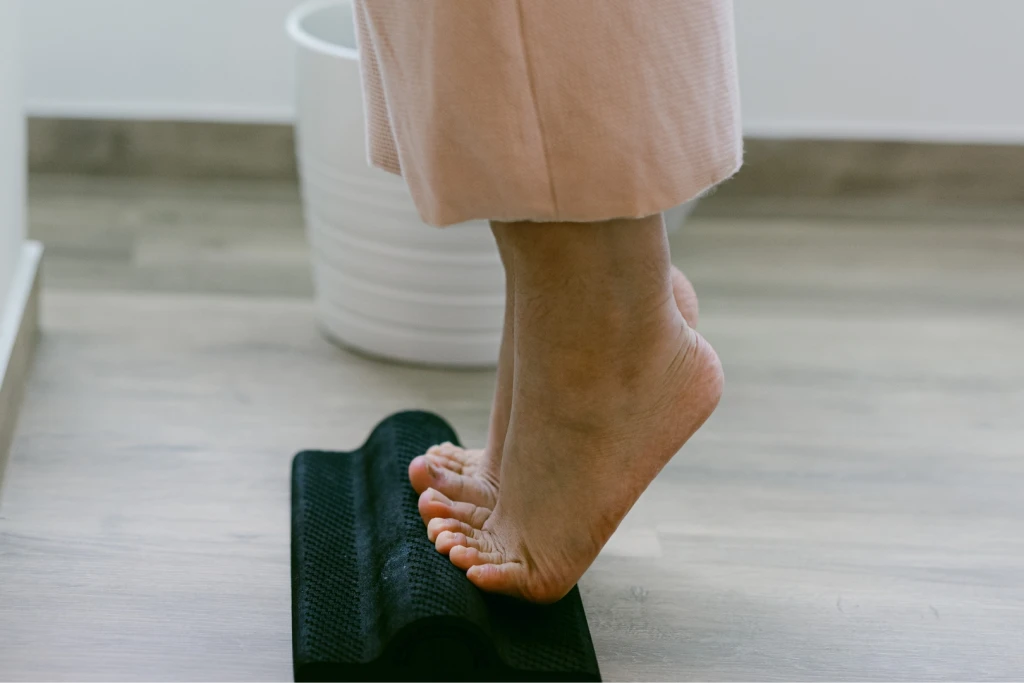
Sometimes stretching can make it worse
This surprises many people; it certainly surprised many of our patients.
Aggressive stretching, especially when the heel is already irritated, can:
- repeatedly stress the inflamed and injured area
- increase sensitivity
- delay settling
This is especially true for cases that actually have a tear in their plantar fascia, but have been mistakenly diagnosed as a “strain” or “inflammation”. It’s like asking you to continue moving a fractured limb and expect the bone to heal.
If stretching feels sharply painful during or after, that’s usually a sign the approach needs adjusting.
So what actually helps?
For treatment of plantar fasciitis, improvement usually comes from a combination of:
- tissue recovery
- appropriate loading
- gradual strengthening
- improving muscle flexibility
- footwear adjustments
- reducing sudden activity spikes
Stretching, as you can see above, can play a role. However, it is rarely the only solution.
Stop stretching your pain
If stretching hasn’t resolved your plantar fasciitis, it doesn’t mean you’re doing it wrong.
It likely means the heel needs a broader strategy; one that looks at how it’s being used every day, not just how flexible it is.
A proper evaluation by a podiatrist can improve your quality of life.