
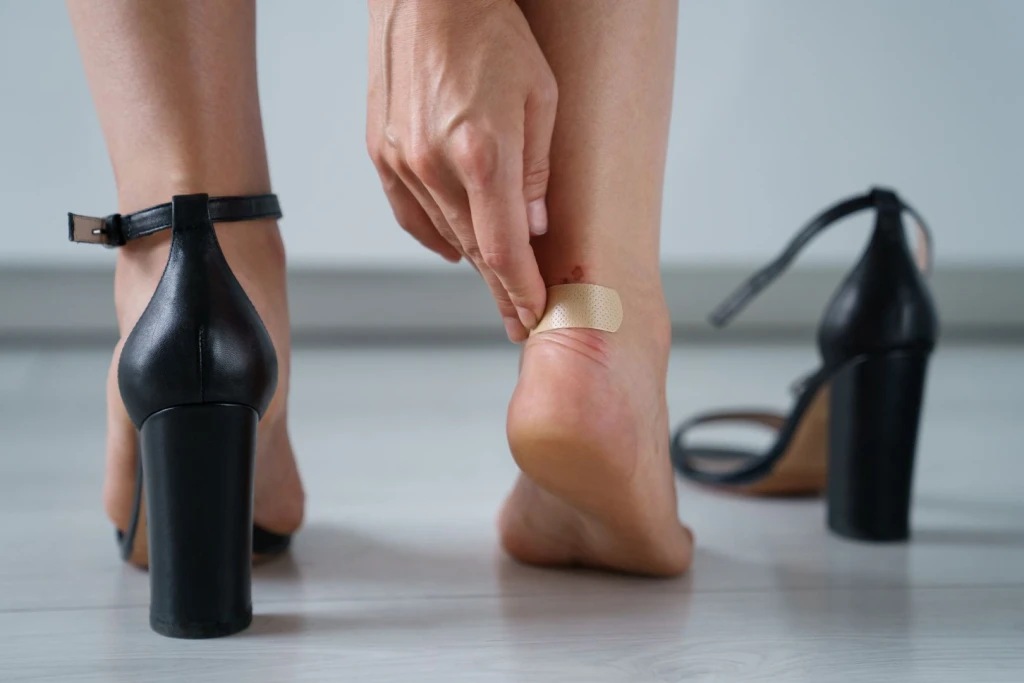
You bought a new pair of leather work shoes and wore them straight into a full day around the office and the MRT. By mid-afternoon the back of your heel felt hot and raw, and by the evening there was a tender, fluid-filled bump where the shoe had been rubbing. Or you finished a long weekend walk around the reservoir in the humidity, peeled off damp socks, and found a stinging blister on the ball of your foot. In Singapore’s heat, sweat softens the skin and shoes grip a little tighter, so a friction blister can form faster than you expect.
A friction blister is a small pocket of fluid that forms when repeated rubbing shears the upper layers of skin apart from the layers beneath. The body fills the gap with clear serum, which acts as a natural cushion while the skin underneath repairs. Most friction blisters are harmless and heal on their own once the rubbing stops. The reason it helps to recognise them accurately is that other skin problems (calluses, corns, and some fungal or allergic rashes) can look similar, they are managed differently, and a blister in someone with diabetes or poor circulation carries a wound risk that changes the advice entirely.
Symptoms of Friction Blisters
Most people recognise a blister once it has formed, but the earlier signs are worth knowing because acting on them can stop the blister developing at all.
- A hot spot before the blister appears: a localised area of heat, redness, or stinging where the shoe or sock is rubbing. This warning phase is the best moment to intervene, before the skin layers separate.
- A raised, fluid-filled bump: the classic blister, a dome of skin filled with clear fluid that feels tense and tender when pressed.
- A darker blood blister: when the shearing force also damages a tiny blood vessel, the pocket fills with blood instead of clear serum and looks red, purple, or almost black.
- Stinging or burning pain on pressure: the blister is usually comfortable at rest and sharply tender when the shoe or the ground loads it during walking.
- Redness around the base: a thin rim of pink or red skin around the blister is normal irritation. A spreading, warm, increasingly painful red area is different and can signal infection.
- Blisters over predictable sites: the back and rim of the heel, the ball of the foot, the tips and sides of the toes, and the edge of the big or little toe are the common friction points.
- Recurrence over the same spot: a blister that keeps forming in exactly the same place, especially over a bony bump, suggests the pressure there is not incidental but built into your foot shape or the way you load the foot.
From what we see in clinic, the blister itself is rarely the interesting part. The useful question is why the friction concentrated where it did, because that is what decides whether it comes back.
Causes of Friction Blisters
A friction blister forms when three ingredients line up: repeated back-and-forth rubbing, enough force to shear the skin, and often moisture that makes the skin more fragile. Understanding which of these is driving your blisters is what makes prevention work.
What Causes Friction Blisters?
- Repetitive shear on the skin: the core mechanism. As the foot slides a few millimetres inside the shoe with every step, the surface layers of skin are dragged back and forth against the layers below until they separate and fill with fluid.
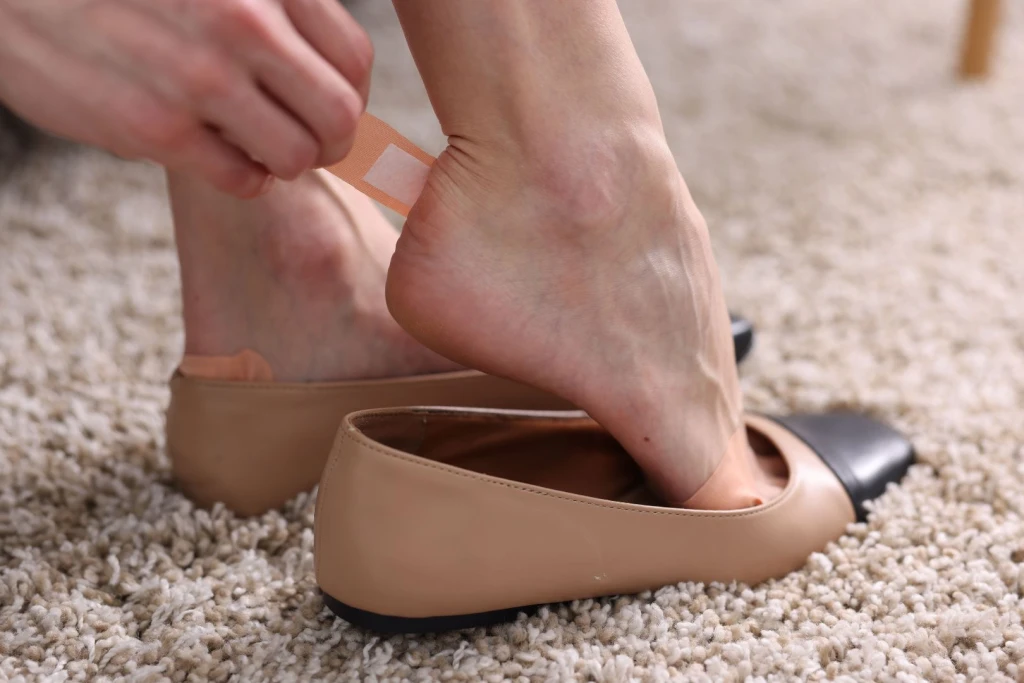
- New or poorly fitting footwear: shoes that are stiff, not yet broken in, too loose so the foot slides, or too tight so a seam presses in all concentrate rubbing on one area. New leather dress shoes and stiff hiking boots are frequent culprits.
- Heat and moisture: Singapore’s climate keeps feet warm and damp, and moist skin is softer and blisters more readily than dry skin. Sweat, rain, and humidity all raise the risk.
- Long or unaccustomed distances: a long walk, a new running programme, a hike, or a full day on your feet at an event exposes the skin to far more rubbing cycles than usual.
- Socks that add friction: thin cotton socks that hold sweat, seams that sit over a pressure point, or socks that bunch and slide can all increase shear rather than reduce it.
- Bony prominences and foot shape: a bunion, a hammertoe, a prominent bone under the ball of the foot, or a high arch pushes one area harder against the shoe, so the friction and the blisters land in the same spot each time.
Who Carries a Higher Baseline Risk?
- Runners, hikers, footballers, dancers, and anyone ramping up distance or intensity.
- NS personnel and uniformed staff during route marches, field training, and long shifts in issued boots.
- People breaking in new or formal footwear, particularly stiff leather shoes.
- Anyone with sweaty feet (hyperhidrosis), where the skin stays soft and damp for long periods.
- People with foot deformities such as bunions, hammertoes, or prominent metatarsal heads.
- People with reduced foot sensation from diabetes or nerve issues, who may not feel the warning hot spot before the blister forms.
Conditions Commonly Mistaken for Friction Blisters
A tender or raised patch of skin on the foot is not always a friction blister. A few other conditions form over the same rubbing points or produce similar-looking bumps, and because they are managed differently, it is worth telling them apart.
Foot calluses
Foot calluses are areas of thickened, hardened skin that build up in response to the same repeated pressure and friction that cause blisters, often over the ball of the foot or the heel. The difference is that a callus is dry, broad, and solid rather than a fluid-filled pocket. Calluses and blisters often appear at the same sites, and a blister can even form under a callus, which is why persistent pressure points are worth addressing rather than just managing each lesion as it appears.
Foot corns
Foot corns also develop from concentrated pressure, but they are small, localised, and have a firm central core that presses inward, often on or between the toes. A corn feels like a sharp, focused point of pain rather than the broad stinging of a blister, and it does not contain fluid. Corns and blisters can coexist over the same bony prominence because both are downstream of the same excess pressure.
Blistering athlete’s foot
Some forms of athlete’s foot (a fungal skin infection) produce small blisters or vesicles, usually on the sole or the arch, along with itching, peeling, and a rash rather than a single blister at a clear rubbing point. Where a friction blister follows an obvious episode of rubbing, blistering athlete’s foot tends to be itchy, more widespread, and recurring, and it needs antifungal management rather than simple protection.
Allergic contact dermatitis
Contact dermatitis is an allergic or irritant reaction of the skin, sometimes to a material, dye, adhesive, or rubber in a shoe or sock. It can blister, but the pattern usually matches where the material touches the skin rather than where the shoe rubs, and it is typically itchy and red across a broader area. A blister that appears with a new pair of shoes may be friction, but if it is itchy and spread across the contact area, dermatitis is worth considering.
Dyshidrotic eczema
Dyshidrotic eczema (also called pompholyx) causes crops of small, intensely itchy blisters on the soles, the sides of the feet, and sometimes the toes. Unlike a friction blister, these are not tied to a rubbing point, they often come in clusters, and they tend to recur in flares. Heat and sweating can trigger them, which makes them relevant in Singapore, and they are managed as a skin condition rather than as a pressure problem.
Treating and Preventing Friction Blisters
Most friction blisters heal on their own within a week or two, so the goal of care is not to force the blister to disappear but to protect the raw skin while it repairs, decide whether the blister is best left intact or drained, and remove the friction that caused it so it does not simply return. Conservative measures resolve the large majority of cases. The one situation that changes the advice completely is a blister in someone with diabetes or poor circulation, where self-drainage is not appropriate and early professional care matters.
Conservative treatment
These measures are usually combined, starting with taking the pressure off the area.
- Removing the friction source: the single most important step. That means correcting footwear fit, breaking new shoes in gradually rather than over a full day, and easing off the activity that caused the rubbing until the skin settles. Without this, the blister tends to come straight back.
- Moisture and sock management: keeping the feet as dry as the climate allows, changing damp socks, and choosing moisture-wicking socks with a smooth seam-free fit over sweaty cotton reduces both the softening of the skin and the shear that drives blisters.
- Lubrication and protective padding: a lubricant, a strip of tape, or a soft pad over a known hot spot lets the surfaces slide against the covering rather than against the skin. A hydrocolloid blister plaster over an existing blister cushions it and keeps it clean while it heals.
- Deciding to drain or leave intact: a small, intact blister is best left alone, because the roof of skin is a sterile natural dressing and the fluid is reabsorbed on its own. A large, tense, or very painful blister may be carefully drained at the edge with a sterilised needle while leaving the roof of skin in place, but the skin should never be peeled off. If in doubt, leaving it intact is the safer choice.
- Dressing and aftercare: once a blister has burst or been drained, keeping it clean and covered with a suitable dressing protects the exposed skin. Watch for spreading redness, increasing pain, warmth, or pus, which are signs the area needs professional attention.
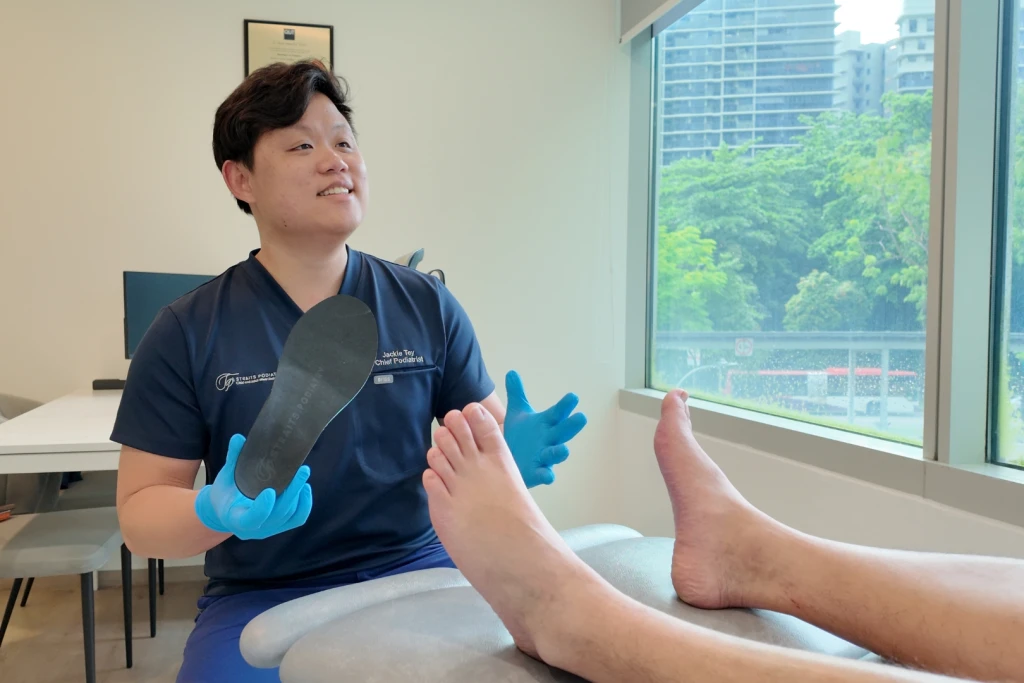
- Addressing the underlying pressure: where blisters keep returning over the same bony prominence, custom foot orthoses can redistribute load away from that point, and footwear advice and padding target the specific spot. This is also where any linked callus or corn over the same site is assessed, because all three share the same root cause of concentrated pressure.
When conservative care isn’t enough
A single friction blister rarely needs more than protection and time. Care is worth seeking when blisters keep recurring in the same place despite footwear changes, because that pattern usually reflects an underlying bony prominence, foot deformity, or gait pattern that concentrates pressure and can be assessed properly. It is also worth seeking if a blister shows signs of infection, such as spreading redness, warmth, pus, or fever, which needs prompt attention. Most important, anyone with diabetes, neuropathy, or poor circulation should not drain a foot blister themselves and should arrange diabetic foot care early, because reduced sensation and slower healing mean a minor blister can progress to a wound or ulcer before it is noticed.

Have Your Friction Blisters Managed at Straits Podiatry
Most friction blisters settle with simple protection, but recurring blisters are a signal worth reading. At Straits Podiatry, an assessment looks at where the blisters form, examines your footwear and the way you load your feet, and identifies the bony prominence or gait pattern concentrating pressure on that spot. From there our podiatrists can help with footwear guidance, protective padding, gait analysis, and custom foot orthoses to take pressure off the area, alongside care for any callus or corn that has built up over the same point.
If you have diabetes or poor circulation, a foot blister deserves earlier attention, and our team can assess and manage it as part of routine diabetic foot screening. If blisters keep returning to the same place or one is slow to heal, book a consultation for an assessment at any of our three Singapore clinics.
Frequently Asked Questions About Friction Blisters
Should I pop a foot blister?
A small, intact blister is usually best left alone. The roof of skin acts as a sterile natural dressing, and the fluid inside is gradually reabsorbed as the skin underneath heals. If a blister is large, tense, and painful enough to interfere with walking, it can be carefully drained at the edge with a sterilised needle, but the roof of skin should be left in place rather than peeled off, and the area kept clean afterwards. Anyone with diabetes or poor circulation should not drain a foot blister themselves and should seek professional care instead.
How long does a friction blister take to heal?
Most friction blisters settle within one to two weeks once the rubbing stops. An intact blister often flattens over a few days as the fluid is reabsorbed, while a blister that has burst or been drained takes a little longer because the exposed skin needs to close over. Healing is faster when the friction source is removed, so continuing to wear the shoe or repeat the activity that caused it tends to slow recovery and can reopen the area.
Why do I keep getting blisters in the same spot?
A blister that keeps forming in exactly the same place is usually a sign that the pressure there is not random. Often there is a bony prominence such as a bunion, a hammertoe, or a prominent bone under the ball of the foot, or a gait pattern that loads one area harder than the rest. Footwear that repeatedly rubs the same point contributes too. Because the cause is structural, changing shoes alone may not fix it, and an assessment of your foot shape and loading, sometimes with custom orthoses or padding, targets the underlying pressure rather than just the blister.
Are blood blisters on the foot dangerous?
A blood blister forms when the shearing force also damages a small blood vessel, so the pocket fills with blood instead of clear fluid. In most cases it is not dangerous and heals like any other friction blister if the friction is removed and the area is protected and left intact. It is worth a closer look if it is very large, extremely painful, shows signs of infection, or appears without any obvious rubbing, and anyone with diabetes or poor circulation should have any blood blister on the foot assessed rather than managed at home.
How do I stop my shoes from giving me blisters?
Start with fit: shoes should hold the foot without sliding and without a seam pressing on one spot, and new footwear is best broken in over short spells rather than a full day. Moisture-wicking, seam-free socks reduce both dampness and shear, which matters in Singapore’s humidity. A lubricant, tape, or a soft pad over a known hot spot lets the shoe slide against the covering rather than the skin. If blisters keep landing in the same place despite these steps, the shoe may not be the whole story and your foot shape or gait is worth assessing.
Can people with diabetes treat a foot blister at home?
People with diabetes should be more cautious with any foot blister. Reduced sensation can mean the warning hot spot is never felt, and slower healing and higher infection risk mean a minor blister can progress to a wound before it is noticed. Draining a blister at home is not recommended in this situation. The safer approach is to keep the area clean and protected, avoid the footwear or activity that caused it, and arrange professional foot care promptly so the blister can be monitored and managed before it becomes a more serious problem.