
Diabetic foot complications can advance quickly when they are not caught early. This article is a structured self-assessment built around the clinical questions a podiatrist would ask in the consult room, what the wound looks like, where it sits, how long it has been there, whether you can feel it. At the end you get a clear answer on urgency: book today, book this week, or monitor.
For the broader picture of what a diabetic foot ulcer is and how it is treated, the pillar page covers the ground. This piece is the self-check.
Question 1: Where Is the Wound
The location of the wound on the foot gives the first clue about what is driving it. Run through the answer to this honestly:
- Under the ball of the foot or under the big toe joint? Wounds here are typically pressure-related, often forming under a long-standing callus where repeated load has broken down the deeper tissue.
- On the tip of a toe or between toes? These are often friction or shoe-fit wounds, particularly where a clawed or hammered toe is rubbing inside the shoe or against a neighbouring toe.
- On the heel? Heel wounds, especially the back of the heel, often relate to immobility, bed pressure, or ill-fitting back-of-heel footwear, and they can deteriorate quickly because heel skin has limited blood supply.
- On the side or top of the foot? Wounds here are more likely to be from external trauma, a hot surface burn, or a footwear issue.
Note the location precisely. A wound under a callused weight-bearing area is treated very differently from a wound on the side of a toe.
Question 2: How Long Has It Been There
A diabetic foot wound that has been present for more than two weeks without clear improvement is no longer a minor problem, even if it does not look dramatic.
- Less than 48 hours and small. Still worth assessing, but you may have caught it early.
- Two to fourteen days. This is the window where prompt podiatry assessment makes the biggest difference. Wounds in this window can often still be turned around without significant complications.
- More than two weeks. This is a non-healing wound by clinical definition, and it needs in-person assessment without further delay.
- You cannot remember when it started. Treat this as more than two weeks.
If the wound is going through cycles of looking better, then breaking down again, count from the first time it appeared, not from the most recent flare.
Question 3: Can You Feel It
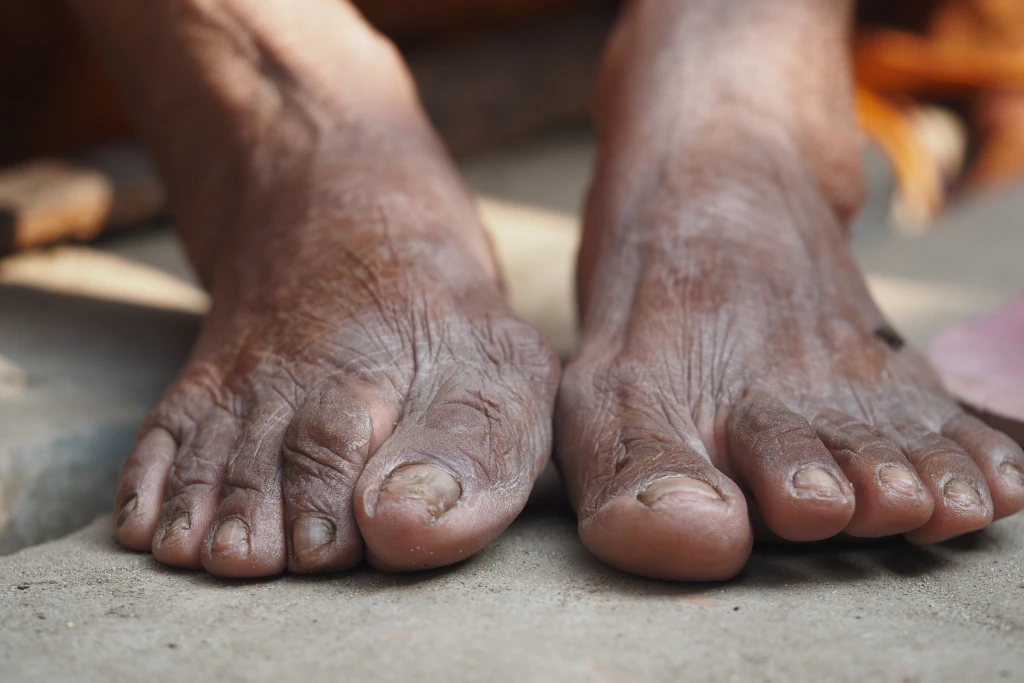
Sensation is one of the most important pieces of information in a diabetic foot consult. If sensation is reduced, the protective signal that would normally make you stop or change what you are doing is missing.
- You can feel the wound clearly and it hurts when you touch it. Sensation is largely intact, which is protective.
- You can feel pressure but not sharp pain. This is consistent with some diabetic neuropathy. The threshold for urgent assessment lowers.
- You cannot feel the wound at all. This is a higher-risk situation. Wounds in numb feet progress without warning and need formal assessment quickly, even when the wound itself looks small.
- You only noticed the wound because of a stain on a sock or a smell. Treat this with the same urgency as a wound you cannot feel.
The combination of a non-healing wound and reduced sensation is the classic high-risk pattern. Do not wait it out.
Question 4: What Does It Look Like
The visual picture matters. Use a mirror or get a household member to look if you cannot see the area easily.
Look at four things:
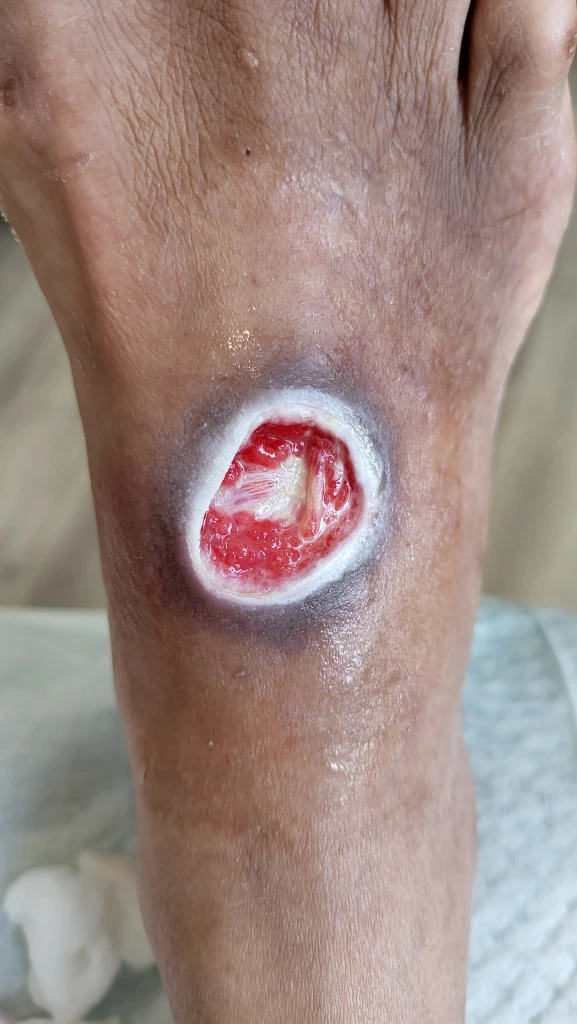
- Colour of the wound bed. Pink or red beefy tissue is the appearance of a healing wound. Yellow slough, grey tissue, or black eschar are signs of compromised tissue.
- Discharge. Clear or lightly straw-coloured fluid is normal in a healing wound. Cloudy, thick, green, or foul-smelling discharge points to infection.
- Surrounding skin. Healthy surrounding skin is the same colour as the rest of your foot. A halo of redness, a hardened ring, or dusky or bluish discolouration around the wound edge is a warning sign.
- Depth. A superficial wound sits within the top layers of skin. A wound where you can see deeper tissue, where you can probe to bone with a sterile cotton bud, or where the edges are undermined, is significantly more serious.
If any of these visual features are present, do not deal with the wound in isolation. The wound is a symptom of what is happening underneath.
Question 5: Is There Spreading Redness or Warmth
Look beyond the wound itself. Compare the affected foot to the other foot.
- A small halo of redness immediately around a wound is common.
- A spreading area of redness that extends more than a centimetre or two beyond the wound edge is a sign of infection that needs same-day attention.
- The affected foot feeling noticeably hotter than the other foot, or feeling tight, swollen, and shiny, also points to infection or deep tissue involvement.
- Red streaks tracking up the foot toward the ankle or leg are an emergency.
This is the question that most often shifts a wound from "book this week" to "book today" or "go to the emergency department now".
Question 6: Is Your Sugar Control On Track
Wound healing is significantly worse when blood sugar is poorly controlled. The wound is a symptom. The metabolic context is part of the picture.
- Recent HbA1c well controlled, blood sugars generally stable. Healing capacity is reasonable.
- HbA1c trending upward, frequent highs in the past few weeks, recent illness or infection. Healing capacity is reduced. The threshold for prompt assessment drops.
- You do not know your current HbA1c, or you have not seen your diabetes doctor in over a year. Treat this as the higher-risk picture.
If sugar control has slipped recently, mention this at the assessment. It changes how the wound is managed and how often it is reviewed.
The Urgency Decision: Book Today / Book This Week / Monitor
Use the answers above to settle the urgency call.
Book today if any of the following are true:
- Spreading redness or warmth around the wound, or red streaks tracking up the foot or leg.
- Foul-smelling, thick, or coloured discharge.
- Black eschar or grey tissue in the wound bed.
- You can probe to bone with a clean cotton bud.
- The wound is in a numb foot and you only noticed it through a sock stain or smell.
- Fever, chills, or feeling generally unwell alongside the wound.
For these features, a same-day podiatry assessment or hospital emergency department visit is appropriate.
Book this week if:
- The wound has been present for more than two weeks without clear improvement.
- The wound is under a callused weight-bearing area.
- Sensation in the foot is reduced.
- You have not had a diabetic foot screening in the last twelve months.
- Your sugar control has been off recently.
Monitor only if:
- The wound is small, less than 48 hours old, sensation is intact, the surrounding skin looks normal, and there is no spread.
- You have a clear baseline of good foot health and recent diabetic foot screening.
- You can re-check the wound daily and have a low threshold for booking an assessment if anything worsens.
If you are in any doubt, default to "book this week". Diabetic foot wounds rarely worsen because of an assessment that turned out to be over-cautious. They often worsen because of an assessment that did not happen.
Closing CTA
If your self-check has pointed you toward "book today" or "book this week", the next step is an in-person assessment. At Straits Podiatry our team manages diabetic foot wounds alongside diabetic foot screening and longer-term risk reduction. Book an appointment at the clinic that suits you.