
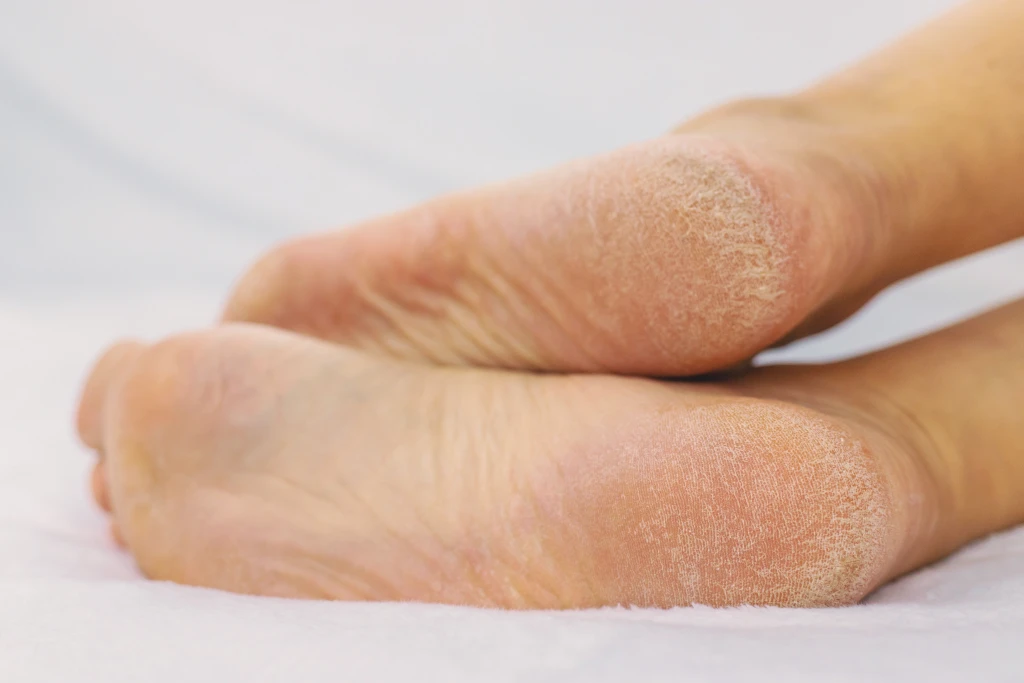
Most people in Singapore notice their cracked heel the same way. A snag on the bedsheet, a catch on a sock, a thin line of blood on the tile floor. The instinct is to reach for moisturiser and move on. Sometimes that is enough. Often it is not, because by the time the skin has split, the heel has been building up a callus for weeks. The fissure is the late stage of a problem that started earlier.
The question worth asking is not whether the crack is ugly, but whether it is telling you something about your foot, your footwear, and in some cases your overall health.
How a heel callus becomes a fissure (the mechanism)
A heel fissure does not appear out of nowhere. It is the final step in a sequence that begins with a heel callus.
When the rim of the heel is loaded repeatedly, from walking, standing, or open-back footwear that lets the heel pad splay outward, the skin lays down extra layers of keratin. On the heel, the geometry is the catch. The skin at the rim has to bend with every step, and thickened skin does not bend the way normal skin does. It is less elastic, more brittle, and prone to splitting under tension.
A fissure is what happens when the loading axis meets a callus that has run out of give. The skin parts along the line of least resistance, usually the back or inside edge of the heel. Shallow fissures stay in the dead layer. Deeper ones extend into living tissue, which is when bleeding, pain, and infection risk enter the picture.
The clinical point: the crack is the symptom, the callus is the underlying issue. Treating only the crack is why fissures come back in the same spot.
The humidity-and-tile-floor trap in Singapore homes
Most international guidance on cracked heels was written for dry climates. Singapore is the opposite. We sit at 70 to 90 percent humidity most of the year, which by the textbook should mean fewer dry-skin problems, not more. What changes that here is the mix of habits the climate encourages.
Open-back footwear is the norm. Slippers indoors, sandals to the kopitiam, slides to the void deck. Every open back lets the heel pad splay sideways, loading the rim where calluses build. Move into a covered shoe for work and the heel sits in a humid micro-climate that softens the surface but does nothing for the drier callus underneath.
Add the tile floor. Walking barefoot on hard tiles transfers no shock, and tile is abrasive in a way polished wood is not, which trains the skin to thicken further.
The Singapore pattern is a callus that is humid on the surface and dry deeper down, on a foot that gets little cushioning at home. It is a recipe for fissures that feel manageable for months and then split during a long walk or after a flight.
Home treatment that works (and home treatment that backfires)
Most cracked heels respond to consistent home care, but the order of operations matters.
What works:
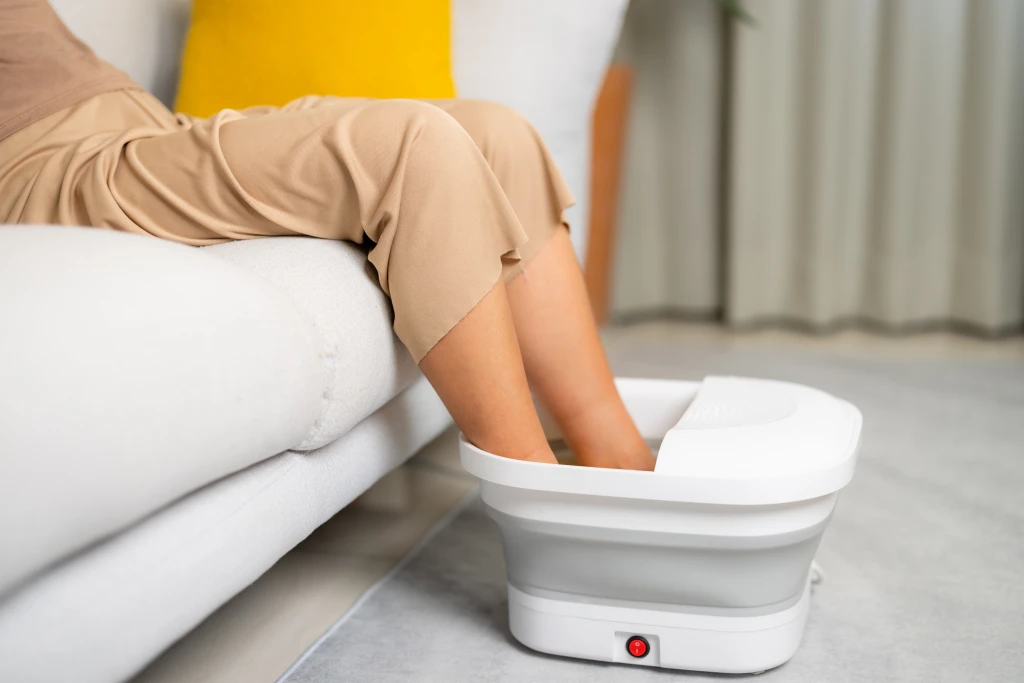
- Soften before you file. A 10 minute soak in warm water lets the keratin layer absorb moisture. Filing dry skin tears it. Filing softened skin smooths it.
- File with the grain. Light strokes across the callused area, stopping while the skin still feels firm. Thin the callus, do not remove it all.
- Use a humectant moisturiser, not a body lotion. A cream with urea (10 to 25 percent) or salicylic acid (around 6 percent) pulls water into the dead skin and breaks down the bonds between keratin cells. Apply at night and sleep in cotton socks so it stays in contact.
- Change one variable in your footwear. Add a closed-back slipper at home for two weeks, or swap slides for sandals with a heel strap. Even a partial change reduces daily loading on the rim.
What backfires:
- Razor blades, callus shavers, and salon shaving. The depth of dead skin is not visible from the surface. Cutting blind reaches living tissue without warning.
- Over-filing. Trains the skin to thicken faster, not slower. Twice a week is usually enough.
- Petroleum jelly alone. Seals the surface but does not rehydrate deeper layers. Useful as a top coat after a urea cream, not on its own.
- Hour-long soaks. Strip surrounding oils and leave the surface more prone to splitting.
Rule of thumb: if the heel improves steadily over two to three weeks, keep going. If it does not, or the crack is deep enough to bleed, home care has reached its limit.
When fissures become a diabetic-foot risk
For most people, a cracked heel is a comfort and cosmetic issue. For people with diabetes, peripheral neuropathy, peripheral vascular disease, or any condition that compromises skin healing, it is a different conversation.
Three things change with diabetes in the picture. Sensation may be reduced, so a deepening fissure does not always signal itself with pain. Blood supply to the skin may be diminished, slowing healing of a wound an otherwise healthy heel would close in a week. And the local environment carries higher infection risk, so a fissure that progresses to a wound can seed a deeper infection, in the worst cases on the path to a diabetic foot ulcer.
Signals to take seriously: any heel fissure that is bleeding, leaking fluid, surrounded by redness, warm to touch, or accompanied by a smell. In someone with diabetes, that is a foot that needs assessment.
If diabetes is part of your history, treat cracked heels as an early warning. Daily foot checks, immediate attention to any break in the skin, and a regular diabetic foot screening belong in the wider diabetic foot care picture.
What clinic-level care adds (debridement, urea creams, offloading)
There is a point at which home care stops moving the heel forward. The fissure keeps reopening, the callus is too thick to file safely, the heel is painful enough to change how you walk, or the medical context (diabetes, immune compromise, anticoagulant therapy) raises the stakes on any wound. That is the threshold for a podiatry assessment.
Three things shift in a clinic setting.
Debridement. A podiatrist uses a sterile scalpel under direct visual control to thin the callus to the point where the skin can flex without splitting. Faster and more controlled than home filing, and reaches a layer home tools cannot safely thin.
Targeted topical therapy. Over-the-counter creams sit at the lower end of the urea range. Clinic-grade formulations can use higher concentrations or combine urea with other keratolytics, matched to the heel.
Offloading. Most heels crack in the same spot for a reason: the heel strike pattern in gait, a thinning heel pad with age, footwear that lets the rim splay, or a leg-length difference loading one side more. A gait and footwear review identifies the pattern. The plan from there might include padded heel cups, footwear changes, or custom orthotics that redistribute pressure away from the rim. Treating only the surface, without offloading the cause, is why fissures recur on the same spot for years.
For most people, the gap between good home care and clinical care is narrow. For the ones who need clinic-level help, it is wide. Knowing which group you are in is most of the value.
If your heel keeps splitting in the same spot, bleeds, is painful enough to change how you walk, or you have diabetes or another condition that affects skin healing, that is the cue for an assessment. The wider story on foot calluses covers the build-up that drives most cracked heels. Speak to a podiatrist at the clinic closest to you in Buona Vista, Orchard, or Paya Lebar.