
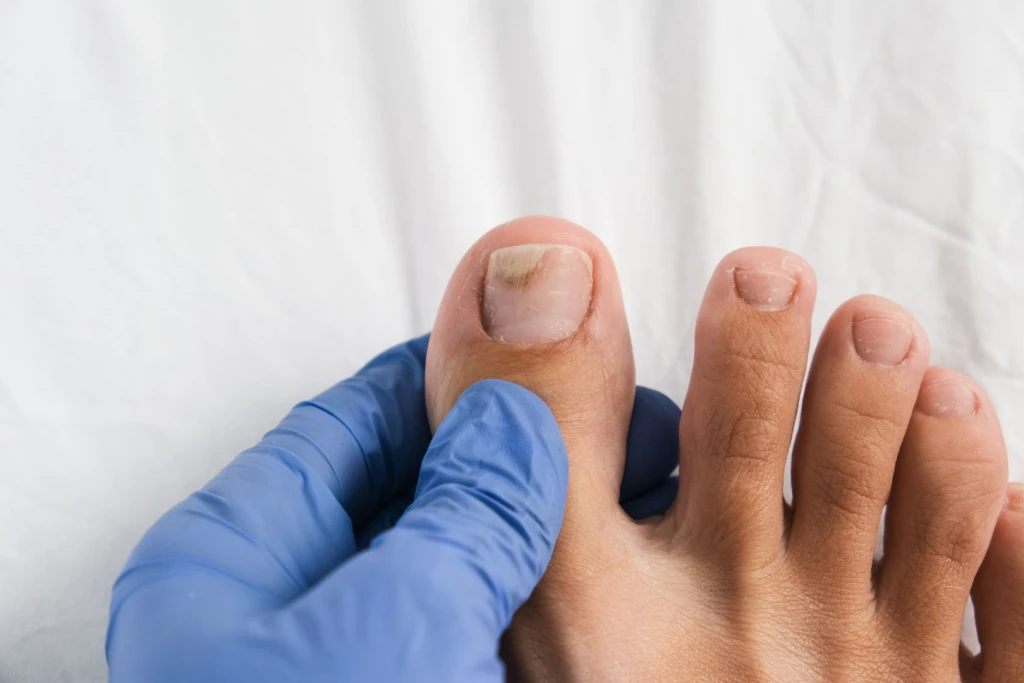
You notice one corner of a toenail looks different, paler than the rest, almost as if there is air behind it. When you press it, there is no pain, but the nail no longer feels stuck down the way it should. Catch it under a sock or run a fingertip along the free edge, and you can feel a small hollow. The nail has lifted off the skin beneath. Nothing hurt, nothing bled, and yet the nail is clearly coming away from the toe.
A toenail is meant to stay firmly bonded to the nail bed. The nail bed is the living skin underneath that anchors the nail plate and feeds it as it grows forward. When that bond breaks down and the hard nail plate detaches from the bed without falling off, the condition is called onycholysis. The separation usually starts at the free edge or a side corner and spreads back toward the base. It leaves a gap that traps air, moisture, and debris, and often looks white, yellow, greenish, or grey. Onycholysis is rarely the whole story on its own. It is the visible result of something acting on the nail. So the useful question is not just how to reattach the nail (it will not reattach) but what caused it to let go, because that is what decides whether the new nail grows back attached.
Symptoms of Onycholysis
Onycholysis tends to announce itself through how the nail looks and feels rather than through pain. That is part of why it is easy to ignore until the lifted area has spread.
- A nail that lifts away from the nail bed. This is the defining feature. The plate separates from the skin underneath, usually starting at the tip or a side and working back. Part of the nail is no longer attached.
- A colour change in the separated area. Where the nail has lifted, the gap traps air and debris. The nail looks white, yellow, grey, or sometimes green, in contrast to the pink of the still-attached portion.
- A visible or palpable gap under the free edge. You can often slide a fingernail or feel a hollow under the lifted part, and dirt or lint collects there.
- Little or no pain. The separation itself is usually painless, which distinguishes it from many other nail problems. Discomfort, if any, tends to come later if the exposed nail bed gets irritated or infected.
- A rough, thickened, or crumbly texture in the lifted portion. This is common when a fungal process or psoriasis is driving the separation.
- The free edge catching on socks or bedding. The loosened nail snags because it is no longer held flat against the toe.
- A faint odour or moisture under the nail. The warm, damp pocket under a lifted nail can harbour bacteria or fungus, especially in Singapore’s humidity.
The single most useful observation is that the separation is painless and the gap is hollow. A painful, throbbing, discoloured nail after a knock points more toward trapped blood than true onycholysis. That distinction shapes what happens next.
Causes of Onycholysis
Onycholysis is a shared end point that several very different processes can reach. The separation looks broadly similar whatever the trigger, so identifying the underlying driver is the part that actually changes management.
What Causes Onycholysis?
- Trauma and repeated micro-injury. Stubbing the toe, dropping something on it, or the slow grind of toes pressing into the front of a shoe can all break the nail-to-bed bond. A single blow or repeated jamming of the toe is one of the most common pathways. It shows up often in runners and people whose footwear is too short.
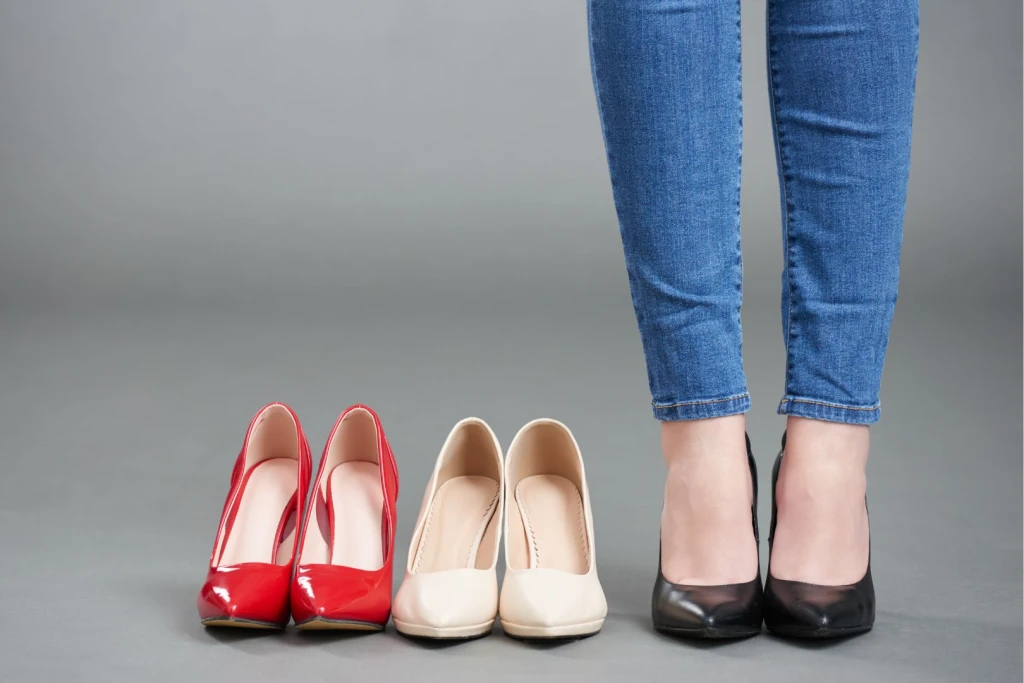
- Tight, narrow, or short footwear. Shoes that crowd the toes apply constant pressure and shear to the nail with every step. Over time this levers the plate off the bed, even without a single memorable injury.
- Moisture and prolonged dampness. Feet that stay sweaty or wet are common with closed shoes in a hot, humid climate. The damp softens the seal between nail and bed, which makes separation easier to start and harder to reverse.
- Fungal infection of the nail. When a fungal nail infection takes hold, it lifts and thickens the nail and fills the gap with crumbly debris. Onycholysis is frequently the first sign that fungus is present.
- Psoriasis affecting the nail. Nail psoriasis is a well-recognised cause. It often appears alongside pitting of the nail surface and an oily-looking discolouration at the edge of the lifted area. The nails can separate even when the skin elsewhere looks clear.
- Chemical and irritant exposure. Frequent contact with nail-product solvents, harsh cleaning agents, or prolonged water immersion can weaken the bond over time.
- Reaction to certain medications. Some medicines, including specific antibiotics, can make nails more sensitive to light and more prone to lifting. If several nails lift together, it is a pattern worth flagging to your doctor.
Who Carries a Higher Baseline Risk?
- People who run, hike, play court or field sports, or do anything that repeatedly drives the toes into the shoe.
- Anyone who habitually wears tight, narrow, or pointed footwear that crowds the toes.
- People whose feet are often damp, whether from heavy sweating, closed work shoes, or wet environments.
- Those with a personal or family history of psoriasis or other nail-affecting skin conditions.
- People with an existing fungal infection of the skin or nails, which can spread and lift a nail.
- Anyone whose hands or feet are frequently exposed to solvents, detergents, or prolonged water.
- People with reduced circulation or diabetes, where any nail change deserves earlier, closer attention.
Conditions Commonly Mistaken for Onycholysis
A lifting, discoloured toenail can look like several other nail problems. The management diverges sharply depending on which one it is. The point of distinguishing them is that onycholysis is the broad separation pattern. The conditions below either cause it, sit alongside it, or simply resemble it.
Subungual haematoma (toenail trauma)
When a single blow or repeated jamming of the toe traps blood under the nail, the result is a dark, often painful, throbbing nail rather than a painless hollow gap. The colour is the trapped blood, not air. A bruise like this can go on to lift the nail later. The early picture, though, is pressure and pain, which is the opposite of classic onycholysis.
Fungal nail infection
A fungal nail infection and onycholysis frequently appear together, which is part of the confusion. Fungus tends to thicken the nail and fill the space under it with crumbly yellow-brown debris. It is often slow and creeping. Onycholysis describes only the separation itself. A clinician’s task is to work out whether fungus is the cause of the lifting or an incidental finding.
Ingrown toenail
An ingrown toenail is a problem of a nail edge curving or pressing into the surrounding skin. It produces pain, redness, and swelling at the side of the toe. It does not involve the nail plate detaching from the bed across its surface. So the symptom pattern, pain at the fold rather than a painless hollow under the nail, tells the two apart.
Paronychia
Paronychia is inflammation or infection of the skin folds around the nail. It presents as a tender, red, sometimes swollen rim. Where onycholysis is a quiet separation of the plate, paronychia is an active, sore inflammation of the surrounding tissue. A long-standing case can still disturb how the nail attaches.
Subungual melanoma
Rarely, a dark streak or patch in the nail that develops without injury, spreads, or extends into the surrounding skin can signal subungual melanoma, a serious condition. Some pigment appears without a clear cause, behaves differently from a bruise, or fails to grow out with the nail. That should be assessed by a doctor promptly, as early diagnosis matters.
Treating and Preventing Onycholysis
Onycholysis is managed by accepting that the lifted portion will not stick back down, then doing two things in parallel. The first is keeping the separated nail clean, dry, and trimmed so the new nail can grow forward attached. The second is finding and addressing whatever caused the separation in the first place. The detached part grows out over months, so patience and consistency matter more than any single intervention.
Conservative care
For the nail itself, the priorities are reducing the snag risk and removing the warm, damp pocket where problems breed. Practical measures include:
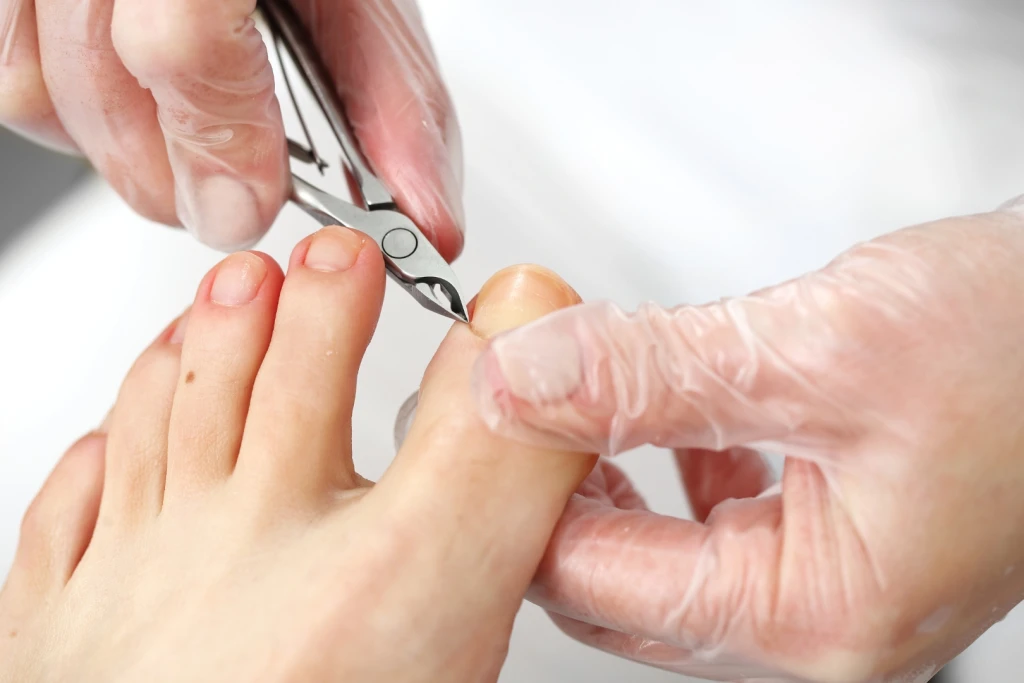
- Trimming the lifted portion back carefully to the point where it is still attached. This leaves less nail to catch and less space to trap debris.
- Keeping the area scrupulously dry. Dry between the toes after showering or sport, and change damp socks promptly, which matters in Singapore’s humidity.
- Avoiding picking at, prising, or aggressively cleaning under the lifted nail, which only extends the separation and risks introducing infection.
- Leaving the nail free of polish, glued tips, or hardeners while it recovers. These can trap moisture and irritants against an already compromised nail.
Addressing the cause is what stops it recurring once this nail grows out. Depending on what is found, that can mean:
- Reviewing and changing footwear so the toes have room and the nail is not levered by a short or narrow shoe. This is often the single most important change for trauma-driven cases.
- Treating an underlying fungal infection if assessment confirms one, so the new nail is not lifted by the same process.
- Managing nail psoriasis in coordination with a dermatologist or doctor where that is the driver, since the skin condition itself needs attention.
- Reducing chemical or prolonged-water exposure, and using gloves for wet or solvent-heavy tasks. Review any new medication with your doctor if several nails lift at once.
When to have it looked at
A lifting nail is worth a proper assessment in several situations. These include when more than one nail is involved, when there is thickening, crumbly debris, or a green tinge that suggests infection, when the separation keeps spreading or recurring, or when the surrounding skin becomes red, swollen, or painful. Anyone with diabetes or reduced circulation in the feet should have any nail change checked earlier rather than waiting. The margin for a small problem to become a bigger one is narrower there.
Have Your Onycholysis Assessed at Straits Podiatry
A toenail quietly lifting away from its bed is easy to live with and just as easy to misread. The cause is rarely obvious from looking at the nail alone. At Straits Podiatry, we can examine the nail and the bed beneath it. We can work out whether the separation is being driven by trauma, footwear, a fungal process, a skin condition like psoriasis, or a mix. We also look at how your feet load and how your shoes fit, so the same pattern does not simply repeat on the new nail.
Once the likely cause is clear, the plan is matched to it. This commonly includes podiatric nail care and debridement to tidy and thin the affected nail and clear the debris trapped underneath. It can also include a footwear and biomechanical review where pressure or shear is part of the picture, plus fungal assessment and, where confirmed, antifungal management to address an underlying infection. Where psoriasis or a medication reaction is involved, there is onward coordination with a doctor or dermatologist. Diabetic foot screening is offered where relevant for those who need closer monitoring. Speak with our team or book a consultation for an assessment and a tailored approach to manage your onycholysis.
Frequently Asked Questions About Onycholysis
Will my lifted toenail reattach to the nail bed?
The separated portion will not bond back down. Once a nail has lifted, that part stays detached and grows out over time. A new section grows forward from the base. The realistic goal is to keep the area clean and dry and to deal with whatever caused the lifting, so that the new nail growing in stays attached. For a toenail, full grow-out can take several months because toenails grow slowly.
How long does onycholysis take to grow out?
A toenail replaces itself slowly. The lifted area is gradually pushed forward and trimmed away over a span of months rather than weeks. The exact time depends on how far back the separation reaches and how quickly your nails grow. What matters more than the calendar is that the underlying cause has been addressed. If it has not, the new nail can lift in the same way as it comes through.
Is a lifting toenail a sign of fungus?
It can be, but not always. A fungal infection is one of the more common causes of onycholysis, and it often comes with thickening and crumbly debris under the nail. Yet trauma, tight shoes, moisture, and psoriasis can all lift a nail without any fungus present. Because the management differs, it is worth having the nail assessed. Assuming it is fungal and reaching for an antifungal may not be the answer.
Should I keep the lifted part of the nail trimmed or leave it alone?
Trimming the loose portion back carefully, to where the nail is still attached, usually helps. It reduces snagging and removes the pocket where moisture and debris collect. What is not advisable is prising the nail up, digging underneath, or cutting into the still-attached part, which can extend the separation and invite infection. If you are unsure how far is safe, a podiatrist can tidy the nail properly and show you how to manage it at home.
Can I still exercise or run with onycholysis?
Usually yes, with sensible adjustments. The main issue is footwear. Shoes that are too short or narrow are often what lifted the nail in the first place, and they will keep aggravating it. Roomier shoes that do not jam the toes, well-fitted socks that keep the foot dry, and keeping the loose nail trimmed all help. If running or sport keeps lifting the same nail, that is a strong signal to have your footwear and foot mechanics reviewed rather than pushing through.
When should I see a podiatrist about a lifting toenail?
It is worth being assessed in several situations. These include when more than one nail is affected, when there is thickening, discolouration, or debris that suggests infection, when the separation keeps spreading or returning, or when the toe becomes red, swollen, or painful. Anyone with diabetes or poor circulation should have any nail change looked at earlier. A podiatrist can identify the cause, manage the nail safely, and put steps in place so the new nail grows back attached.