
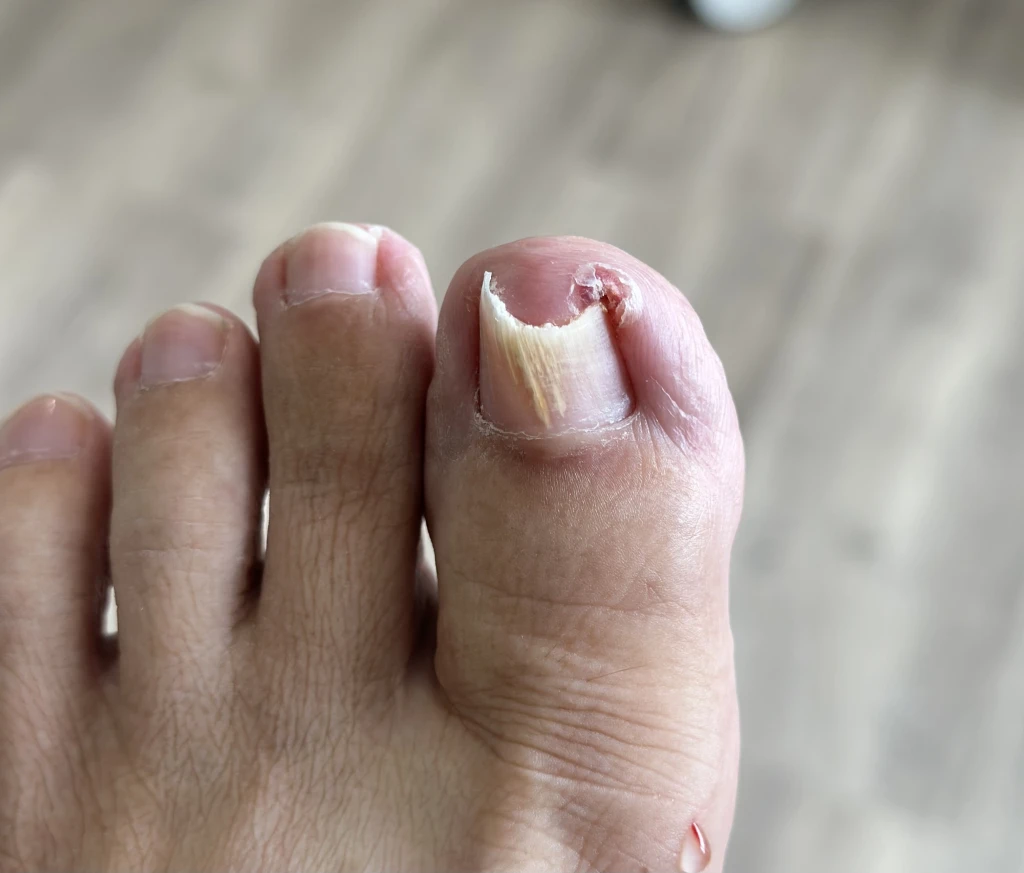
You can feel your big toenail aching by the end of a long day, a deep pinching soreness running down both sides of the nail rather than at one corner. The skin is not red or broken, and there is no pus. Nothing looks dramatic when you glance down. Yet pressing the top of the nail or wearing a firmer shoe sets off a tenderness that an ingrown nail never quite explained. Looking closely, the nail no longer sits flat. Its edges have curled downward into the flesh, so the nail is shaped more like a tube or a pinching clamp than a plate.
That curling is the defining feature of a pincer nail, also called an involuted toenail. A healthy toenail has a gentle, even transverse curve and grows forward over a flat nail bed. In a pincer nail the curvature becomes exaggerated, and crucially it tightens the further the nail grows. The free edge is more curved than the base. As the walls of the nail roll inward, they compress the nail bed and the soft tissue beneath. In long-standing cases the underlying bone and skin are slowly squeezed into the narrowing channel. The pain comes from that ongoing compression. This is why a pincer nail can hurt considerably while the skin stays intact, the detail that most often leads people to assume the problem must be something else.
Symptoms of Pincer Nail
The symptom pattern of a pincer nail is driven by compression rather than penetration. It tends to build gradually as the curvature tightens over months. The hallmark is pain on a nail that looks deceptively normal from above.
- Pinching pain down both sides of the nail. Soreness sits along the two side edges where the nail curls into the flesh, rather than at a single corner. Patients often describe a squeezing or clamping sensation.
- Pain that worsens with pressure on top of the nail. Pressing the nail plate, wearing firmer or narrower shoes, or kneeling and tucking the toes reproduces or intensifies the ache. Any downward load drives the curled walls deeper.
- A visibly over-curved or pinched nail. Viewed end-on, the nail looks tube-shaped, trumpet-shaped, or like an upside-down U. The edges roll toward each other instead of lying flat.
- Tenderness without redness or pus. Unlike an infected ingrown nail, the surrounding skin is usually intact and not inflamed. The toe can look unremarkable despite being genuinely sore.
- A narrowing nail bed. Over time the bed of skin beneath the nail appears squeezed and thinner. This sometimes lifts the sides of the nail away from the surface.
- Symptoms in both big toes. Pincer nails frequently develop symmetrically, affecting the same nail on both feet. This points away from a one-off injury and toward a structural or inherited tendency.
- Pain that escalates by the end of the day. The discomfort is often mild in the morning. It accumulates with hours of standing, walking, and footwear pressure.
The most useful early clue is the combination of genuine pain with skin that looks healthy. When a toenail hurts but is not red, broken, or weeping, over-curvature is one of the first things to examine.
Types of Pincer Nail
Pincer nails are usually grouped by what is driving the curvature. The underlying type guides how the nail is best managed.
Hereditary (developmental) pincer nail
The most common pattern, where an inherited tendency toward over-curvature shows up gradually through adulthood. It is frequently symmetrical, affecting both big toes, and tends to tighten slowly over years. There is no single triggering injury, which is part of why it is often missed.
Acquired pincer nail
Here the over-curvature develops in response to an external factor acting on a previously normal nail. Several forces can gradually pull the nail into a pinched shape. These include tight footwear, repeated pressure, certain medications, osteoarthritis changes in the toe joint, or a bony spur. A fungal nail infection can drive it too. As the infection thickens the nail and packs debris under the plate, that build-up pushes the nail upward and inward into a curl. Acquired pincer nails may be one-sided, following whichever toe carries the load or structural change.
Causes of Pincer Nail
Pincer nail curvature reflects a mismatch between the nail and the surface it grows over. In hereditary cases the tendency is built in. In acquired cases an external force progressively distorts the nail. Both pathways end in the same result, a nail that curls inward faster than it grows forward.
What Causes Pincer Nail?
- Inherited nail shape. The strongest single factor. Some people are simply born with a nail matrix that lays down an over-curved plate. The tendency becomes symptomatic as the curve tightens in adulthood.
- Tight or narrow footwear. Shoes that squeeze the sides of the toe over years can train the nail to roll inward. Pointed work shoes and narrow sports footwear, both common in Singapore, are typical culprits.
- Changes in the bone beneath the nail. Osteoarthritis, a bony spur (osteophyte), or widening of the bone tuft at the tip of the toe can lift and splay the nail bed. The nail edges are then forced to curl as they grow over an altered surface.
- Debris from a fungal nail infection. When a fungal nail thickens and packs debris beneath the plate, that build-up lifts and pushes the nail. Over time it can nudge the edges into an over-curve, so a long-standing fungal nail is one recognised driver of an acquired pincer nail.
- Repeated pressure or minor trauma. Activities that repeatedly load the toenail can shift the nail’s growth pattern toward over-curvature. An old injury that healed unevenly can do the same.
- Certain medications. Some drugs are recognised as influencing nail curvature in susceptible people, including beta-blockers and a number of cancer therapies.
- Nail bed conditions. Long-standing skin or nail changes under the plate can alter how the nail seats, nudging it toward a pinched shape.
Who Carries a Higher Baseline Risk?
- People with a family history of over-curved or pincer-shaped toenails.
- Adults in their middle and later years, as cumulative footwear pressure and joint changes add up over decades.
- Office workers and others who spend long hours in narrow, pointed, or firm shoes.
- People with osteoarthritis of the big toe joint or a known bony spur under the nail.
- Patients on long-term beta-blockers or certain cancer therapies that affect nail growth.
- Anyone with a previous significant toenail injury that changed the way the nail grows.
Conditions Commonly Mistaken for Pincer Nail
Because a pincer nail hurts without an obvious wound, it is regularly confused with other nail problems. The distinction matters because the management differs, and treating the wrong condition leaves the curvature untouched.
Ingrown toenail
The most frequent mix-up. An ingrown toenail occurs when a nail edge actually pierces or grows into the surrounding skin. This produces a break in the skin, localised redness, and often infection at one corner. A pincer nail compresses the nail bed without necessarily penetrating the skin. The pain runs down both sides, and the skin can stay intact. The two can overlap, since a severely curled pincer nail may eventually breach the skin. The starting problem, though, is over-curvature rather than a piercing edge.
Paronychia
Paronychia is an infection of the soft tissue alongside the nail. It is marked by warmth, swelling, redness, and sometimes a pocket of pus. A pincer nail produces a deeper, mechanical pinching pain with the skin typically looking normal. Where a pincer nail has worn the skin down enough to let bacteria in, paronychia can develop on top of it. The inflammation is then a secondary event.
Fungal nail infection
A fungal nail infection thickens and discolours the nail plate, turning it yellow, white, or brown and crumbly at the edges. A pincer nail, by contrast, keeps a relatively normal colour and texture but takes on an exaggerated inward curl. The two are easy to confuse, because a thickened fungal nail can feel sore under pressure. They are also genuinely linked. Debris packed under a fungal nail can push the plate up and inward, so a long-standing fungal infection is itself one of the drivers of an acquired pincer nail. That is why the assessment looks for fungal involvement rather than treating the two as entirely separate.
Subungual exostosis or trauma
Pain and lifting under the nail can also come from a bony spur at the tip of the toe. It can also follow an old nail-bed injury, such as a subungual haematoma that left the nail growing unevenly. These can sit alongside a pincer nail. In fact a bony spur is one recognised driver of acquired over-curvature, so the assessment looks for both.
Treating and Preventing Pincer Nail
Pincer nail care works on the curvature itself, not just the symptoms it produces. The principle is to reduce the inward roll of the nail and take pressure off the compressed nail bed. It also means removing whatever is driving the over-curvature so it does not simply return. Most cases are managed without surgery, and the gentlest effective option is usually the first choice.
Conservative treatment
-
Nail bracing to reshape the curvature. For pincer nails specifically, nail bracing is often the centrepiece of care. A thin composite brace is bonded flat across the nail, and rather than pulling on it, it guides the over-curved plate to grow into a flatter shape as the nail moves forward. It works with the nail’s natural growth rather than removing tissue. That suits a problem that is fundamentally about shape. It is a slow process that follows the growth of the nail, and the brace is replaced over a series of visits.
Bracing does have limits worth knowing up front. It suits a nail that over-curves toward the middle and the free edge, where the brace has enough plate to act on. A nail that curls tightly all the way down to the root gives the brace little to hold, so reshaping is unlikely to hold there. In that pattern a partial nail avulsion is the more reliable option.
-
Footwear and pressure modification. Switching to shoes with a wider, deeper toe box removes the side-to-side squeeze that aggravates the curl. This matters in a climate where many people alternate between firm office shoes and tight sports footwear. Reducing repeated pressure on the nail gives the bed a chance to settle. This includes how the toes are loaded during exercise.
-
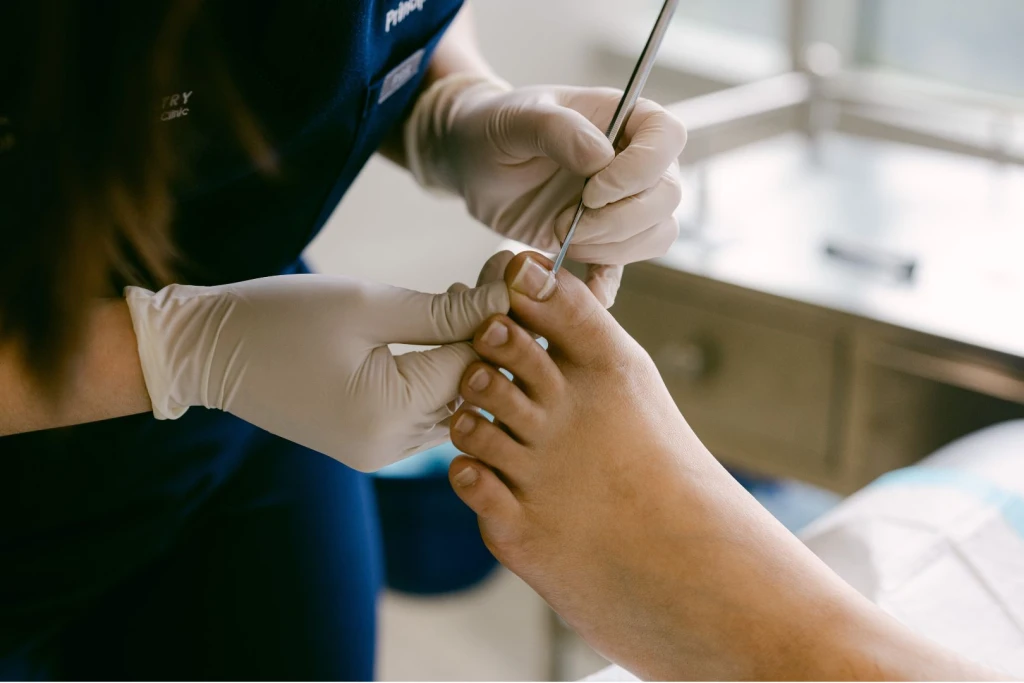
Nail-care guidance. A few habits help prevent the curvature from worsening or breaking the skin. Cut the nail straight across rather than rounding or digging at the corners. Keep the edges free without forcing them, and avoid aggressive home tools. A podiatrist can clear and reduce the curled edges in clinic to relieve the immediate pinching. This buys time while the longer-term plan takes effect.
When conservative care isn’t enough
Where the over-curvature is severe, painful despite bracing, or repeatedly breaches the skin, a more definitive nail procedure is considered. A partial nail avulsion removes the over-curved side portion of the nail. The aim is to stop that segment regrowing in the same shape. To achieve this, the matrix at that edge can be treated too. This is a considered step rather than a first move, decided after the conservative options have been weighed. It is reserved for nails where reshaping alone will not hold.
Have Your Pincer Nail Assessed at Straits Podiatry
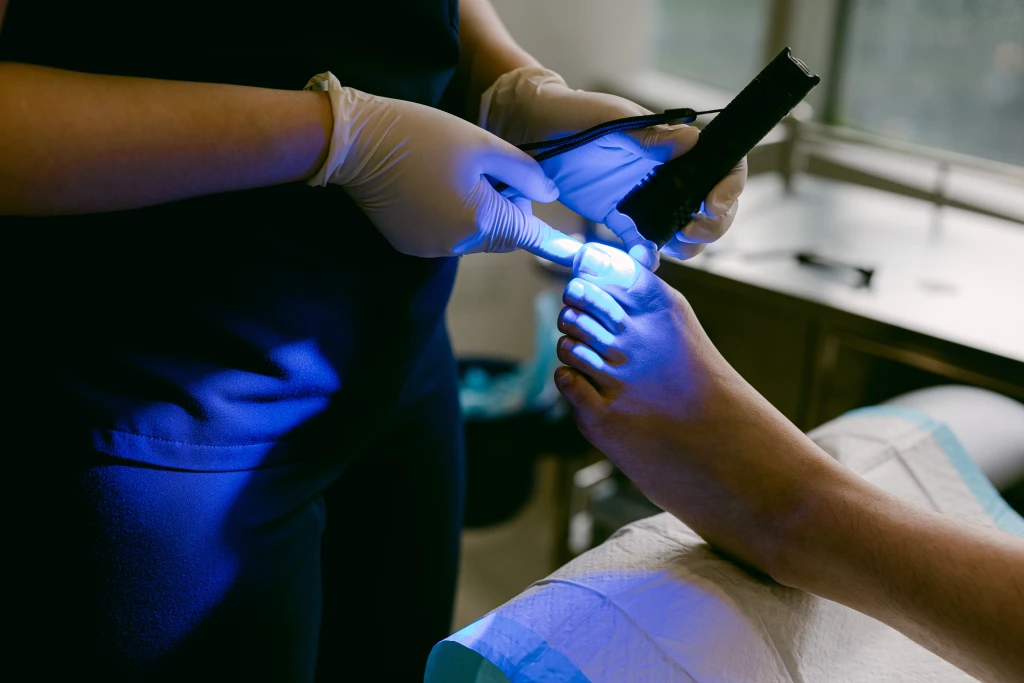
A pincer nail is easy to live with for too long, because the toe rarely looks alarming and the pain builds slowly enough to seem normal. The difficulty is that over-curvature tends to tighten with time. A nail that is a mild nuisance now can become a daily compression later. The longer it runs, the harder the shape is to coax back. At Straits Podiatry, an assessment for a suspected pincer nail looks at the degree and direction of the curvature. It checks whether the skin has been breached and the state of the nail bed. Any bony change beneath the nail is noted, along with the footwear and activity patterns feeding the problem.
From that assessment, a management plan is built around the cause and severity of the curvature. For most pincer nails this centres on nail bracing to reshape the over-curved plate. Footwear and nail-care guidance take pressure off the bed. Partial nail avulsion is held in reserve for severe or recurrent cases where reshaping alone will not settle it. Speak with our team or book a consultation for an assessment and a tailored approach to manage your pincer nail.
Frequently Asked Questions About Pincer Nail
How is a pincer nail different from an ingrown toenail?
The difference is whether the skin is pierced. An ingrown toenail has a nail edge growing into and breaking the surrounding skin. This is why it typically produces redness, a wound, and often infection at one corner. A pincer nail is over-curved and compresses the nail bed from both sides. It can be genuinely painful while the skin stays intact and the toe looks relatively normal. They can overlap, because a severely curled pincer nail may eventually breach the skin. The underlying problem, though, is the nail’s shape rather than a piercing edge.
Can a pincer nail be corrected without surgery?
Often, yes, but it depends on where the curve sits. Nail bracing works by bonding a thin composite brace flat onto the nail, which guides it to grow into a flatter shape as it moves forward, without removing any tissue and without pulling on the nail. It works well when the over-curvature is in the mid-section or toward the free edge, where the brace has enough plate to act on. Paired with wider footwear and correct nail-cutting technique, that addresses the curvature directly, which is why bracing is usually the first approach. Where the nail is curled tightly all the way down to the root, the brace has little to grip and is unlikely to hold. A partial nail avulsion, which removes the over-curved side portion, then becomes the more reliable option. The same applies to nails that keep breaking the skin despite reshaping.
Why does my toenail hurt when there is nothing visibly wrong?
This is the most characteristic feature of a pincer nail. The pain comes from the curled walls of the nail squeezing the nail bed and the soft tissue beneath. This compression happens under the nail rather than at the visible skin surface. Because nothing has broken through the skin, the toe can look healthy from above. It can still ache under pressure or by the end of the day. A toenail that hurts but is not red, broken, or weeping is worth having examined for over-curvature.
Does footwear cause pincer nails?
Footwear is one contributor rather than the whole story. Many pincer nails have a strong inherited component, where the nail is predisposed to over-curve regardless of shoes. Tight, narrow, or pointed footwear can still aggravate that tendency. Over years, it can also help drive an acquired pincer nail by squeezing the sides of the toe. Switching to a wider, deeper toe box does not undo an established curve on its own. It does remove a force that keeps worsening it, and it supports any reshaping work.
Will a pincer nail get worse if I leave it?
Over-curvature usually tightens gradually over time rather than staying static. The free edge tends to curl more than the base, so a mild pinch can become a more constant daily compression. Left long enough, a severe pincer nail can squeeze the nail bed and surrounding tissue enough to start breaking the skin. This then invites infection and complicates what would have been straightforward reshaping. Addressing the curvature earlier, while it is still flexible, generally makes it easier to manage.
Should I see a podiatrist or a GP for a pincer nail?
A GP can help if a pincer nail has become infected and needs antibiotics. For the curvature itself, a podiatrist is better placed, because the core of the problem is the nail’s shape and the way it loads the bed. A podiatrist can assess the degree of curvature, fit and adjust a nail brace, and clear the curled edges to relieve the pinching. They can also advise on footwear and nail care, and consider a nail procedure if reshaping is not enough. A podiatry assessment examines the nail shape, the bed, and any contributing footwear or bony change together in one consultation.