
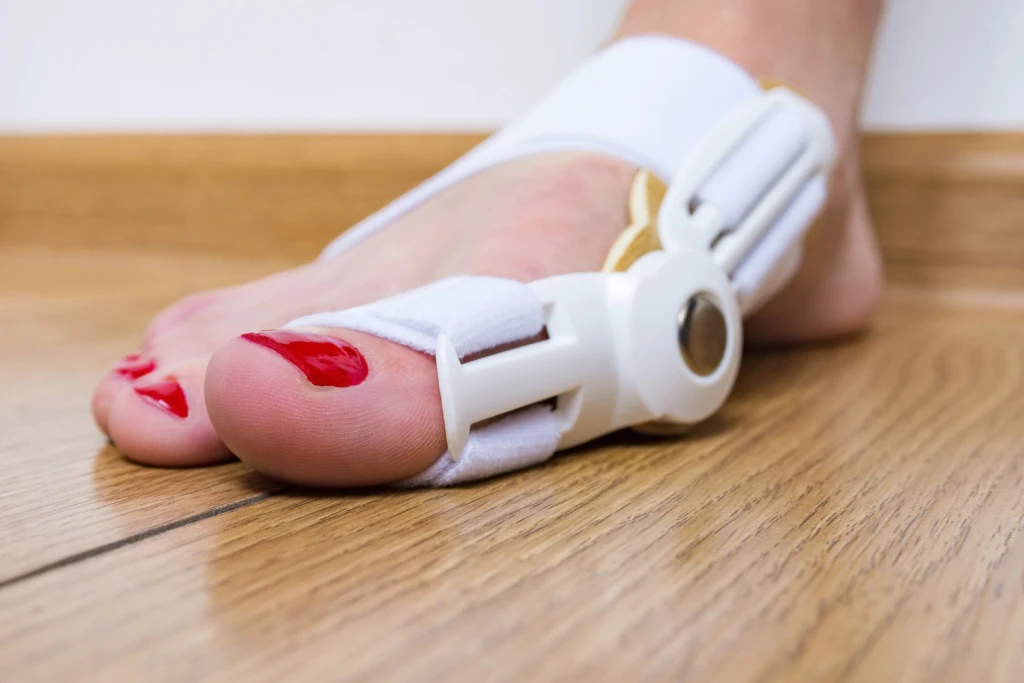
Almost every patient who comes in about a bunion has already bought a corrector online, or is about to. It is usually the first thing people reach for, and I understand why, because the before-and-after photos look convincing and the device is cheap. So I will be as straight with you here as I am in clinic. A bunion corrector will not straighten your bunion.
That is not me being dismissive. It is that a bunion is a structural change in the joint, and there is only one proven way to actually correct that structure. To help you make an informed decision before you get one, here is what the various devices can and cannot do, where a splint is genuinely useful, and what actually helps to keep a bunion from getting worse.
Do bunion correctors actually straighten a bunion?
No. A bunion corrector does not straighten or reverse a bunion, and no good-quality study has ever shown that it can. The only proven way to correct the structural deformity of a bunion is surgery. A landmark randomised trial found that surgery realigned the joint, whereas a wearable device did not correct the deformity at all. [1] Later evidence reviews reach the same conclusion: non-surgical options can ease symptoms, but they do not straighten the joint. [2]
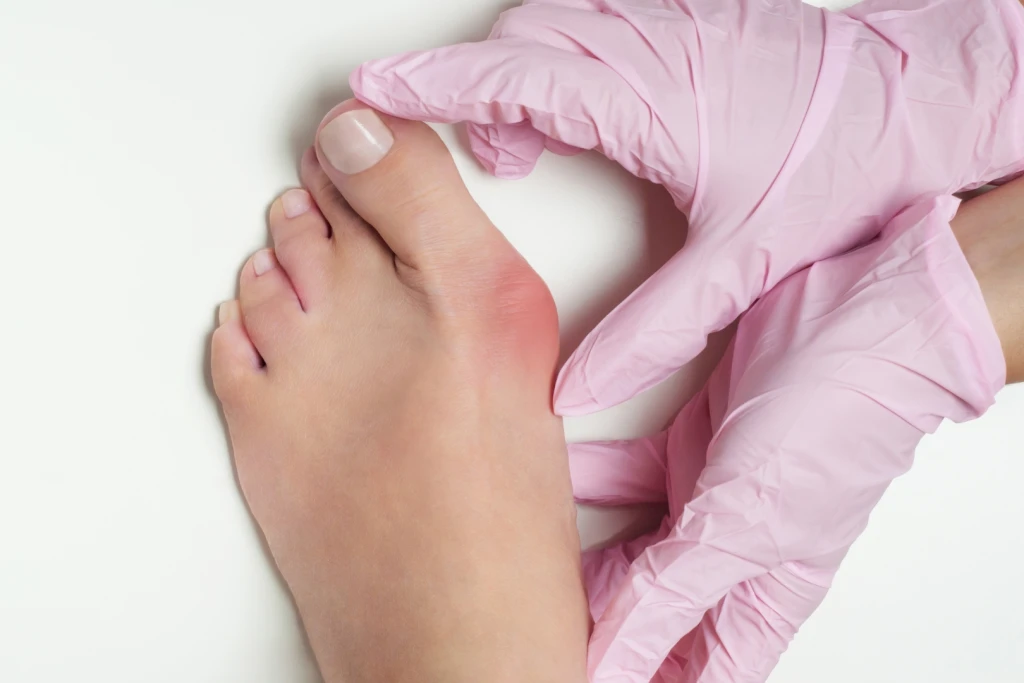
The reason is simple. A bunion is not a soft, bendy thing that will mould back into place if you hold it straight for long enough. It is a joint that has drifted out of alignment because of how load travels through the foot. The dramatic before-and-after images you see are usually the same foot photographed from a different angle, or edited to look straighter, to make the sale. If a device could truly realign a bunion, we would prescribe it and skip surgery altogether.
What each type of device actually does
Not everything sold for bunions is the same, and a couple of them do have a small, honest role. None of them corrects the bunion.
- Rigid hinged “correctors”: These are the ones marketed as the real fix. They do not correct the bunion. They do have one legitimate overnight use, which I explain below.
- Bunion sleeves and cushions: These protect the bump from rubbing against the shoe, so they can reduce blistering, redness, and soreness over the bunion. The catch is that a sleeve takes up room inside the shoe, which can make a snug shoe tighter and defeat the purpose. Often, simply switching to a wider pair of shoes solves the same problem without the sleeve.
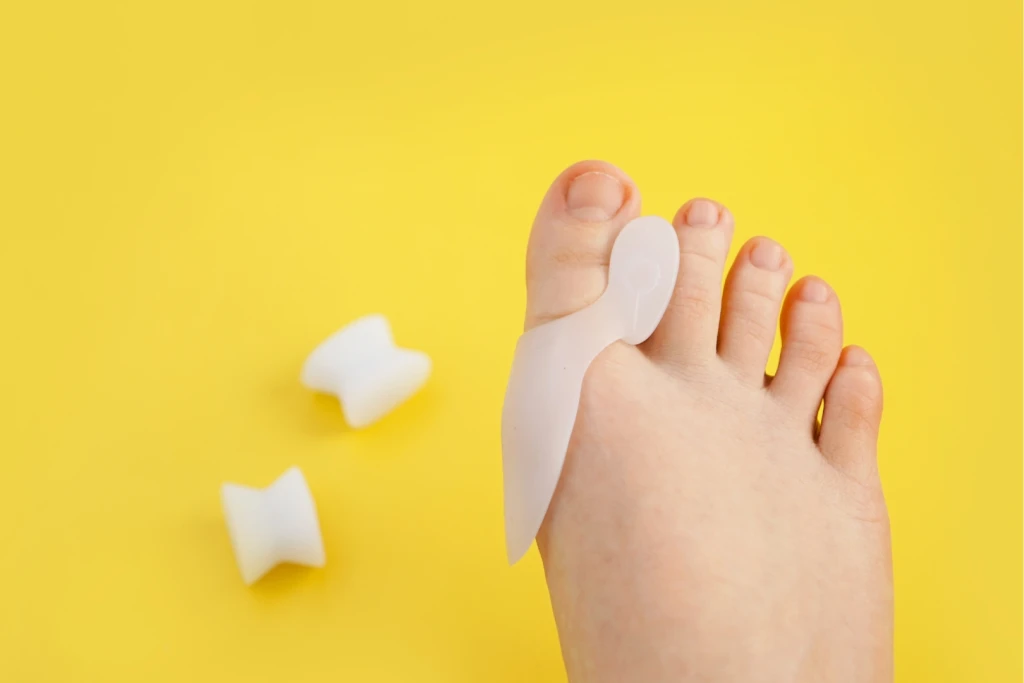
- Toe spacers and separators: Their one real job is to keep the big toe and second toe apart. That genuinely helps when the big toe has deviated so far that it presses on the second toe and causes a corn, a callus, or pain in between. Keeping them separated reduces that pressure and friction. They also tend to slip out of place once you start walking, which many people find fiddly.
Is a bunion splint good for anything?
Yes, with one specific and limited use. A bunion splint will not correct the joint, but it can provide real pain relief when the pain is coming from the stretched ligaments and soft tissue on the inner side of the joint. Resting those tissues in a splint overnight can let them settle, so you wake up more comfortable.
Two important cautions. First, you should never walk in a bunion splint. Forcing the toe straight while you are loading it can aggravate the joint and cause more harm, not less. Second, a splint does nothing for the biomechanical reason the bunion formed in the first place. Bunions develop because of how the joint is loaded during movement, often linked to flat feet or the way the foot pronates. Holding the toe straight at night without addressing that underlying loading will not stop the bunion progressing, and if your pain is actually coming from the top of the joint (a dorsal impingement) rather than the inner side, a splint will barely touch it.
Do they work better for children or milder bunions?
No, there is no difference. A corrector does not do more for a child, a teenager, or an early bunion than it does for an established one. To stop a bunion getting worse, the place to start is identifying the biomechanical issue driving it and being honest about the shoes you wear, not strapping the toe into a device.
The mistakes I see most
The trouble is rarely the device itself. It is what people expect from it.
- Most people wear a corrector because of the promise of correction. They wear it religiously, often too tightly, and end up creating more pain and discomfort before they come in for help. I have seen bad blisters and swollen joints from people wearing them far too hard.
- Some buy one because a friend recommended it, when the friend does not even have a bunion.
- Some are talked into it by a salesperson who “proves” it is working by photographing the bunion from a flattering angle so it looks straighter.
- And the real cost is not the device, it is the months of delay. Time spent waiting for a corrector to work is time the bunion keeps progressing and the pain keeps building, when an assessment could have started something that actually helps.
What actually helps a bunion
There is only one way to correct a bunion, and that is surgery, which is considered when pain limits daily life. Everything else is about controlling the pain and slowing the progression, and done well, that is worth a great deal. In practice that means a combination of customised insoles designed around the specific biomechanical factors driving your bunion, intrinsic foot muscle strengthening, and proper supportive footwear. Which of these matters most depends on what an assessment finds is driving your bunion.
Why you see so many bunion correctors in Singapore
Online shopping is so easy here, and these products face very little control and regulations, so correctors are advertised aggressively, often with doctored before-and-after photos, and priced low enough that people buy on impulse without checking whether any of it is true. Most of my patients bought theirs on Shopee or Lazada, and they usually only come in once the pain has grown, or once they have realised the money was spent for nothing. If that is where you are, you have not done anything wrong. You have just been sold a promise the product cannot keep.
If a corrector has not helped, or your bunion is becoming more painful or harder to fit into shoes, the more useful step is to find out what is actually driving it. Book a consultation with any of our podiatrists in Singapore for an assessment of the bunion and the mechanics behind it, and honest advice on what will and will not help.
Frequently Asked Questions About Bunion Correctors
Do bunion correctors actually straighten your toe?
No. A bunion corrector does not straighten the toe or realign the joint, and no good-quality study has shown that it can. A bunion is a structural change in the joint, and the only proven way to correct that structure is surgery. Devices can ease symptoms, but they do not reverse the deformity.
Are bunion correctors a waste of money if I want to fix my bunion?
If your goal is to actually correct the bunion, then yes, a corrector will not do it. Some devices have a smaller, honest use, a splint for overnight relief of inner-joint soreness, a sleeve to stop the bump rubbing, or a toe spacer to keep the big toe off the second toe, but none of these change the underlying deformity.
Can I wear a bunion splint while walking?
No. A bunion splint is for resting the joint, usually overnight. Walking in one forces the toe straight while the joint is loaded, which can aggravate it and cause more harm. It also does nothing about the biomechanics that caused the bunion.
What actually helps a bunion if correctors do not?
Surgery is the only way to correct the deformity, and it is considered when pain limits daily life. Short of that, the aim is to reduce pain and slow progression with customised insoles built around your foot mechanics, foot muscle strengthening, and supportive, roomy footwear. An assessment identifies which of these applies to you.
References
- Torkki M, Malmivaara A, Seitsalo S, et al. Surgery vs orthosis vs watchful waiting for hallux valgus: a randomized controlled trial. JAMA. 2001;285(19):2474-2480. doi:10.1001/jama.285.19.2474.
- Hurn SE, Matthews BG, Munteanu SE, Menz HB. Effectiveness of nonsurgical interventions for hallux valgus: a systematic review and meta-analysis. Arthritis Care Res (Hoboken). 2022;74(10):1676-1688. doi:10.1002/acr.24603.