
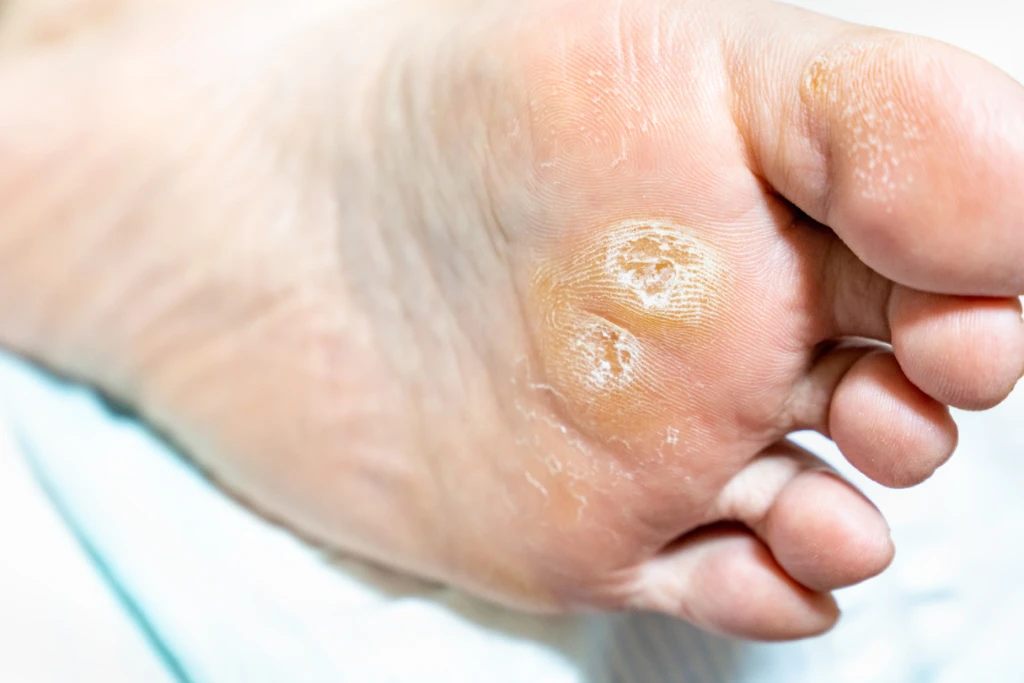
If you keep getting a foot callus in the same spot, no matter how often you file it down, your foot is trying to tell you something. A callus is thickened skin, and it forms where there is too much pressure and load on one area. When it comes back to exactly the same place every time, that is not bad luck. It means the pressure on that spot has never gone away.
The good news is that the location of a recurring callus is one of the most useful clues I get in clinic. Where it sits tells me a lot about how your foot is loading as you walk, and that is what decides how to stop it coming back. Here is how I read it, along with the signs that a callus needs more than a trim.
Why your callus keeps coming back after you shave it
Shaving or filing a callus removes the dead, thickened skin, and that brings immediate relief. The trouble is that it does nothing about why the skin thickened in the first place.
Your skin thickens to protect itself from repeated pressure. If the way you walk and the pressure on that spot stay the same, your body simply responds the same way again and rebuilds the callus. That is why most people find it is back within a couple of months, even after a thorough shave.
So the callus is not really the problem. It is the result of the problem. To stop it recurring, you have to find where the extra pressure is coming from and reduce it.
What the location of your callus says about how you walk
Different foot types overload different parts of the foot, so a recurring callus tends to show up in a predictable place for each one.
A callus under the second toe or on the side of the big toe
This is the pattern I see a lot in people with flat feet. Ideally, the big toe joint takes a large share of the load as you push off. When the foot rolls in and loads inefficiently, that load shifts across to the ball of the foot under the second toe, and sometimes onto the side of the big toe instead. The skin there thickens in response.
A callus on the tips of the smaller toes
When the toes are bent and curled, as with claw toes or hammer toes, the tips of the smaller toes press down into the ground or the shoe with every step. Those tips become pressure points, and calluses build up right at the end of the toes.
A callus around the little toe or the outer edge of the foot
High arches work the other way around. A high-arched foot tends to put more of its load through the outside of the foot, so the thickening shows up around the fifth toe and over the bony bump on the outer edge of the foot (the styloid process, at the base of the fifth metatarsal).
Footwear plays into all of these. A shoe that is too narrow, too loose or not supportive enough can add to the pressure in exactly the area your foot type already overloads.
When a recurring callus is a red flag
Most calluses are a nuisance rather than a danger. There are two situations where I look more carefully.
A thick, painful callus with white, soggy skin underneath. When a callus is very thick and painful, shaving it down sometimes reveals macerated, white tissue beneath it. That means the skin underneath is starting to break down from too much pressure, and it can go on to form an ulcer. This is especially common in people with diabetes who have reduced feeling in their feet, from diabetic neuropathy. Because they cannot feel how thick the callus has become, the pressure keeps building until the skin breaks down into a diabetic foot ulcer. If you have diabetes, a recurring callus is something to have looked at regularly, not to manage on your own.
A wart hiding under the callus. A wart can cause quite a bit of thickening around it, so it can look like an ordinary callus at first. When we shave down a plantar wart, it shows a cauliflower-like surface with small black spots, and it often starts to bleed. A callus does not, and those same clues are how we tell plantar warts, corns and calluses apart, which matters because each needs very different care.
How to stop a callus coming back in the same spot
Stopping a callus from recurring means taking the pressure off the spot that keeps thickening. That usually comes down to a few things, in this order.
- Footwear first. I start by checking that your shoes give enough support and are not overloading the area where the callus forms.
- Padding to offload the area. A metatarsal pad can reduce the pressure on the ball of the foot, which is often where recurring calluses sit.
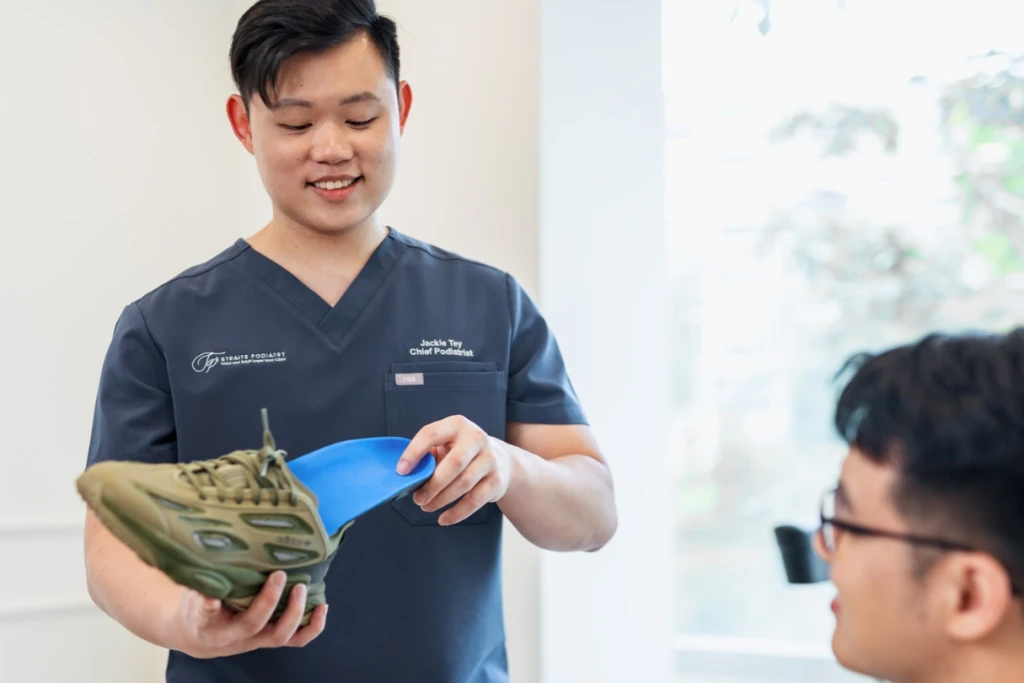
- Custom insoles where the foot mechanics are the driver. Custom foot orthoses can offload the foot properly. For example, a full custom insole that controls the rolling-in of a flat foot reduces the pressure under the second toe, which is what keeps rebuilding the callus there.
Removing the existing callus still has its place. Having it carefully reduced by a podiatrist relieves the discomfort straight away. But on its own it is only the short-term half of the job. The offloading is what stops you coming back for the same callus every couple of months.
Corns follow the same logic. A corn is a more concentrated version of the same pressure problem, which is why foot corns keep coming back for the same reason when the pressure behind them is left alone.
The mistakes people make with a callus that keeps coming back
The most common one is wanting an easy way out and shaving the callus down at home. It is understandable, but if it is not done properly, it can cut the skin and lead to an infection or a wound that does not heal nicely. That risk is much higher if you have diabetes or poor circulation.
The other is reaching for corn plasters. Many of them contain salicylic acid, which works by breaking down skin. Used for too long, it can cause a chemical burn around the area and leave you with a wound that is far more trouble than the callus was.
What I would do about a callus that keeps coming back
If a callus keeps returning to the same spot, start by looking at where it sits. Under the second toe or the side of the big toe points towards a flat foot loading inefficiently. On the tips of the toes points towards curled toes. Around the little toe or the outer edge of the foot points towards a high arch. In every case, the callus is the sign, and the pressure is the cause.
When you see a podiatrist, the assessment looks at where the callus is, how your foot lands and rolls as you walk, and whether your footwear is adding to the pressure. The callus can be reduced there and then for relief, and the plan to stop it recurring is built around offloading that spot, whether that means changing your shoes, adding padding or using custom insoles.
If you are tired of the same callus coming back, book a consultation with any of our podiatrists in Singapore.
Frequently Asked Questions About a Callus That Keeps Coming Back
Why does my callus come back even after a podiatrist removes it?
Because removing the callus takes away the thickened skin, not the pressure that caused it. If your foot posture, the way you walk or your shoes keep overloading that spot, the skin thickens again to protect itself. Offloading the area with the right footwear, padding or custom insoles is what stops it returning.
Is it safe to shave my own calluses at home?
It is not recommended. Shaving a callus yourself can easily cut the skin, which can lead to an infection or a wound that is slow to heal. If you have diabetes or poor circulation, do not shave or cut calluses yourself at all. Have them reduced by a podiatrist instead.
Can a callus turn into an ulcer?
Yes, it can. Under a very thick callus, the skin can start to break down from the constant pressure, turning white and soggy, and this can progress to an ulcer. It is most common in people with diabetes who have reduced feeling in their feet, which is why a recurring callus in a diabetic foot should be checked regularly.
How do I know if it is a wart and not a callus?
A wart often has a cauliflower-like surface and small black spots, and it tends to bleed when it is shaved down. A callus is smooth, even thickened skin with no black spots. If you are unsure, have it looked at before treating it, because a wart and a callus need very different care.
