
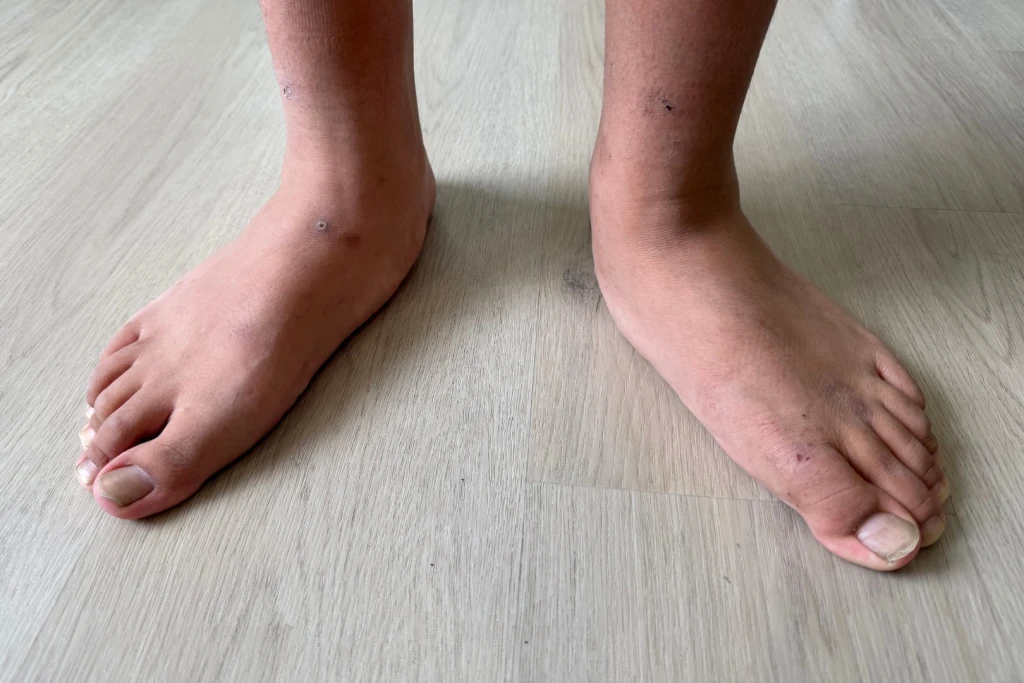
Flat feet exercises are all over the internet, and most of them are sold on a promise they cannot keep. Let me start with the honest part, because I have skin in this game. I have flat feet myself, and no amount of exercise has ever given me an arch. If you have been told that the right routine will rebuild your arch and fix your flat feet, I want to gently correct that, because it is one of the most common pieces of misinformation I see, and it usually comes from people who have never had a flat foot themselves.
Can exercises fix flat feet?
No, not in the sense most people mean. Exercises will not give you a new arch or structurally correct a flat foot. To be fair to the science, some studies do show that foot strengthening, especially the arch-doming (short-foot) exercise, can produce a modest improvement in arch posture measures in flexible flat feet. But those changes are small, often measured only in a static position, and they are a long way from a rebuilt, permanent arch. None of it applies to a rigid flat foot.
So if the goal is to grow an arch, exercise is not the answer, and no routine on the internet changes that.
If exercises can’t fix it, why bother strengthening?
Because strengthening does something genuinely valuable, just not what people think. Flat feet throw off the ideal alignment of the foot, and that puts extra strain on the joints and tendons. Strengthening the intrinsic foot muscles builds the foot’s tolerance to that load, which raises your resistance to injury. That is the real prize. A stronger foot copes better with the demands you place on it.
This is also where support earns its place alongside exercise. Where strengthening builds tolerance, a well-designed orthotic improves the alignment of the foot, which reduces the stress on the structure in the first place. The two work on different parts of the same problem. Put strengthening, appropriate footwear, and orthotics together, and you can withstand higher loads and take on higher-impact activity with a lower risk of injury. The evidence points the same way. A review of intrinsic foot muscle strengthening in adults with flatfoot found it improves foot posture and muscle function, and separate trials show exercise and arch-support insoles working well together.
Flexible or rigid? It changes everything
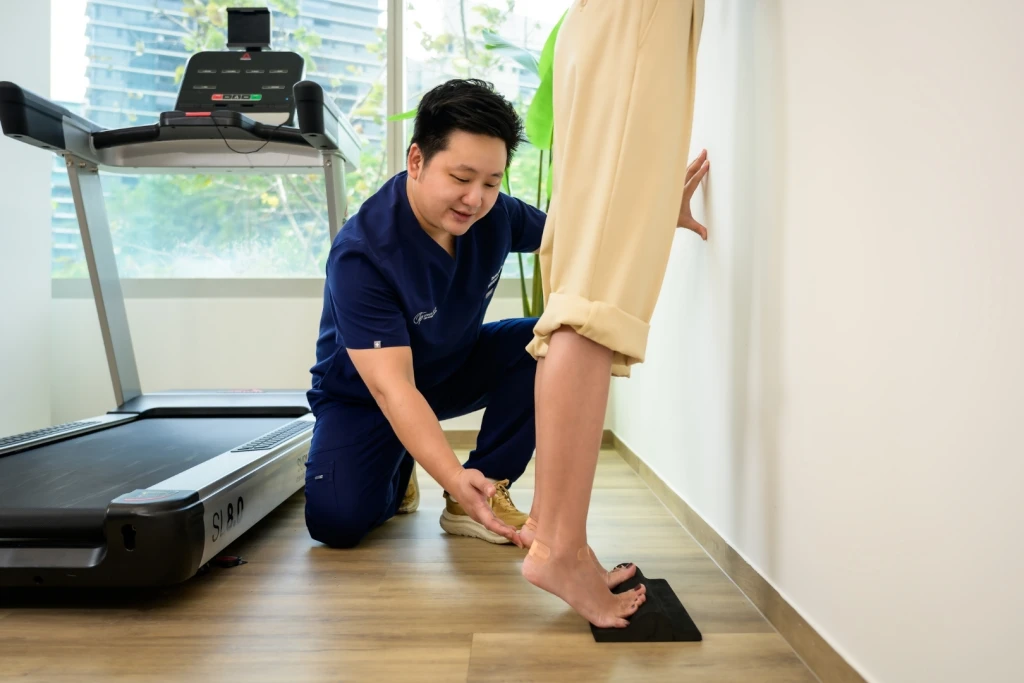
Before you start exercising a flat foot, it is worth knowing which kind you have, because it changes what you should do. A flexible flat foot has an arch that appears when you are off your feet or on tiptoe and flattens when you stand. A rigid flat foot stays flat regardless. Exercises correct neither, but a rigid flat foot needs more urgent attention and sometimes a surgical approach, which is not something you should be quietly exercising at home. The one exception is a rigid flat foot from chronic, late-stage posterior tibial tendon dysfunction, where support such as an orthotic or an ankle-foot orthosis matters more, to preserve mobility.
Should you exercise, or get checked first?
Almost anyone with flat feet benefits from strengthening, so this is not a warning against exercise. It is about sequence. Here is the rule of thumb I give patients:
- Flat feet with no pain: you can safely work on strengthening your foot and lower limb muscles, and decide over time whether you want to be assessed or fitted with orthotics as a preventive measure.
- Flat feet with pain, swelling, or a limp: get diagnosed first. We need to identify which structure is affected before loading it, so that exercising does not pile more stress onto something that is already injured.
If it turns out to be a rigid flat foot or advanced tendon disease, that often needs a more immediate and sometimes invasive approach, and the right next step is a referral to a foot and ankle surgeon rather than a set of exercises.
The biggest mistake I see
At least eight times out of ten, the patient in front of me has been trying to consciously hold an arch while they walk, convinced it is their fault for letting the foot go flat. They picked this up from a personal trainer, a Pilates instructor, a YouTube video, an influencer, or honestly sometimes a physiotherapist. It is well meant and it is wrong.
Here is what I explain. The way you move is run by a neural pathway your brain and muscles built in your early years, as you learned to stand, walk, and eventually run and jump. Every step has a timing, certain muscles fire while their opposites relax, and that coordination is what lets you move smoothly. When you consciously contract muscles to hold an arch through the whole gait cycle, you override that balance completely. The result is muscle overload. That is exactly why these patients end up in my clinic, usually with posterior tibialis pain, after weeks of doing what they were told. Do not try to walk yourself an arch.
The other mistake: retail insoles
The second thing I see constantly is someone who bought over-the-counter or so-called custom insoles from a retail store, on a friend’s recommendation, and ended up spending a lot of money and in more pain. Designing an insole that actually works for a flat foot is genuinely difficult. I have made several different designs for my own feet, so I know first-hand how much pain the wrong one causes. Jamming support up into the arch is a common way to create real pain rather than relieve it. And if a friend’s insole worked wonders for their flat feet, there is a fair chance their feet were never that flat to begin with.
This is why an orthotic for flat feet is worth having done properly. The design has to generate enough supination force to improve the alignment without causing discomfort, and that is a judgement a podiatrist makes on your foot. A generic insole, or something that simply moulds to the shape of your foot, rarely gets there.
The three exercises I recommend
Strengthening should be part of every flat-foot plan, alongside supportive footwear and, where needed, orthotics. Three simple exercises do most of the work:
- Arch doming (the short-foot exercise): gently draw the ball of your foot towards your heel to lift the arch, without curling your toes.
- Toe towel curls: scrunch a towel towards you using your toes.
- Single-leg heel raises: rise onto the ball of one foot, slowly and under control.
How you do them matters far more than most people realise:
- Move slowly and with control, and give each rep your maximum effort. Most people just go through the motion without a real, hard contraction, which is why they see nothing.
- Work to the point of failure, meaning you simply have no strength left for another rep. Failure does not mean pain. If it hurts, stop.
- Aim for 12 to 15 reps per set, at least 3 sets, at least every other day, and ideally twice a day. By the end you should feel the foot genuinely worn out.
Who should not just exercise
Exercise is safe for most, but not everyone should start unsupervised:
- Anyone with pain should be assessed first, so you know you are not quietly making things worse.
- This matters most with possible posterior tibial tendon dysfunction, where exercising without guidance simply loads an already struggling tendon further.
- Older adults with flat feet should take extra care, because balance work carries a higher fall risk, and a fall sets you back far more than the exercise gains you.
If your flat feet are painful, or you are not sure whether it is safe to load them, book a consultation with any of our podiatrists at any of our three clinics in Singapore. We will work out what is safe for your feet and build the strengthening, footwear, and support around it.
Frequently Asked Questions About Flat Feet Exercises
Can you fix flat feet with exercises?
No. Exercises do not rebuild an arch or structurally correct a flat foot. Some studies show a modest improvement in arch posture in flexible flat feet from strengthening, but it is a small, often static change, not a cure, and it does not apply to rigid flat feet. What strengthening reliably does is build the foot’s tolerance to load and lower your injury risk.
What are the best exercises for flat feet?
Arch doming (the short-foot exercise), toe towel curls, and single-leg heel raises cover most of it. The technique is what counts: slow, controlled reps with maximum effort, worked to the point of muscle fatigue rather than pain, around 12 to 15 reps for at least 3 sets, done at least every other day.
Can flat feet be corrected without surgery?
A flat foot is not usually “corrected” in the sense of permanently rebuilding an arch. It is managed. Strengthening builds resilience, and orthotics and footwear improve alignment and reduce strain, which together let the foot handle load with less risk. Rigid flat feet and advanced tendon disease are the cases that sometimes need a surgical opinion.
Should I do exercises or wear insoles for flat feet?
Usually both, because they do different jobs. Strengthening builds the foot’s tolerance to load, while a well-designed orthotic improves alignment and reduces the stress on the structure. Retail or generic insoles often disappoint, so an orthotic for flat feet is worth having designed by a podiatrist for your foot.
References:
- Effects of Strengthening the Intrinsic Muscles of the Foot in Adults with Flatfoot: A Scoping Review, Journal of the American Podiatric Medical Association.
- Effects of foot exercises and customized arch support insoles on foot posture, plantar force distribution, and balance in people with flexible flatfoot: A randomized controlled trial, Gait & Posture, 2024.