
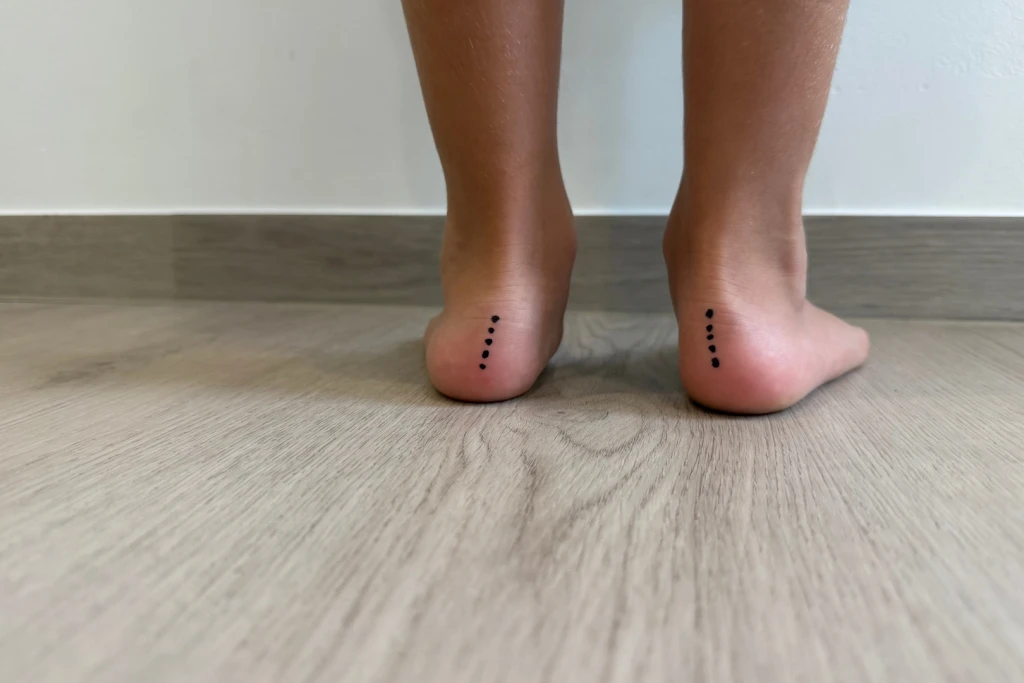
Overpronation has become one of those words that shoe shops and running forums throw around, usually right before someone tells you that you need to fix it. A patient walks in worried because a retail assistant watched them walk for ten seconds and announced that they overpronate, and now they are convinced something is wrong with their feet. The real picture is more nuanced than that, and a lot less alarming.
So here is how I explain it in the clinic.
What is overpronation, really?
Pronation is normal. Every time your foot takes load, it rolls inward a little, and the arch lowers slightly, which is how your foot absorbs shock and adapts to the ground. Overpronation just means the foot rolls inward more than average, often alongside a flatter foot posture. So it is a variation, not a disease.
That said, I am not going to tell you it means nothing. Overpronation is a genuine biomechanical disadvantage. The foot is working in a less efficient position, so the tissues around it can end up doing a bit more work than they would on a better-aligned foot. Whether that ever becomes a problem is the real question.
Is overpronation actually a problem?
Not always, and this is the part the shoe shop leaves out. Most people who overpronate, especially when they are younger, have no trouble with it at all. I have seen plenty of athletes who overpronate and perform perfectly well, because the way they have trained has built up a high tolerance in those tissues.
The honest way to think about it is a balance. On one side is the load you put through the foot. On the other is your body’s capacity to tolerate that load. Overpronation nudges the load side up a little, but if your capacity is high, the balance still holds and nothing hurts. So overpronation on its own does not doom you to injury.
So when does it matter?
It matters when the balance tips. If you already have pain, if your feet fatigue easily, or if you struggle to walk long distances, especially when you are young and would not expect to, that tells me the load is outrunning your capacity, and intervention is almost always worth it. In that situation, managing the overpronation genuinely helps.
My own feet are a good example of this balance tipping. I have flat feet, and I overpronate, and for years it caused me no trouble at all. Then at nineteen I went into National Service, the training load jumped overnight, and the obstacle course left me with posterior tibial tendon symptoms and knee pain that turned out to be chondromalacia patellae and meniscus tears. Nothing about my feet had changed. What changed was the load, and it outran what they could tolerate. That is exactly why, when a young person is already in pain, I do not tell them to simply wait and see.
If you are generally fine, with no symptoms and no limits on what you can do, there is no immediate concern. You do not need to fix a foot that is quietly doing its job.
Does it get worse with age?
For many people, yes, in a sense. Your tissues’ tolerance for load tends to drop over the years. That is why a foot that coped fine for decades can start to complain later in life, and why a flat, overpronated foot can cause real trouble in older adults, including posterior tibial tendon dysfunction, where the main tendon supporting the arch starts to give way. So “no problem now” is not the same as “no problem ever”. It is worth keeping an eye on, even if you are comfortable today.
Will insoles fix my overpronation for good?
No, and this is the myth I most want to clear up. Wearing insoles for a long time will not permanently correct flat feet or overpronation, especially in an adult. That is a claim you will hear in some retail stores, often right before they sell you a pair, and it is simply not true.
What a well-designed custom orthotic actually does is change how you load your foot while you are wearing it. It manages the mechanics, it does not rebuild your arch. That is still genuinely useful when overpronation is driving your symptoms, but it is a very different promise from “wear this and your feet will be fixed”.
I am the living proof of this. I have worn custom orthotics for years, and my flat feet are still flat, and they always will be. The orthotics manage how I load, they were never going to reshape my arch permanently, and no honest podiatrist would tell you otherwise.
So should you worry about overpronation?
Read it as a risk factor, not a verdict. If you overpronate and you feel fine, keep doing what you are doing and simply be aware that it may need attention later. If you overpronate and you are getting pain, fatigue, or trouble on your feet, that is the signal that the balance has tipped and it is worth acting on.
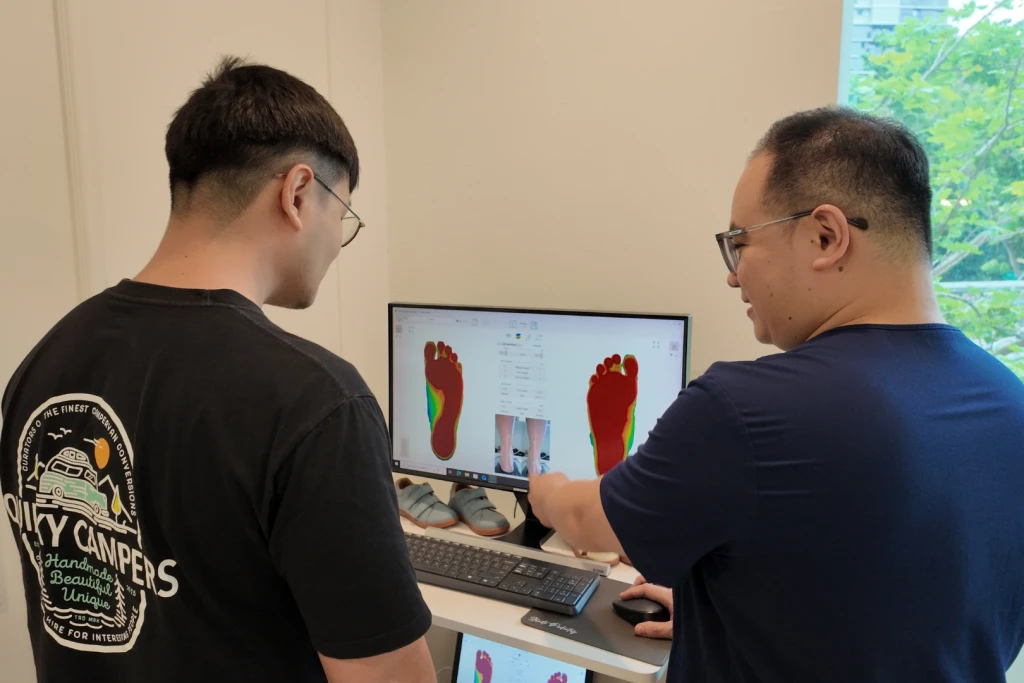
The thing a podiatrist assessment tells you, which a ten-second look in a shop cannot, is whether your overpronation is actually behind your symptoms, or just an innocent bystander. If your feet or legs are giving you trouble, book a consultation with any of our podiatrists in Singapore at any of our three locations, and we will work out which one it is.