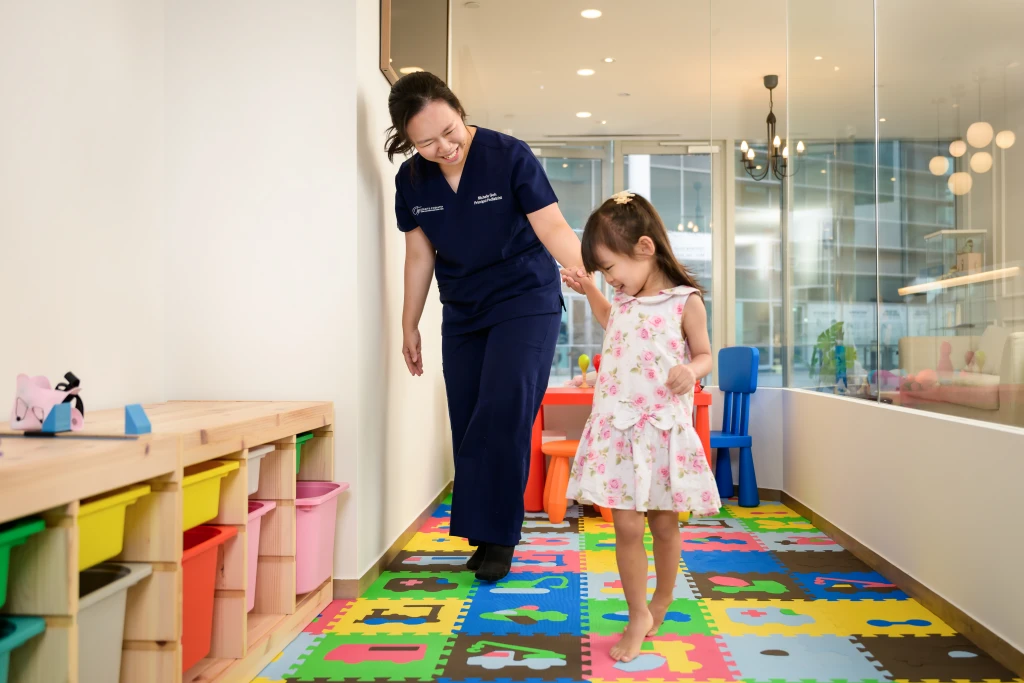
Parents often bring a child in worried about how their feet or legs look, flat feet, knees that knock together, or a little one who walks on their toes, usually after someone suggested it needs fixing. The reassuring truth, and the one I spend a good part of the visit explaining, is that most of what looks unusual in a young child’s feet and legs is a normal part of growing up, and it settles on its own.
Children are not small adults. Their bones, joints, and muscles are still developing, and a lot of what would look abnormal in a grown-up is simply a stage a child passes through. That is exactly where an assessment earns its place. A proper paediatric assessment separates the common, self-resolving variations from the smaller number that genuinely need support, so you are neither worrying over something that will sort itself out nor missing the child who does need help early. That judgement is hard to make from the outside, and getting it right is worth far more than simply waiting to see what happens.
Flat feet
Flat feet are very common in young children because the foot is still developing, and an arch usually starts to appear between the ages of two and four, as the bones, muscles, and ligaments mature and the soft baby fat under the arch thins out. The numbers reflect this: a flat foot is found in roughly half of three-year-olds and falls to about a quarter by age six. The flat shape itself is rarely the problem. Most flexible flat feet are painless, but a flatter foot is still a risk factor worth being aware of, because it can add load through the foot and leg as a child gets more active, so it is not something to simply dismiss. What is worth checking is a flat foot that is painful, one that is stiff rather than flexible, or one that appears on only one side.
Knock knees
Knock knees, or genu valgum, look most dramatic between the ages of three and four, when the knees can angle noticeably inward while the ankles stay apart. This is almost always a normal developmental phase, and it corrects itself, the knees usually settle towards their adult position by around age seven. Braces, special shoes, and orthotics have not been shown to speed that up, so the real “treatment” is time and growth. The signs worth assessing are knock knees that are getting worse rather than better, that have not improved by about age ten, or that are clearly worse on one side than the other.
Toe walking
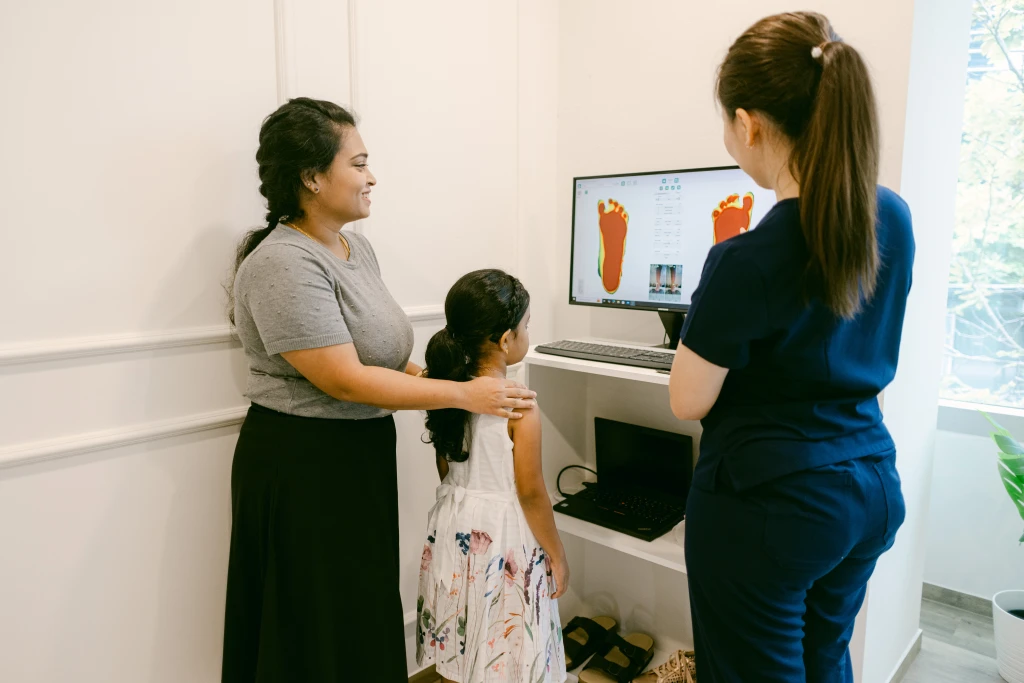
Toe walking is common in children who are still finding their feet, and most of the time it fades on its own. It is seen in somewhere around five to twelve percent of children, and most who toe walk without a tight heel cord grow out of it. That said, toe walking is still worth having checked, because it can occasionally be the first sign of an underlying concern rather than just a habit. Once that has been ruled out in a young child with normal ankle movement, reassurance is usually what is needed. What changes the picture is toe walking that persists, that comes with tight calves, or that appears alongside other developmental concerns, because toe walking that does not settle is worth assessing to look for an underlying cause.
Leg length difference
A small difference in leg length is common and usually causes no problems at all. A larger leg length discrepancy is worth measuring and monitoring as the child grows, because a meaningful difference can change how the hips and spine are loaded over time.
When should you actually see a podiatrist?
Most of the above needs reassurance and a bit of watching, not treatment. It is worth booking an assessment when you notice:
- Pain in a child’s foot, leg, or knee that is persistent or gets in the way of activity
- A change that is only on one side, or that is getting worse rather than better with age
- A child who tires quickly on their feet, trips often, or avoids activity they used to enjoy
- A walking pattern or foot posture that you are not sure whether you should be worried about
How podiatry helps
Where the concern genuinely comes from the lower limb, a podiatrist’s role is to assess your child’s feet, gait, and stage of development, and to work out whether what you are seeing is a normal phase or something that would benefit from support. When support is warranted, we start conservative, footwear advice, activity guidance, and targeted exercises, and we only recommend custom foot orthoses or supramalleolar orthoses when the clinical reasoning truly supports it. Not every child needs a device, and we will tell you plainly when yours does not.
The bottom line
Worries about a child’s feet and posture are one of the most common reasons parents come to see us, and most of the time the honest answer is reassuring. At Straits Podiatry, our podiatrists assess your child carefully, tell you plainly whether what you are seeing needs anything more than time, and put together a conservative plan only where it is genuinely needed. Contact us or schedule an appointment for a proper assessment.
References:
- Paediatric flexible flat foot: how are we measuring it and are we getting it right? A systematic review, Journal of Foot and Ankle Research.
- Genu Valgum, StatPearls, NCBI Bookshelf.
- Idiopathic Toe Walking: An Update on Natural History, Journal of the American Academy of Orthopaedic Surgeons, 2022.