
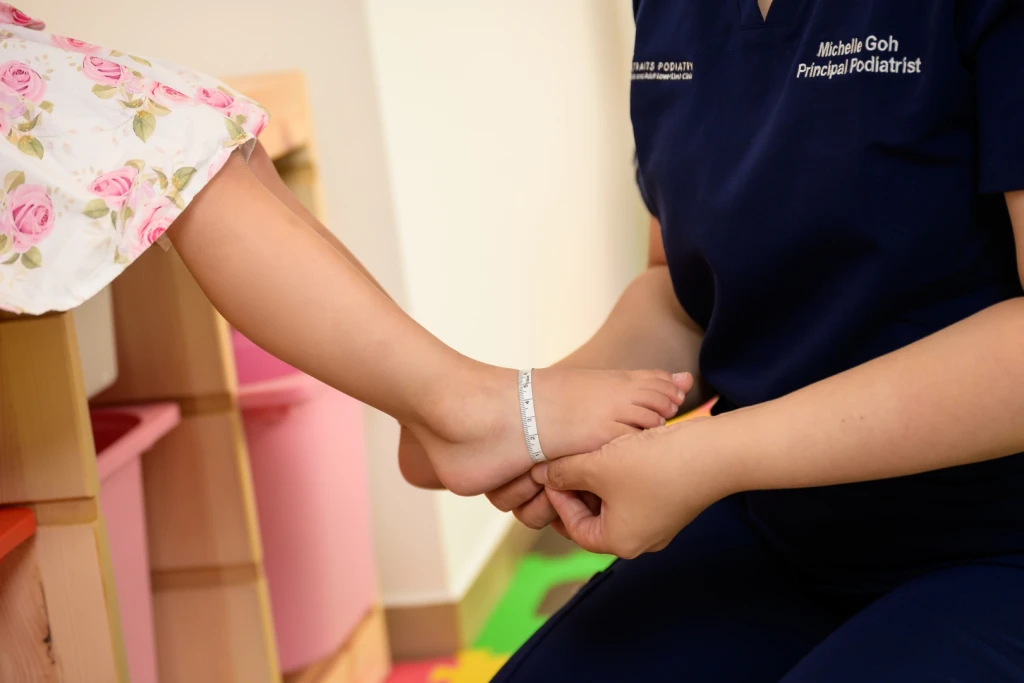
Most of the children’s feet that worry a parent enough to book an appointment turn out to be doing something completely normal for their age. A foot that looks flat, toes that point inward at the playground, a toddler who walks on tiptoe around the living room, legs that look bowed one year and knock-kneed the next. These look alarming when it is your own child, and a late-night search almost always makes it worse.
Here is the part that search results tend to bury. A young child’s feet and legs are supposed to change shape a great deal in the first several years. Arches build slowly, legs rotate as the child grows, and a lot of what looks wrong at three has quietly sorted itself out by seven. The job of a parent is not to catch every wobble. It is to know which changes are part of the normal timeline and which few are worth a closer look.
So rather than list conditions, let me walk you through the questions I hear most from parents, roughly in the order that children grow into them, and give you the honest “usually fine” alongside the signals that genuinely warrant a check.
Are flat feet in my child a problem?
Most of the time, no. Babies and toddlers look flat-footed because they have a fat pad under the arch and the arch itself has not developed yet. The arch tends to build through the early years, and a visible arch usually appears between the ages of two and four. Squatting or standing on tiptoe often reveals an arch that is simply hidden when they stand flat. If you want the fuller picture, we cover it in depth on our page about flat feet in children.
The version worth checking is a flat foot that causes real pain, that stays stiff and cannot be moved into an arch position, that sits clearly worse on one side than the other, or that comes with a child avoiding activity they used to enjoy. A flexible, painless flat foot in a happy, active child is a stage, not a problem.
My child walks pigeon-toed. Is that normal?
In-toeing, where the feet point inward when a child walks, is one of the most common things parents notice once walking gets going. It usually comes from the natural way the shin or the hip is rotated at that age, and many children grow out of it as the bones rotate into their adult alignment over the early years. You will often see it improve on its own without any device or exercise by 3 to 4 years old. The mechanisms behind it are explained on our page about in-toe walking, and the opposite pattern, feet pointing outward, is covered under out-toe walking.
What changes the picture is in-toeing that is clearly worse on one side, that is showing no signs of getting better, that comes with pain, or that trips the child so often it is holding back their play. Symmetrical in-toeing that is slowly improving is the reassuring version.
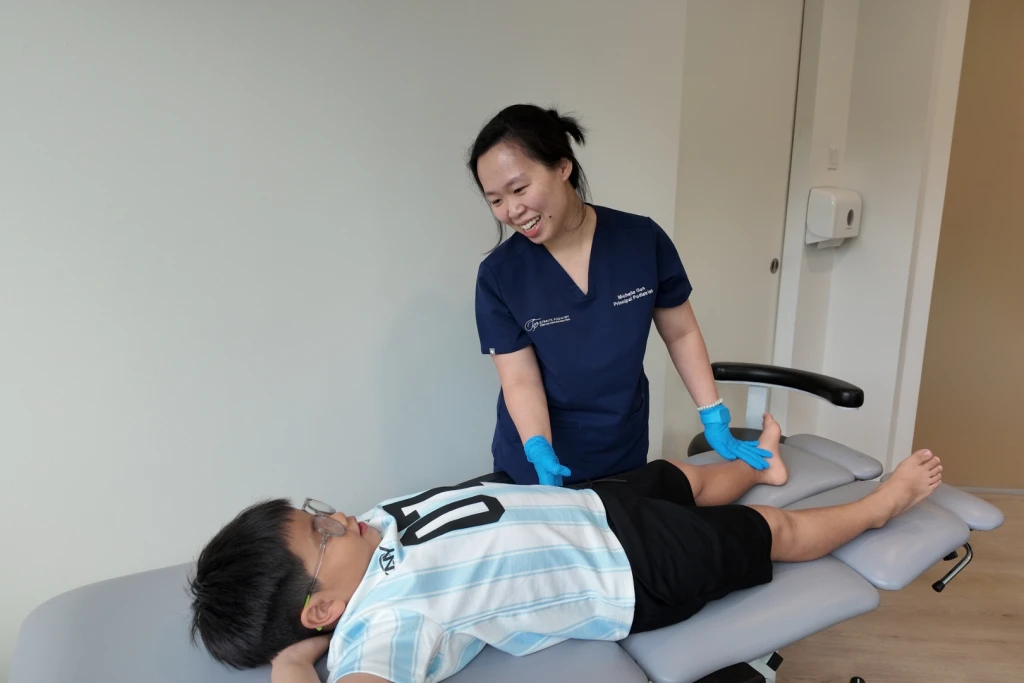
He walks on his tiptoes. Should I stop him?
Toe-walking is common in toddlers who are still finding their feet, and in a lot of children it is simply a habit rather than a sign of anything underneath. Many children who toe-walk can bring their heels down to the floor perfectly well when reminded, and drift out of the habit on their own. Our page on toe-walking goes through the reasons behind it.
The pattern to have looked at is a child who cannot get the heels flat because the calf or ankle feels tight, who toe-walks only on one leg, who started toe-walking after previously walking flat, who had significant flat feet along with it, or whose toe-walking sits alongside speech or developmental things you were already wondering about. Persistent toe-walking well past the age of two to three, especially with tightness, is worth an assessment.
Her legs look bowed, then knock-kneed. Is that meant to happen?
Yes, and this one surprises parents the most. Toddlers are naturally bow-legged up to around the age of two to three. The legs then swing the other way into a knock-kneed look, often most obvious between three and six, before straightening out to their adult shape by around age seven. It is a normal arc, not a deformity appearing and disappearing. When the knock-kneed stage is what you are seeing, our page on knock knees explains where it sits on the timeline.
The signals that move this out of “normal phase” are bowing or knock knees that is clearly worse on one leg than the other, that is getting worse instead of following the expected turnaround, that comes with pain or a limp, or that looks severe for the child’s age. Symmetrical legs that are tracking the usual timeline do not need treatment.
What about those curly little toes?
Curly toes, usually the third, fourth, or little toe tucking under its neighbour, are common and often run in families. Plenty of them loosen and settle on their own as the child grows and the foot takes more weight through walking. You can read more on our page about curly toes.
They are worth a look if a toe is causing pain, rubbing raw in shoes, developing hard skin, or if the curling is getting tighter rather than easing. A curly toe that never bothers the child is mostly a cosmetic matter.
My child gets sore legs at night. Is that a worry?
Growing pains are a common and usually harmless cause of aching legs in children, typically in the calves, shins, or behind the knees, often in the evening or waking them at night, with the child completely fine by morning. They tend to come and go over months and settle with time. We go through them and how to ease them in our guide to managing growing pains.
What is worth checking is pain that sits in one specific spot rather than a general ache, pain during the day or with activity, pain in only one leg, swelling, a limp, or a child who is generally unwell. Those patterns are not typical growing pains and deserve a look.
My older, active child’s heel hurts. What is that?
Once children hit the busy sporting years, heel pain that flares with running and jumping and eases with rest is commonly Sever’s disease, an irritation of the growth plate at the back of the heel. It is common between around eight and fourteen, it is not dangerous, and it settles as the growth plate matures, though it can be managed so the child stays active and comfortable in the meantime.
It is worth an assessment if the heel pain is severe, keeps coming back, makes the child limp, or is stopping them doing the sport they love, both to confirm it is Sever’s and to get them moving comfortably again.
So when is it not just a phase?
If you take one thing from this, let it be the short list of red flags that cut across all of the above, because these are the signals that a change is worth checking rather than watching.
- Pain. Healthy childhood foot development does not hurt. A child who limps, complains, or pulls back from activity deserves a look.
- One-sided or asymmetry. The normal stages are symmetrical. Something clearly worse on one side than the other is the pattern we pay attention to.
- Going backwards. A skill that was there and is now lost, such as walking that becomes clumsier or a heel that used to reach the floor and no longer does, matters more than any single snapshot.
- Not walking by around 18 months, or tripping and falling that is getting worse rather than better with age.
- Stiffness. A foot or joint that cannot be gently moved into a normal position, rather than one that simply looks unusual, is worth assessing.
None of these mean something is definitely wrong. They mean the change has stepped outside the normal timeline enough that it is worth a professional set of eyes.
Getting peace of mind, and help if it is needed
Most of what worries parents about young feet is a stage that resolves on its own, and a fair amount of a paediatric visit is exactly that, reassurance backed by a proper look. When something does fall outside the normal pattern, a paediatric assessment maps out what is happening, looks at how your child moves and stands through a gait analysis, checks the joints and muscle flexibility, and sets out a plan. That plan might be watchful waiting, some simple footwear or exercise advice, or where it is genuinely needed, supportive devices such as custom orthotics. The point is to match the response to what the foot is actually doing, and often that means doing very little.
If something about the way your child walks, stands, or complains does not sit right with you, you can book an appointment with any of our podiatrists in Singapore at any of our three clinics, or read more across our paediatric podiatry service. A check is as much about giving you peace of mind as it is about treatment, and there is no harm in asking.