
Most people are surprised by how little ingrown toenail surgery hurts once it is done. What catches them out is the aftercare. The dressing feels bulky, the toe looks a little angry for a while, and it is hard to know whether what you are seeing is normal healing or the start of a problem.
This guide is for the days and weeks after a partial nail avulsion, the procedure that removes the offending edge of an ingrown toenail and stops that edge growing back. It covers what to expect, what to leave alone, and the signs that mean you should call us.
The first 48 hours after ingrown toenail surgery
For the first one to two days, expect mild discomfort or soreness, usually around 2 to 3 out of 10. Paracetamol is normally enough to manage it.
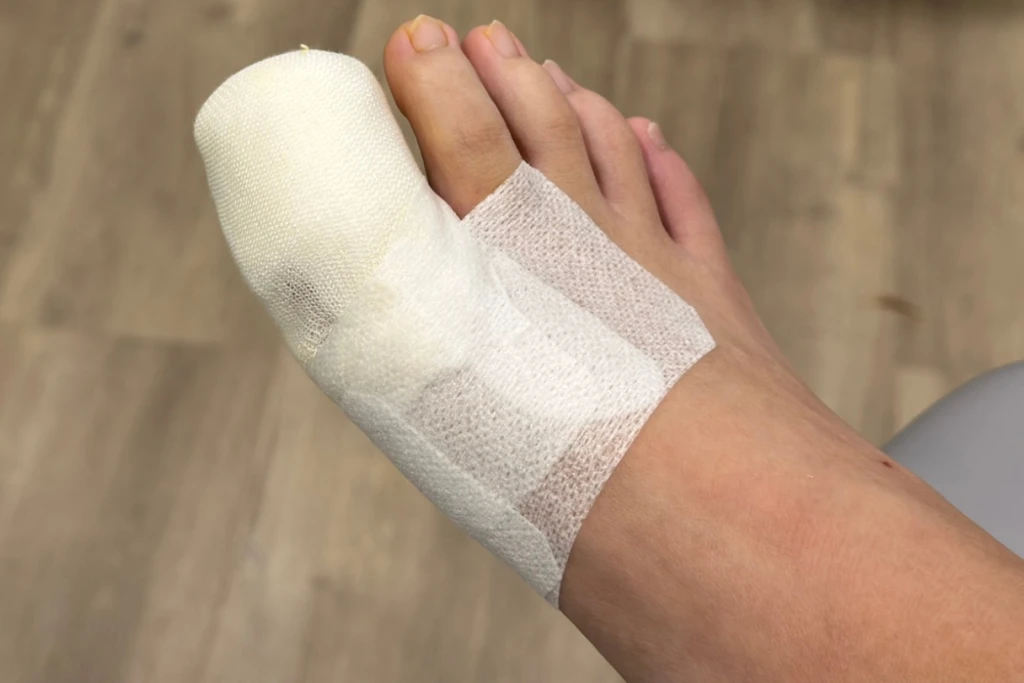
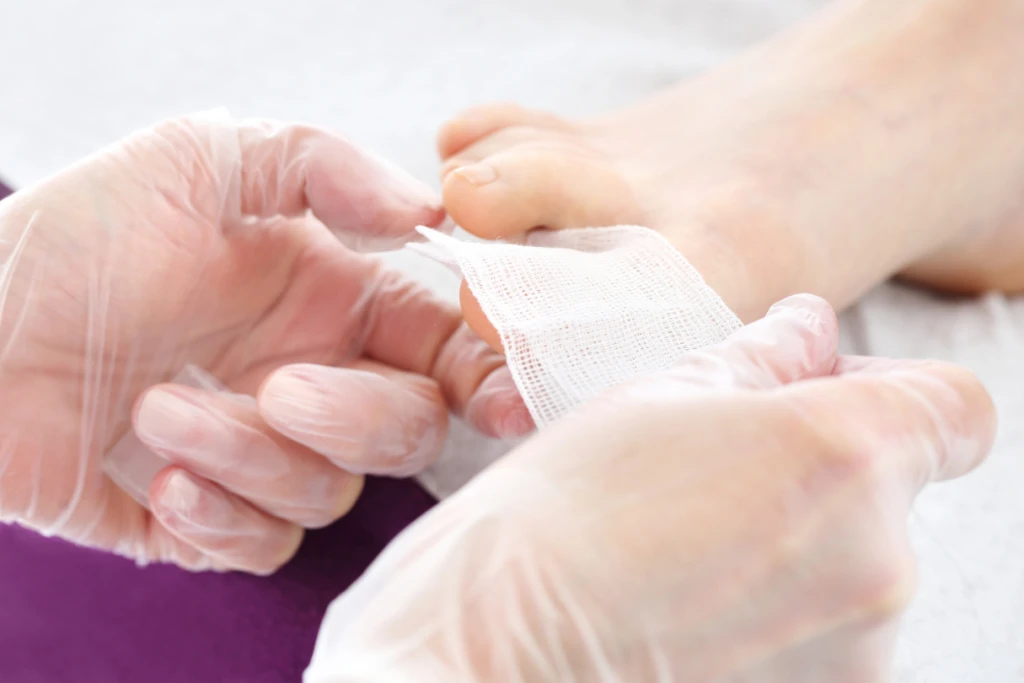
You will go home with a big dressing on the toe that should not be touched until your first follow-up appointment. At that visit, the podiatrist cleans the wound and replaces the bulky dressing with a smaller one.
If you notice a little bleeding or some discomfort before then, add more bandage over the top of the existing dressing rather than taking it off. Removing the dressing yourself disturbs the wound and lets bacteria in at the point it is most vulnerable.
What healing looks like after ingrown toenail surgery, and the signs of infection
Some swelling and inflammation around the toe is normal for up to two weeks after the procedure. After that, the wound should start to close up and form a scab, which is the sign it is healing well.
What is not normal is a toe that is getting worse instead of better. Over the first one to two weeks, call us if you notice:
- Pus coming from the wound
- Increasing swelling, rather than swelling that is slowly settling
- Increasing redness spreading around the toe
- Increasing pain, rather than soreness that is easing
The word that matters in all of these is increasing. A toe that is a bit red and puffy but improving each day is healing. A toe that looks worse than it did two days ago needs to be seen.
When you can wear shoes, play sport and swim again after ingrown toenail surgery
Most people are back to their usual activities in about two to three weeks, depending on how quickly the wound heals.
- Sport and swimming. The rule I give patients is simple: once there is no discharge and the wound no longer looks wet, most activities, sports and swimming can resume.
- Closed shoes. You can wear closed shoes straight after the procedure as long as they are wide enough not to press on the toe. Even so, I normally advise waiting about two weeks, until the wound has closed, before going back to closed shoes for long periods.
The timeline is a guide, not a deadline. The state of the wound decides when you are ready, not the date on the calendar.
What your toenail will look like after ingrown toenail surgery
The nail will look pretty normal. The difference is at the corner where the procedure was done. During the procedure, the nail root along that edge is destroyed so that the nail stops growing back there, so in most cases that corner becomes skin rather than nail.
The result is a nail that is slightly slimmer than before, with no edge left to dig into the skin. Most people find it hard to tell unless they are looking for it.
The aftercare mistake I see most after ingrown toenail surgery
The most common mistake is simply not taking proper care of the wound. Active patients are the usual example. They feel well, the pain has gone, and they want to get back to their sport, so they start running before the wound has actually closed.
The toe takes a lot of pressure and friction during a run, and an open wound does not cope well with that. It can delay healing, or cause an injury to the toe that makes the wound worse. A few extra days of patience usually saves you a few extra weeks of healing.
Who heals more slowly after ingrown toenail surgery
Some people heal more slowly, and that is expected rather than a sign that something has gone wrong. This includes people who are immunocompromised, people with diabetes, especially those with a diabetic foot and reduced feeling, and people with poor blood circulation to the feet, as in peripheral arterial disease.
For them, the wound can take four weeks or longer to recover. As long as it is healing steadily, even if slowly, no major intervention is usually needed, and it can be allowed to recover at its own pace. We simply keep a closer eye on it at follow-up, and the signs of infection above matter even more.
What I would want you to know before your procedure
Ingrown toenail surgery is a short procedure, but the healing happens at home, and that part is mostly in your hands. Leave the dressing alone until your follow-up, add bandage on top rather than taking it off, expect some swelling that slowly settles, and watch for anything that is getting worse rather than better. Go back to sport and swimming once the wound is dry and closed, not just when the pain has gone.
If your ingrown toenail keeps coming back and you are weighing up whether a procedure is the right step, or you have had one and are unsure how it is healing, book a consultation with any of our podiatrists in Singapore.
Frequently Asked Questions About Aftercare After Ingrown Toenail Surgery
Is it normal for my toe to be swollen after ingrown toenail surgery?
Yes. Some swelling and inflammation is normal for up to about two weeks after the procedure, after which the wound should start to close and scab. Swelling that is increasing rather than settling, especially with spreading redness, pus or worsening pain, is not normal and should be checked.
Can I take the dressing off myself after the procedure?
No. Leave the large dressing in place until your first follow-up, where the podiatrist will clean the wound and apply a smaller dressing. If there is a little bleeding or discomfort before then, add more bandage over the top instead of removing it.
When can I swim after ingrown toenail surgery?
Once there is no discharge and the wound no longer looks wet, which for most people is around two to three weeks. If you heal more slowly, for example because of diabetes or poor circulation, it can take longer. Wait until the wound is dry and closed rather than going by the date alone.
How do I know if my toe is infected after ingrown toenail surgery?
Look for pus, and for swelling, redness or pain that is getting worse over the first one to two weeks instead of slowly improving. A toe that looks better each day is healing normally. A toe that looks worse than it did a couple of days ago should be seen by your podiatrist.