
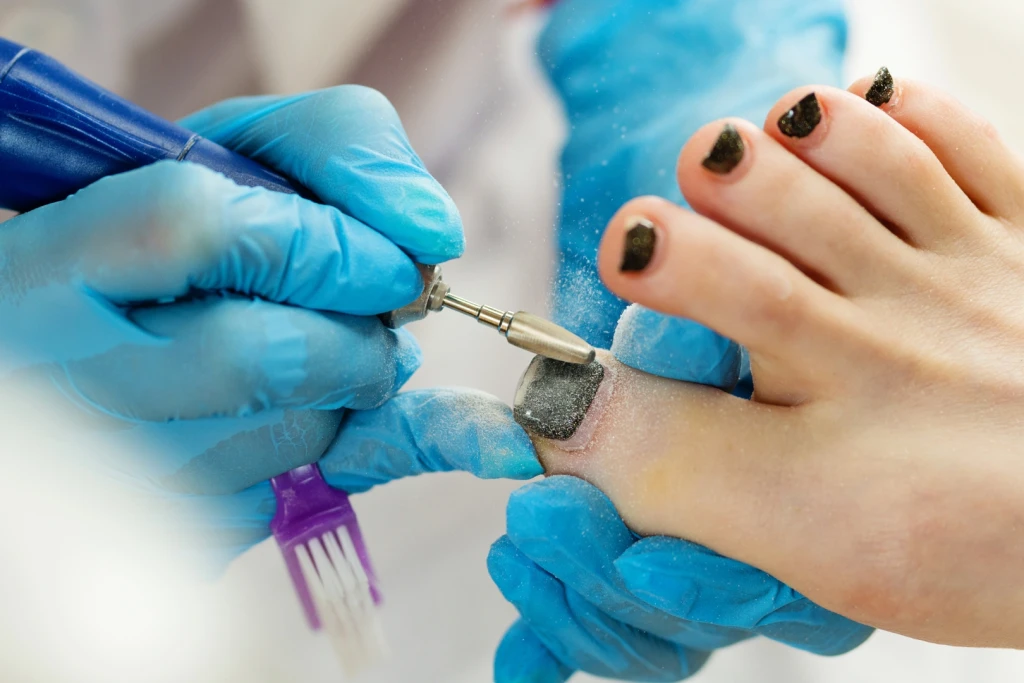
Plenty of people book a pedicure hoping it will tidy up a toenail that has started to feel sore and ingrown. A good pedicure can make the nail look neater, and it might take the edge off mild discomfort. Whether it genuinely helps an ingrown toenail, or quietly sets you up for a worse one, comes down to what happens at the nail edge. That is where I want to be honest with you, because over the years I have seen a lot of feet made more complicated by a well-meant pedicure. Here is how I talk it through with patients, and how to enjoy a pedicure without paying for it later.
Can a pedicure fix an ingrown toenail?
With safety in mind, a pedicurist can probably help tidy up the look of your nail and give some relief for mild ingrown discomfort. What I want to be clear about is that it is a misconception that pedicurists are trained to deal with an actual ingrown toenail.
The way a pedicurist tries to remove an ingrown edge often leaves a deeper spike behind, and that makes it far more tedious to remove later. I have seen too many patients meet that fate. They arrive after several pedicures with a spike buried so deep that it needs a far more involved removal than it ever would have at the start.
Can a pedicure actually cause an ingrown toenail?
Unfortunately, and with all due respect to pedicurists, a pedicure can cause an ingrown toenail. It comes down to two habits.
The first is the way the sides of the nail are trimmed down, along with the constant digging at the cuticles and the dead skin at the sides. By doing that, the skin is allowed to sit above the edge of the nail, which makes it far easier for an ingrown toenail to start.
The second is the digging itself, which is often what causes the infection. It creates tiny breaks in the skin, and an unsterilised tool then introduces bacteria straight into the area.
What else can a pedicure lead to, beyond ingrown toenails?
Ingrown toenails are only part of what I see. The same backstory of frequent pedicure visits turns up with an infection of the nail fold called paronychia, with fungal nail infections, with green nail syndrome, and with progressively involuted nails that curl in at the sides. These are presentations I see at least once a week.
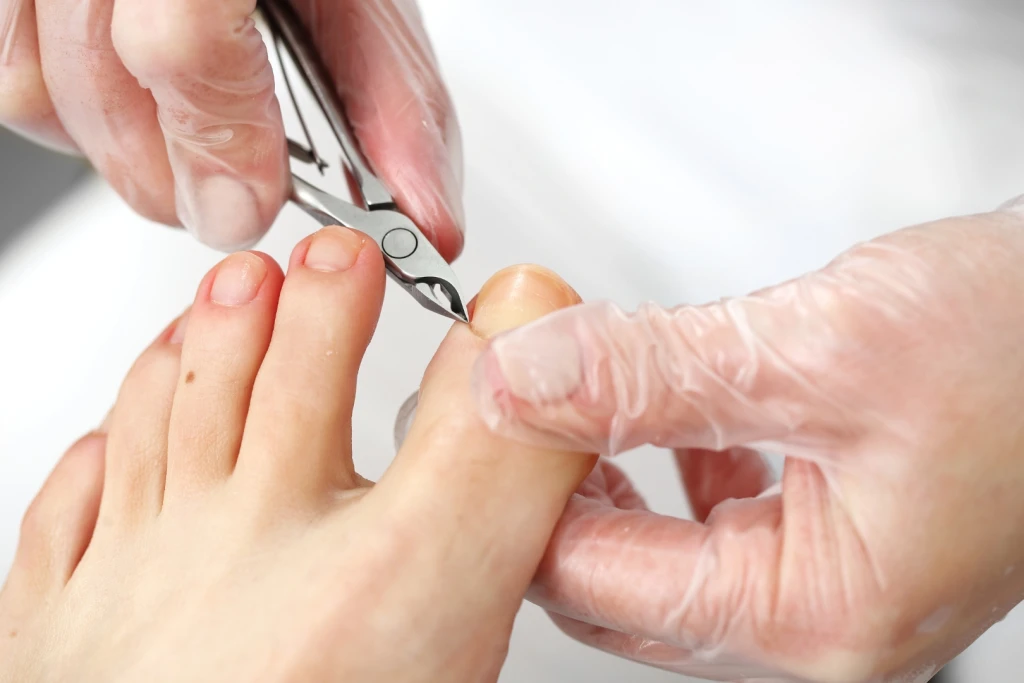
I am not suggesting that a pedicure is the sole direct cause, but there is certainly a close association. Shared tools do two things. They pass bacteria and fungus from one person to the next, and they cause direct inoculation when a tool nicks the skin. That is why the infection risk is very real.
What does a podiatrist do differently from a nail salon?
A podiatrist has medical training, and I use it before I touch the nail. I first understand a person’s underlying health, so I know what they can and cannot safely go through. That shapes the plan directly, because it tells me their risk of infection, their likely healing time, and how aggressively the situation needs to be managed. The medical knowledge is the foundation.
The skill comes next. We are trained to remove the nail spike without causing further trauma, to remove infected tissue to bring an infection under control, and, where a case needs more help than a routine spike removal, to perform a partial nail avulsion. All of it is done with sterile tools and a full understanding of the implications for that particular patient.
This is where the difference matters most. Without medical training, a pedicurist can be too aggressive on someone who is going through chemotherapy, or whose diabetes is poorly controlled. That can put them at risk of a serious infection. Worse still, in a person with poor circulation, a single pedicure can leave a non-healing wound, and I have seen that end in the need for surgery to restore blood flow and save the toe. I saw cases exactly like this during my time practising in a public hospital.
I am not saying any of this to drum up patients. The risks are simply real, and a problem that has been made worse often costs you more to sort out than it would have at the start.
Can I still get pedicures safely?
Yes. If all you are after is a tidy set of nails, a pedicure is generally safe, as long as you protect the nail edge.
- Do not let them cut the sides of each nail down, and do not let them dig at the sides or the cuticles.
- Bring your own set of tools, and wipe them with alcohol before and after they are used.
- If you have poorly controlled diabetes, peripheral vascular disease, cancer, or any other condition that weakens your immune system, see a podiatrist instead. For you, it is the safer choice, not a luxury one.
Why this matters more in Singapore
Our humid climate does the fungus a favour, encouraging it to grow. The heat and sweat also raise the risk of an ingrown toenail becoming infected, which is a big part of why I see so many active children and teenagers with them. On top of that, nail salons are always promoting gel polish, and that adds another layer of infection risk on nails that may already be under strain.
When to see a podiatrist instead
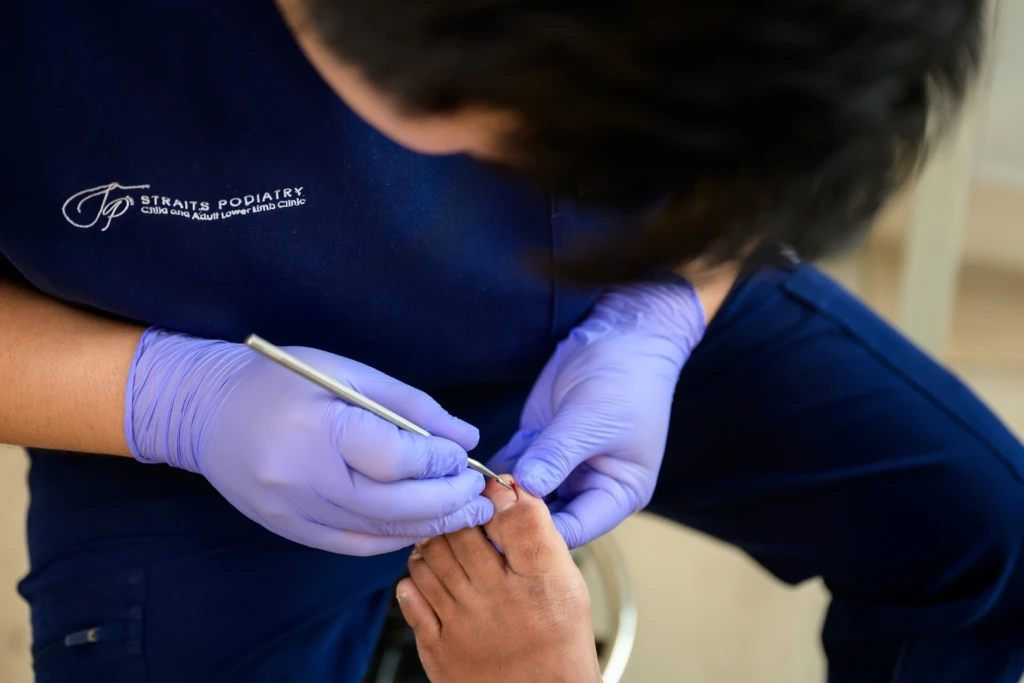
If your ingrown toenail keeps coming back, is infected, or a pedicure has left you with a spike or a sore, swollen nail fold, it is worth having it assessed properly rather than booking another pedicure and hoping. A podiatrist can lift the offending spike out safely, bring any infection under control, and, for a nail that keeps growing in, offer a lasting option so the cycle stops.
If that sounds like your situation, book a consultation with any of our podiatrists at any of our three clinics in Singapore. Catching it early almost always means simpler, gentler care.
Frequently Asked Questions About Pedicures and Ingrown Toenails
Can a pedicure get rid of an ingrown toenail?
A pedicure can tidy the look of the nail and ease mild discomfort, but a pedicurist is not trained to deal with a true ingrown toenail. Attempts to remove the ingrown edge often leave a deeper spike behind, which is more difficult to remove later. If the toe is genuinely ingrown, a podiatrist is the safer place to have it dealt with.
Can pedicures cause ingrown toenails or infections?
They can. Trimming the sides of the nail down and digging at the cuticles lets the skin sit over the nail edge, which makes an ingrown toenail more likely. The digging also creates small skin breaks, and unsterilised shared tools can introduce bacteria or fungus, which can cause infections such as paronychia, fungal nail, or green nail syndrome.
Is it safe to get a pedicure if I have diabetes or poor circulation?
If you have poorly controlled diabetes, peripheral vascular disease, cancer, or a weakened immune system, a salon pedicure carries real risk. In a foot with poor circulation, even a small wound can struggle to heal. For these situations, having your nail care done by a podiatrist is the safer choice.
How can I make pedicures safer for my toenails?
Ask the technician not to cut down the sides of the nails or dig at the cuticles, bring your own tools and wipe them with alcohol before and after use, and keep your feet clean and dry afterwards. If a nail is already sore, ingrown, or infected, see a podiatrist rather than trying to have it fixed at the salon.