
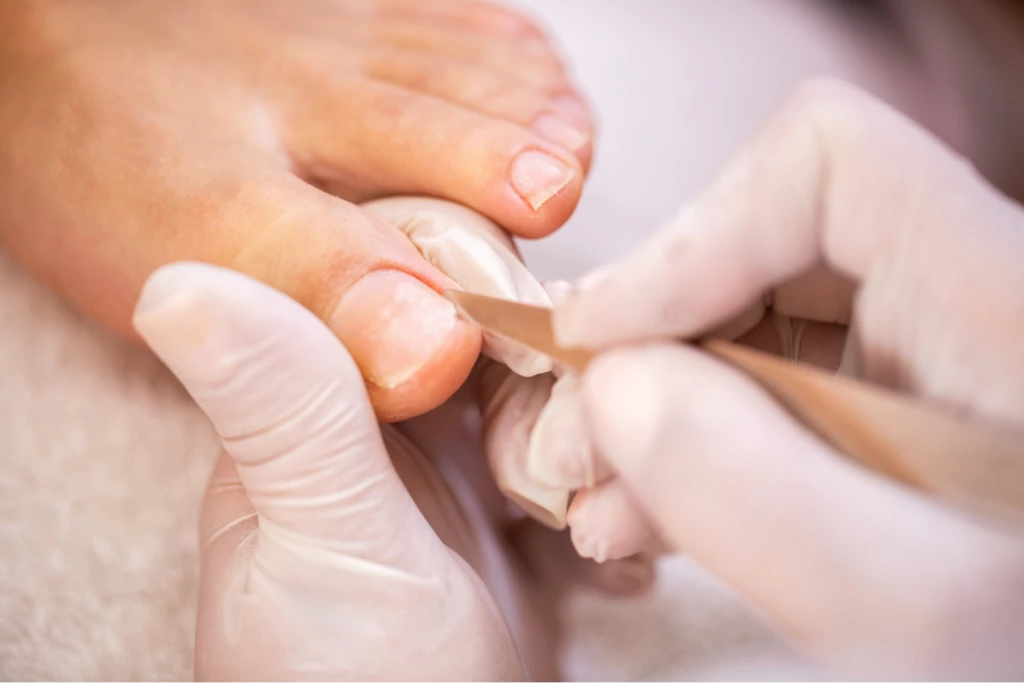
If you already have a fungal nail, it is tempting to book a pedicure and simply cover it up, especially with an event coming up. I understand the instinct, but I want to be honest with you about what a pedicure does and does not do for an infected nail. It will not treat the fungus, and depending on what happens in the chair, it can quietly make things worse. Here is how I talk it through with patients.
A pedicure will not treat a fungal nail
I will not offend anyone here, but going for a pedicure when you already have a fungal nail infection does not treat the problem, and it can contribute to spreading it to others. It is perfectly fine to keep enjoying pedicures, as long as you understand that they will not resolve the infection.
Most of the ladies who come to me for fungal nails tell me the same story. They noticed the problem, did not think it was serious, and just wanted to cover it up so they could still attend an event with nails that looked nice. A month later, when the acrylic or gel polish comes off, they see how much worse the nail has become. The honest, long-story-short version is this. Get a fungal nail treated early, when it is easier to resolve. Continuing pedicures will not fix it, and it can make it worse, so you end up facing a tougher challenge to get rid of it.
How pedicures make fungal nails worse, and spread them
Two things happen in the chair that work against you.
First, if the pedicurist keeps digging or pushing back the cuticles, or if you agree to polish over a nail that is already infected, you are encouraging the fungus to invade the nail plate further.
Second, the same set of tools moves from nail to nail, so the infection can spread to your other toes. Whether it spreads to the surrounding skin is a little different. That can happen with or without a pedicure, because the nail already carries the organism. Some species readily invade skin and can go on to cause athlete’s foot, while other species affect only the nail and leave the skin alone regardless of whether you have a pedicure.
Why salon tools may not be as clean as they look
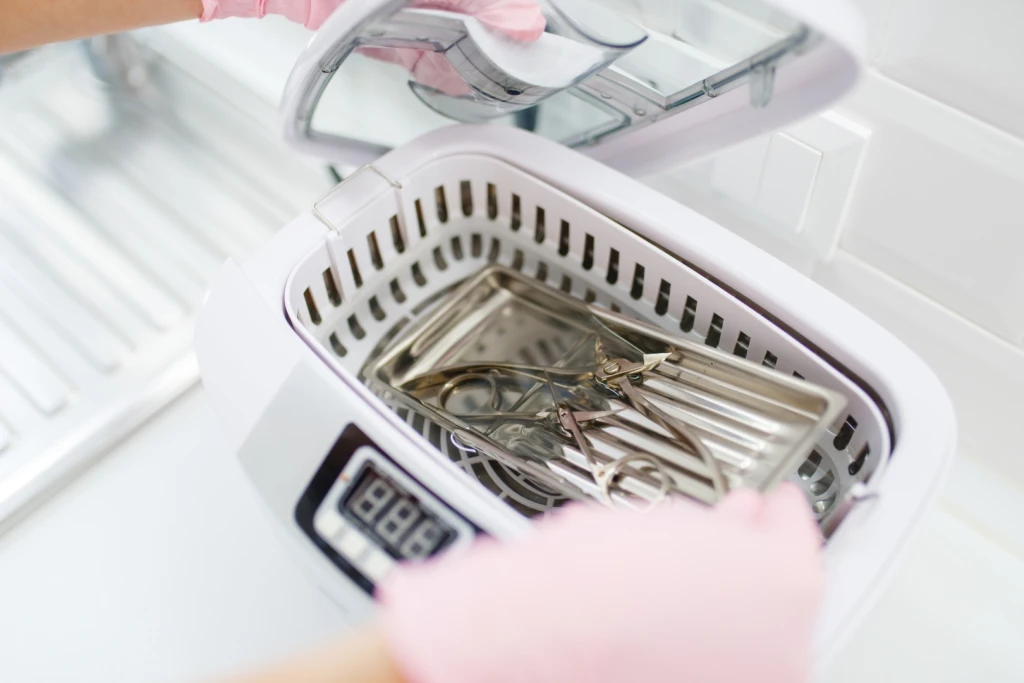
Shared tools are a genuine risk, especially when they are not properly sterilised. Common household products such as alcohol wipes or surface disinfectant do not reliably kill fungus, and the spores in particular can withstand harsh chemicals. So what looks like sterilising may not be doing what you think it is doing. The only method that is scientifically proven to sterilise equipment is an autoclave. Without that, the tools can easily carry fungal cells from one person to the next.
Whether the next person actually catches it also depends on what was done to their nails and on how vulnerable their skin and general health make them. Bringing your own set of tools gives you better peace of mind. One catch, though. If you already have a fungal nail, your own tools are not necessarily clean either, so they need proper cleaning too.
What gel and acrylic polish do to an infected nail
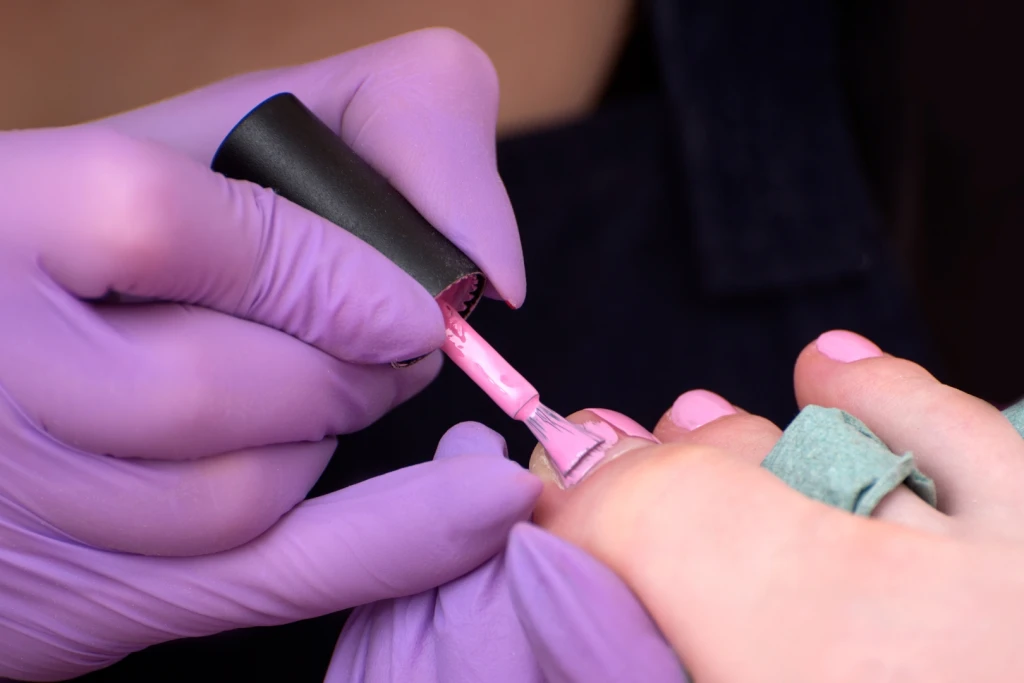
Polishing over a fungal nail creates the perfect concoction of darkness and moisture, and then you add a stretch of neglect while it stays covered. That powerful mix is exactly what makes the reveal, when the polish finally comes off, such an unpleasant surprise.
How to keep enjoying pedicures safely
If you love your pedicures, this is the advice I give patients:
- Take breaks from nail polish in between, so your nails get some natural light rather than staying covered without a break.
- Avoid aggressive cuticle cutting or digging.
- Bring your own tools, and clean them properly once you are home.
- If you already have a fungal nail infection, have it seen to first rather than covering it up to hide it from your own sight.
- If you are going for a pedicure while an infection is being sorted out, either bring a separate set of tools, or let the pedicurist work only on your healthy nails while a podiatrist manages the infected one.
If a fungal nail is not settling, or you are not sure whether a nail is infected in the first place, book a consultation with any of our podiatrists at any of our three clinics in Singapore.
Can my nails still look nice while the infection is treated?
I would love to say yes without any caveat, but I do not want to give you false hope either. When we use PACT antifungal therapy to clear a fungal nail, it is important to trim off as much of the infected portion of the nail as possible, because that makes the treatment more effective. That does mean the nail will temporarily look different.
Here is the reassuring part. Because the discoloured, infected portion is trimmed away, the nail often looks tidier and cleaner rather than worse. And in the long run, healthy nails are what keep your feet looking nice, far more than a coat of polish over a problem ever could.
Frequently Asked Questions About Pedicures and Fungal Nails
Can a pedicure cure a fungal nail?
No. A pedicure is cosmetic. It can tidy how the nail looks, but it does not clear the infection, and covering an infected nail with polish can let it worsen out of sight. A fungal nail needs proper treatment to resolve.
Can I spread a fungal nail to other people at a salon?
Yes, through shared tools that are not properly sterilised. Alcohol wipes and surface sprays do not reliably kill fungal spores, and only autoclaving is proven to. Whether the next person catches it also depends on their own susceptibility and what was done to their nails.
Is it safe to put nail polish over a fungal nail?
It is not a good idea. Polish, gel or acrylic traps darkness and moisture against the nail, which is exactly what the fungus thrives on, and it hides the problem so it is often much worse when the polish comes off.
Can I still get a pedicure if I have a fungal nail?
You can, but keep the infected nail out of it. Have the fungal nail treated by a podiatrist, and either bring your own tools or let the pedicurist work only on your healthy nails.